
The great Ottoman mosques of Istanbul are the Süleymaniye, Şehzade, Sokollu Mehmet Pasha, the Mihrimah Sultan mosques and the Blue Mosque. Most are by Mimar Sinan and date from 1543 to 1616. Group them by district to see them in a day.
Key facts
- Main architect: Mimar Sinan (16th century)
- Core period: 1520s to 1770s
- Best starting point: Süleymaniye Mosque
- Styles: Classical Ottoman and Ottoman Baroque
- Key material: İznik tiles and domed stone
- Districts: Fatih, Üsküdar, Beyoğlu
- Best for: Architecture and history lovers
- Cards below: 12 mosques with map buttons
Which are the great Ottoman mosques of Istanbul?
The great Ottoman mosques of Istanbul include the Süleymaniye, the Şehzade, the Sokollu Mehmet Pasha and the two Mihrimah Sultan mosques, all by Mimar Sinan, and the Blue Mosque from the next generation. Together they trace classical Ottoman architecture from 1522 to the Baroque mosques of the 1700s.
Sinan served as chief imperial architect in the 16th century, therefore many of the best mosques share his handwriting: a central dome, slim minarets and carefully placed light. Visiting several in sequence makes the pattern easy to see.
How did we choose these mosques?
We chose these places using four honest criteria: official or well-documented status, a clear location that works on a walking or tram route, details we can trace to published sources, and variety across districts and periods. Because this guide is about architecture, we selected buildings with a documented architect or period, and we included a few Baroque examples for contrast.
We do not accept payment for placement, and no venue can buy a spot. Moreover, opening arrangements, visitor rules and crowd levels change, so we send you to the place’s own page or Google Maps for today’s information and current visitor feedback instead of quoting scores here.
Which mosques show Sinan’s style best?
Start with the Süleymaniye and the Şehzade, because they show Sinan’s large imperial work. Then add the smaller Rüstem Pasha and Sokollu mosques for tile and detail, and the two Mihrimah Sultan mosques for light and setting. The cards below keep that order.
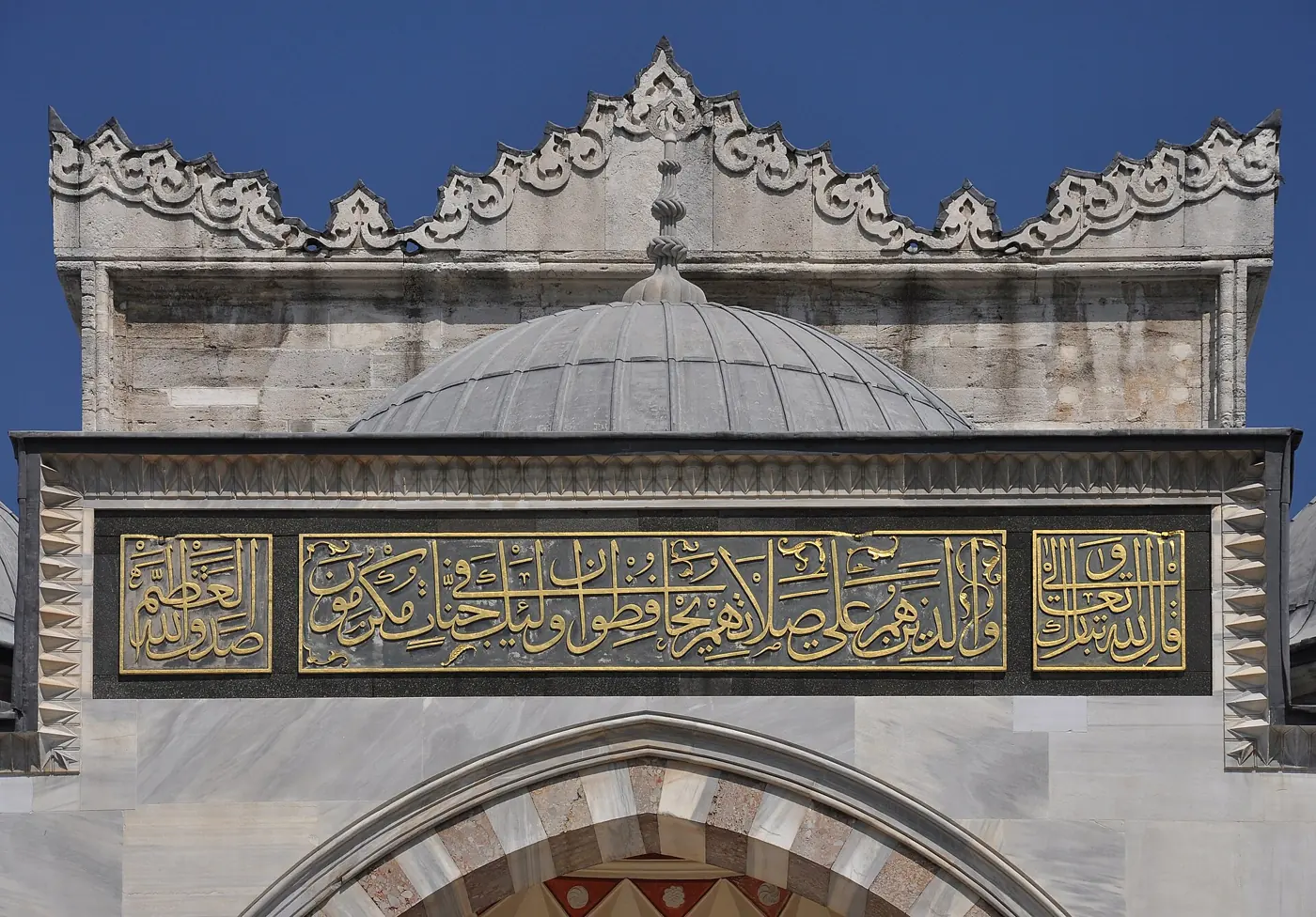
1 Süleymaniye Camii
Built in 1550-1557 for Suleiman the Magnificent, the Süleymaniye is the great reference point for Sinan’s mature style. It stands on the Third Hill above the Golden Horn.
- Built: 1550-1557
- Architect: Mimar Sinan
- Patron: Suleiman the Magnificent
Show map
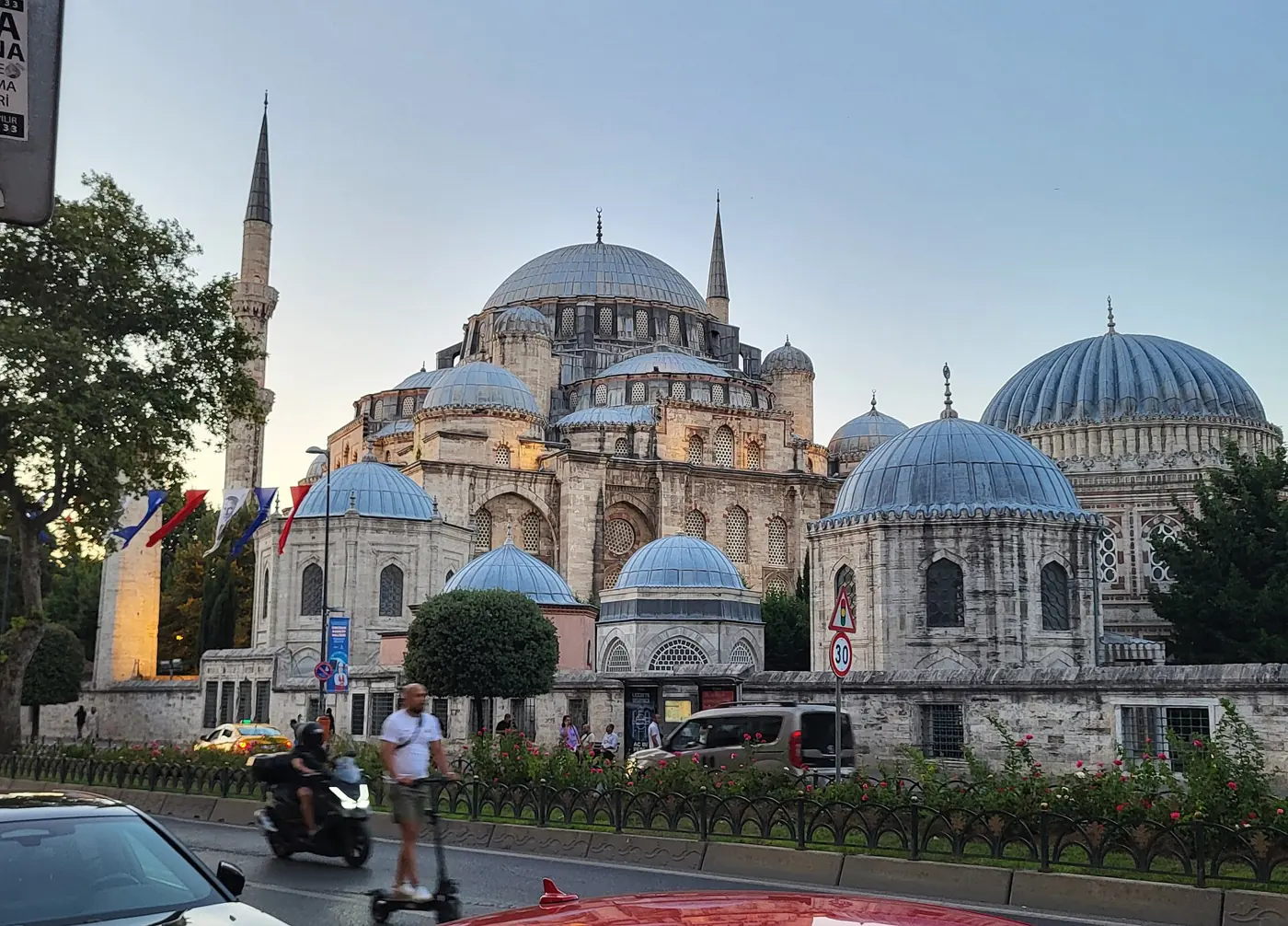
2 Şehzade Camii
Built in 1543-1548 for Prince Mehmed, the Şehzade Mosque is an early imperial work by Sinan. It shows his first large-scale experiments with a central dome.
- Built: 1543-1548
- Architect: Mimar Sinan
- Commissioned by: Suleiman the Magnificent for Prince Mehmed
Show map
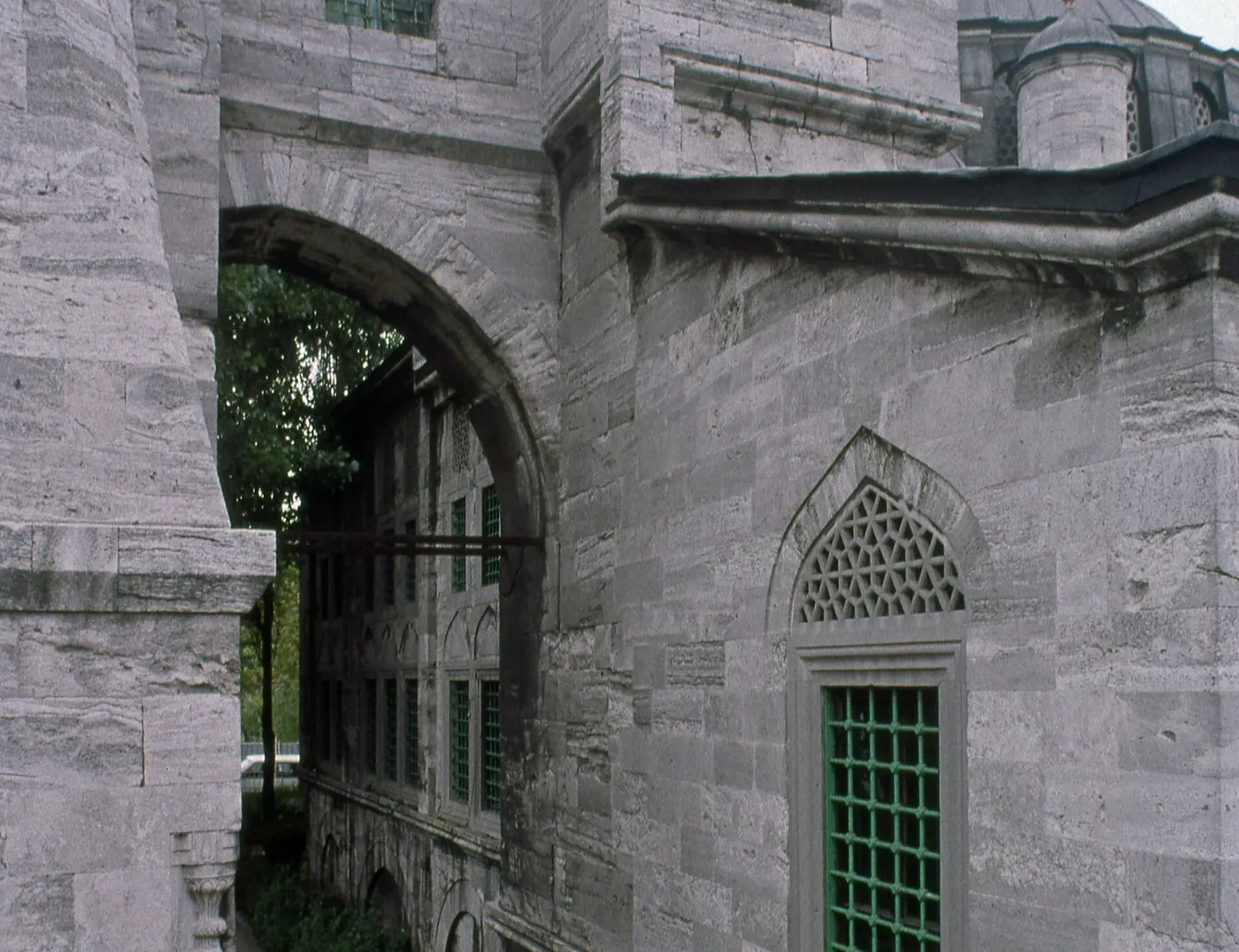
3 Sokollu Mehmet Paşa Camii
Completed in 1572, this Sinan mosque is known for İznik tiles and a piece of the Black Stone of the Kaaba. It is smaller than the imperial mosques but rich in detail.
- Built: 1572
- Architect: Mimar Sinan
- Known for: İznik tiles and a piece of the Kaaba’s Black Stone
Show map
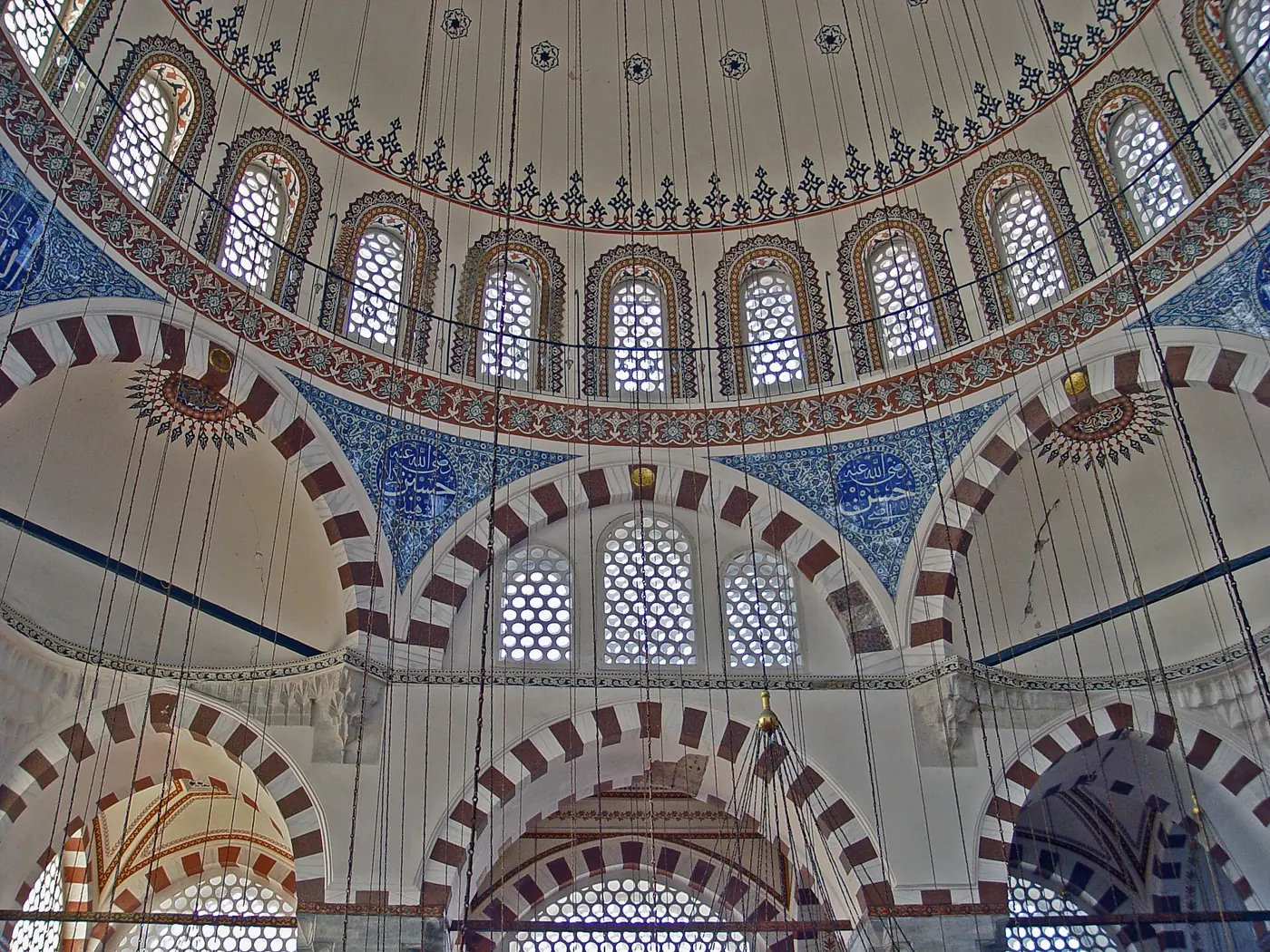
4 Rüstem Paşa Camii
Completed around 1563, this small Sinan mosque is covered in many different İznik tile designs. Its raised position near the Spice Bazaar makes it easy to miss.
- Completed: c. 1563
- Architect: Mimar Sinan
- Known for: İznik tiles
Show map
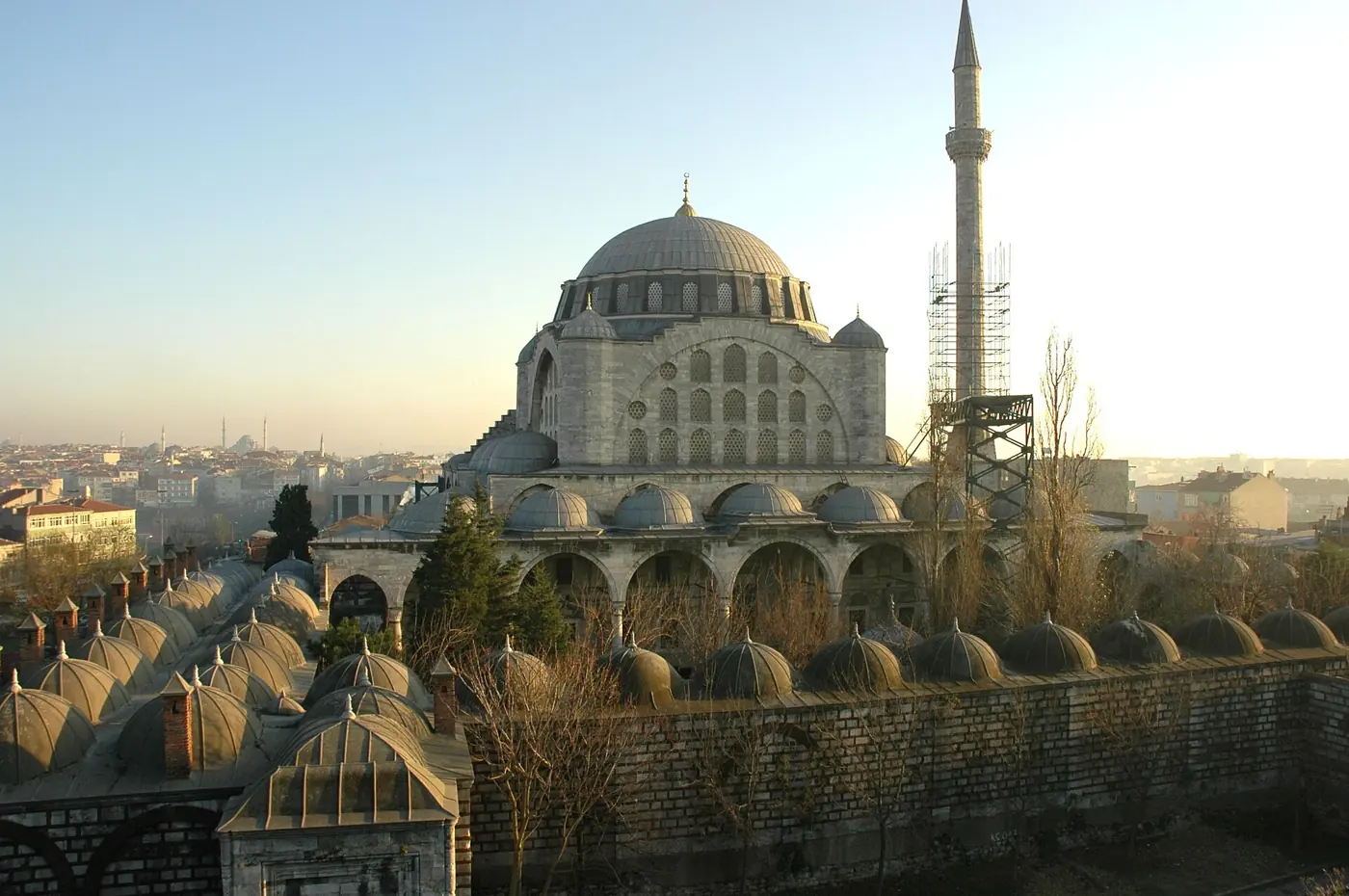
5 Mihrimah Sultan Camii
Built c. 1565-1570 near the Byzantine land walls, this mosque is known for its light-filled interior with many windows. It shows how Sinan used light as a design tool.
- Built: c. 1565-1570
- Architect: Mimar Sinan
- Known for: light-filled interior with many windows
Show map
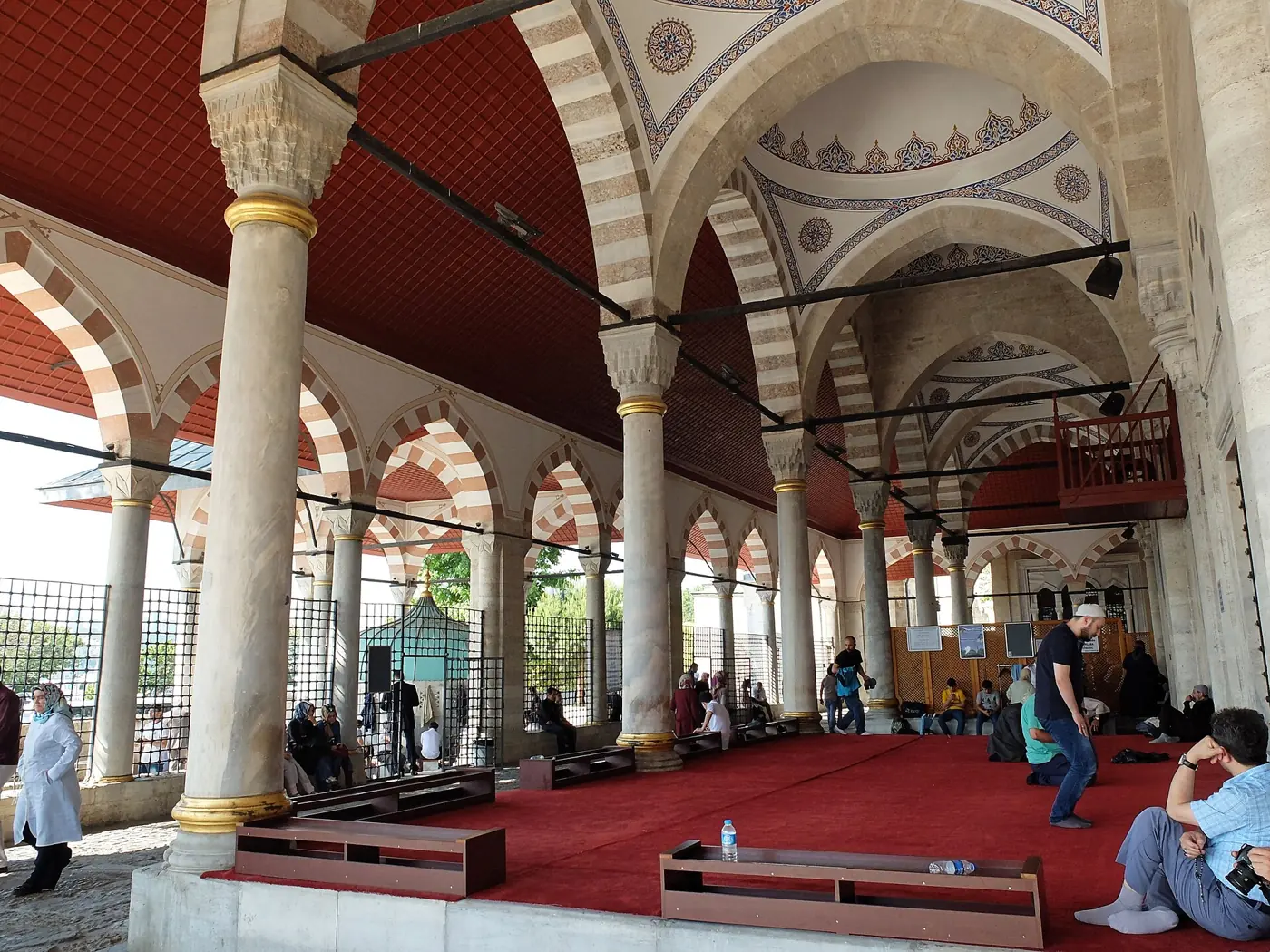
6 Mihrimah Sultan Camii (İskele Camii)
A 16th-century Sinan mosque on the Üsküdar pier square, also called the İskele Mosque. It is the best Sinan stop on the Asian side.
- Era: 16th century
- Architect: Mimar Sinan
- Location: Üsküdar pier square, Asian side
Show map
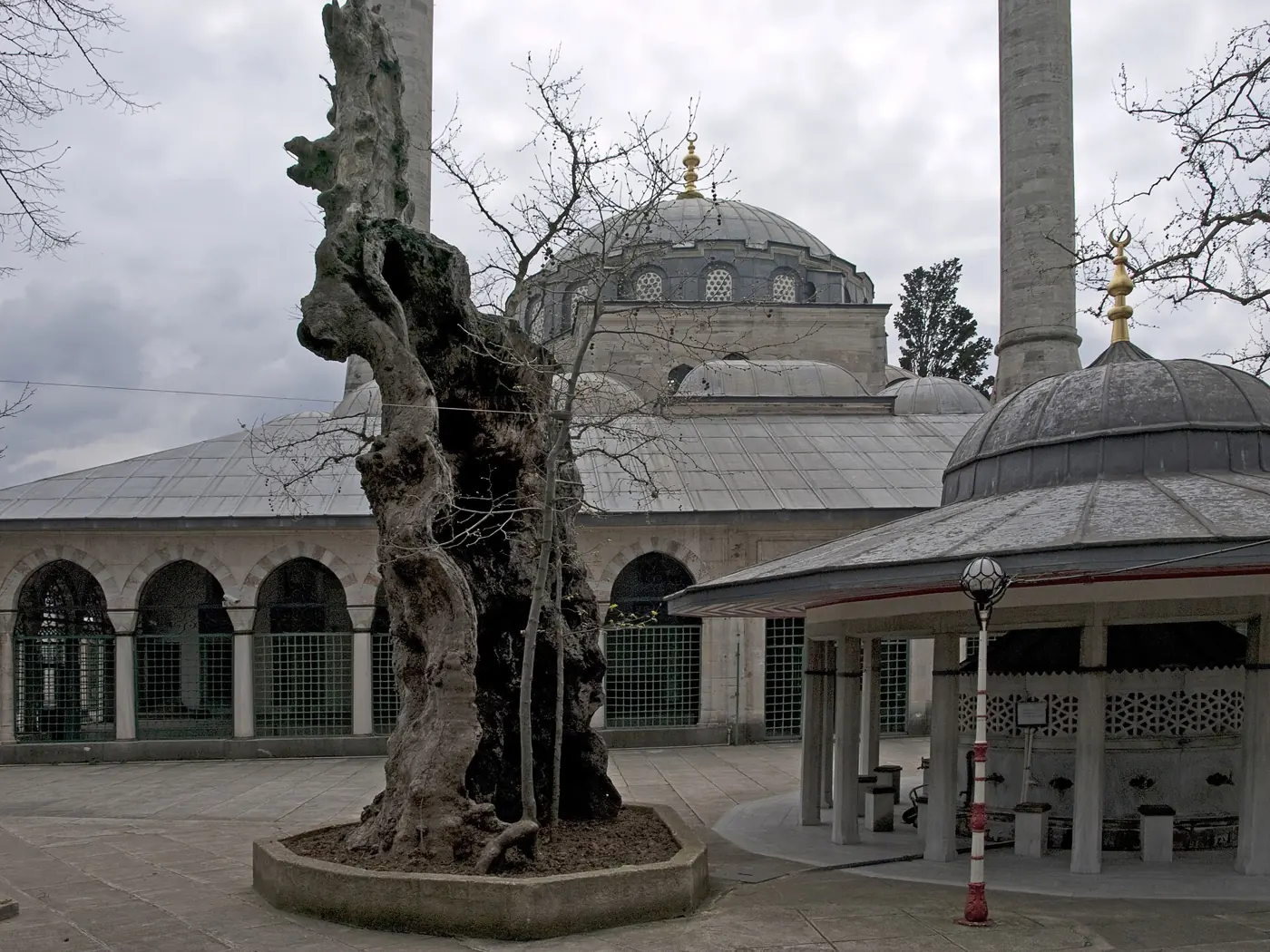
7 Atik Valide Camii
Built in 1583 for Nurbanu Sultan on a hill above Üsküdar, the Atik Valide is a late Sinan work. It belongs to a large complex, so allow time to explore.
- Built: 1583
- Architect: Mimar Sinan
- Commissioned by: Nurbanu Sultan
Show map
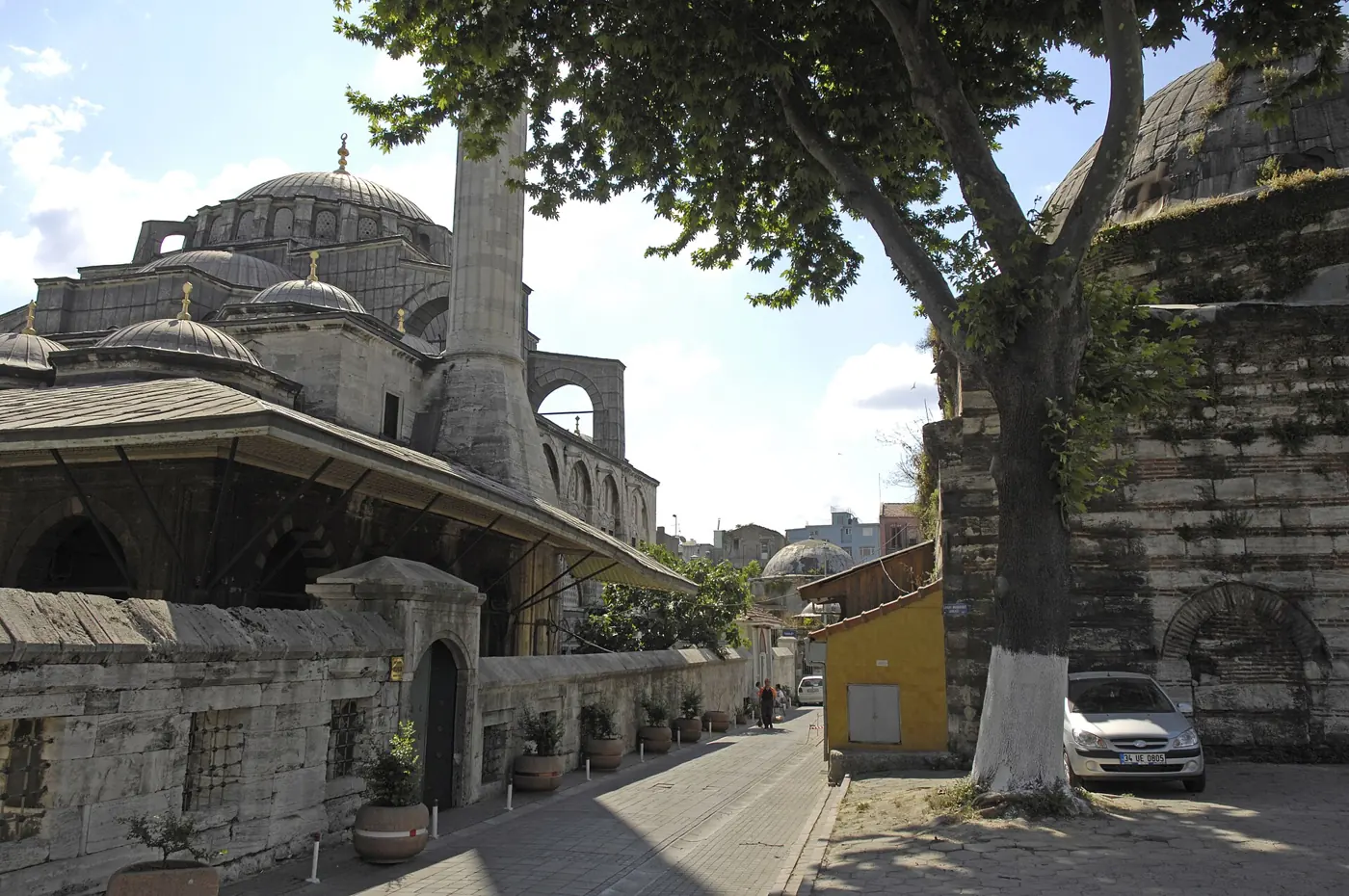
8 Kılıç Ali Paşa Camii
Built in 1578-1580 beside the sea for Grand Admiral Kılıç Ali Pasha, part of a complex with a medrese and a hamam. It shows Sinan working on a waterfront site.
- Mosque built: 1578-1580
- Complex built: 1580-1587
- Architect: Mimar Sinan
Show map
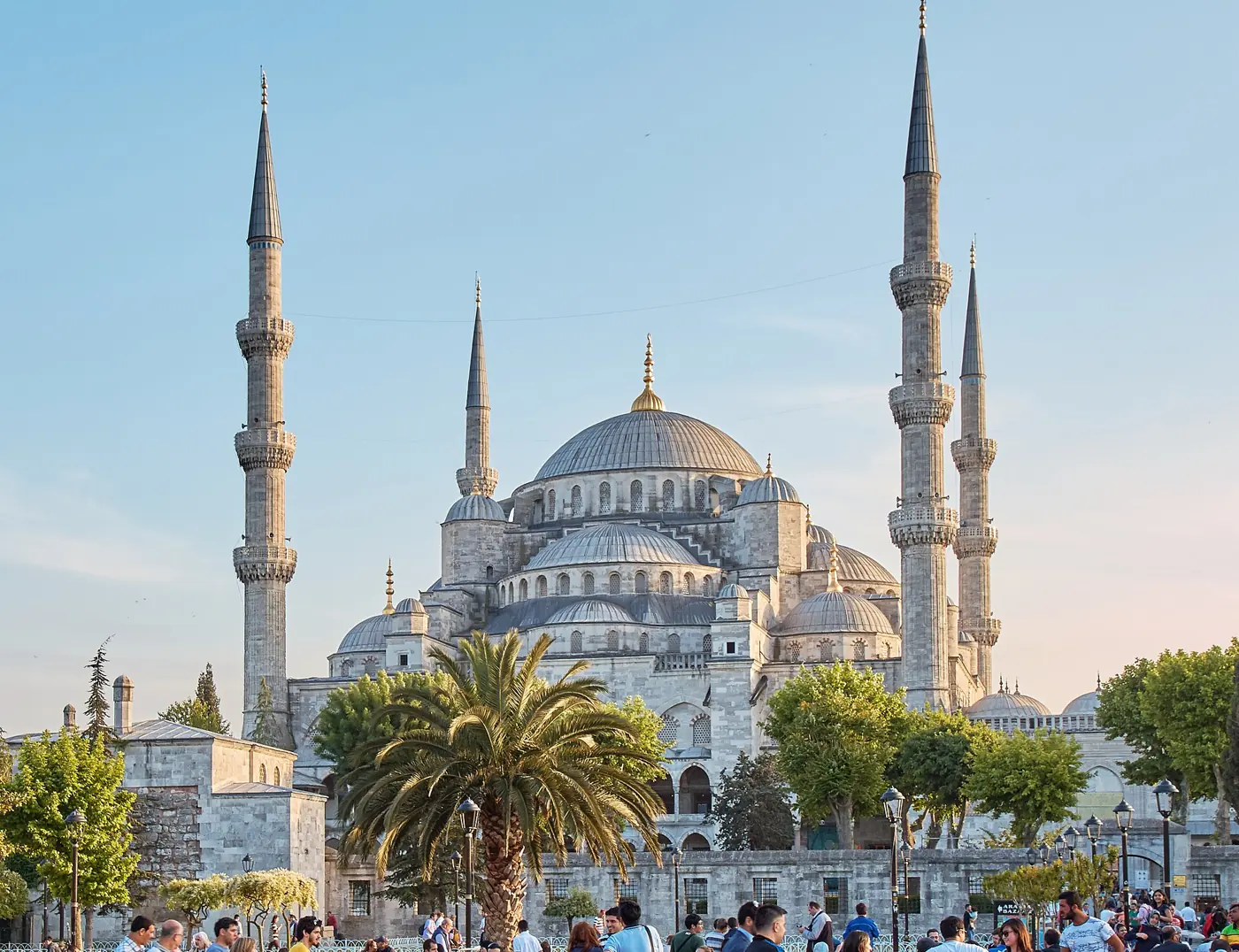
9 Sultanahmet Camii
Built in 1609-1616 by Sedefkar Mehmed Agha, the Blue Mosque closes the classical era. It is known for six minarets and blue İznik tiles.
- Built: 1609-1616
- Architect: Sedefkar Mehmed Agha
- Known for: Six minarets and blue İznik tiles
Show map
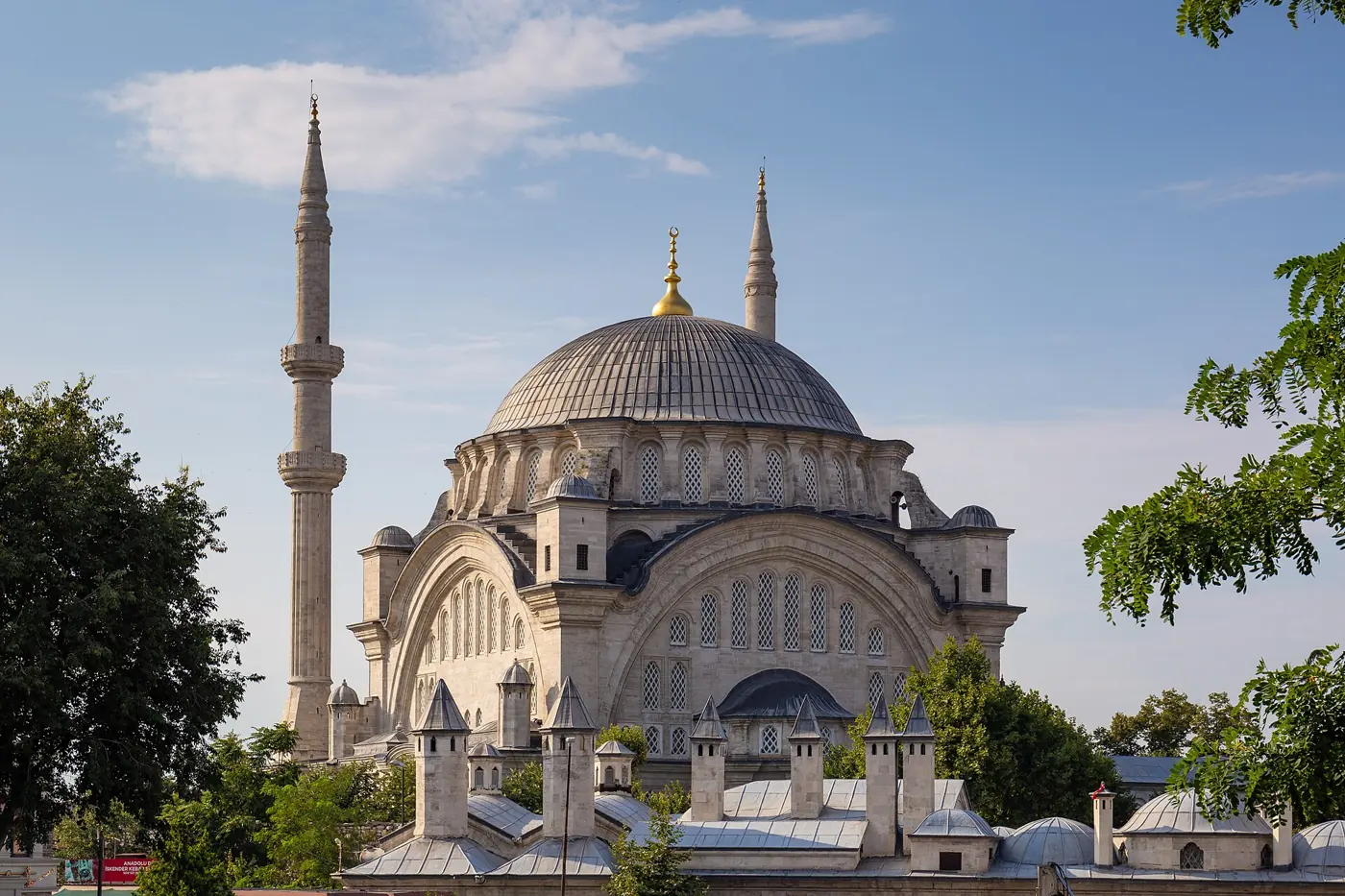
10 Nuruosmaniye Camii
Completed in 1755, this mosque shows the shift to Ottoman Baroque. Compare its curves with the earlier classical Sinan buildings.
- Completed: 1755
- Style: Ottoman Baroque
- Location: next to the Grand Bazaar
Show map
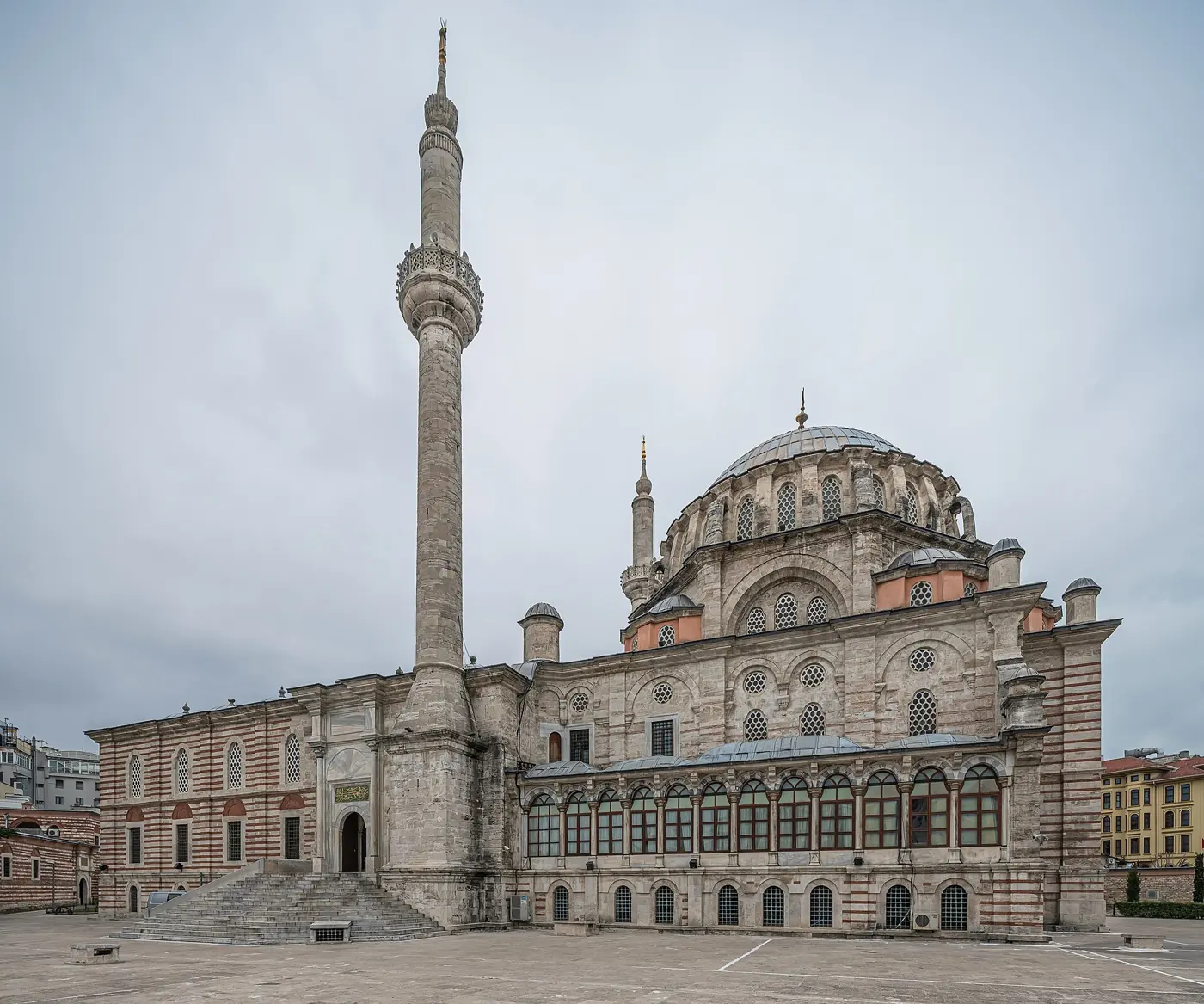
11 Laleli Camii
Built in 1760-1763 for Sultan Mustafa III in Ottoman Baroque style. It helps you see how imperial taste changed after Sinan.
- Built: 1760-1763
- Style: Ottoman Baroque
- Commissioned by: Sultan Mustafa III
Show map
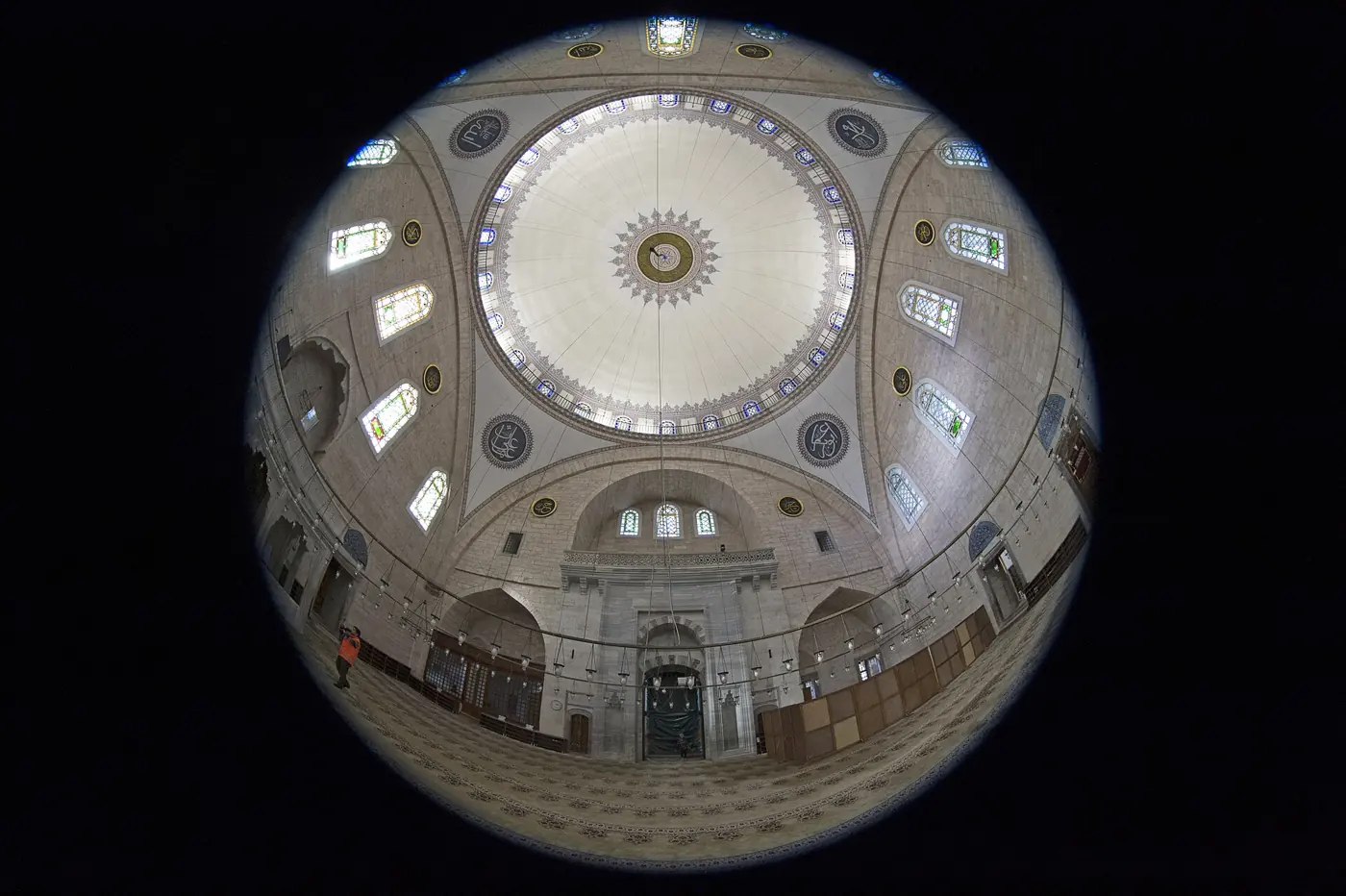
12 Yavuz Selim Camii
Completed in 1522 and overlooking the Golden Horn, this imperial mosque predates Sinan’s chief works. It gives you the earlier model that Sinan inherited.
- Completed: 1522
- Overlooks: Golden Horn
Show map
How do the mosques compare?
The table lists each mosque by district and its documented date. Notice that Sinan’s mosques cluster between 1543 and 1583, while the Baroque mosques follow in the 1750s and 1760s. In contrast, the earliest building here, Yavuz Selim, was completed in 1522.
This table lets you place each mosque in time.
| Mosque | District | Key date or feature |
|---|---|---|
| Süleymaniye Mosque | Fatih | 1550-1557 |
| Şehzade Mosque | Fatih | 1543-1548 |
| Sokollu Mehmet Pasha Mosque | Fatih | 1572 |
| Rüstem Pasha Mosque | Fatih | c. 1563 |
| Mihrimah Sultan Mosque (Edirnekapı) | Fatih | c. 1565-1570 |
| Mihrimah Sultan Mosque | Üsküdar | 16th century |
| Atik Valide Mosque | Üsküdar | 1583 |
| Kılıç Ali Pasha Mosque | Beyoğlu | 1578-1580 |
| Sultan Ahmed Mosque (Blue Mosque) | Fatih | 1609-1616 |
| Nuruosmaniye Mosque | Fatih | 1755 |
| Laleli Mosque | Fatih | 1760-1763 |
| Yavuz Selim Mosque | Fatih | 1522 |
How do you get around the Ottoman mosque route?
Group the mosques by area to avoid long transfers. The Fatih cluster (Şehzade, Süleymaniye, Rüstem Pasha) is walkable with some uphill sections; the Üsküdar cluster is a ferry or Marmaray ride away; Edirnekapı and the waterfront mosques need a bus or private car.
Follow these steps for an efficient route.
- Morning in Fatih: Şehzade Mosque, then the Süleymaniye on the Third Hill.
- Late morning: walk down to the Rüstem Pasha Mosque near the Spice Bazaar.
- Afternoon: cross to Üsküdar for the Mihrimah Sultan and Atik Valide mosques.
- Optional extra day: Sokollu, Edirnekapı and the Kılıç Ali Pasha waterfront mosque.
Here is the usual access for each cluster.
| Cluster | Mosques | Main access |
|---|---|---|
| Fatih and Süleymaniye | Şehzade, Süleymaniye, Rüstem Pasha | T1 tram, then walk |
| Üsküdar | Mihrimah Sultan, Atik Valide | Marmaray or ferry |
| Edirnekapı | Mihrimah Sultan (Edirnekapı) | Bus or taxi; check the route planner |
| Tophane | Kılıç Ali Pasha | T1 tram, Tophane stop |
What should you look for in Sinan’s mosques?
Look for four things: the central dome and its supporting half-domes, the placement of windows, the tile panels in the smaller mosques, and the way the mosque sits in its landscape. These details separate one building from another. Furthermore, the courtyard often shows more of the plan than the interior.
Take a notebook or use your phone to record the differences. Short notes help when you compare the Şehzade with the Süleymaniye later.
Keep this checklist on your phone.
- Dome shape and how many half-domes support it.
- Window rows and how light falls at your visit time.
- Tile colours and patterns in the smaller mosques.
- Courtyard layout and fountain position.
- Minaret count and placement.
What does a sample architecture day look like?
A good plan for architecture lovers keeps the climb at the start of the day and ends near the water. The table gives a day that covers four Sinan works and one Baroque contrast, while leaving time for a meal.
Use this day plan and shift stops around prayer times.
| Time | Stop | Focus |
|---|---|---|
| Morning | Şehzade Mosque | Early imperial design |
| Late morning | Süleymaniye Mosque | Classical peak and Golden Horn view |
| Midday | Rüstem Pasha Mosque | İznik tile panels |
| Afternoon | Nuruosmaniye or Laleli | Baroque contrast |
| Evening | Mihrimah Sultan, Üsküdar | Waterfront setting |
How should you plan timing and etiquette?
Plan around prayer times and dress modestly, with shoulders and knees covered and hair covered for women. Allow about forty-five minutes for large mosques. Moreover, check current visiting arrangements on Google Maps, since some mosques restrict access during services or restoration.
Spring and autumn offer the best walking weather for the hilly Fatih section. In contrast, summer afternoons are hot, so start early and keep the Üsküdar waterfront for the cooler evening.
Why did Sinan shape Istanbul’s skyline so strongly?
Sinan held the post of chief imperial architect for roughly five decades, so a large share of the capital’s finest mosques passed through his office. He worked with the same set of problems repeatedly: how to raise a wide dome, how to bring in light and how to fit a complex into a hillside or a waterfront. His answers changed over time, which is why several buildings reward comparison.
Many of his projects were complexes rather than single mosques. A typical complex included a medrese, a kitchen for the poor, a school or a hamam, and the Kılıç Ali Pasha complex on this list shows that pattern clearly. In contrast to a lone monument, a complex shaped the daily life of a whole district.
After Sinan, imperial taste moved toward Baroque curves and richer ornament. Seeing the Nuruosmaniye and Laleli mosques after the classical works makes the change visible. Therefore a good architecture tour ends with a contrast stop rather than another dome from the same century.
Architecture visits also benefit from patience. Stand in the courtyard first, then enter and look up, because the dome reads differently from below. Furthermore, return to the courtyard at the end of the visit to see how the exterior echoes the interior. This simple routine makes each mosque easier to remember and compare.
Photographers should note that interior light changes through the day, therefore plan the windowed mosques such as Mihrimah Sultan in Edirnekapı for bright hours. Keep a notebook entry for each stop, listing the date, dome type and tile colour.
Frequently asked questions
Who was Mimar Sinan?
Mimar Sinan was the chief Ottoman imperial architect in the 16th century. He designed many mosques in Istanbul, including the Süleymaniye.
Which Sinan mosque is the best to start with?
Start with the Süleymaniye Mosque, built in 1550-1557, because it shows his mature style at imperial scale.
Is the Blue Mosque a Sinan building?
No. It was built in 1609-1616 by Sedefkar Mehmed Agha, but it follows the classical tradition Sinan established.
Which mosque has the best tiles?
The Rüstem Pasha Mosque is known for many different İznik tile designs. The Sokollu Mehmet Pasha Mosque also has fine tiles.
Can I visit all of them in one day?
A day covers four or five if you group them by district. The rest need a second half-day.
Do I need to pay to enter?
Mosque visits are generally free, but check each page or Google Maps for current arrangements.
What is the difference between classical and Baroque mosques?
Classical mosques follow Sinan’s domed plans, while Ottoman Baroque mosques such as the Nuruosmaniye add curves and decorative detail.
Can TurkGT provide an architecture guide?
Yes. A licensed guide can explain each building and plan the route; ask by WhatsApp or the form.
Plan this with TurkGT
A licensed guide can explain Sinan’s work on site, and a private car with driver links the Fatih, Tophane and Üsküdar stops without long waits. Tell us your dates and interests by WhatsApp or the inquiry form and we will shape the route.
Request a booking
Sources
- Süleymaniye Mosque
- Şehzade Mosque
- Sokollu Mehmet Pasha Mosque
- Rüstem Pasha Mosque
- Mihrimah Sultan Mosque (Edirnekapı)
- Mihrimah Sultan Mosque
- Atik Valide Mosque
- Kılıç Ali Pasha Mosque
- Sultan Ahmed Mosque (Blue Mosque)
- Nuruosmaniye Mosque
- Laleli Mosque
- Yavuz Selim Mosque
Last reviewed: 2026-11-18.