
Trabzon is a province on Türkiye’s Eastern Black Sea coast, built around a historic city the ancient Greeks called Trapezus. Visit for Sümela Monastery, Atatürk Köşkü, highland pastures and Uzungöl. Flights run hourly from Istanbul, according to Wikivoyage.
Key facts
- Location: Eastern Black Sea coast
- From Istanbul: Hourly flights (Wikivoyage); bus about 18 hours; check current schedule
- Uzungöl from the city: 99 km
- Best season: Summer for highlands; bring rain gear year-round
- Typical visit time: 1 day for the city; 2-3 days with Sümela and Uzungöl
- Komnenos state: Founded 1204; ended 26 October 1461
- Local food: Hamsi, kuymak
- UNESCO: No World Heritage property in this entry’s sources
- Entrance: See official page
What is Trabzon and why visit it?
Trabzon is a province on Türkiye’s Eastern Black Sea coast, built around a historic city the ancient Greeks called Trapezus. Visit for Sümela Monastery, Atatürk Köşkü, highland pastures and the lake of Uzungöl. GoTürkiye describes it as a centre of culture and natural richness in the Eastern Black Sea Region.
The province mixes city, coast and mountains. Moreover, its food and folk culture are strong, with hamsi (anchovy), kuymak, the horon dance and the kemençe. In contrast to the dry interior, the Black Sea is green and wet, so plan for rain.
Therefore Trabzon suits nature, culture and food travellers. Flights make it easy to reach from Istanbul.
The main reasons to visit are these.
- Sümela Monastery: a monastery hewn into a cliff, per Wikivoyage.
- Uzungöl: a lake in the Çaykara district, 99 km from the city.
- Atatürk Köşkü: a historic pavilion listed by the Culture Portal.
- Highland pastures (yayla): Hıdırnebi, Lişer and others.
- The old city and mosques: Tavanlı and Çarşı mosques.
- Local food: hamsi, kuymak and tea-region culture.
What is the history of Trabzon?
The first written mention of Trapezos comes from Xenophon’s Anabasis, per the Trabzon Governorship. Trabzon came under Roman rule in 66 BC, and the Byzantine emperor Justinian (527-564) had the city walls restored. After the Latins took Constantinople in 1204, the Komnenos family founded an independent state at Trabzon. It ended on 26 October 1461 with Mehmed II’s conquest.
The city sat at a key point of the Silk Road link between Europe and Asia, according to the Culture Portal. As a result, the Milesians, Persians, Romans, Byzantines and the Komnenos all ruled it.
The name also reflects the landscape. The oldest known remains stand on a high, table-shaped area between the Tabakhane and Zağnos streams. The Culture Portal says the name comes from the table-like form of the old centre.
The table summarises the key dates.
| Date | Event | Source note |
|---|---|---|
| Antiquity | First written mention as Trapezos in Xenophon’s Anabasis | Trabzon Governorship |
| 66 BC | City enters Roman rule | Trabzon Governorship |
| 527-564 | Justinian restores the city walls | Trabzon Governorship |
| 1204 | Komnenos found an independent state after the Fourth Crusade | Trabzon Governorship |
| 26 October 1461 | Komnenos principality ends with Mehmed II’s conquest | Culture Portal |
What should you see in Trabzon? (highlights at a glance)
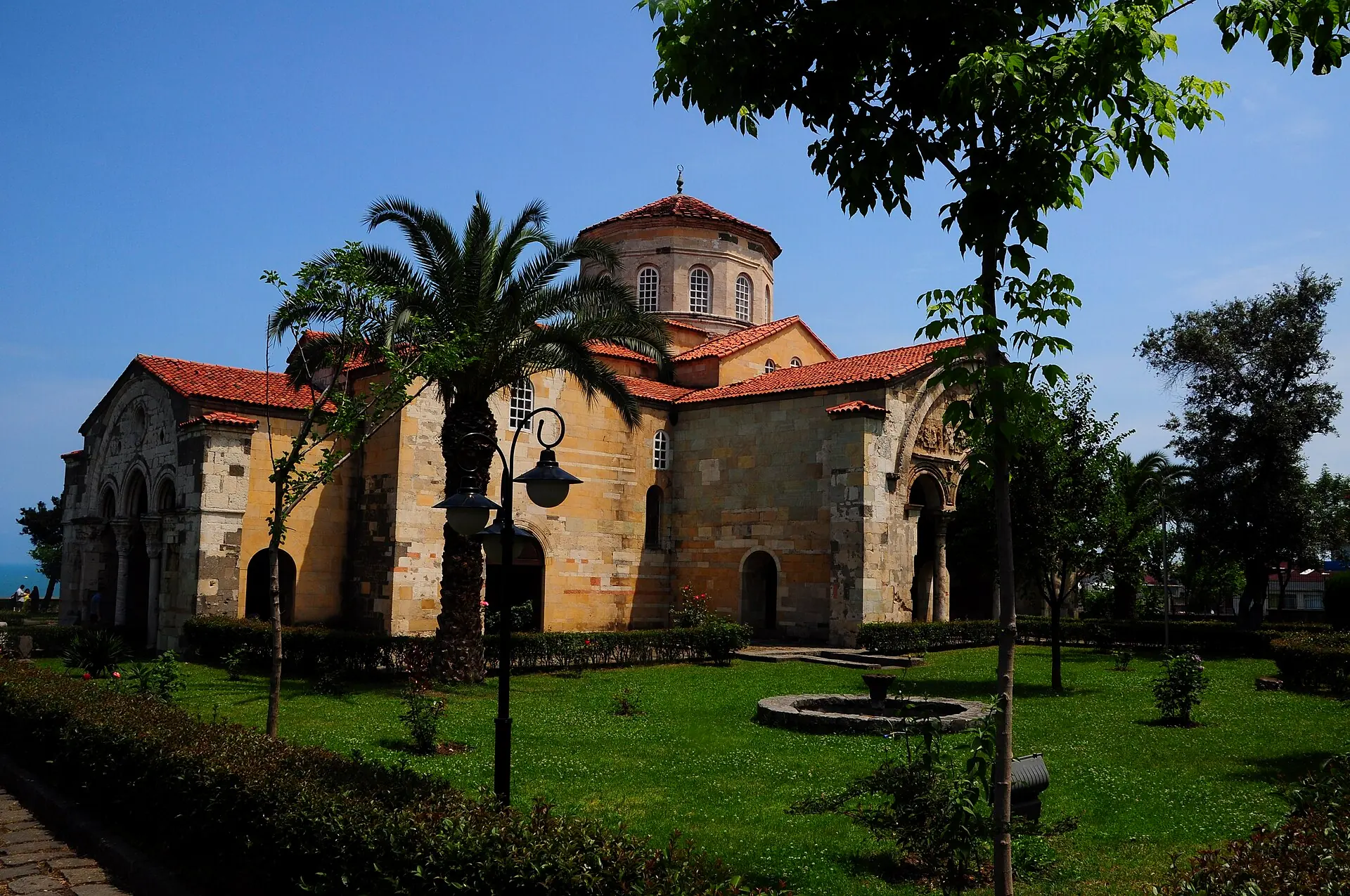
Combine the city’s historic sights with a mountain day. In the city, see the Tavanlı and Çarşı mosques and Atatürk Köşkü. Wikivoyage calls the Byzantine church of Hagia Sophia the city’s top sight, with frescoes, arches and friezes. In the mountains, visit Sümela Monastery and Uzungöl.
Use this list as your highlights.
- Hagia Sophia of Trabzon: a Byzantine church built in the 1250s, per Wikivoyage.
- Atatürk Köşkü: pavilion listed by the Culture Portal.
- Sümela Monastery: reached by a minibus shuttle from the parking lot, per Wikivoyage.
- Uzungöl: means long lake, formed when a landslide blocked the valley.
- Hıdırnebi Plateau, Lişer and other yayla.
- Boztepe: terraces for sunset, per Wikivoyage.
The table compares the main stops.
| Stop | Type | Typical time | Best for |
|---|---|---|---|
| Old city and mosques | Historic centre | 2-3 hours | History |
| Hagia Sophia | Byzantine church | 1 hour | Frescoes |
| Atatürk Köşkü | Historic pavilion | 1 hour | Gardens and history |
| Sümela Monastery | Cliff monastery | Half day with transfer | Landscape and heritage |
| Uzungöl | Lake | Half to full day | Mountain views |
How do you get to Trabzon and get around?
Most visitors fly. Wikivoyage says domestic connections are excellent, with hourly flights from Istanbul (IST and SAW). Buses from Istanbul take 18 hours. Therefore flying saves a day. Check current schedules.
A Havaş shuttle bus runs downtown, or you can walk to the coastal highway for a dolmuş, according to Wikivoyage. For the sights outside the city, use a tour or private transfer, because roads are winding. Our guide page on Trabzon airport transfer options covers this.
The table lists typical routes with Wikivoyage figures.
| Route | Mode | Typical duration | Note |
|---|---|---|---|
| Istanbul to Trabzon | Flight | Check current schedule | Hourly from IST and SAW (Wikivoyage) |
| Istanbul to Trabzon | Bus | About 18 hours (Wikivoyage) | Several a day |
| Airport to city | Shuttle, dolmuş or taxi | Check current options | Havaş shuttle runs downtown |
| City to Uzungöl | Road | 99 km (Culture Portal) | Via Çaykara; check road conditions |
| Sümela parking to monastery | Minibus shuttle | Short ride | Per Wikivoyage; pay for both |
When is the best time to visit Trabzon?
Summer suits the highlands and Uzungöl. Autumn is the wettest time of year, according to Wikivoyage. Therefore bring rain gear in any season, and check the forecast before mountain trips. Highland festivals take place yearly, such as Akçaabat’s Hıdırnebi festival and Maçka’s Lişer festival.
The table gives a seasonal overview.
| Season | Weather (general) | Crowds | Notes |
|---|---|---|---|
| Spring | Mild and showery | Light to moderate | Green landscapes |
| Summer | Warmer; best for the highlands | Busy | Yayla festivals |
| Autumn | Wettest time (Wikivoyage) | Light | Pack waterproofs |
| Winter | Cool and damp; snow in the high areas | Light | Check road conditions |
How long should you stay in Trabzon?
One day covers the city. Two days add Sümela. Three days add Uzungöl and a yayla. Mountain roads are slow, so leave buffer time.
These plans show typical choices.
| Time | Suggested plan | Who it suits |
|---|---|---|
| Half day | Old city, Hagia Sophia, Boztepe sunset | Short stopovers |
| 1 day | City sights plus Atatürk Köşkü | First-time visitors |
| 2-3 days | Add Sümela, Uzungöl and a yayla | Nature and culture travellers |
What practical tips help in Trabzon?
Pack layers and rain gear. For tickets and fees, see the official page of each site, because fees change. Mountain weather shifts quickly, so check conditions before driving.
These tips cover most visits.
- Dress code: modest dress at mosques; sturdy shoes for Sümela.
- Tickets: see official page (muze.gov.tr) for current fees.
- Accessibility: Sümela involves steps and slopes; ask ahead.
- Photography: fog is common; check conditions.
- Safety: drive carefully on mountain roads.
- Etiquette: ask before photographing locals.
Where should you stay and eat in Trabzon?
Stay in the city centre for transport and food, or near Uzungöl for lake views. Eat hamsi, which Wikivoyage describes as locally fished anchovies, typically fried and eaten whole. Try kuymak, made from butter, cheese and corn flour.
Neighbourhood-level notes:
- City centre: walkable, near mosques and restaurants.
- Boztepe: hilltop views.
- Uzungöl: lakeside stays for mountain trips.
What are the nearby places and day trips from Trabzon?
Main day trips are Sümela, Uzungöl, Hıdırnebi, Sera Lake and Çal Cave. Plan one mountain trip per day.
Related pages:
- Sümela Monastery
- Uzungöl Lake
- Hıdırnebi Plateau
- Sera Lake
- Çal Cave
- Trabzon airport transfer options
Plan this with TurkGT
TurkGT is an Istanbul-based travel company that offers guided trips, private transfers, and guide or interpreter services. Send us your dates, and we will confirm options by WhatsApp. Prices follow only after we confirm availability.
Frequently asked questions
Why is Trabzon famous?
It is known for Sümela Monastery, Uzungöl, Atatürk Köşkü, highland pastures and hamsi cuisine.
When did the Ottomans take Trabzon?
Mehmed II conquered Trabzon on 26 October 1461, ending the Komnenos principality.
How far is Uzungöl from Trabzon?
The Culture Portal says Uzungöl is 99 km from Trabzon and 19 km from Çaykara.
How long is the flight from Istanbul?
Check current schedules. Wikivoyage says flights run hourly from IST and SAW.
Is there a bus from Istanbul?
Yes, Wikivoyage says buses take 18 hours.
What does Uzungöl mean?
Wikivoyage says it means long lake, formed when a landslide blocked the valley.
What is the rainiest season?
Wikivoyage says autumn is the wettest time of year.
How much is entry to Sümela?
See the official page for current fees. We do not list prices.
Related on TurkGT
- Places and guides in Trabzon:
- Uzungöl
- Sümela / Maçka
- Uzungöl Lake
- Sümela Monastery
- Atatürk Pavilion (Atatürk Köşkü)
- Hıdırnebi Plateau
- Sera Lake
- Çal Cave
- Trabzon Airport Transfer Options
Sources
- Trabzon – GoTürkiye
- T.C. Trabzon Valiliği – Tarihi Geçmişi
- Trabzon – Türkiye Kültür Portalı (Ministry of Culture and Tourism)
- Uzungöl – Türkiye Kültür Portalı
- T.C. Trabzon Valiliği – Yaylalar, göller, mağaralar
- Trabzon – Wikivoyage
Last reviewed: 2026-11-17.