
A traditional Turkish bath in Istanbul is a heated marble hall where you sweat, get scrubbed with a kese mitt and receive a foam wash. This guide compares seven historic hammams from our registry, explains each step of the ritual, and shows how to choose one that suits your plans and comfort level.
Key facts
- Typical ritual: Warm room, scrub with a kese mitt, foam wash, rest
- Hammams in this guide: 7, all with photos and map buttons
- Oldest in this guide: Galatasaray Hamamı, founded 1481
- Sinan-built options: Çemberlitaş, Süleymaniye, Kılıç Ali Paşa, Ayasofya Hürrem Sultan
- Closest to Hagia Sophia: Ayasofya Hürrem Sultan and Cağaloğlu
- Prices and packages: Not listed here; check each hammam’s page
- What to bring: Swimwear or disposable underwear if offered, flip-flops, hair tie
What is a traditional Turkish bath, and what happens inside?
A hammam is a public bathhouse built around a domed hot room. You undress in a changing cubicle, wrap a cotton wrap called a peştemal around you, and move into a warm marble hall. An attendant scrubs your skin, rinses you and finishes with a foam wash. The whole visit usually fills one to two hours.
The ritual follows a fixed order. First you sit in the warm room and let the heat open your pores. Then you lie on the central marble platform, known as the göbek taşı. Next the attendant scrubs you with a coarse kese mitt, and afterwards covers you in soap foam. Finally you rinse, wrap up and rest with tea.
Moreover, many hammams in Istanbul sit in Ottoman buildings that are historic monuments in their own right. Therefore a visit works as both a spa session and a short lesson in architecture. Domes with small star-shaped skylights, carved basins and marble floors are typical features.
In contrast to a modern spa, a hammam keeps the experience simple. There are no machines and few extras. However, most hammams now sell packages that add oil massage or a face mask, so read the options before you pay.
Typical stages of a visit:
- Changing room: undress, take a wrap and a towel, store valuables in a locker or at reception.
- Warm room: sit and sweat for ten to twenty minutes.
- Göbek taşı: lie on the heated marble platform.
- Kese scrub: the attendant removes dead skin with a rough mitt.
- Foam wash: soap bubbles and a rinse with warm water.
- Cooling room: rest, drink tea or water, dress slowly.
The table lists each stage of the ritual and what to expect.
| Stage | What happens | Approx. feel |
|---|---|---|
| Changing room | You undress and take a wrap | Quiet, private |
| Warm room | You sit and sweat | Gentle heat |
| Göbek taşı | You lie on the marble platform | Warmest spot |
| Kese scrub | Attendant scrubs dead skin | Firm, brisk |
| Foam wash | Soap bubbles and a rinse | Soothing |
| Cooling room | Tea and rest | Relaxed |
How did we choose these hammams?
We selected hammams from our own Istanbul registry using three checks: the building’s age and history, the location relative to the main sights, and the details on each hammam’s official website. We do not accept payment for placement. A hammam never appears here because it asked to.
Ratings and opening hours change often, and mixed or segregated sessions can vary by day. Therefore we send you to each hammam’s page and to Google Maps through the button on every card. Check there for the current schedule, packages and any rules about men and women before you travel.
We also avoided quoting prices. Packages differ by season, by service level and by whether you book online. A published figure would age quickly, so it is safer to ask the hammam directly.
Which are the best historic hammams in Istanbul?
The seven hammams below cover the old city, Beyoğlu and the Tophane waterfront. Four were built by the great architect Mimar Sinan in the sixteenth century. Others are older still. All are described only from facts in our registry, so check each official site for sessions and packages.
Choose by location first. If you plan a morning in Sultanahmet, a hammam beside Hagia Sophia saves transport time. If you stay in Beyoğlu, the Galatasaray and Çukurcuma bathhouses are closer to your hotel. Therefore, match the hammam to the district of your day.
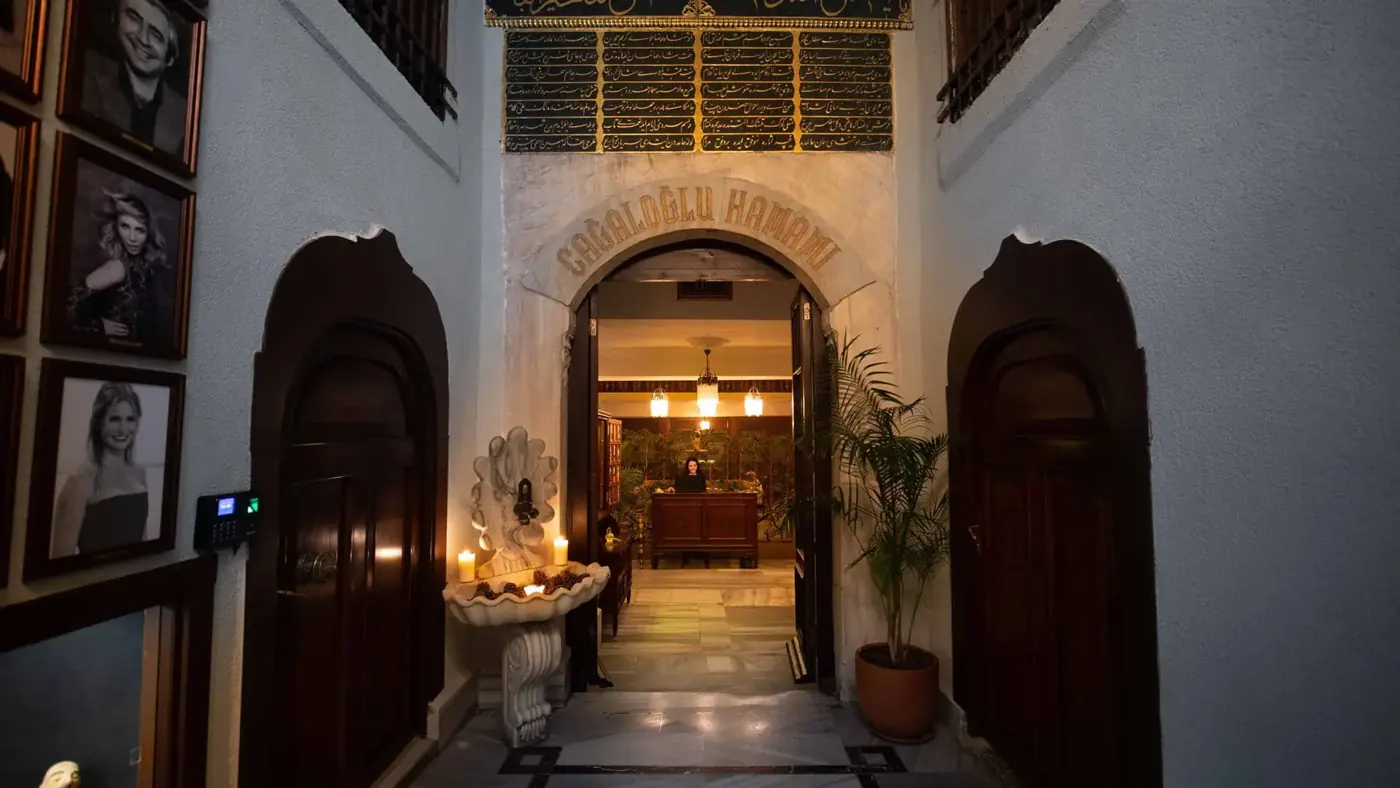
1 Cağaloğlu Hamamı
Cağaloğlu Hamamı was built in 1741 and is one of the last great Ottoman bathhouses in the old city. It sits near Hagia Sophia and is described as tourist-friendly. A marble hot room is its main feature, which makes it a good first hammam for visitors to Sultanahmet.
- Built: 1741
- Area: Cağaloğlu, near Sultanahmet
- Style: Ottoman bath with marble hot room
Show map
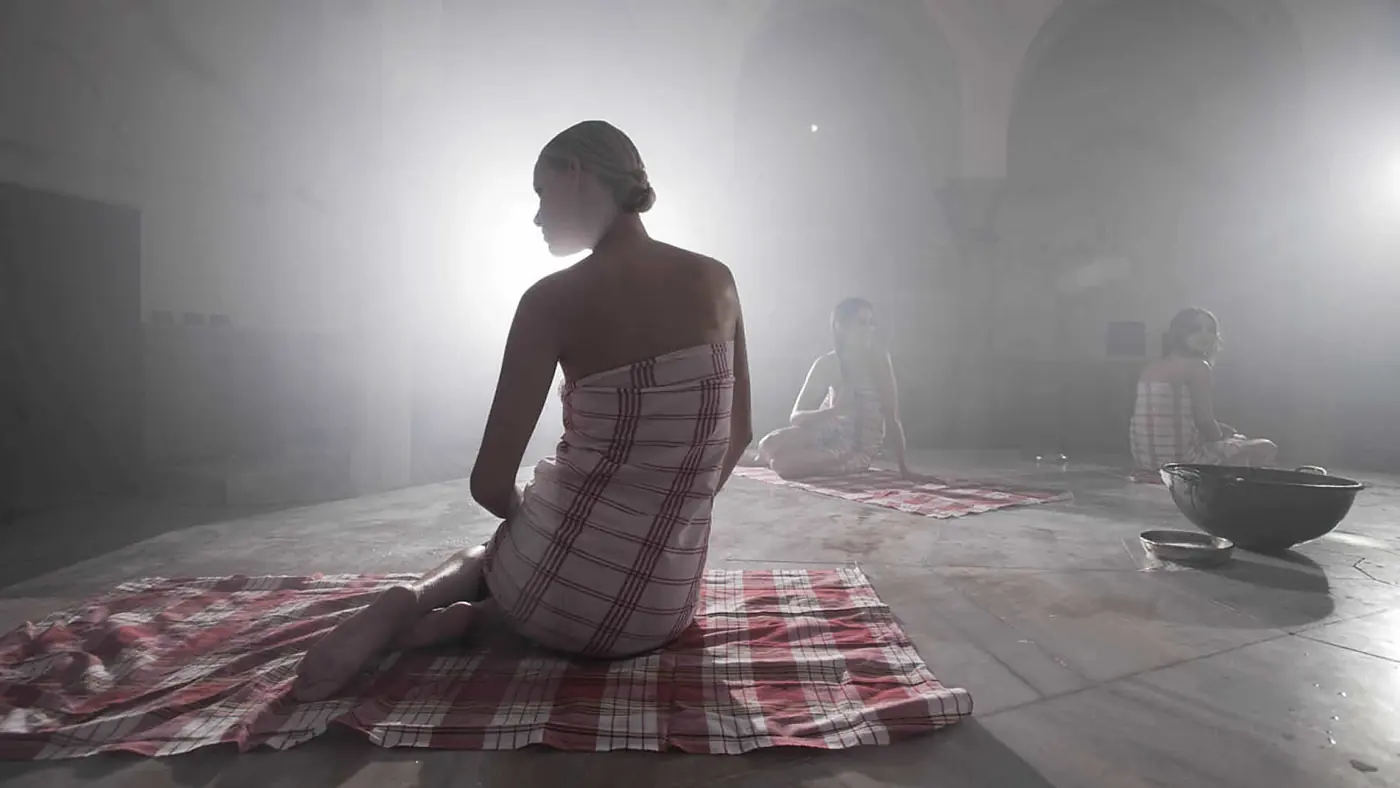
2 Çemberlitaş Hamamı
Çemberlitaş Hamamı was commissioned by Nurbanu Sultan in 1584 and is attributed to Sinan. It stands on Divanyolu, the old city’s main avenue, so it is easy to reach by tram. It suits readers who want a Sinan building without leaving the tram line.
- Built: 1584
- Architect: Attributed to Mimar Sinan
- Area: Divanyolu, Çemberlitaş
Show map
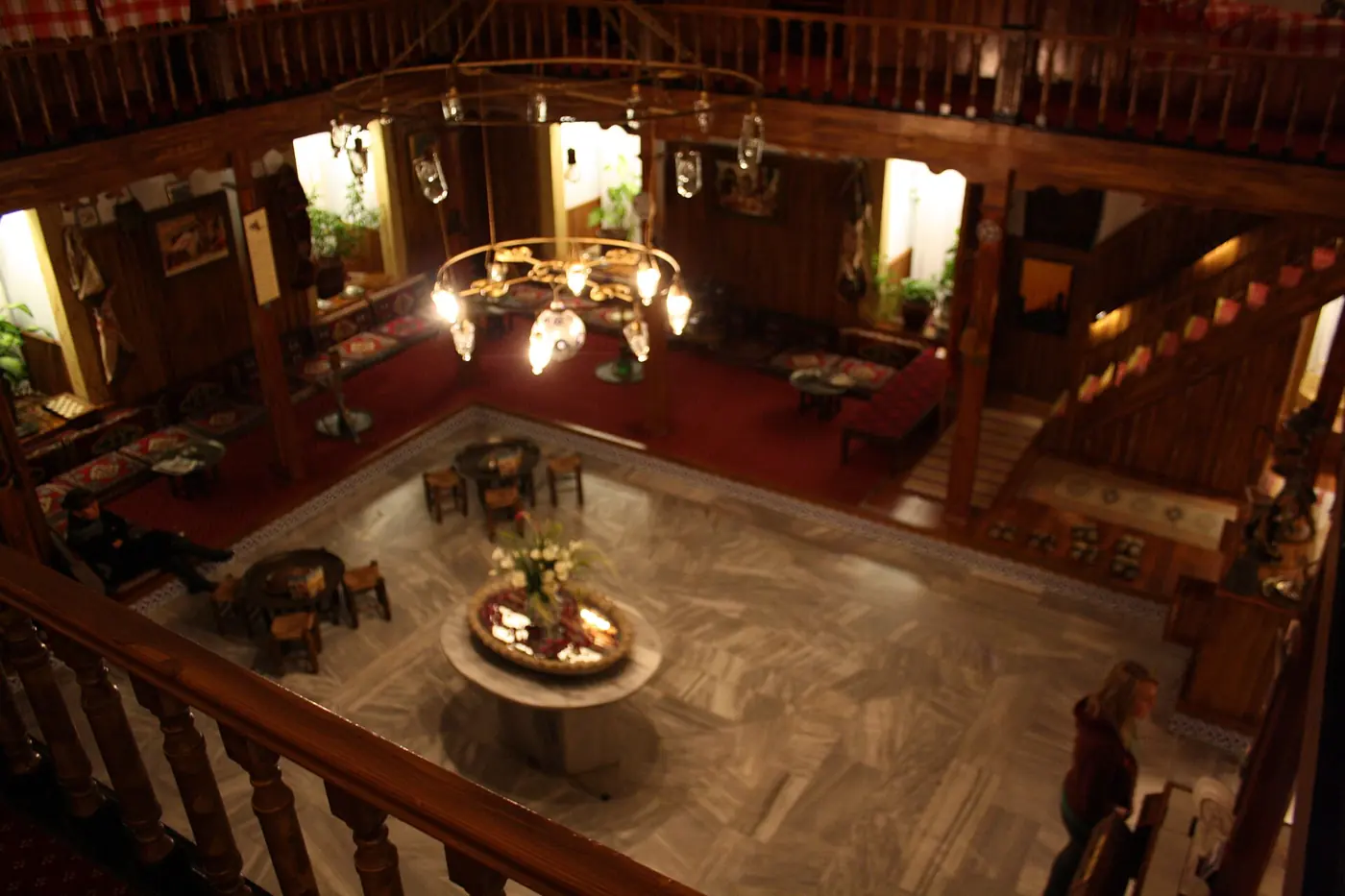
3 Süleymaniye Hamamı
Süleymaniye Hamamı is the bathhouse of the Süleymaniye complex and was built by Sinan in the 1550s. It works as a hammam again today. Pair it with a visit to the mosque beside it for a morning on one of Istanbul’s hills.
- Built: 1550s, part of Süleymaniye complex
- Architect: Mimar Sinan
- Area: Beside Süleymaniye Mosque
Show map
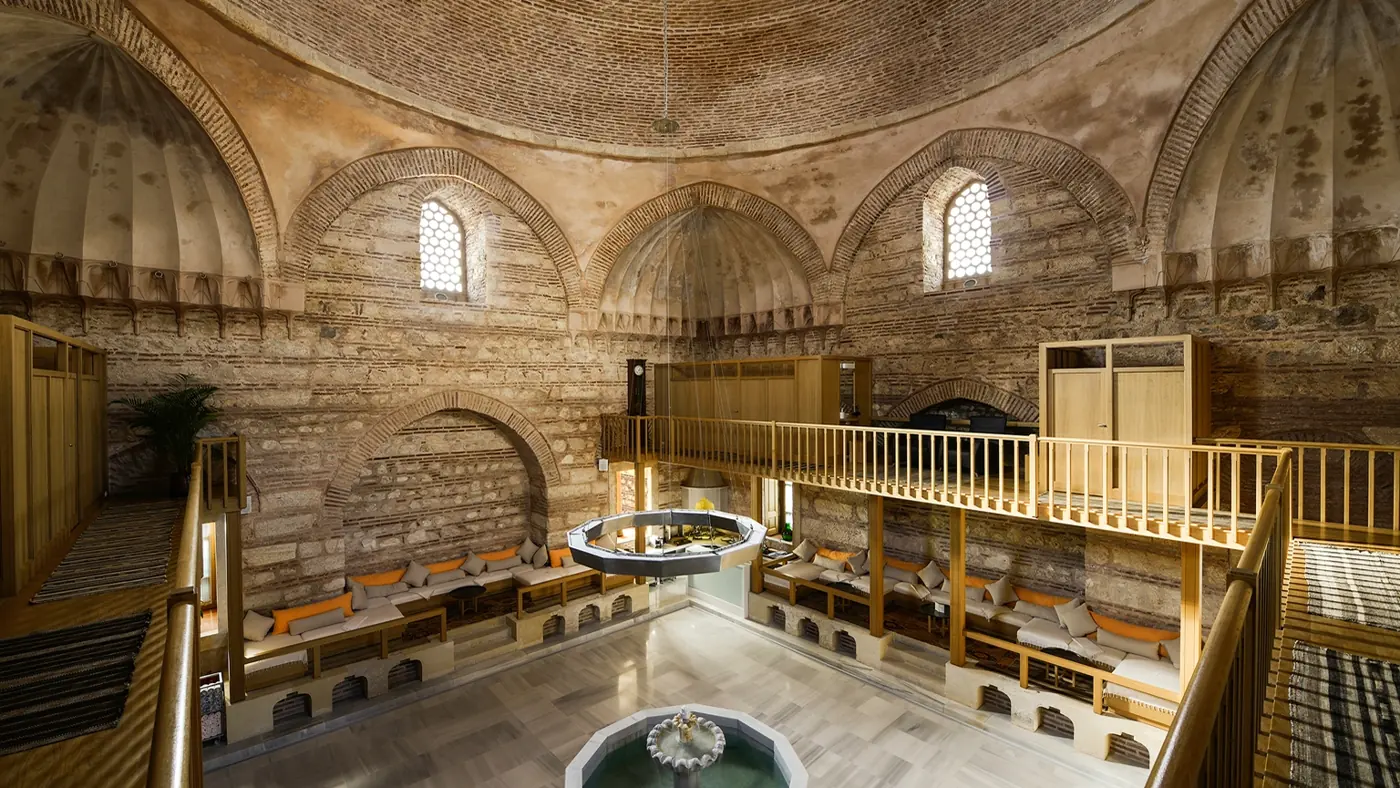
4 Kılıç Ali Paşa Hamamı
Kılıç Ali Paşa Hamamı is a sixteenth-century Sinan bathhouse in Tophane with a large domed hot room. It has been restored and operates as a hammam. It is a good choice if you combine the visit with Karaköy and the Bosphorus waterfront.
- Built: c. 1580
- Architect: Mimar Sinan
- Area: Tophane, next to Nusretiye Mosque
Show map
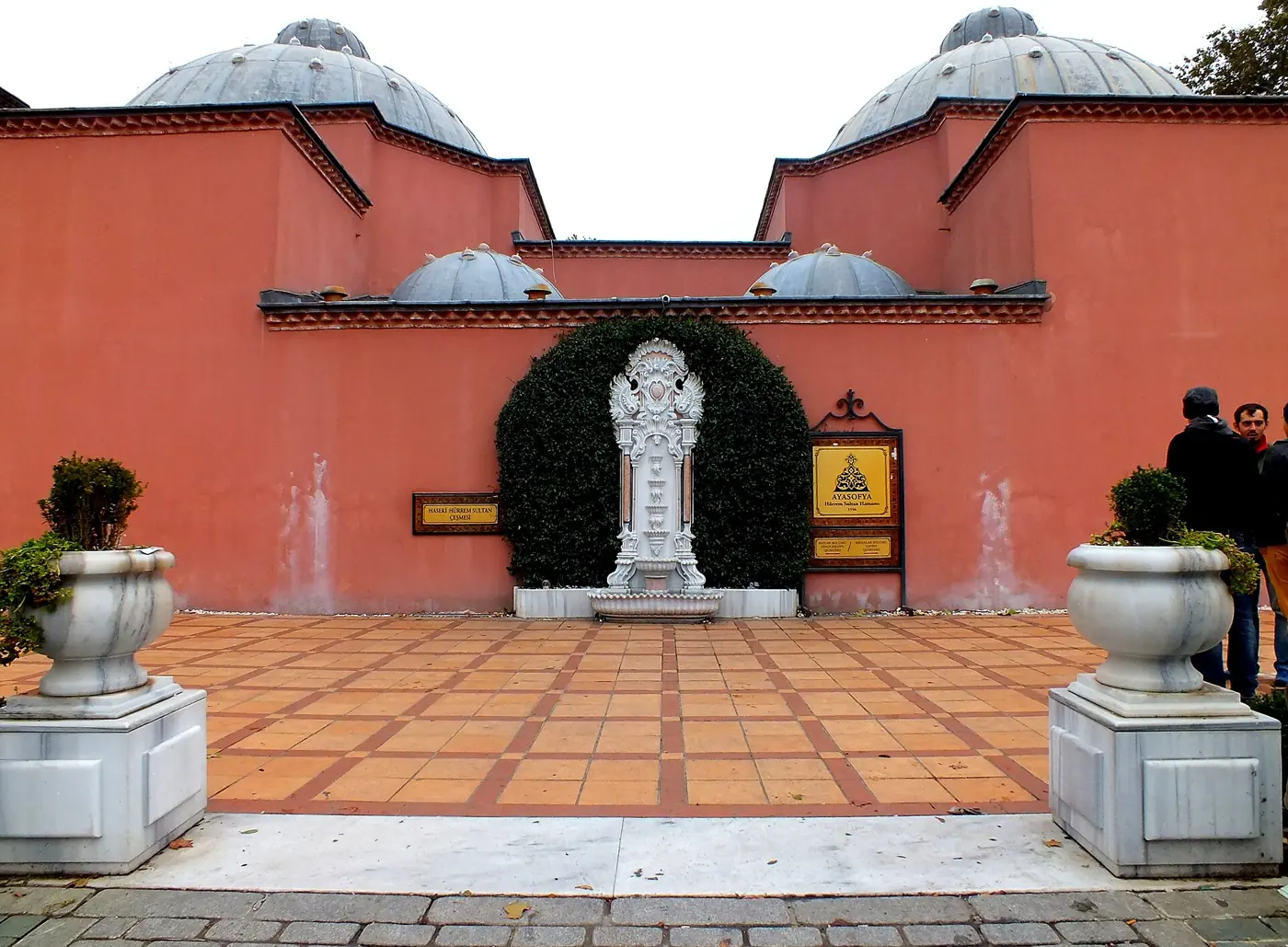
5 Ayasofya Hürrem Sultan Hamamı
Ayasofya Hürrem Sultan Hamamı is a double bathhouse built by Sinan in 1556 for Hürrem Sultan. It stands between Hagia Sophia and the Blue Mosque and operates again after restoration. Its position makes it the most central option in this guide.
- Built: 1556
- Architect: Mimar Sinan
- Area: Between Hagia Sophia and Sultanahmet Mosque
Show map
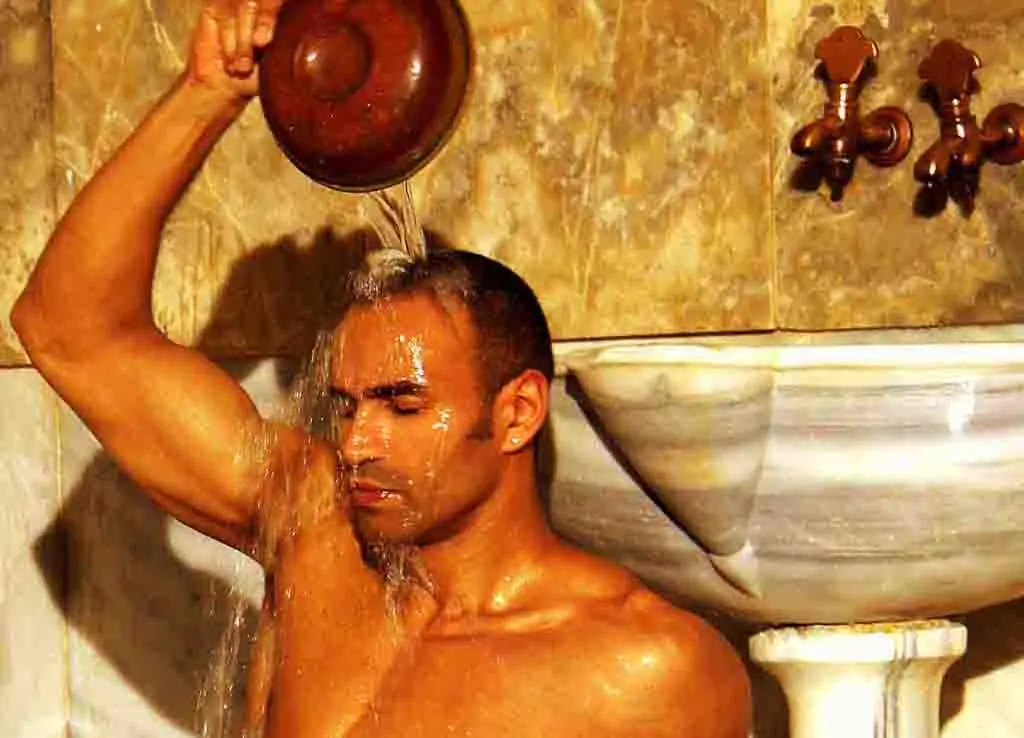
6 Galatasaray Hamamı
Galatasaray Hamamı was founded in 1481 and is among the oldest bathhouses still operating in Beyoğlu. It lies just off İstiklal Avenue. It fits travellers who stay on the European side north of the Golden Horn.
- Founded: 1481
- Area: Beyoğlu, off İstiklal Avenue
Show map
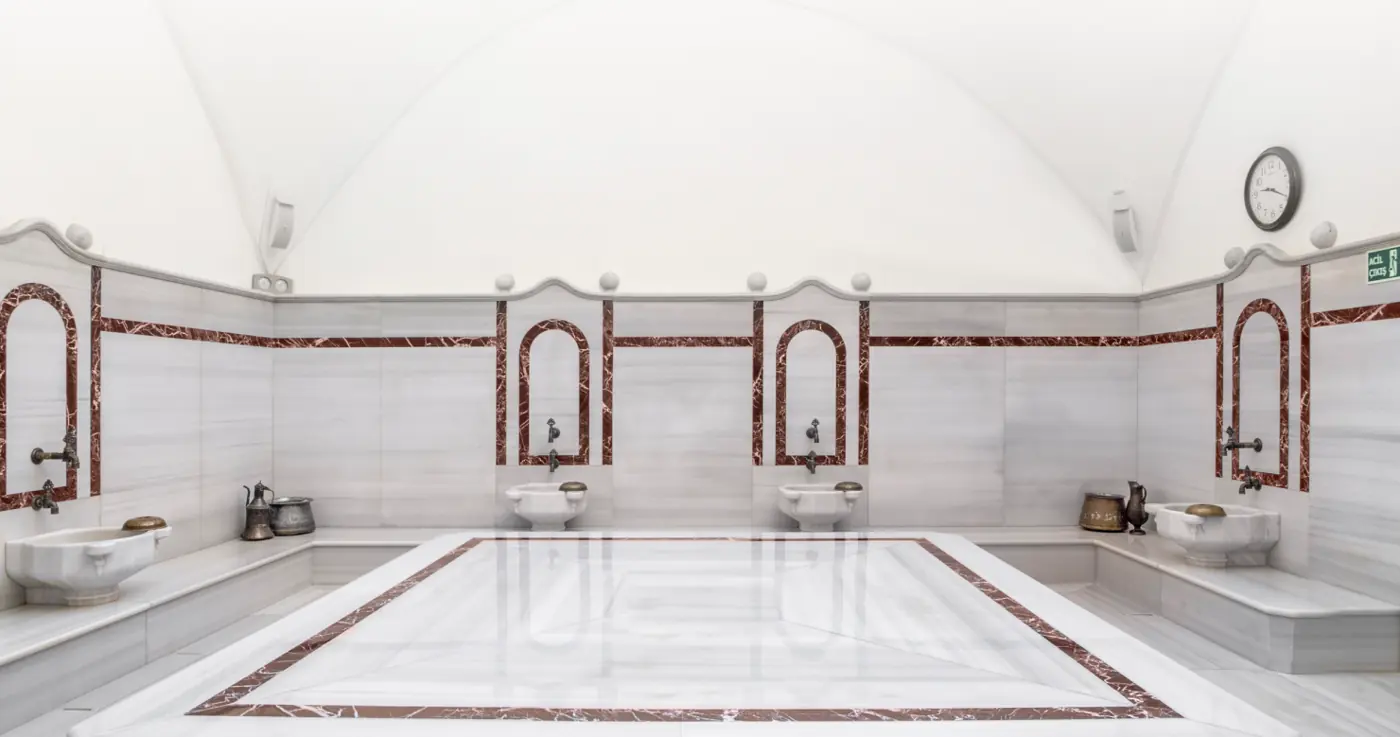
7 Çukurcuma Hamamı
Çukurcuma Hamamı is a neighbourhood bathhouse in the antiques district of Çukurcuma. It runs as a traditional Turkish bath. Combine it with a walk among the antique shops and small galleries of the area.
- Area: Çukurcuma, Beyoğlu
- Type: Traditional Turkish bath
Show map
How do the hammams compare?
The table below places the seven hammams side by side using only facts from our registry. Use it to narrow the list by age, architect and area. Then open each official page for schedules, packages and rules on mixed or separate sessions.
The table compares build date, architect and area for each hammam.
| Hammam | Built | Architect | Area |
|---|---|---|---|
| Cağaloğlu | 1741 | Not stated here | Cağaloğlu, near Sultanahmet |
| Çemberlitaş | 1584 | Attributed to Sinan | Divanyolu |
| Süleymaniye | 1550s | Sinan | Beside Süleymaniye Mosque |
| Kılıç Ali Paşa | c. 1580 | Sinan | Tophane |
| Ayasofya Hürrem Sultan | 1556 | Sinan | Between Hagia Sophia and Blue Mosque |
| Galatasaray | Founded 1481 | Not stated here | Beyoğlu |
| Çukurcuma | Not stated here | Not stated here | Çukurcuma, Beyoğlu |
How do you get to the hammams?
Most hammams in this guide are close to a tram or funicular line. The T1 tram serves Sultanahmet, Çemberlitaş and Cağaloğlu on the old city side. Beyoğlu hammams are a short walk from İstiklal Avenue, and Tophane is on the tram line along the Bosphorus shore.
Therefore, plan the hammam as part of a district day. Sultanahmet, Divanyolu and Cağaloğlu fit one morning on foot. Tophane and Çukurcuma fit a Beyoğlu afternoon. A private car with a driver helps if you want to visit two districts in one day or arrive with luggage.
Route ideas by area:
- Sultanahmet: walk from Hagia Sophia to Ayasofya Hürrem Sultan or Cağaloğlu.
- Divanyolu: take the T1 tram to Çemberlitaş.
- Süleymaniye: walk uphill from Eminönü or the Grand Bazaar side.
- Beyoğlu: walk from Taksim or Galata to Galatasaray or Çukurcuma.
- Tophane: use the tram along the shore to Kılıç Ali Paşa.
The table maps each area to the simplest way to arrive.
| Area | Hammams | Simplest way to arrive |
|---|---|---|
| Sultanahmet | Ayasofya Hürrem Sultan, Cağaloğlu | Walk or T1 tram |
| Divanyolu | Çemberlitaş | T1 tram |
| Süleymaniye | Süleymaniye Hamamı | Walk uphill from Eminönü |
| Beyoğlu | Galatasaray, Çukurcuma | Walk from Taksim or Galata |
| Tophane | Kılıç Ali Paşa | Tram or walk along the shore |
What should you know before your first hammam?
Preparation makes the visit easier. Eat lightly beforehand, drink water and arrive with time to spare. Do not plan a tight schedule afterwards, because the heat can leave you tired. Many visitors book the hammam late in the afternoon after sightseeing, then dine nearby.
Privacy rules vary. Most tourist hammams give separate sessions or sections for men and women, or private rooms, but each place sets its own policy. Therefore, confirm this on the official site. Swimwear or disposable underwear is common, and the staff will explain what to wear.
Practical tips:
- Book ahead in high season and ask about languages spoken.
- Leave jewellery and valuables at the hotel.
- Bring flip-flops if the hammam does not supply them.
- Tell the attendant about skin conditions, pregnancy or heart problems before the scrub.
- Drink water after the session and avoid alcohol before it.
- Check the final price, tip custom and package contents before you start.
What does a one-day hammam plan look like?
Start in Sultanahmet with Hagia Sophia and the Blue Mosque in the morning. Walk to Divanyolu for lunch, then enter a hammam in the late afternoon. After the scrub, rest with tea and take the tram to a quiet dinner. This order keeps the heat of the bath for the end of the day.
Alternatively, spend the day in Beyoğlu. Walk İstiklal Avenue and Çukurcuma in the morning, visit Galata in the afternoon and finish at Galatasaray Hamamı before dinner. Either plan works in any season, though winter makes the hot room especially welcome.
Frequently asked questions
How long does a Turkish bath visit take?
Plan one to two hours in total, including changing, the warm room, the scrub, the foam wash and a rest. Packages that add massage take longer. Check each hammam’s page for session length.
What do you wear in a hammam?
You receive a cotton wrap called a peştemal. Many visitors wear swimwear or disposable underwear underneath, and hammams often supply the latter. Ask the staff if you are unsure.
Are men and women separate in Istanbul hammams?
Many tourist hammams offer separate sections, separate hours or private rooms. Policies differ between places, so confirm the arrangement on the hammam’s official site before you go.
Is a historic hammam better than a modern spa?
They offer different things. A historic hammam gives you the traditional ritual in an Ottoman building. A modern spa offers more treatments and privacy. Choose by what you want from the visit.
How much does a hammam cost?
Prices vary by hammam, package and season, so we do not list figures. Open the hammam’s page or Google Maps for current packages, and confirm the total before you start.
Which hammam is closest to Hagia Sophia?
Ayasofya Hürrem Sultan Hamamı stands between Hagia Sophia and the Blue Mosque. Cağaloğlu Hamamı is also near Hagia Sophia, a short walk away.
Can I visit a hammam with children?
Rules differ by hammam. Some accept families in private rooms, others have age limits. Ask the hammam directly before booking.
Should I book in advance?
Booking is wise in high season and at weekends. Check the hammam’s site for online booking or contact options.
Plan this with TurkGT
TurkGT can arrange a private car with driver to take you between the old city and Beyoğlu hammams, and a licensed guide to combine the bath with the surrounding sights. Send us your dates and hotel by WhatsApp or the inquiry form and we will suggest a routing.
Request a booking
Sources
- Cağaloğlu Hamamı
- Çemberlitaş Hamamı
- Süleymaniye Hamamı
- Kılıç Ali Paşa Hamamı
- Ayasofya Hürrem Sultan Hamamı
- Galatasaray Hamamı
- Çukurcuma Hamamı
Last reviewed: 2026-11-18.