
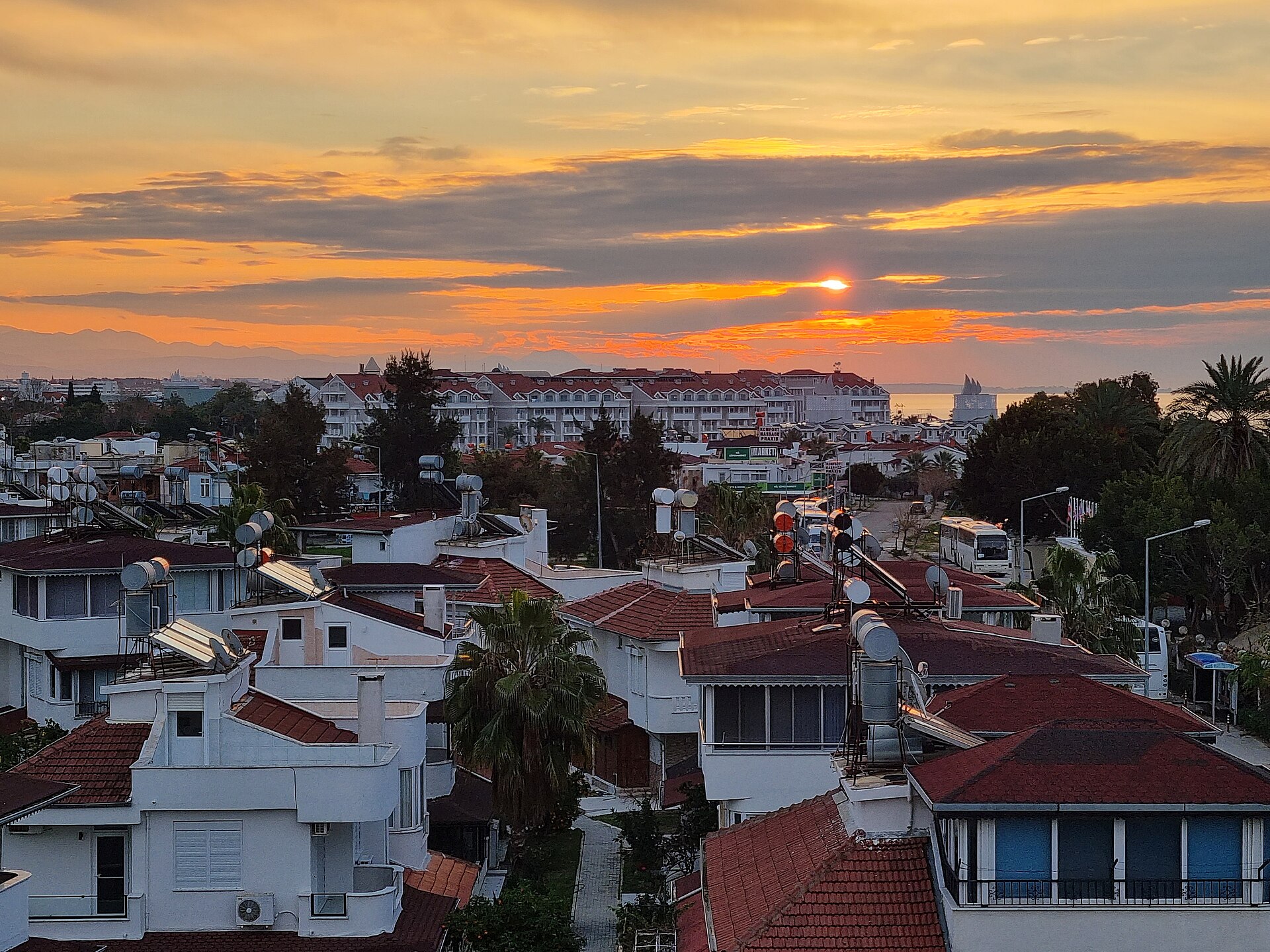
Side is a resort town on Turkey’s southern Mediterranean coast, in the Manavgat district of Antalya Province, 78 km from Antalya. It combines a modern holiday town with the ruins of an ancient port city on a small peninsula. Visitors see a Roman theatre, a Hellenistic gate, temples and a long aqueduct.
Key facts
- Location: Manavgat district, Antalya Province, 78 km from Antalya city
- Former name: Selimiye
- Population: 14,527 (2022)
- Ancient city founded: Most likely in the 7th century BC
- Setting: Peninsula about 1 km long and 400 m across
- Roman theatre: 15,000-20,000 seats
- Roman aqueduct: About 30 km, 2nd half of the 2nd century AD
- Best season: Spring and autumn; summer is hot and busy
- Typical visit time: Half a day to 1 day
- UNESCO status: None
- Entrance: See official page for fees and hours
What is Side and why visit?
Side is a resort town on Turkey’s southern Mediterranean coast, in the Manavgat district of Antalya Province. It includes a modern resort and the ruins of an ancient city on a small peninsula. Visitors come for Roman remains beside the sea.
In addition, the town sits near Manavgat and about 78 km from Antalya, so it fits easily into a coast itinerary with Alanya, Perge and Aspendos.
The table lists main reasons to visit.
| Draw | Detail | Notes |
|---|---|---|
| Ancient city | Peninsula ruins | Excavated since 1947 |
| Theatre | Seats 15,000-20,000 | Being restored |
| Main gate | Megale Pyle, 2nd century BC | Hellenistic |
| Aqueduct | About 30 km, 22 bridges, 16 tunnels | 2nd century AD |
| Resort town | Seafront square and Liman Caddesi | Cafes, shops |
What is the history of Side?
Ancient sources record that Greek settlers from Cyme in Aeolis founded Side, most likely in the 7th century BC. Possessing a good harbour for small craft, it became one of the main trade centres of the region.
Alexander the Great occupied Side without a struggle in 333 BC. After 188 BC it minted its own money, and in the 1st century BC Cilician pirates made it a naval base. Rome defeated them, and Side then prospered through trade in olive oil. Most extant ruins date from this Roman period.
The story after antiquity is short.
- Steady decline began from the 4th century.
- A revival came in the 5th and 6th centuries.
- The site was abandoned by the 10th century.
- It became known as Eski Adalia (Old Antalya).
Key dates from Wikipedia.
| Date | Event |
|---|---|
| 7th century BC | Founded by Greek settlers from Cyme (most likely) |
| 333 BC | Alexander the Great occupies Side |
| 67 BC | Pompey brings Side under Roman control |
| 25 BC | Placed in the Roman province of Galatia |
| 7th century AD | Arab fleets raid and burn Side |
| 1895 | Cretan Turkish immigrants settle among ruins as Selimiye |
What are the highlights of Side?
The highlights are the 2nd-century theatre, the Megale Pyle gate, the Roman baths museum, the agora and the Temple of Apollo near the sea. The colossal theatre is less well preserved than Aspendos but is almost as large.
The aqueduct is notable because the altitude difference between source and city is only 36 m. As a result, builders needed 22 bridges and 16 tunnels to keep the route straight.
Plan these stops.
- Theatre: 2nd century, seating 15,000-20,000.
- Megale Pyle: Hellenistic main gate.
- Roman baths: restored as a museum with statues and sarcophagi.
- Agora with the round Tyche and Fortuna temple.
- Temple of Apollo at the end of the peninsula.
- Aqueduct bridges near Oymapinar.
At-a-glance table of sights.
| Sight | Period | Notes |
|---|---|---|
| Theatre | 2nd century AD | Open-air sanctuary in Byzantine times |
| Megale Pyle | 2nd century BC | Entrance through city walls |
| Roman baths | Roman | Museum |
| Agora | Roman | Round temple of Tyche and Fortuna |
| Aqueduct | 2nd century AD | About 30 km |
How do you get to Side and get around?
Side lies near Manavgat, 78 km from Antalya. Most visitors arrive by transfer, taxi or bus from Antalya Airport and Antalya city. Check the current timetable for buses and dolmuş.
The ruins and town are compact. Therefore walking is the main way to get around once you arrive.
Transport options without fixed timetables.
| Option | Route | Notes |
|---|---|---|
| Private transfer | Antalya Airport to Side | Pre-booked |
| Bus or dolmuş | Via Manavgat | Check current timetable |
| Taxi | Manavgat or Antalya | Agree price first |
| On foot | Within Side | Ruins and town are close |
When is the best time to visit Side?
Spring and autumn are comfortable for walking among ruins. Summer is hot and crowded, so visit early. Winter is quiet and some seasonal businesses close.
Therefore choose shoulder seasons for sightseeing and summer for beach time.
General guidance by season.
| Season | Weather | Crowds | Notes |
|---|---|---|---|
| Spring | Mild, pleasant | Moderate | Good for ruins |
| Summer | Hot | High | Early starts |
| Autumn | Warm | Moderate | Sea warm |
| Winter | Mild, wetter | Low | Some places closed |
How long should you stay in Side?
Half a day covers the ruins and old harbour. One full day adds the beach and the Temple of Apollo at sunset. Two to three days suit a base for nearby day trips.
These are suggestions. Moreover, heat in summer can shorten the best sightseeing hours.
Suggested plans.
| Time | Plan | Good for |
|---|---|---|
| Half day | Theatre, gate, agora | Short stop |
| 1 day | Add museum, harbour and beach | Day-trippers |
| 2-3 days | Base for Aspendos, Perge, Manavgat | Culture and beach |
What practical tips should you know?
Wear sun protection and shoes with grip on marble. Check the official page for tickets and opening hours. Carry water in summer.
Do not climb on ruins. Furthermore, ask before photographing people and bargain politely in shops.
Practical points.
- Tickets: see the official page.
- Accessibility: ruins have uneven stone paths.
- Safety: watch for slippery marble.
- Photography: sunset at the temple is popular.
- Etiquette: respect barriers around ruins.
Where should you stay and eat?
Visitors stay in the old town on the peninsula, along the beaches or in nearby resort areas. Hotels, guesthouses and restaurants change often, so compare current options and recent reviews rather than relying on any single list.
The seafront square and Liman Caddesi, the bustling street linking the bus station to the water, have many cafes and fish restaurants. In contrast, quieter streets offer simpler meals.
What are the nearby places and day trips?
Aspendos Theatre, Perge Ancient City, Alanya and Antalya‘s Kaleiçi are the main excursions. Manavgat Waterfall and Köprülü Canyon are nature stops.
See the linked TurkGT pages.
Popular excursions.
- Aspendos Theatre.
- Perge Ancient City.
- Alanya Castle.
- Kaleiçi in Antalya.
- Köprülü Canyon.
Plan this with TurkGT
TurkGT is an Istanbul-based travel company that arranges guided trips, private transfers, local guides and interpreter support. If you want help with Side and the Antalya coast, tell us your dates and group size. We confirm every booking and every detail by WhatsApp before you travel.
Therefore you can keep the plan flexible and still have a clear itinerary. Ask us about combining this stop with nearby places from the lists above.
Frequently asked questions
Where is Side?
Side is on the southern Mediterranean coast of Turkey, in the Manavgat district of Antalya Province, 78 km from Antalya.
What is Side famous for?
Its ancient ruins, including a large Roman theatre and a Hellenistic gate, beside a resort town.
Why is Side also called Selimiye?
Cretan Turkish immigrants settled among the ruins in 1895 and called the place Selimiye.
How big is the theatre?
It seats 15,000-20,000 people.
How long is the aqueduct?
About 30 km, with 22 bridges and 16 tunnels.
When was Side founded?
Most likely in the 7th century BC by Greek settlers from Cyme.
Is Side a UNESCO site?
No UNESCO listing is claimed on this page.
When should I visit?
Spring and autumn are comfortable; summer is hot and busy.
Related on TurkGT
- Part of Antalya
- Düden Waterfalls
- Konyaaltı Beach
- Lara Beach
- Aspendos Theatre
- Perge Ancient City
- Köprülü Canyon
Sources
Last reviewed: 2026-11-18.