
The Galata Tower is a Romanesque stone tower in Istanbul’s Beyoğlu district, built between 1335 and 1349 as part of the Genoese fortifications. It stands 62.59 m tall and has been a museum and exhibition venue since 2020. Visitors come for the history and the view.
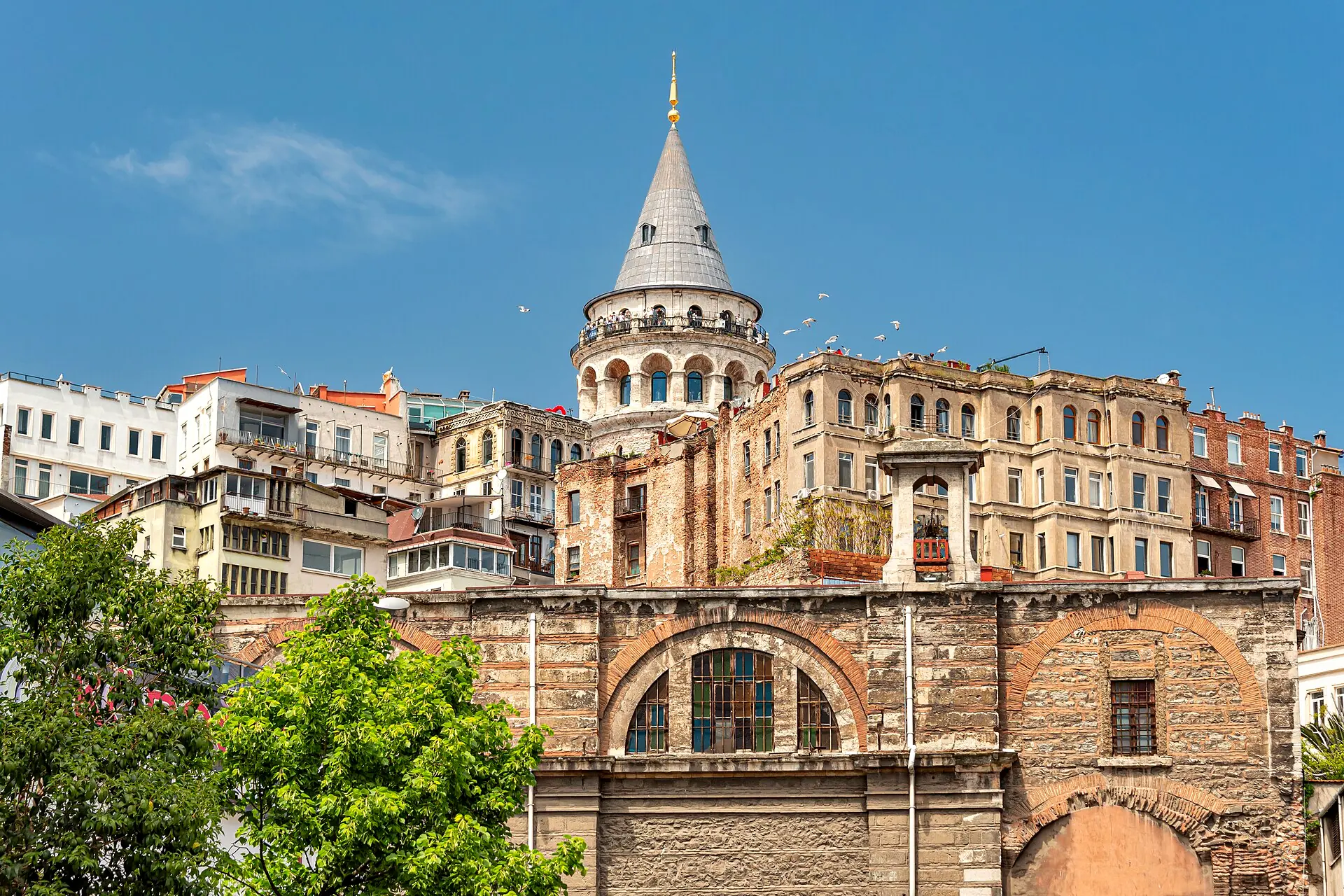
Key facts
- Location: Galata, Beyoğlu, north of the Golden Horn
- Distance: Short uphill walk from Şişhane metro or Karaköy; see airport guides
- Built: 1335-1349, by the Genoese
- Height: 62.59 m to the roof tip
- UNESCO: Tentative List since 2013
- Best season: Spring and autumn; late afternoon for views
- Typical visit time: About 1 hour
- Entrance: See official page
What is the Galata Tower and why visit?
The Galata Tower is a medieval stone tower in Istanbul’s Beyoğlu district, built between 1335 and 1349 by the Genoese as part of the fortifications of their colony. Since 2020 it has been a museum and exhibition venue. Visitors come for the history of Galata and for views over the Golden Horn and the old city.
The tower is a landmark of both Beyoğlu and Istanbul. Moreover, it sits at the top of a lively neighbourhood of steep streets, cafes and galleries. As a result, many travellers combine it with a walk to Karaköy, Istiklal Avenue and the Golden Horn waterfront.
What is the history of the Galata Tower?
The Genoese, allies of the Byzantine Empire, founded a colony called Pera in Galata in 1267. The tower was built between 1335 and 1349 as part of its fortifications. It was known then as the Tower of the Holy Cross because of the cross at its summit.
When the Ottomans took Constantinople on 29 May 1453, the Genoese handed over Pera. A decree of Mehmed II halted the destruction of the tower, and the damaged sections were rebuilt. It was damaged by the 1509 earthquake and repaired by 1510. Later it housed prisoners of war, served as a supply warehouse, and from the eighteenth century acted as a fire lookout used by the Mehterhane corps and fire watchers.
After its roof collapsed in a storm in 1875, two timber-framed masonry floors were added. Restoration between 1965 and 1967 arranged it as a tourist attraction. In 2020 it was converted into a museum and exhibition venue, and roof work took place in 2023.
In summary, the tower has been a Genoese fortification, an Ottoman lookout and a modern museum. Moreover, its roof and upper floors changed several times after fires and storms, so the profile you see today is a layered result of centuries of repair.
This table lists the main dates.
| Date | Event | Result |
|---|---|---|
| 1267 | Genoese found the colony of Pera | Galata becomes a Genoese enclave |
| 1335-1349 | Tower built within the fortifications | Tower of the Holy Cross |
| 1453 | Ottoman conquest; Mehmed II halts destruction | Tower preserved and repaired |
| 1509-1510 | Earthquake damage and repair | Tower restored |
| 1875 | Roof collapses in a storm | Two floors added |
| 1965-1967 | Restoration | Opened as a tourist attraction |
| 2020 | Converted to museum and exhibition venue | Present role |
What are the highlights of the Galata Tower?
The highlights are the view from the top, the museum exhibits and the tower itself. It stands 62.59 m tall to the tip of its roof and has 11 floors, counting a basement, ground floor and mezzanine. The conical roof is reinforced concrete, and the style is Romanesque masonry.
These are the main things to see inside and around the tower.
- A simulation area with a screen showing Hezârfen Ahmed Çelebi gliding from the tower.
- Exhibits about the period when Taqi al-Din used the tower.
- Information and artefacts relating to the tower and the walls of Galata.
- The conical roof and the Romanesque masonry from outside.
- Views over the Golden Horn and the historic peninsula, weather permitting.
The at-a-glance table summarises the structure.
| Feature | Detail | Note |
|---|---|---|
| Height | 62.59 m to the roof tip | Landmark of Beyoğlu |
| Floors | 11, including basement, ground and mezzanine | Museum areas |
| Style | Romanesque masonry | Genoese era |
| Roof | Conical, reinforced concrete | Renewed in 1960s |
| Role today | Museum and exhibition venue | Since 2020 |
How do you get to the Galata Tower and get around?
The Galata Tower is in Beyoğlu, on the north side of the Golden Horn. Take the metro to Şişhane or the tram and funicular route via Karaköy, then walk uphill. Check the current timetable of each line. Taxis and transfers reach the neighbourhood, although streets are narrow and steep.
This table compares ways to arrive.
| Option | How it works | Notes |
|---|---|---|
| Metro | M2 to Şişhane, then walk | Check the current timetable |
| Tram plus walk | T1 to Karaköy, then walk uphill | Steep cobbled streets |
| Funicular | Tünel funicular from Karaköy | Check the current timetable |
| From the airports | Metro, shuttle or private transfer | See our airport guides |
| On foot | Walk from Istiklal Avenue or across Galata Bridge | Some uphill sections |
When is the best time to visit the Galata Tower?
The Galata Tower is a view-led attraction, so light and weather matter more than at most sites. Late afternoon is popular for the view, while mornings are calmer. Spring and autumn offer clear mild weather, and summer is hot and busy. Check the official page for opening hours, since they are not stated here.
Moreover, sunset draws crowds, so arrive early if you want a calmer visit. In contrast, an overcast winter day may cloud the view across the Golden Horn.
The table shows what each season is generally like.
| Season | Weather | Crowds | Notes |
|---|---|---|---|
| Spring (Mar-May) | Mild | Busy | Good views on clear days |
| Summer (Jun-Aug) | Hot | Highest | Queues likely; go early |
| Autumn (Sep-Nov) | Mild to cool | Moderate | Clear light |
| Winter (Dec-Feb) | Cool and rainy | Lowest | Weather can block the view |
How long should you stay at the Galata Tower?
The Galata Tower itself is a compact visit, but its setting rewards slower exploring. Allow about an hour for the tower and an extra half day for Galata and Karaköy. A full day also fits Istiklal Avenue and the Golden Horn waterfront. Therefore plan the tower alongside a neighbourhood walk.
The streets around it climb steeply, so allow time for the walk and for breaks in cafes. As a result, the tower works best as part of a Galata and Karaköy afternoon.
This table gives three plans.
| Plan | What it covers | Pace |
|---|---|---|
| Half day | Tower plus Galata streets and Karaköy | Relaxed |
| 1 day | Add Istiklal Avenue and Beyoğlu | Full |
| 2-3 days | Add Sultanahmet, Dolmabahçe and a Bosphorus cruise | Easy pace |
What are the practical tips for visiting the Galata Tower?
Check the official page before you travel, because tickets, opening times and queue rules can change. Check the official page for tickets and opening times. Fees and rules change, so confirm before you go. Expect queues and a short walk uphill.
Moreover, crowds can be heavy at peak hours, so a morning visit often feels easier. Wear comfortable shoes, since the surrounding lanes are cobbled and steep.
These tips help.
- Tickets and fees: see the official page; we do not quote prices.
- MuseumPass Istanbul is a multi-day product; check whether it applies.
- Accessibility: the tower has many floors; ask official sources about lift and stair access.
- Photography: sunset light is popular, so arrive early.
- Safety: watch pockets on crowded streets around the tower.
- Etiquette: keep queues orderly and avoid blocking narrow lanes.
Where should you stay and eat near the Galata Tower?
Choose a neighbourhood by mood rather than distance, since the area is compact and well linked by tram. Galata and Karaköy have boutique hotels and cafes within walking distance, while Beyoğlu is livelier at night. In contrast, Sultanahmet is quieter and a tram ride away. Cihangir and Taksim offer more choice.
Try bakeries, coffee houses and lokantas on the side streets. Compare menus before sitting down.
Galata and Karaköy have a creative, cafe-led feel, while Beyoğlu and Taksim are busier and louder at night. Sultanahmet is calmer and closer to the old-city monuments.
What is near the Galata Tower and what day trips work?
Around the Galata Tower, you can reach the Golden Horn, Karaköy, Istiklal Avenue and Galata Bridge on foot, so plan a loop. The tower sits among Galata’s streets, close to the Golden Horn. Use this list to plan nearby stops.
The tower also links well to the old city across the water. Therefore a day can run from Sultanahmet over Galata Bridge, up through Karaköy and Galata, and down Istiklal Avenue toward Taksim.
Nearby options include these.
- Karaköy and the Golden Horn waterfront.
- Istiklal Avenue and Beyoğlu.
- Galata Bridge toward Eminönü.
- Sultanahmet landmarks across the Golden Horn.
- Pierre Loti Hill and the Golden Horn.
- A Bosphorus cruise.
Plan this with TurkGT
TurkGT is an Istanbul-based travel company offering guided tours, private transfers, licensed guide and interpreter services, and tailored itineraries. Tell us your dates and interests, and we confirm the plan and availability by WhatsApp. For tickets and opening times, we point you to the official page first.
Our Galata, Karakoy and Istiklal Walking Tour and Istanbul by Night Tour: Galata, Taksim and Mosques cover this area.
Frequently asked questions
When was the Galata Tower built?
It was built between 1335 and 1349 by the Genoese.
How tall is it?
The tower is 62.59 m tall to the tip of its roof.
What was it called originally?
It was known as the Tower of the Holy Cross because of the cross at its summit.
Is it a museum?
Yes, it has functioned as an exhibition venue and museum since 2020.
Where is it?
In Beyoğlu, Istanbul, in the Galata neighbourhood.
How do I get there?
Take the M2 metro to Şişhane or the Tünel funicular from Karaköy, then walk. Check current timetables.
What are the opening hours?
Check the official page; they are not stated here.
What is nearby?
Karaköy, Istiklal Avenue, Galata Bridge and Beyoğlu.
Related on TurkGT
Sources
- Wikipedia: Galata Tower
- Türkiye Kültür Portalı: Galata Kulesi
- Ministry of Culture and Tourism: MuseumPass Istanbul
Last reviewed: 2026-11-17. Opening hours, ticket prices and other changeable details are not listed because they change; check the official source before you travel.