
Gordion is the archaeological site of the ancient Phrygian capital, about 90 km south-west of Ankara in central Türkiye, inscribed by UNESCO in 2023. It is known for its Iron Age citadel and the 53 m Midas Mound. Visit it as a half-day trip from Ankara.
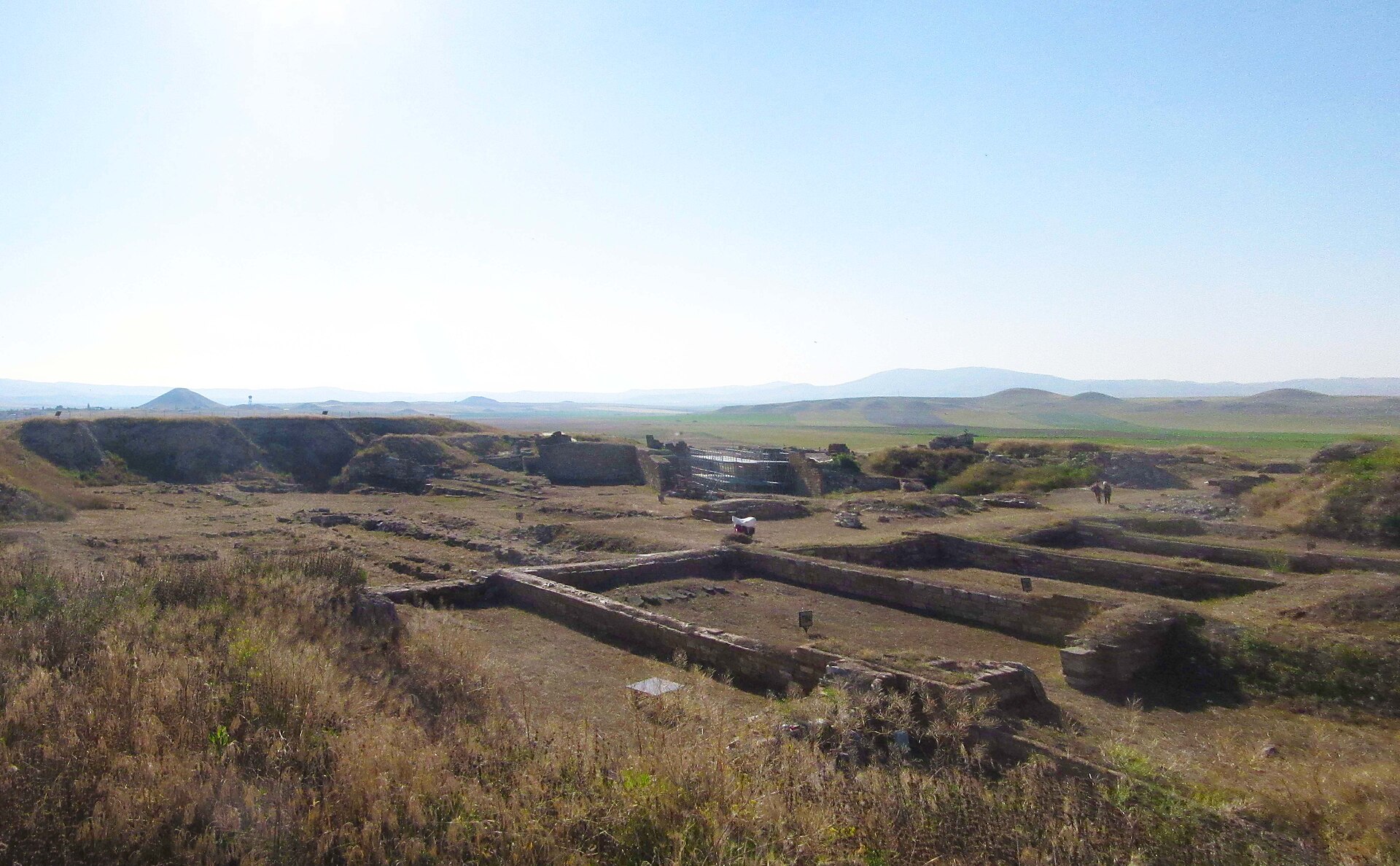
Key facts
- Location: Yassıhöyük, near Polatlı, central Türkiye
- Distance: About 90 km south-west of Ankara; Polatlı town about 18-20 km away
- Civilisation: Phrygian; occupied from about 2300 BCE to the 4th century CE
- Midas Mound: 53 m high; wooden chamber about 740 BCE
- UNESCO status: Inscribed 2023, criterion (iii); 1,064 ha, buffer 4,430 ha
- Best season: Spring and early autumn
- Typical visit time: Half day; 2-3 hours on site
- Transport: Car or transfer recommended; bus or train to Polatlı
- Entrance: See official page (Ministry of Culture and Tourism)
What is Gordion and why visit?
Gordion is the archaeological site of the ancient Phrygian capital, about 90 km south-west of Ankara in central Türkiye. UNESCO listed it in 2023. Visit it for the Iron Age citadel, the huge Midas Mound with its wooden burial chamber, and the legend of the Gordian Knot.
Moreover, Gordion offers a clear mix of landscape, archaeology and story. The Midas Mound rises above the Sakarya plain, and a tunnel leads into the burial chamber. As a result, visitors can grasp the scale of Phrygian power in a single half day.
In contrast to coastal sites, Gordion is quiet and rural. The village of Yassıhöyük has a small museum, and the citadel lies a short drive away. Therefore the site suits travellers who like open-air archaeology and an easy day trip from the capital.
What is the history of Gordion?
Gordion was the capital of ancient Phrygia, occupied from about 2300 BCE to the 4th century CE. It peaked in the 9th and 8th centuries BCE under kings such as Midas, fell to the Persians from 546 BCE, and became a smaller town under Greek and Roman rule.
Wikipedia explains that Gordion stands at the confluence of the Sakarya and Porsuk rivers. A major fire about 800 BCE sealed the Early Phrygian buildings, and later rebuilding preserved them. In addition, Tumulus W of about 850 BCE is the first known tumulus in Anatolia.
Midas was the most famous Phrygian king. Tumulus MM, the Midas Mound, was built about 740 BCE and is now generally assumed to be the tomb of his father Gordias. Moreover, more than a hundred tumuli surround the site, which shows the power of the local elite.
In 546 BCE Cyrus the Great began the Achaemenid conquest, which ended Phrygian autonomy. Tradition says Alexander the Great cut the Gordian Knot here in 333 BCE. Later a Roman road between Ancyra and Pessinus ran through the site. Modern excavation started with the Körte brothers in 1900, and the University of Pennsylvania worked here from 1950.
What are the highlights of Gordion, and what can you see?
The highlights are the Midas Mound, the Gordion Museum, the citadel mound with its East Gate and Terrace Complex, and the many smaller tumuli. All three main parts share one ticket, according to Wikivoyage. The Midas Mound is the focal point, because you can enter its burial chamber through a tunnel.
Use this list to plan the order of your visit.
- Midas Mound (Tumulus MM): 53 m high, with a burial chamber that is the oldest known standing wooden building in the world.
- Gordion Museum: finds from the Bronze Age to the Roman period, at the east edge of the village.
- Citadel mound: the East Citadel Gate with masonry preserved to about ten metres.
- Terrace Complex: an industrial quarter over a hundred metres long for food and textile work.
- Pebble and coloured mosaics: the earliest known coloured floor mosaics in the elite buildings.
- Smaller tumuli: more than a hundred burial mounds in the surrounding fields.
The table below gives an at-a-glance summary of the main parts of the site.
| Part | What to see | Why it matters |
|---|---|---|
| Midas Mound | Burial chamber of about 740 BCE | Oldest known standing wooden building |
| Gordion Museum | Phrygian finds and a Roman mosaic | Context before the outdoor sites |
| Citadel mound | East Gate and elite buildings | Best-preserved Iron Age gate complex found so far |
| Terrace Complex | Food and textile quarter | Over a hundred metres long |
| Surrounding tumuli | Burial mounds in fields | Landscape of Phrygian power |
Why is Gordion a UNESCO World Heritage Site?
UNESCO inscribed Gordion in 2023 under criterion (iii). The property covers 1,064 ha with a 4,430 ha buffer zone. UNESCO calls it the best surviving testimony to Phrygian civilisation, which excelled in timber construction, woodcarving and metalwork. The protected area is large because it includes the tumuli landscape.
The listing covers the citadel, the surrounding tumuli and the rural setting. UNESCO stresses that the rural character of the landscape should be preserved. In short, the large boundary protects the setting as well as the ruins.
This table summarises the World Heritage details.
| Item | Detail |
|---|---|
| Inscription year | 2023 |
| Criterion | (iii) |
| Property | 1,064 ha |
| Buffer zone | 4,430 ha |
| Key monuments | Citadel mound, Midas Mound and many tumuli |
| Civilisation | Phrygian |
How do you get to Gordion and get around?
Travel from Ankara to Polatlı by bus, regional train or car, then continue about 18-20 km to Yassıhöyük. The drive from Ankara is about 90 km. Wikivoyage notes that you need your own transport for the antiquities, so a taxi or private transfer is the practical choice. Check the current timetable.
Buses from Ankara AŞTİ take about an hour to Polatlı, and regional trains take about 70 minutes. High-speed trains stop at Polatlı YHT, 4 km south-east of town. The three parts of Gordion lie within a short drive of each other.
This table compares ways to reach Gordion, with typical durations from public sources.
| From | Mode | Typical duration | Note |
|---|---|---|---|
| Ankara | Car or private transfer | About 1 to 1.5 hours; check traffic | About 90 km, flexible stops |
| Ankara AŞTİ | Bus to Polatlı | About 1 hour | Then taxi to the site; check current timetable |
| Ankara | Regional train to Polatlı | About 70 minutes | Check current timetable |
| Polatlı YHT | Taxi to Polatlı or the site | Check route time | Station 4 km south-east of town |
| Eskişehir | Bus or car | About 2 hours to Polatlı | Along the D200 highway |
When is the best time to visit Gordion?
Spring and early autumn are the most comfortable seasons. Ankara has hot, dry summers and cold, snowy winters, and Wikivoyage calls early autumn the best climate. The site is open-air and exposed, so summer afternoons are hot and winter days can be cold and windy.
This table shows weather, crowds and notes by season.
| Season | Weather | Crowds | Notes |
|---|---|---|---|
| Spring (Apr-May) | Mild, some showers | Low | Fields are green around the mounds |
| Summer (Jun-Aug) | Hot and dry | Low | Go in the morning; bring a hat and water |
| Autumn (Sep-Oct) | Mild and dry | Low | Comfortable for walking the citadel |
| Winter (Dec-Feb) | Cold, snow possible | Very low | Check road and site conditions |
How long should you stay at Gordion?
Allow half a day at Gordion. The museum, the Midas Mound and the citadel mound together need two to three hours with transport between them. A full day adds Polatlı monuments, and a two-to-three-day trip links Gordion with Ankara and with nearby Sivrihisar.
The table below suggests three plans by available time.
| Time | Plan |
|---|---|
| Half day | Gordion Museum, Midas Mound tunnel and citadel mound; return to Ankara |
| 1 day | Gordion plus Sakarya battle memorials near Polatlı, with lunch in town |
| 2-3 days | Add Ankara museums and Anıtkabir, then Sivrihisar and the Phrygian site of Pessinus |
What practical tips should you know before visiting Gordion?
Check the official page for tickets, opening hours and tunnel access before you travel. Wikivoyage lists the museum and the two outdoor sites on one ticket. Wear sun protection and sturdy shoes, because the mounds are exposed and the ground is uneven. Carry water, because there are few services around the site.
These tips combine public guidance and common sense.
- Tickets and fees: see the official page of the Ministry of Culture and Tourism.
- Dress: hat, sunscreen and layers; the plain is windy.
- Accessibility: the tunnel and mound paths are uneven, so check access for reduced mobility.
- Safety: stay on paths on the mounds and watch your head in the tunnel.
- Photography: personal photography is usually fine; ask the staff about tripods and drones.
- Etiquette: do not climb on excavated walls or remove stones.
- Transport: arrange a taxi or private transfer in advance, since public transport to the site is limited.
Where should you stay and eat near Gordion?
Most visitors stay in Ankara and visit Gordion as a day trip. Polatlı has simple hotels and many small eateries, according to Wikivoyage. The village of Yassıhöyük is small, so do not expect many services. Book Ankara accommodation in the Kızılay or Ulus areas for easy access.
In Ankara, try regional dishes and kebab houses near Ulus. In Polatlı, small restaurants serve simple meals. Moreover, carrying a snack and water is sensible. As a result, you can spend more time at the mounds.
What are the nearby places and day trips from Gordion?
Ankara is the main base, with the Museum of Anatolian Civilizations and Anıtkabir. Polatlı has the Sakarya Victory Monument, and Sivrihisar is the next town west with a historic quarter and a UNESCO-listed mosque. Many travellers link Gordion with Hattusha or Çatalhöyük on a longer central Anatolia route.
Consider these add-ons when you plan the route.
- Ankara: Museum of Anatolian Civilizations and Anıtkabir.
- Polatlı: Sakarya Victory Monument and battle memorials.
- Sivrihisar: historic quarter and a UNESCO-listed mosque.
- Hattusha and Çatalhöyük on a longer central Anatolia route.
Plan this with TurkGT
TurkGT is an Istanbul-based travel company. We offer guided trips, private transfers, local guides and interpreter services for central Anatolia, including Gordion and Ankara. Send us your dates, group size and interests, and our team will propose a route and confirm every detail with you by WhatsApp.
Frequently asked questions
Where is Gordion?
Gordion is at Yassıhöyük near Polatlı, about 90 km south-west of Ankara in central Türkiye.
What is the Midas Mound?
It is the largest burial mound at Gordion, 53 m high, with a wooden burial chamber dated to about 740 BCE.
When was Gordion inscribed by UNESCO?
UNESCO inscribed Gordion in 2023 under criterion (iii).
Which civilisation built Gordion?
Gordion was the capital of the Phrygian civilisation, known for timber construction, woodcarving and metalwork.
Is Midas buried in the Midas Mound?
Not necessarily. Wikipedia says it is now generally assumed to be the tomb of his father Gordias.
How do you get to Gordion from Ankara?
Take a car or private transfer, or a bus or regional train to Polatlı and a taxi onward. Check the current timetable.
How long does a visit take?
Plan half a day. The museum, mound and citadel together take two to three hours with transport.
What is the Gordian Knot?
Tradition says it was an intricate knot at Gordion that Alexander the Great cut in 333 BCE. A prophecy said whoever loosened it would rule Asia.
Related on TurkGT
Sources
- UNESCO World Heritage Centre: Gordion
- Gordion Antik Kenti – Kültür Portalı
- Wikipedia: Gordion
- Wikivoyage: Polatlı
- Wikivoyage: Ankara
Last reviewed: 2026-11-17.