
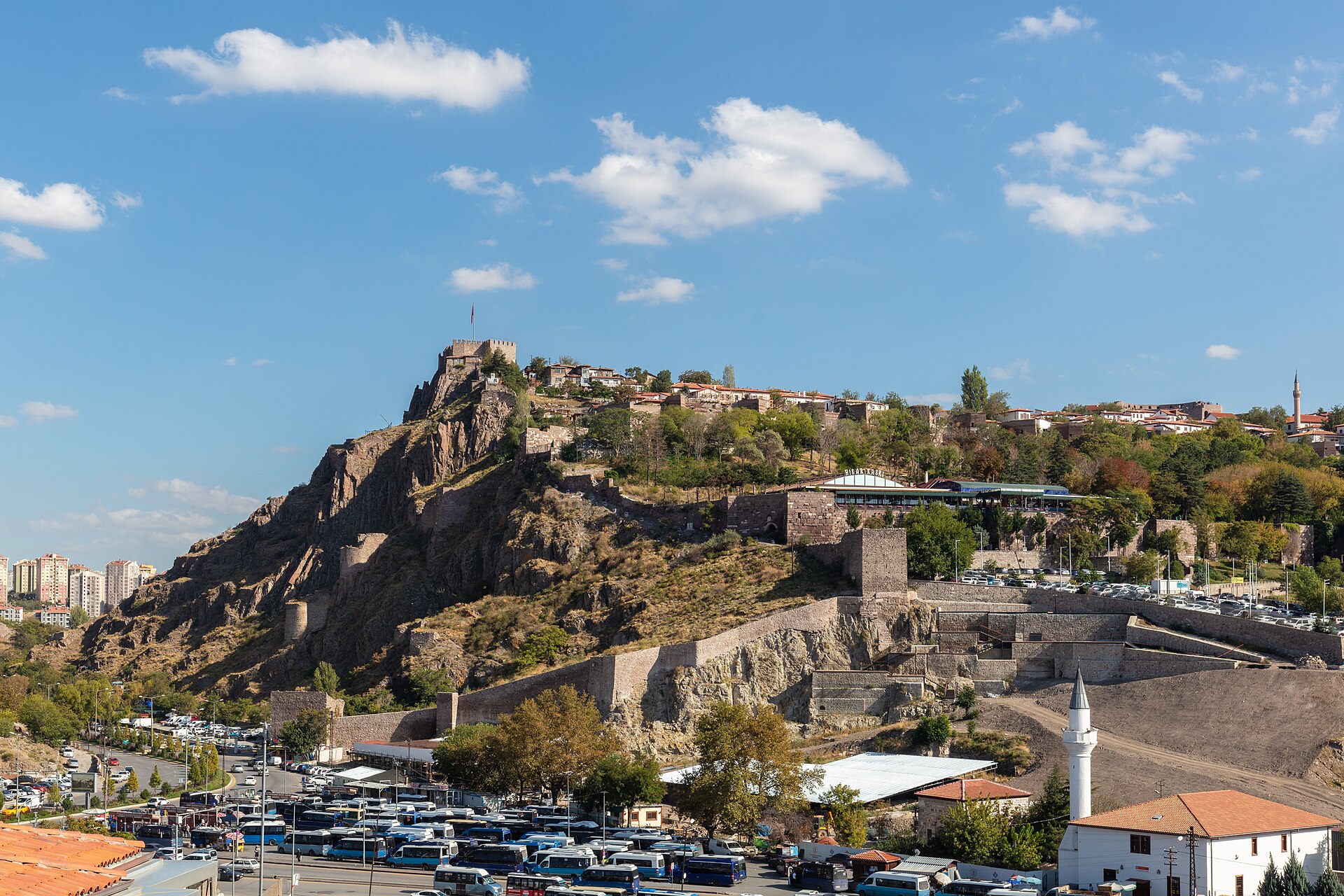
Ankara is the province around Türkiye’s capital, mostly in Central Anatolia, and the city became the capital of the Republic in 1923. Visit for Anıtkabir, the Anatolian Civilizations Museum and the old Citadel quarter. High-speed trains from Istanbul take about 4.5 hours, according to Wikivoyage.
Key facts
- Location: Central Anatolia, partly Black Sea region
- Airport: Esenboğa, 30 km north of the centre (Wikivoyage)
- From Istanbul: High-speed train about 4.5 h; coach about 6 h (Wikivoyage); check current timetable
- Best season: Early autumn (Wikivoyage); spring also good
- Typical visit time: 1 day for top sights; 2-3 days with day trips
- Population: 5,782,285 (2022)
- Districts: 25
- UNESCO: Gordion in the province is a World Heritage property
- Entrance: See official page
What is Ankara and why visit it?
Ankara is the province around Türkiye’s capital city, mostly in Central Anatolia with a part in the Black Sea region. It became the capital of the Republic in 1923. Visit for Anıtkabir, the Anatolian Civilizations Museum, the old Citadel quarter and a calmer, more local city atmosphere.
The city is a government and university centre. Therefore it feels different from Istanbul, with wide boulevards, museums and cafés rather than crowded tourist streets. Moreover, it reaches far back in time, because Hittites, Phrygians, Lydians and Galatians all lived in the area.
Ankara also works as a gateway. Travellers use it as a stop between Istanbul, Konya and Cappadocia.
The main reasons to plan time in Ankara are these.
- Anıtkabir: the mausoleum of Mustafa Kemal Atatürk, on a hilltop in the city.
- Anatolian Civilizations Museum: displays from prehistory to the Roman era.
- Ulus and the Citadel: the old city quarter.
- Gordion: a nearby UNESCO site linked to the Phrygians.
- Beypazarı: a historic town in the province.
What is the history of Ankara?
Ankara was the capital of the Galatian Tectosages in the Hellenistic period, according to the Culture Portal. It later served as a Roman provincial capital, an important Byzantine city and the centre of the Anatolia Eyalet in Ottoman times. In 1920 Atatürk chose it as the seat of the provisional government, and in 1923 it became the capital.
The Seljuk victory at Malazgirt in 1071 decided the city’s fate, as the Culture Portal explains. As a result, the city passed into Turkish hands. In contrast to the long older story, the capital role is relatively modern.
The name also has a story. The Culture Portal cites an ancient source saying the first name, Ankypa (Latin Ancyra), means ship’s anchor in Greek.
The table lists the main historical stages.
| Period | Event | Source note |
|---|---|---|
| Early periods | Hittites, Phrygians, Lydians and Galatians lived here | Culture Portal, citing excavations |
| Hellenistic | Capital of the Galatian Tectosages | Culture Portal |
| Roman and Byzantine | Provincial capital, then important city | Culture Portal |
| 1071 | Malazgirt victory decides the city’s fate | Culture Portal |
| Ottoman | Centre of the Anatolia Eyalet | Culture Portal |
| 1920 and 1923 | Provisional government, then capital of the Republic | Wikipedia |
What should you see in Ankara? (highlights at a glance)
Begin with Anıtkabir, which Wikivoyage describes as an extensive hilltop site centred on the mausoleum of Atatürk. Then visit the Anatolian Civilizations Museum, south of Ankara Castle per GoTürkiye. Finish in Ulus, the old city, and in Kızılay for a modern evening.
Here are the key highlights.
- Anıtkabir: ideal place to start visiting Ankara, according to GoTürkiye.
- Anatolian Civilizations Museum: Wikivoyage lists an excellent display from prehistory to the proto-Greek and Roman eras.
- Ankara Castle and Ulus: old city streets and views.
- Kızılay: central district, named for the Red Crescent headquarters.
- Lake Tuz: the second largest lake in Türkiye, partly in Şereflikoçhisar.
- Işık Mountain in Kızılcahamam: highest point, 2,015 m.
The table compares the main stops.
| Stop | Type | Typical time | Best for |
|---|---|---|---|
| Anıtkabir | Mausoleum and museum complex | 1.5-3 hours | Republic history |
| Anatolian Civilizations Museum | Museum | 2-3 hours | Prehistory to Roman eras |
| Ulus and Citadel | Old quarter | 1-2 hours | Streets and views |
| Kızılay | Modern centre | Evening | Cafés and shopping |
| Lake Tuz | Natural site | Half day | Landscape |
How do you get to Ankara and get around?
Most visitors arrive by plane, high-speed train or coach. Wikivoyage says Esenboğa Airport is 30 km north of the centre. From Istanbul, the high-speed rail takes about 4.5 hours, and coaches take six hours non-stop. Check current timetables.
Airport coaches run from Kızılay, and Havaş also runs from the main AŞTİ terminal, per Wikivoyage. Therefore you do not need a taxi for the airport leg. Inside the city, use the metro and buses, and check the current network.
The table lists typical routes with Wikivoyage figures.
| Route | Mode | Typical duration | Note |
|---|---|---|---|
| Esenboğa Airport to centre | Airport coach or taxi | Check current options | Airport is 30 km north |
| Istanbul to Ankara | High-speed train (YHT) | About 4.5 hours (Wikivoyage) | 13 daily via Pendik, per Wikivoyage |
| Istanbul to Ankara | Coach | About 6 hours non-stop (Wikivoyage) | Departures every 15 min, per Wikivoyage |
| Intercity coach hub | AŞTİ terminal | – | Huge two-storey terminal |
| City sights | Metro, bus, taxi | Check current network | Anıtkabir is a hilltop site |
When is the best time to visit Ankara?
Early autumn has the best climate, according to Wikivoyage. Summers are hot, regularly topping 30 °C in July and August, but humidity is low. Annual precipitation in the city is 415 mm, so it is a dry city overall. Winters can be cold, so check the forecast.
The table gives a seasonal overview.
| Season | Weather (general) | Crowds | Notes |
|---|---|---|---|
| Spring | Mild | Moderate | Good for city walks |
| Summer | Hot, low humidity (Wikivoyage) | Moderate | Visit museums in the heat of the day |
| Early autumn | Best climate (Wikivoyage) | Moderate | Ideal for Anıtkabir and Citadel |
| Winter | Cold; check forecast | Lighter | Indoor museums work well |
How long should you stay in Ankara?
One day covers the top sights. Two days add the old quarter, a day trip and a slower pace. A stopover of half a day is possible if you arrive by train.
These plans show typical choices.
| Time | Suggested plan | Who it suits |
|---|---|---|
| Half day | Anıtkabir and the museum | Transit travellers |
| 1 day | Anıtkabir, museum, Ulus, Citadel | First-time visitors |
| 2-3 days | Add Beypazarı, Gordion or Lake Tuz | History and nature fans |
What practical tips help in Ankara?
Ankara is formal and quiet. Dress neatly at Anıtkabir and respect the ceremonial rules there. For tickets and fees, see the official page of each museum, because rules change.
These tips cover most visits.
- Anıtkabir: expect security checks; carry ID and check official visiting rules.
- Tickets: see official page (muze.gov.tr) for current fees.
- Accessibility: Citadel streets are steep and uneven; plan taxis for the climb.
- Photography: follow signs, especially at Anıtkabir ceremonies.
- Safety: standard city care; keep an eye on belongings in busy areas.
- Etiquette: stay respectful in memorial areas.
Where should you stay and eat in Ankara?
Stay in Kızılay or nearby Çankaya for transport links and restaurants. Choose Ulus for old-city atmosphere. For food, look for local restaurants and bakeries and ask for the regional speciality of the day.
Neighbourhood-level notes:
- Kızılay: central, with metro links.
- Çankaya: calmer and residential, near embassies.
- Ulus: old city, close to the Citadel and the museum.
What are the nearby places and day trips from Ankara?
Beypazarı is a historic town in the province, and Gordion is a UNESCO site linked to the Phrygians. Lake Tuz and Kızılcahamam offer nature. Konya is reachable by high-speed train in 1 hr 45 min, according to Wikivoyage.
Related pages:
- Anıtkabir
- Gordion
- Beypazarı
- Konya
- Mevlana Museum
Plan this with TurkGT
TurkGT is an Istanbul-based travel company that offers guided trips, private transfers, and guide or interpreter services. Share your dates and we will confirm options by WhatsApp. We do not publish prices without confirming availability.
Frequently asked questions
Why is Ankara the capital?
Atatürk and the Turkish National Movement chose Ankara as the site of the provisional government in 1920, and it became the capital in 1923.
What does Ankara’s old name mean?
The Culture Portal says the first name, Ankypa (Latin Ancyra), means ship’s anchor in Greek.
How far is Esenboğa Airport from the centre?
Wikivoyage says it is 30 km north of the centre.
How long is the train from Istanbul?
Wikivoyage gives about 4.5 hours by high-speed rail. Check the current timetable.
How many districts does Ankara have?
Ankara has 25 districts, according to Wikipedia.
What is the best season for Ankara?
Wikivoyage says early autumn has the best climate.
What is the highest point in Ankara province?
Işık Mountain in Kızılcahamam, 2,015 m, according to Wikipedia.
How much is entry to Anıtkabir or the museum?
Check the official pages for current fees. We do not list prices.
Related on TurkGT
Sources
- Ankara Province (Wikipedia)
- Ankara – Türkiye Kültür Portalı (Ministry of Culture and Tourism)
- Go Türkiye: Ankara
- Ankara – Wikivoyage
Last reviewed: 2026-11-17.