
Ankara’s two best-known mosques are Kocatepe in Kızılay, the city’s largest, and Hacı Bayram in Ulus, built around a Sufi saint’s tomb. Our registry holds a short list of religious sites, so this is a focused guide. Dress modestly, avoid prayer times and check hours first.
Key facts
- Largest mosque: Kocatepe Mosque, completed 1987
- Oldest here: Hacı Bayram Mosque, 15th century
- Districts: Kızılay (Çankaya) and Ulus (Altındağ)
- Related sites: Temple of Augustus and Rome; Anıtkabir
- Dress: Modest; cover shoulders and knees; women carry a scarf
- Shoes: Remove before entering prayer halls
- Entry: Check hours and rules on the day
- Scope: Short list; data in our registry is limited
Which mosques should you visit in Ankara?
Visit Kocatepe Mosque and Hacı Bayram Mosque first. Kocatepe is the largest mosque in Ankara, an Ottoman Classical-style complex completed in 1987 in Kızılay. Hacı Bayram is a 15th-century Ottoman mosque in Ulus, rebuilt in the 1700s around the tomb of Hacı Bayram-ı Veli.
Together they show two sides of the capital. One is a modern landmark built in classical style, and the other is a working pilgrimage site with deep local meaning. Our registry holds only these two mosques with images, so we keep the list short rather than invent others.
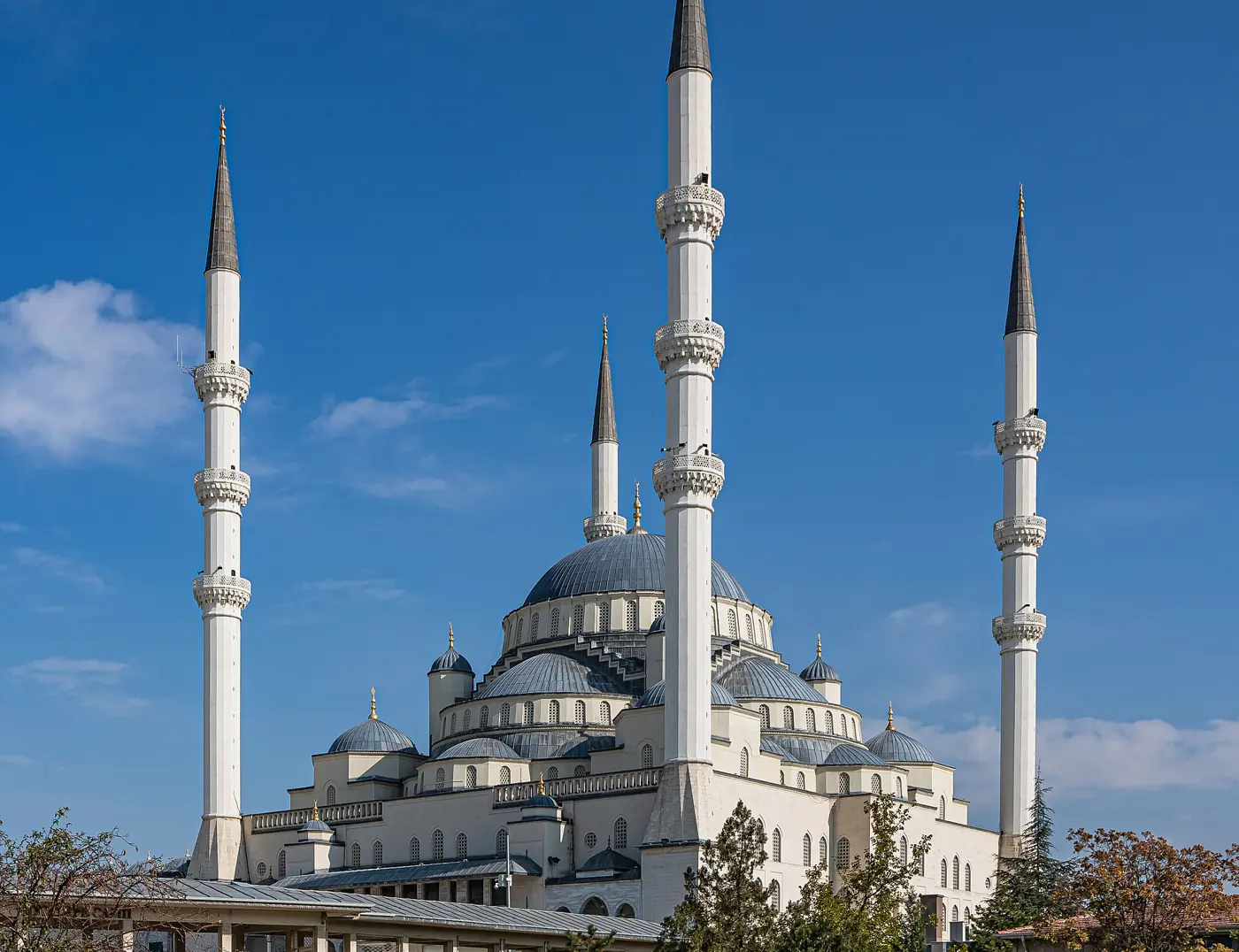
1 Kocatepe Camii
Kocatepe is the largest mosque in Ankara, completed in 1987 in the Kızılay district. Its Ottoman Classical revival style makes it a landmark visible from much of the centre.
- Completed: 1987
- Style: Ottoman Classical revival
- Area: Kızılay, Çankaya
Show map
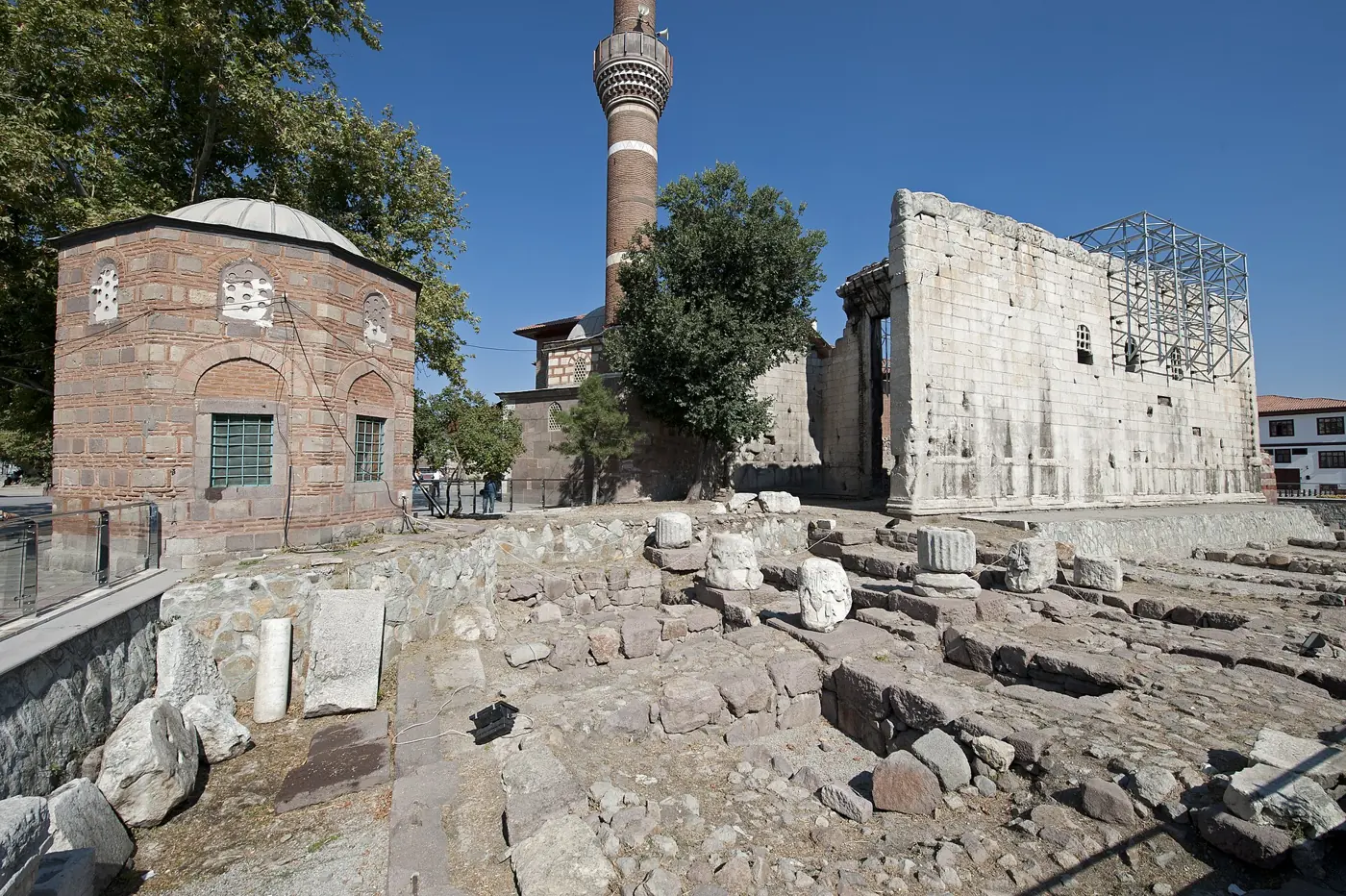
2 Hacı Bayram Camii
This mosque was built in the 15th century around the tomb of the Sufi saint Hacı Bayram-ı Veli and rebuilt in the 1700s. It stands beside the Temple of Augustus and Rome.
- Built: 15th century, rebuilt 1700s
- Next to: Temple of Augustus and Rome
Show map
What other religious or memorial sites are nearby?
Two nearby sites add historical context, although neither is a mosque. The Temple of Augustus and Rome stands beside Hacı Bayram and shows the Roman layer of the city. Anıtkabir is a national mausoleum, not a place of worship, but many visitors treat it with similar solemnity.
Therefore, plan the Ulus pair together and treat Kocatepe and Anıtkabir as separate stops. Moreover, respectful behaviour applies at all of them.
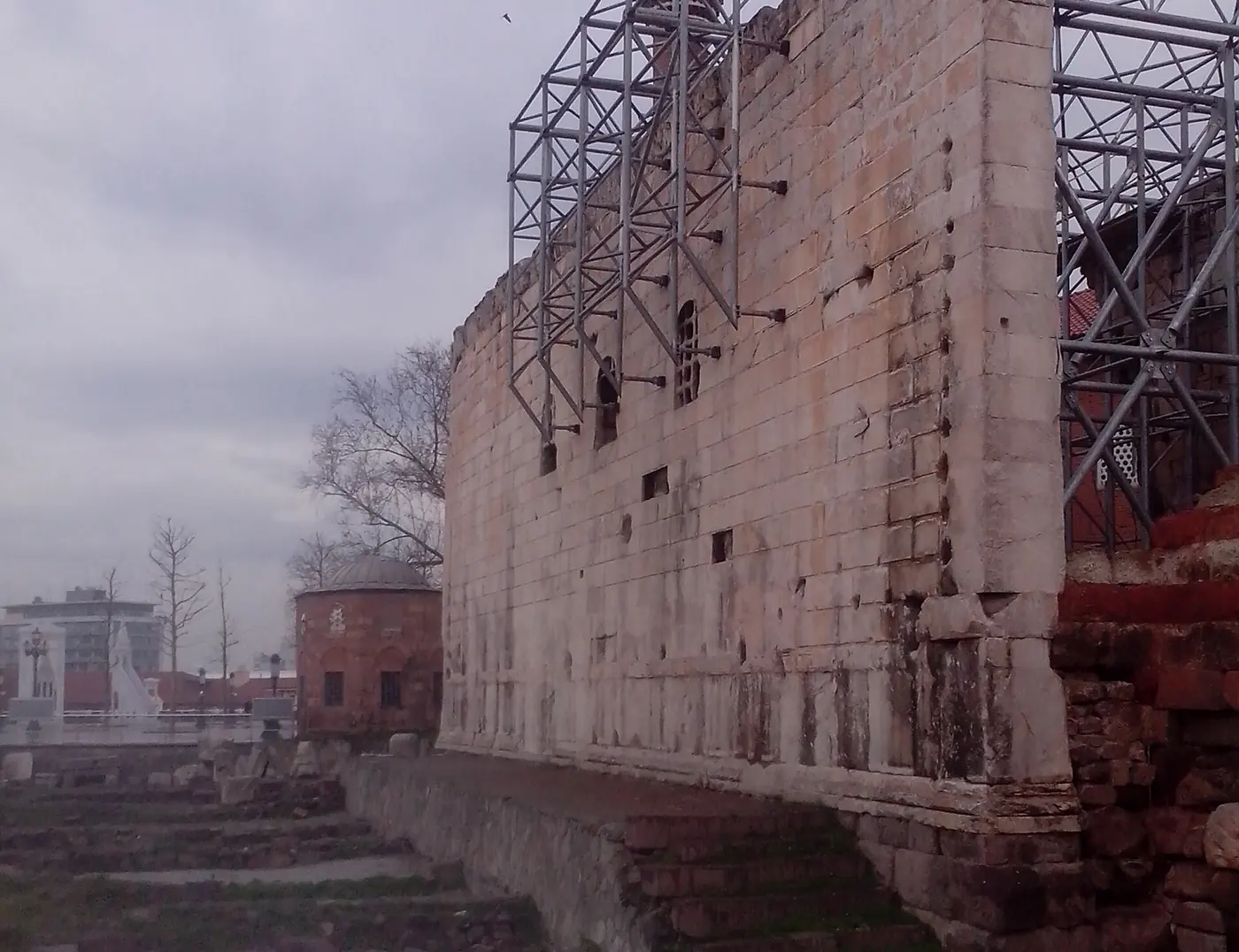
3 Augustus Tapınağı
A Roman temple of about 25-20 BC with the Res Gestae inscription. It stands next to Hacı Bayram Mosque, so the two make an easy pair.
- Built: c. 25-20 BC, Galatian origins
- Inscription: Res Gestae Divi Augusti
- Next to: Hacı Bayram Mosque
Show map
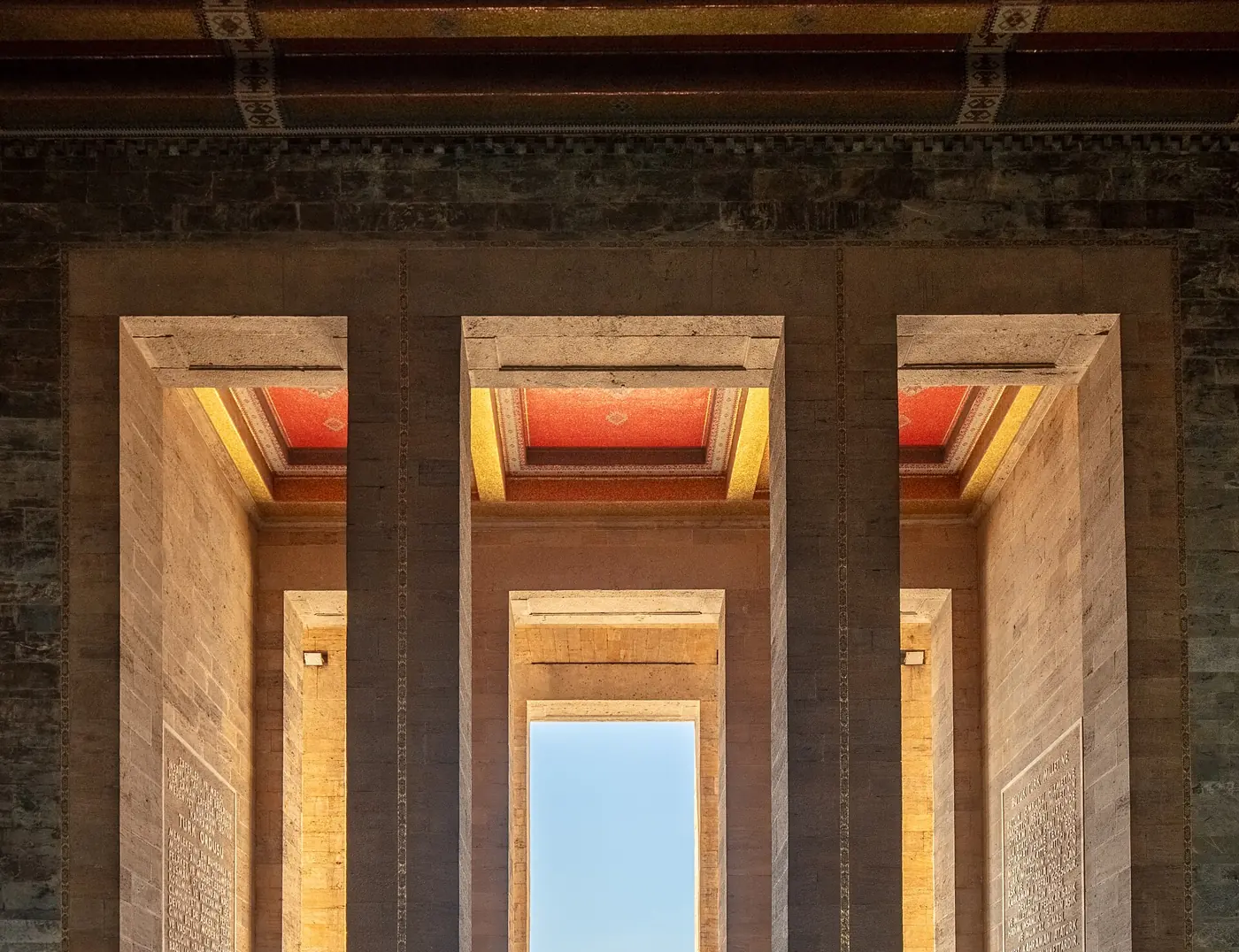
4 Anıtkabir
The mausoleum of Atatürk on Rasattepe hill in Çankaya. It is a national memorial rather than a mosque, and visitors should stay quiet and dress with respect.
- Opened: 1953
- Architects: Emin Onat and Orhan Arda
- Area: Rasattepe hill, Çankaya
Show map
How do the sites compare?
The table compares the four stops by type, area and what to expect. It uses registered facts only. Use it to decide which stops fit your interests.
Hacı Bayram and the Temple of Augustus belong together in Ulus. Kocatepe sits in Kızılay, a short metro ride away.
This table compares the main sites.
| Site | Type | Area | Key fact |
|---|---|---|---|
| Kocatepe Mosque | Mosque | Kızılay | Largest in Ankara, completed 1987 |
| Hacı Bayram Mosque | Mosque and tomb | Ulus | 15th century, rebuilt 1700s |
| Temple of Augustus and Rome | Roman temple | Ulus | Res Gestae inscription |
| Anıtkabir | Mausoleum | Çankaya | Opened 1953 |
What is the etiquette for visiting a mosque?
Dress modestly. Men and women should cover shoulders and knees, and women should carry a headscarf for the prayer hall. Remove shoes at the entrance and keep your voice low. Do not walk in front of people who pray.
Avoid visiting during the five daily prayers, and expect longer closures around Friday midday prayer. Moreover, ask before you take photographs of worshippers. Staff and volunteers usually guide visitors kindly if you ask.
Mosque hours can change, so we publish none. Check the official page or Google Maps on the day.
Quick etiquette list:
- Cover shoulders and knees.
- Carry a scarf if you are a woman.
- Remove shoes and carry them in a bag.
- Stay quiet and do not interrupt prayer.
- Avoid prayer times and Friday midday.
- Ask before photographing people.
This table lists what to wear and do.
| Item | Women | Men |
|---|---|---|
| Clothing | Long sleeves or shawl, long skirt or trousers | Long trousers, no sleeveless shirts |
| Head | Scarf for the prayer hall | Not required |
| Shoes | Remove at entrance | Remove at entrance |
| Behaviour | Quiet, do not cross prayer rows | Quiet, do not cross prayer rows |
How do you get to the mosques?
Kocatepe is in Kızılay, which has central metro connections. Hacı Bayram is in Ulus, served by the Ankaray line at Ulus station. Both can be linked by metro in a short ride.
If you plan more stops in one day, a private car with a driver saves time. A licensed guide adds the religious and historical context that signs do not give.
Transport options:
- Metro to Kızılay for Kocatepe.
- Ankaray to Ulus for Hacı Bayram and the Roman temple.
- Taxi between sites if you carry bags.
- Driver and guide for a full day.
What is a simple half-day plan?
Start in Ulus in the morning. Visit the Temple of Augustus and Hacı Bayram Mosque together, then walk to the castle area if you have time. After lunch, go to Kızılay for Kocatepe Mosque.
Add Anıtkabir on another half day because it needs unhurried time. Therefore, do not squeeze all four into a few hours.
Sample order:
- Morning: Temple of Augustus, Hacı Bayram Mosque.
- Lunch: Ulus or old town.
- Afternoon: metro to Kızılay, Kocatepe Mosque.
- Another day: Anıtkabir.
How do you plan around prayer times and holidays?
Mosque visits work best outside the five daily prayers. Midday on Friday is the busiest time for Kocatepe and Hacı Bayram, so plan sightseeing for another day if you can. Religious holidays change the opening pattern and the crowd size.
Therefore, check the daily prayer times on the day you visit and choose mid-morning or mid-afternoon. Moreover, speak with the staff or volunteers at the door if you are unsure whether visitors may enter at that moment.
A guide helps with timing and explanation. Our registry does not give opening hours, so we recommend Google Maps or the official page rather than a guess.
Finally, remember the purpose of the visit. These are living places of worship and memory, not only sights. Therefore, walk slowly, keep conversations short and follow any sign or instruction from staff. Visitors who show courtesy are usually welcomed warmly. If you travel with children, explain the rules before you enter so that the visit stays calm for worshippers and for your family. A short briefing from a licensed guide before each stop also helps, because it covers history, customs and photography limits in one place.
Timing tips:
- Avoid the five daily prayer times.
- Skip Friday midday for sightseeing.
- Expect crowds during religious holidays.
- Choose mid-morning or mid-afternoon.
- Ask staff at the entrance if you are unsure.
This table suggests the best visiting windows.
| Day or time | Visitor suitability | Note |
|---|---|---|
| Weekday mid-morning | Good | Quieter prayer hall |
| Weekday afternoon | Good | Check prayer time first |
| Friday midday | Poor | Main congregational prayer |
| Religious holidays | Limited | Expect closures and crowds |
How did we choose these places?
We chose the places in this guide from official classifications, location and details published by official and reference sources. We do not accept payment for placement, and no venue can buy a card here. We chose sites by their religious or memorial role, location and official descriptions.
Ratings and opening hours change often. Therefore, we show no review scores. Use the Google Maps button on each card to read current ratings, photos, hours and recent visitor comments before you go.
Moreover, we kept the list honest. Where our registry holds limited data on religious sites, we say so and send you to the official page instead of guessing.
Frequently asked questions
What is the largest mosque in Ankara?
Kocatepe Mosque in Kızılay, completed in 1987.
Who is buried at Hacı Bayram Mosque?
The mosque was built around the tomb of the Sufi saint Hacı Bayram-ı Veli.
Can non-Muslims enter?
Visitors are generally welcome outside prayer times if they dress modestly, but check the day’s rules.
What should I wear?
Cover shoulders and knees, and bring a scarf if you are a woman.
Is the Temple of Augustus a religious site?
It was a Roman temple of about 25-20 BC and is now a historic monument beside Hacı Bayram.
Is Anıtkabir a mosque?
No. It is the mausoleum of Atatürk and a national memorial.
Where do I check hours?
Use the official page or Google Maps, because hours change.
Plan this with TurkGT
TurkGT can provide a licensed guide who explains the Roman and Ottoman layers of Ulus, a private car with driver between Ulus, Kızılay and Anıtkabir, and an airport transfer. Contact us by WhatsApp or the inquiry form with your dates.
Request a booking
Related guides
- Top Sights in Ankara: Landmarks and Museums Visitor Guide
- Anıtkabir Ankara: Visit Guide and Nearby Sights
- Museum of Anatolian Civilizations and Ankara Museums
- Best Hotels in Ankara: Top Picks by Area and Style
- Top 10 Restaurants in Ankara: Where to Eat in the Capital
- Ankara Parks and Lakes for Families: Top Picks
- Best Shopping in Ankara: Malls, Metro-Access Centres and Streets
Related destinations and attractions
Explore more city guides
Sources
- Kocatepe Mosque (Wikipedia)
- Hacı Bayram Mosque (Wikipedia)
- Temple of Augustus and Rome (Wikipedia)
- Anıtkabir (Wikipedia)
Last reviewed: 2026-11-21.