
The top sights in Ankara are Anıtkabir, the Museum of Anatolian Civilizations, Ankara Castle and the Roman and Ottoman monuments of Ulus, plus Kocatepe Mosque and Atakule. Most are in Ulus and Çankaya and fit one or two days. Check opening hours and ticket details on each venue’s page.
Key facts
- Core areas: Ulus, Çankaya, Kızılay
- Must-see: Anıtkabir (free-entry tag), Museum of Anatolian Civilizations, Ankara Castle
- Roman sights: Temple of Augustus, Column of Julian
- Mosques: Hacı Bayram (Ulus), Kocatepe (Kızılay)
- Views: Ankara Castle and Atakule
- Metro: Tandoğan (Anıtkabir), Ulus, Kızılay
- Tickets and hours: Check each venue’s page or Google Maps
What are the top sights in Ankara?
Ankara’s top sights are Anıtkabir, the Museum of Anatolian Civilizations, Ankara Castle, Ulus Square, Hacı Bayram Mosque, the Temple of Augustus and Kocatepe Mosque. Together they cover Roman, Ottoman and early Republican history. Moreover, most sit within a short ride of Ulus or Kızılay metro stations.
Ankara is the capital of Türkiye and sits in Central Anatolia. Its sights reflect that role. Anıtkabir honours the founder of the Republic, Ulus preserves early Republican buildings, and the old citadel recalls earlier centuries. Therefore, a visit works as both a history lesson and a city walk.
In short, think of Ankara as three zones. Çankaya holds Anıtkabir and Atakule, Ulus holds the old town and most museums, and Kızılay holds the modern centre with Kocatepe. Moreover, the metro links the zones, so the city feels smaller than its map suggests.
How did we choose these sights?
We selected landmarks, museums and mosques with a clear entry in Wikipedia or an official site and a stated location. We balanced eras, from Roman to modern. We do not accept payment for placement. Visitor opinions change, so check Google Maps for current reviews and conditions.
Therefore, the list reflects history and location, not popularity scores.
Moreover, we checked that each sight has a stated location and a clear theme. Ankara has several similarly named places, so we list each sight once and keep entries distinct. This keeps the list short enough to plan around.
Criteria:
- Documented in Wikipedia or an official source.
- A clear district and nearby transport.
- A mix of eras and themes.
- Suitable for first-time visitors.
- No paid placement.
Which sights should you see?
Fourteen cards follow, grouped roughly from Çankaya through Ulus to Kızılay. Moreover, Ulus holds the densest cluster, so allow extra time there.
The cards begin with Anıtkabir, because it anchors many itineraries. Moreover, the Ulus cluster follows in a natural walking order: museum, castle, square, mosque and Roman temple. The last cards cover Kızılay and Çankaya, which suit the late afternoon and evening.
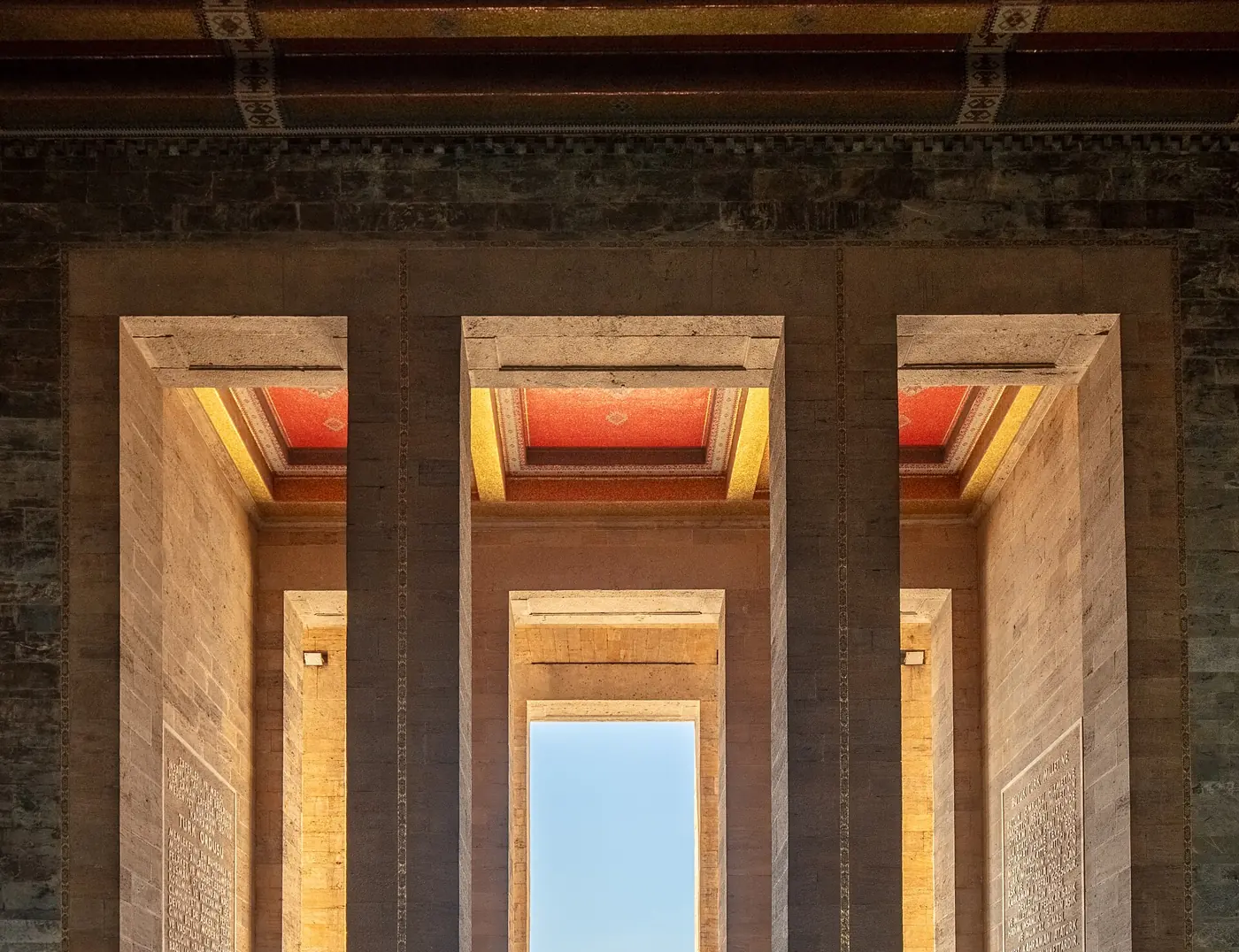
1 Anıtkabir
Anıtkabir is the mausoleum of Mustafa Kemal Atatürk on Rasattepe hill. It also houses a museum and the Independence War Museum. It is tagged free-entry and family-friendly.
- Opened: 1953
- Architects: Emin Onat and Orhan Arda
- Area: Rasattepe hill, Çankaya
Show map
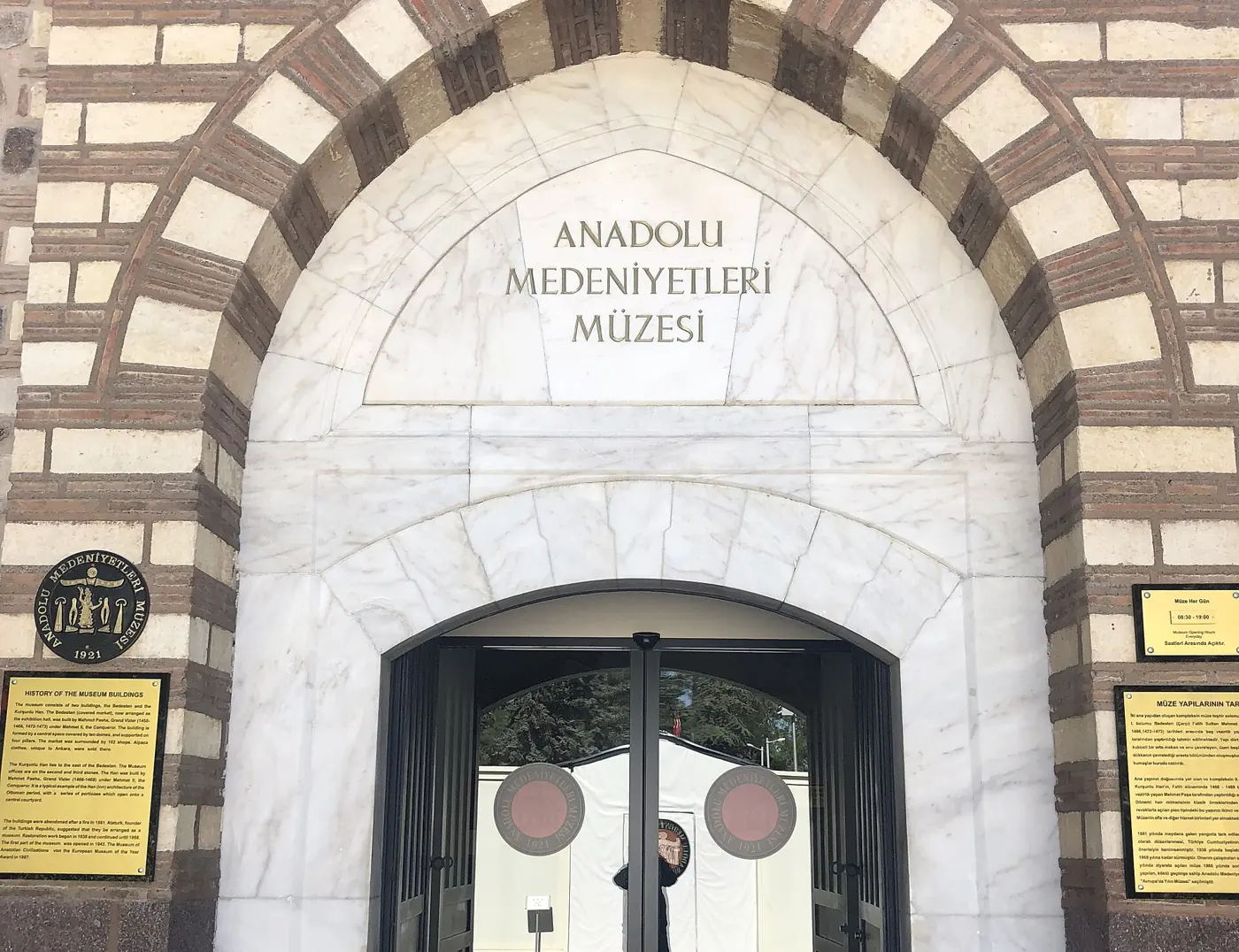
2 Anadolu Medeniyetleri Müzesi
This archaeology museum sits in restored Ottoman buildings below the castle. Its collections run from the Paleolithic to the Phrygian and Urartian periods.
- Housed in: Mahmut Paşa Bedesten and Kurşunlu Han
- Collections: Paleolithic to Phrygian and Urartian
- Area: Ulus, near Ankara Castle
Show map
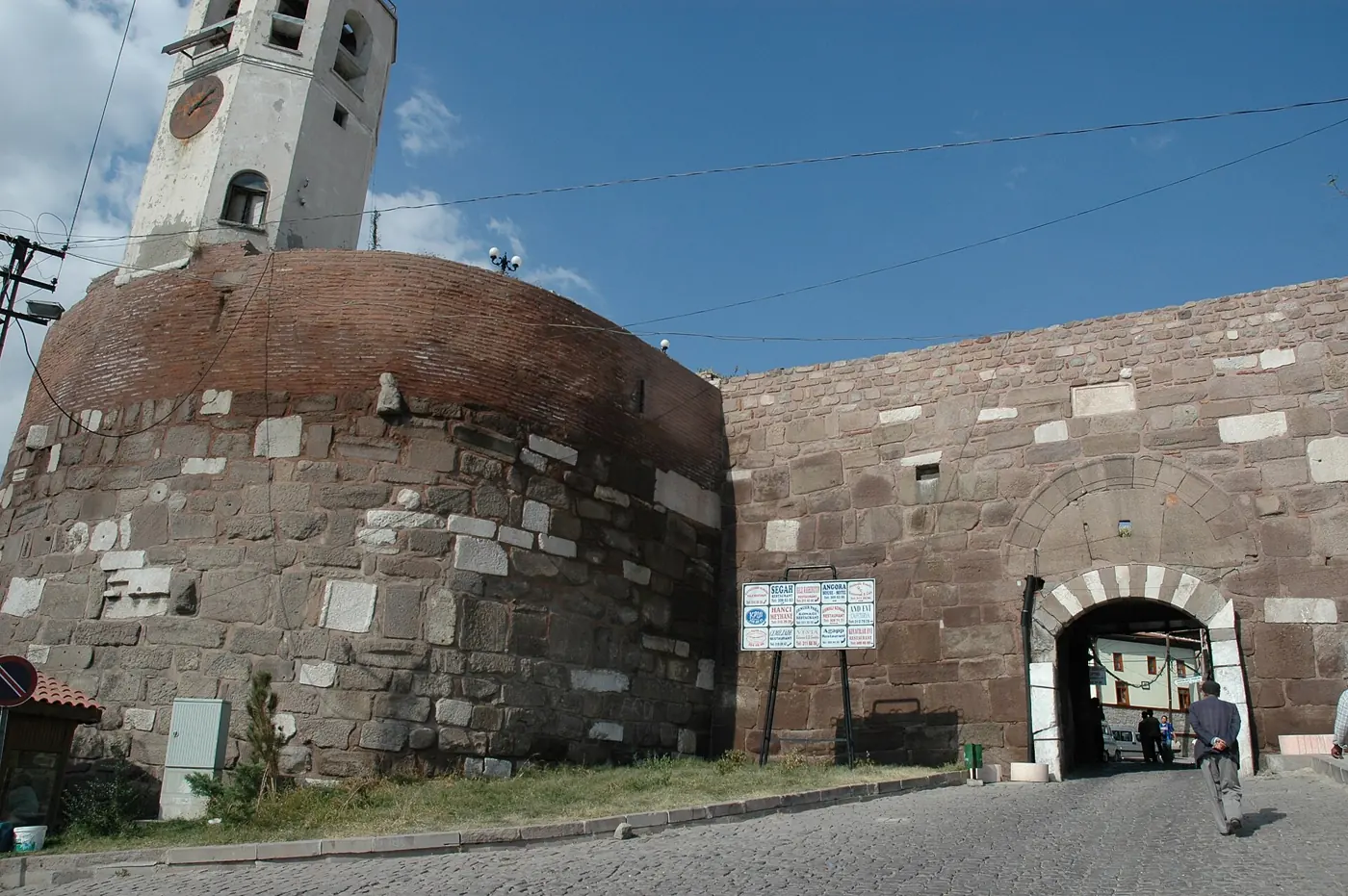
3 Ankara Kalesi
Ankara Castle is a hilltop fortress and old-town quarter above Ulus. Its walls were extended by Seljuks and Ottomans, and the viewpoint looks over the city.
- Area: Hisarparkı, Altındağ
- Origin: Roman/Byzantine walls, rebuilt in later periods
- Nearby: Museum of Anatolian Civilizations
Show map
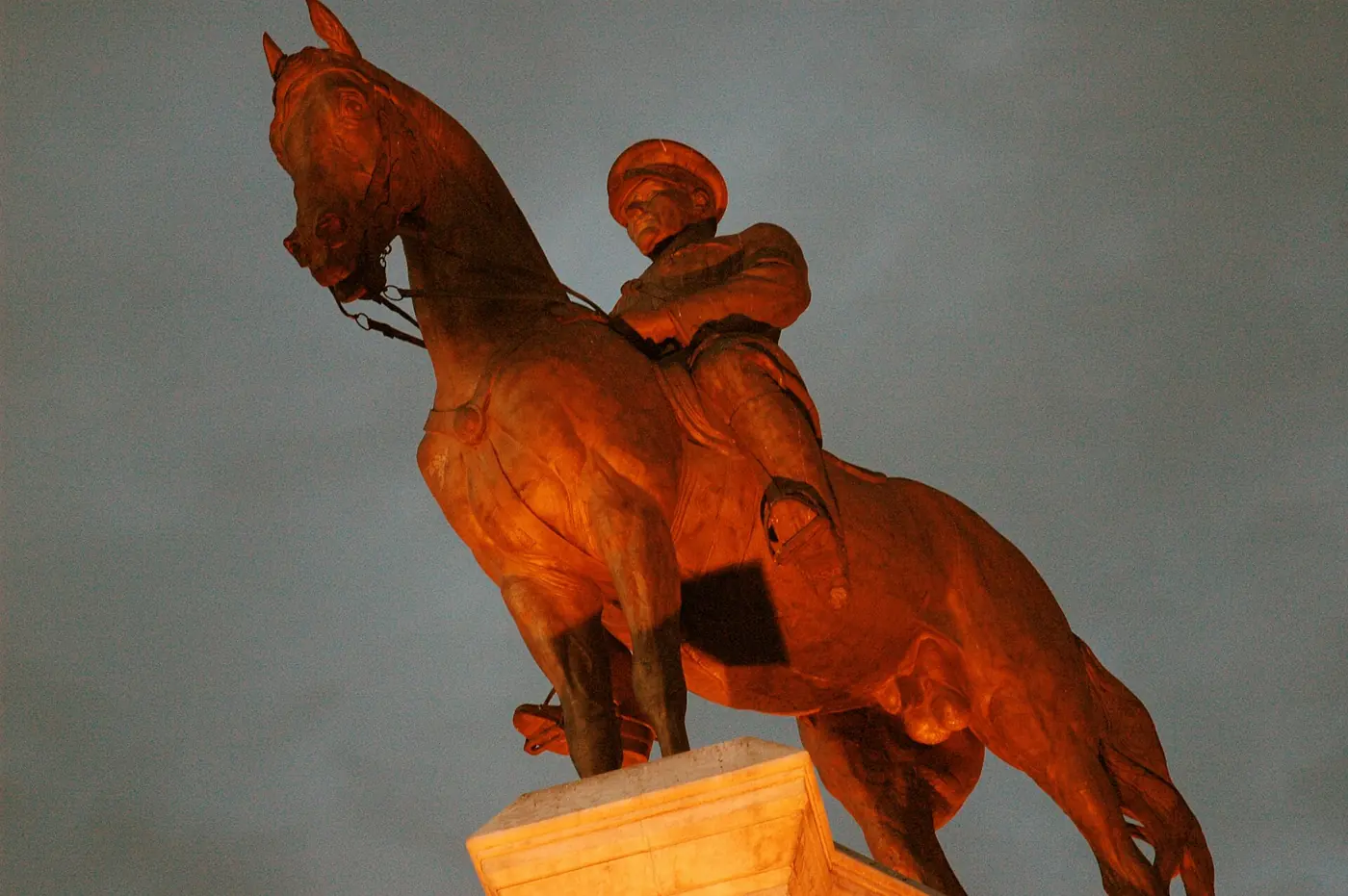
4 Ulus Meydanı ve Zafer Anıtı
Ulus Square is the historic centre of early Republican Ankara, with the Atatürk equestrian monument and the first Parliament building nearby.
- Area: Ulus, Altındağ
- Nearest metro: Ulus (Ankaray)
- Nearby: Ankara Castle, old Parliament
Show map
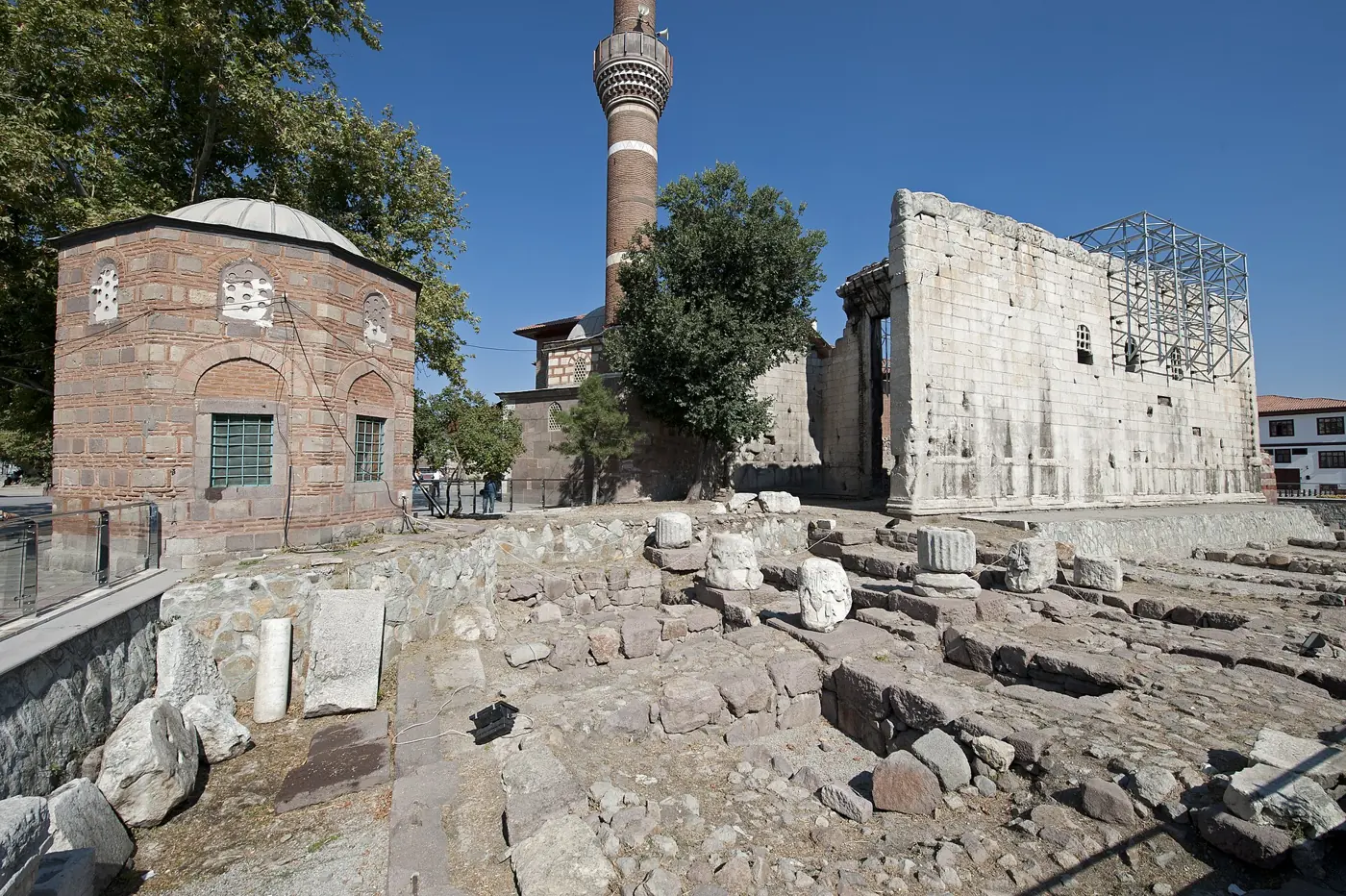
5 Hacı Bayram Camii
Hacı Bayram Mosque is a 15th-century Ottoman mosque built around the tomb of Hacı Bayram-ı Veli, rebuilt in the 1700s, beside the Temple of Augustus.
- Built: 15th century, rebuilt 1700s
- Next to: Temple of Augustus and Rome
Show map
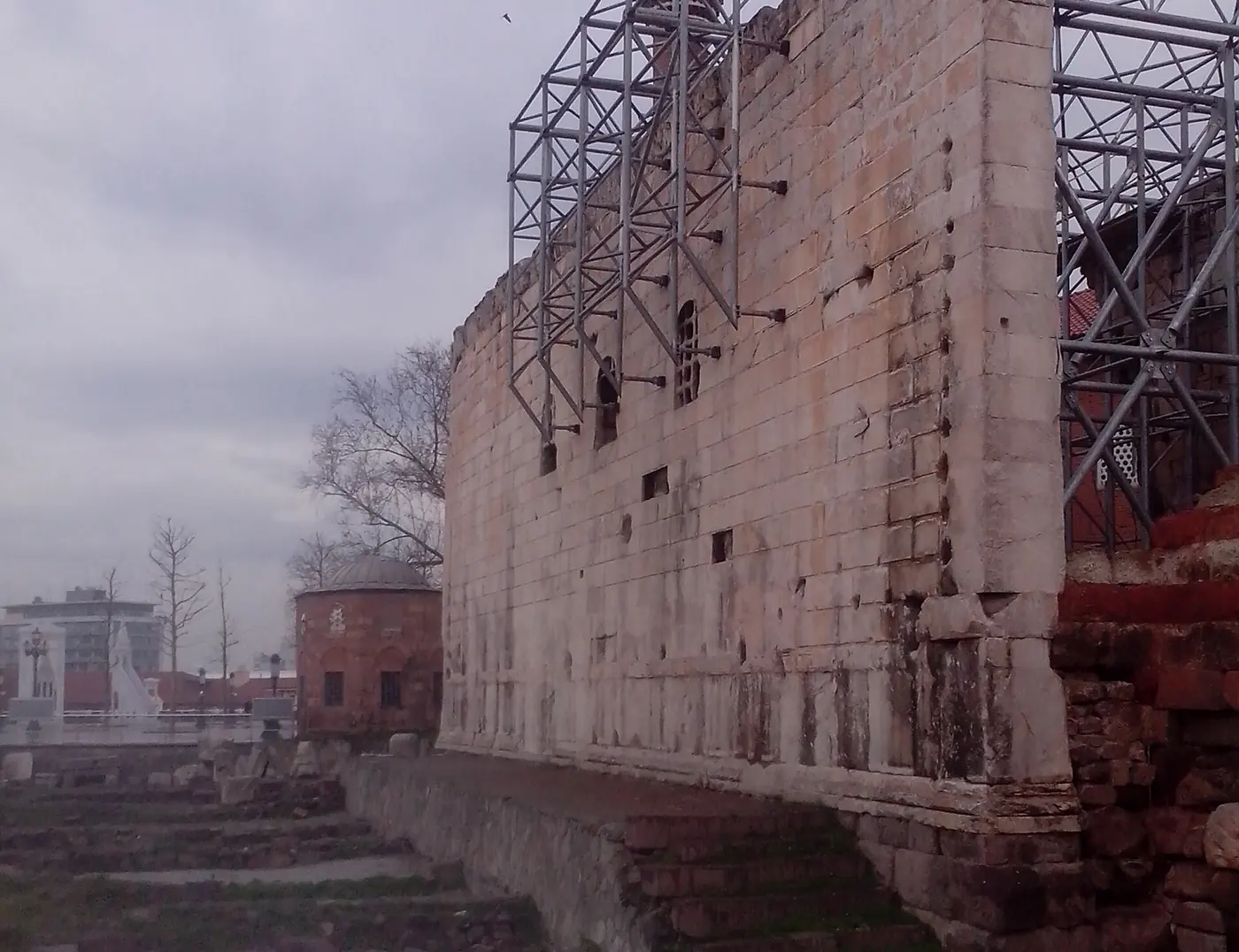
6 Augustus Tapınağı
The Temple of Augustus and Rome is famous for the Res Gestae Divi Augusti inscription on its walls, built around 25-20 BC.
- Built: c. 25-20 BC, Galatian origins
- Inscription: Res Gestae Divi Augusti
- Next to: Hacı Bayram Mosque
Show map
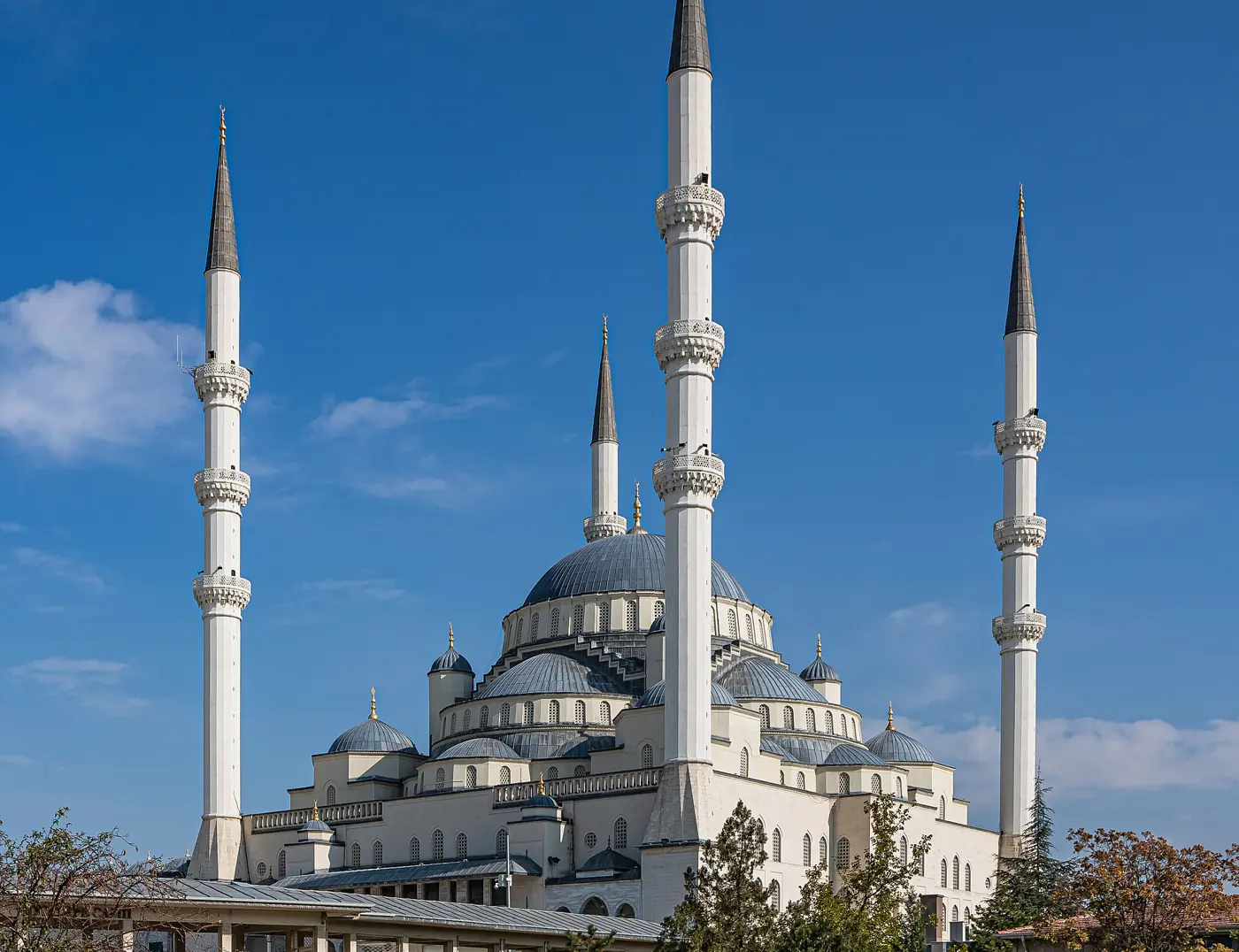
7 Kocatepe Camii
Kocatepe Mosque in Kızılay is the largest mosque in Ankara, an Ottoman Classical-style complex completed in 1987.
- Completed: 1987
- Style: Ottoman Classical revival
- Area: Kızılay, Çankaya
Show map
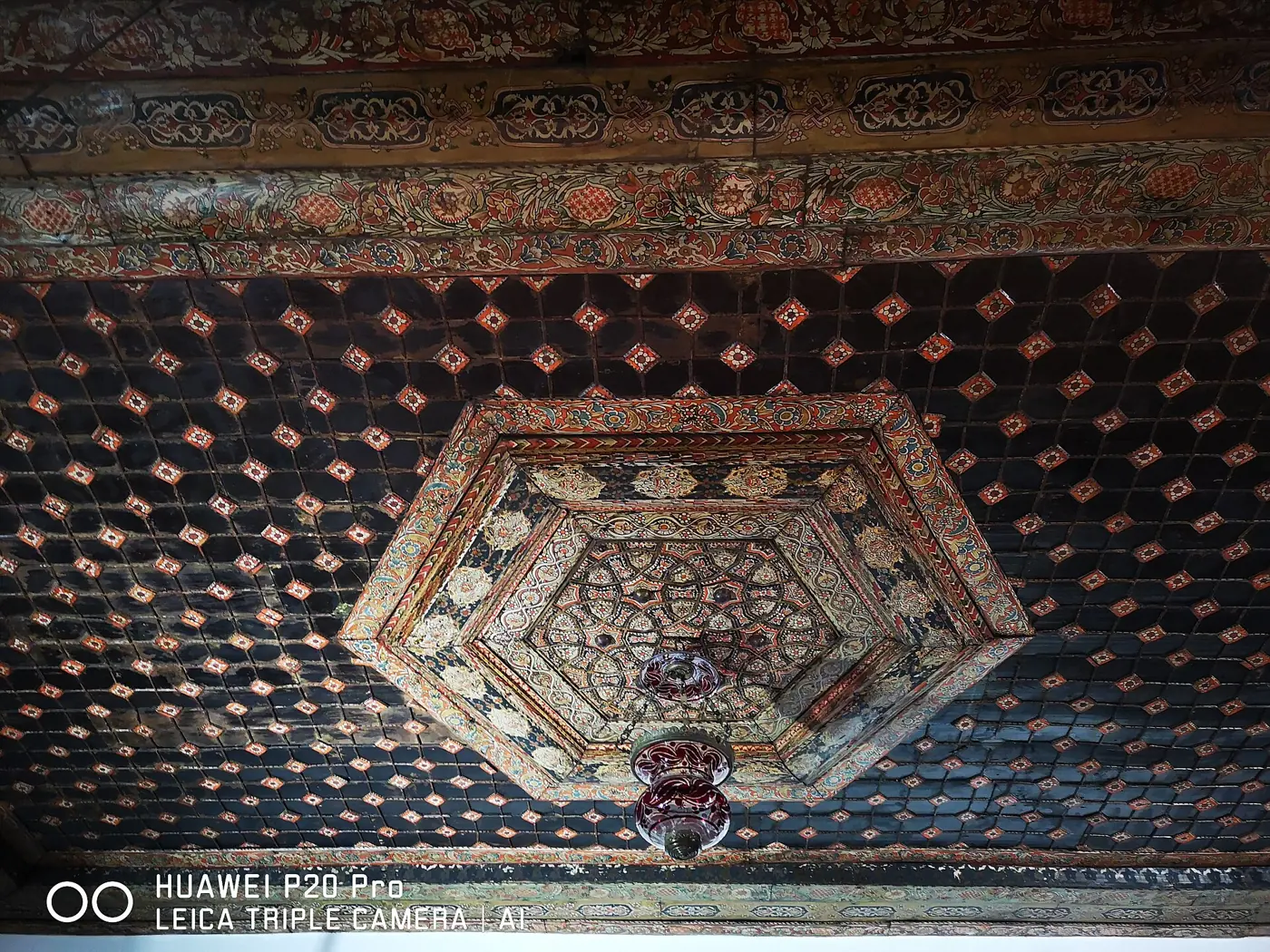
8 Etnografya Müzesi
The Ethnography Museum opened in 1930 and shows Turkish folk culture. Atatürk’s body lay here before the move to Anıtkabir in 1953.
- Opened: 1930
- Architect: Arif Hikmet Koyunoğlu
- Area: Ulus, Altındağ
Show map
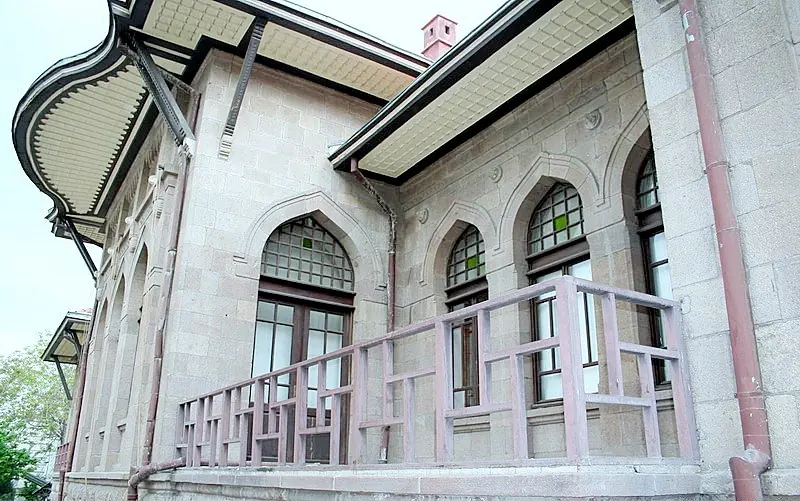
9 Kurtuluş Savaşı Müzesi
This museum occupies the first Parliament building, where the Grand National Assembly met from 1920 to 1924.
- Building: First Grand National Assembly
- Period: 1920-1924
- Area: Ulus
Show map
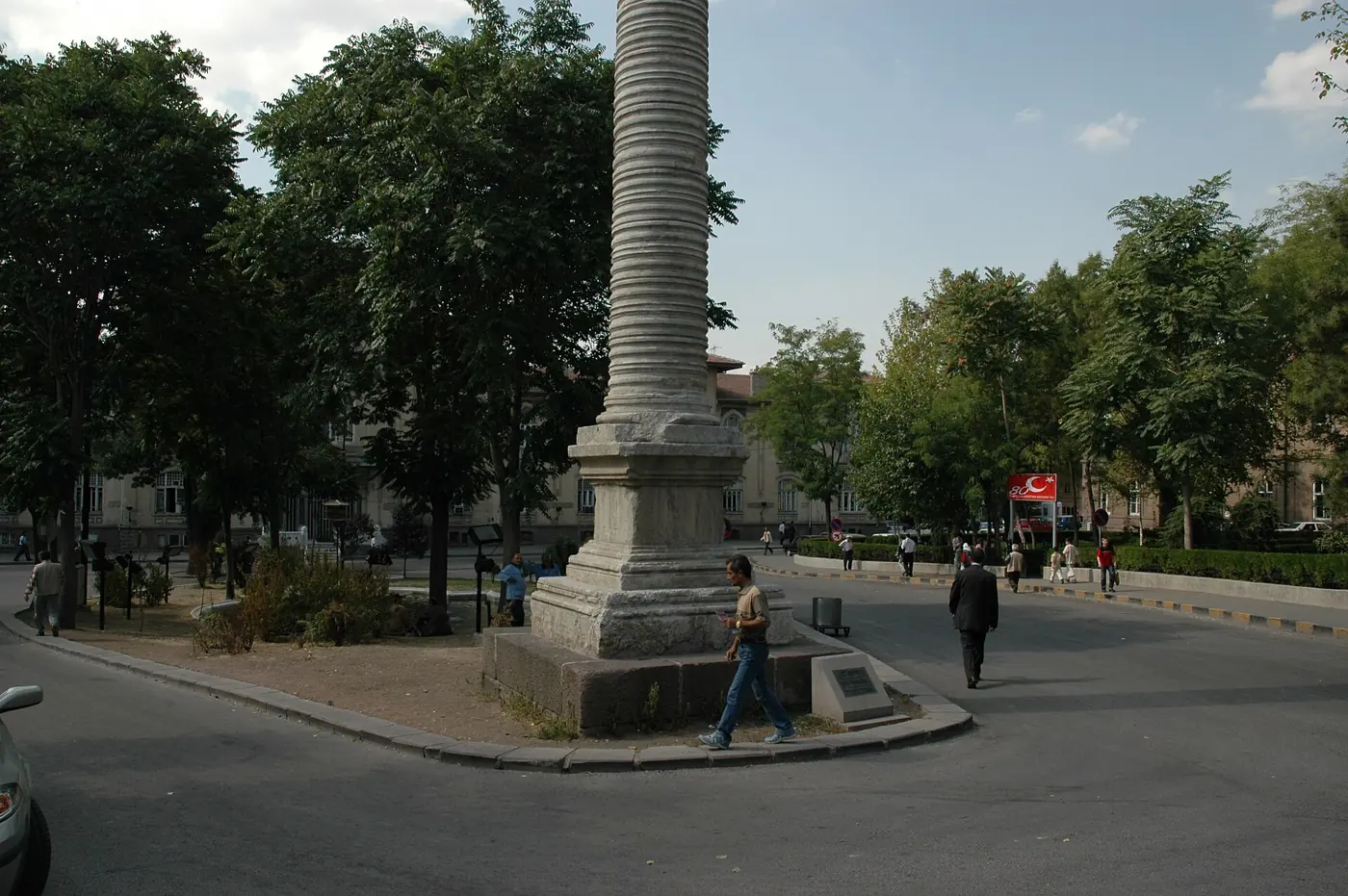
10 Jülyen Sütunu
The Column of Julian is a Roman column of 362 AD, about 15 m high and topped by a stork nest.
- Date: 362 AD
- Height: about 15 m
- Area: Ulus
Show map
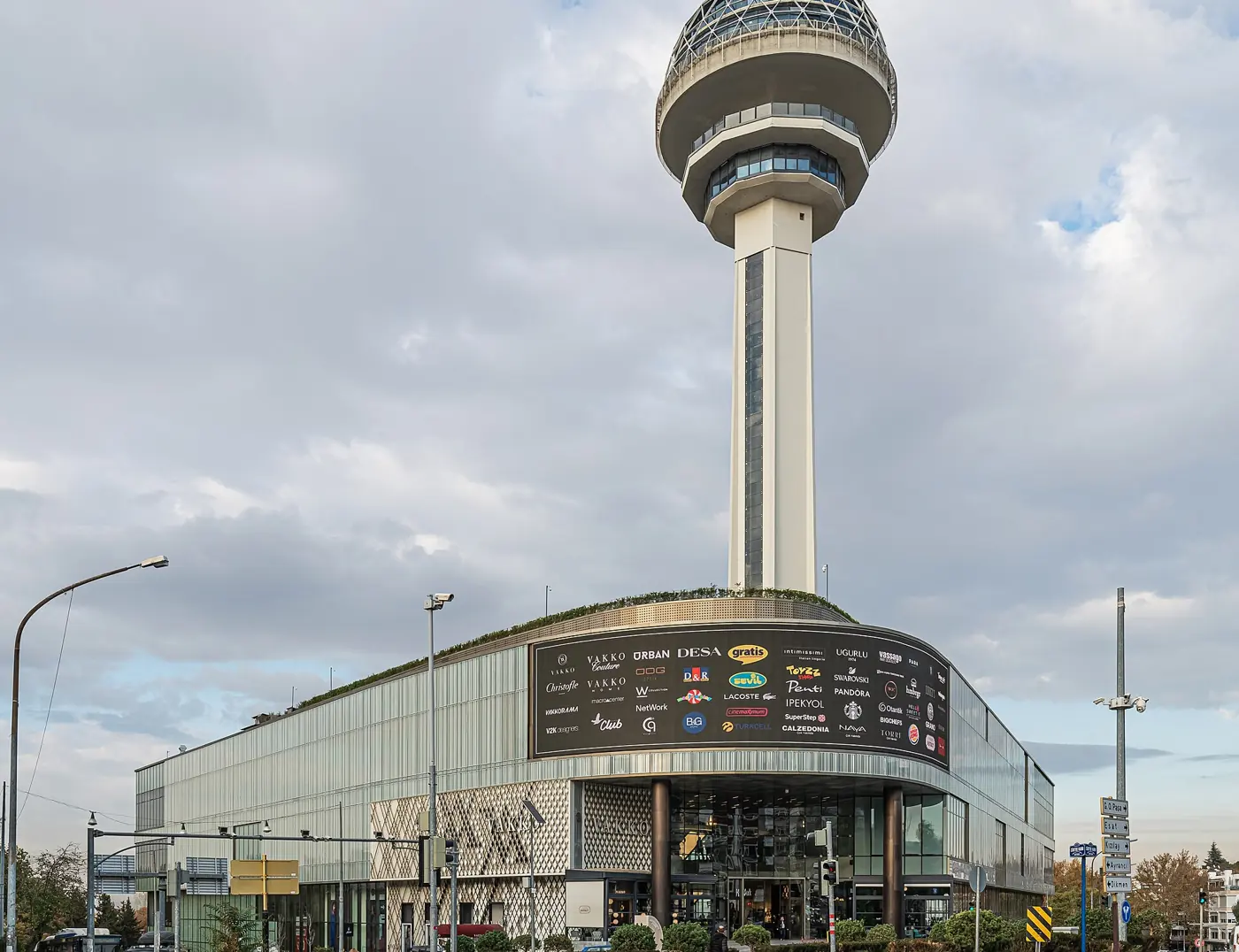
11 Atakule
Atakule is an observation tower and shopping centre in Çankaya with a revolving restaurant and panoramic views.
- Area: Çankaya
- Type: Tower with viewing level, restaurant and shops
Show map
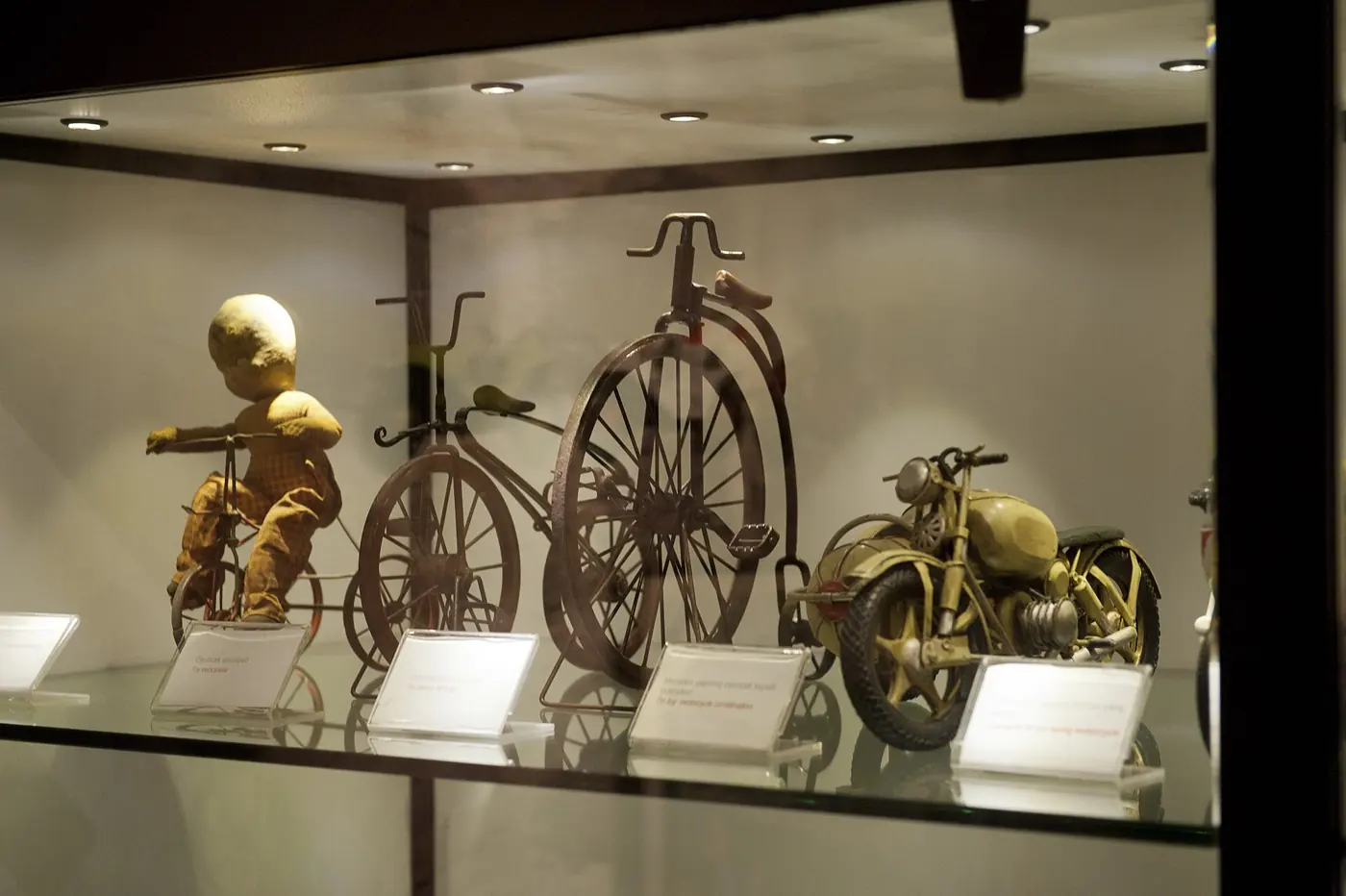
12 Rahmi M. Koç Müzesi
The Rahmi M. Koç Museum fills the restored Çengelhan caravanserai with industry, transport and communications exhibits.
- Building: Çengelhan caravanserai
- Subject: Industry, transport, communications
- Area: Ulus
Show map
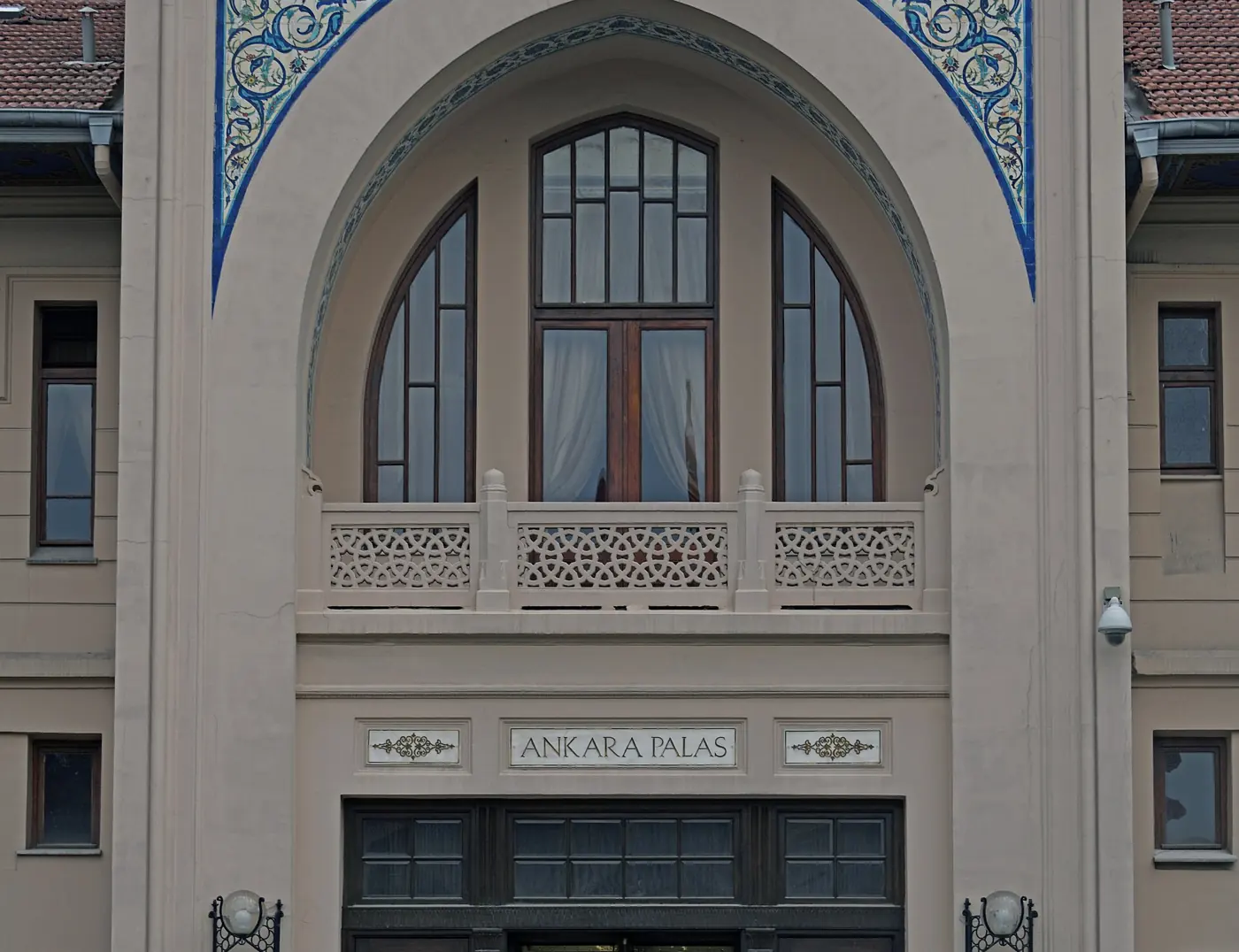
13 Ankara Palas
Ankara Palas is an early Republican hotel and state guesthouse built in 1927 and designed by Vedat Tek. Today it is a heritage landmark in Ulus.
- Built: 1927
- Architect: Vedat Tek
- Area: Ulus
Show map
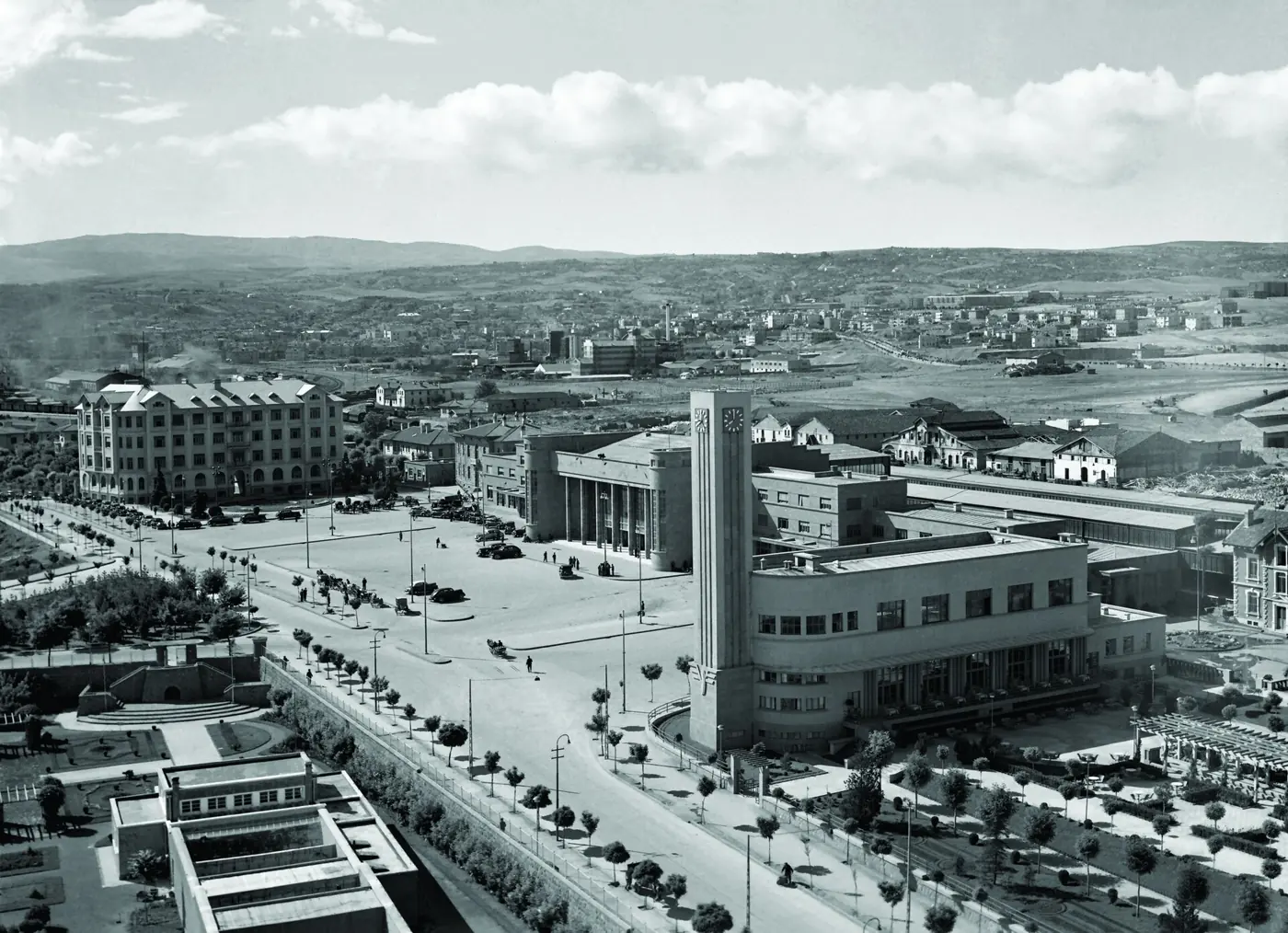
14 Ankara Garı
The historic Ankara Railway Station opened in 1937 and is a key early Republican landmark. It is a good first stop if you arrive by train.
- Opened: 1937
- Area: Altındağ
Show map
How do the sights compare?
Use the table to plan your day. Eras and areas come from our registry. Check hours and tickets on official pages.
The table highlights how many eras the city covers. Roman monuments sit beside an Ottoman mosque, and early Republican museums stand a few minutes away. In contrast, Atakule and Kocatepe show modern Ankara. This range explains why a guide helps connect the stories.
For first-time visitors, the Museum of Anatolian Civilizations and Anıtkabir give the clearest introduction. Add the castle for views. However, if you enjoy Roman history, give extra time to the Temple of Augustus and the Column of Julian in Ulus.
The table lists the era or theme and area of each sight.
| Sight | Era or theme | Area |
|---|---|---|
| Anıtkabir | Republic, Atatürk | Çankaya |
| Museum of Anatolian Civilizations | Prehistory to Urartu | Ulus |
| Ankara Castle | Byzantine, Seljuk, Ottoman | Altındağ |
| Ulus Square | Early Republic | Ulus |
| Hacı Bayram Mosque | Ottoman, 15th century | Ulus |
| Temple of Augustus | Roman, c. 25-20 BC | Ulus |
| Column of Julian | Roman, 362 AD | Ulus |
| Ethnography Museum | Folk culture, 1930 | Ulus |
| War of Independence Museum | 1920-1924 Assembly | Ulus |
| Rahmi M. Koç Museum | Industry and transport | Ulus |
| Kocatepe Mosque | Ottoman revival, 1987 | Kızılay |
| Atakule | Tower, views | Çankaya |
How do you get to the sights and move between them?
Anıtkabir’s nearest metro is Tandoğan on the Ankaray line. Ulus has its own Ankaray station, and Kızılay has a metro station. The Ulus sights are walkable, though uphill towards the castle. In contrast, Atakule needs a taxi or driver, and Anıtkabir needs a short walk from the metro.
Because Ankara is spread over hills, plan the route before you start. Moreover, a metro trip saves time between Çankaya, Ulus and Kızılay, and a taxi or driver fills the gaps. For families and groups, a private car with driver is simpler than changing transport several times.
If you arrive by train, the historic Ankara Railway Station, opened in 1937, is itself an early Republican landmark. Moreover, Ankara Palas, built in 1927 and designed by Vedat Tek, stands in Ulus and is a heritage building to see from the street.
Getting around:
- Ankaray to Tandoğan for Anıtkabir.
- Ankaray to Ulus for the old town, then walk.
- Metro to Kızılay for Kocatepe.
- Taxi to Atakule in Çankaya.
- A private driver saves time between Çankaya and Ulus.
The table lists the nearest hub for each cluster.
| Cluster | Nearest hub | Mode |
|---|---|---|
| Anıtkabir | Tandoğan | Metro and walk |
| Ulus sights | Ulus | Walk |
| Kocatepe | Kızılay | Metro and walk |
| Atakule | Çankaya | Taxi |
What practical tips help?
Start early at Anıtkabir, because it is a large site and a place of national respect. Dress modestly for mosque visits and remove shoes inside. Wear comfortable shoes for Ulus, where streets slope. Moreover, check museum closing days before you go, since they vary.
Photography rules vary at memorials, museums and mosques, so follow posted signs and staff instructions. Furthermore, ask before photographing people. Opening days differ among museums, and some close on one weekday, so check each page. Bring identification if a site requires it.
Weather matters. Summers can be hot on the hills, and winters can be cold, so dress in layers and carry a bottle of water. Furthermore, start outdoor sights early and keep museums for the hottest or coldest part of the day.
Remember:
- Check hours and ticket rules for each museum.
- Dress modestly for mosques.
- Allow time for the castle climb.
- Carry water in warm months.
What does a one-day plan look like?
Begin at Anıtkabir in the morning. Ride to Ulus for lunch and the Museum of Anatolian Civilizations. Walk to Ankara Castle and Hamamönü in the late afternoon. If time remains, see Kocatepe at dusk.
This plan keeps the long ride, from Çankaya to Ulus, to one trip. Moreover, it lets you stop for tea in Hamamönü. If you have a second day, add the Ethnography Museum, the War of Independence Museum and the Rahmi M. Koç Museum, then finish at Atakule for the view.
Finish the day with a view. Atakule offers a panorama from its tower, and Ankara Castle gives another from the old town. Therefore, pick whichever matches your route, and check sunset and closing times before you go.
The plan fits a single day.
| Time | Plan | Area |
|---|---|---|
| Morning | Anıtkabir | Çankaya |
| Midday | Ulus Square and Roman sites | Ulus |
| Afternoon | Museum of Anatolian Civilizations, castle | Ulus |
| Evening | Kocatepe Mosque or Atakule | Kızılay or Çankaya |
Frequently asked questions
What is the number one sight in Ankara?
Anıtkabir, the mausoleum of Mustafa Kemal Atatürk, is the best-known site and carries a free-entry tag in our registry. Check current rules before you go.
How many days do you need in Ankara?
One full day covers the core sights, and two days allow museums and parks at a slower pace.
Is Ankara Castle worth visiting?
Yes, for the walls, the old-town quarter and the views over the city.
Where are the Roman sights?
The Temple of Augustus and Rome and the Column of Julian are in Ulus.
Which mosque is the largest?
Kocatepe Mosque in Kızılay is the largest in Ankara, completed in 1987.
How do I reach Anıtkabir?
The nearest metro is Tandoğan on the Ankaray line, then walk or take a short taxi.
Can I combine Ankara with other cities?
Yes. Ankara sits in Central Anatolia, and Konya and Cappadocia are common next stops.
Plan this with TurkGT
TurkGT offers licensed guides for Anıtkabir, Ulus and the castle, private cars with drivers between districts, airport transfers, and onward tours to Konya or Cappadocia. Send your dates and group size by WhatsApp or the inquiry form and we will reply with options.
Request a booking
Related guides
- Anıtkabir Ankara: Visit Guide and Nearby Sights
- Museum of Anatolian Civilizations and Ankara Museums
- Ankara Castle and Ulus Old Town: Sights and Mosques
- Best Hotels in Ankara: Top Picks by Area and Style
- Top 10 Restaurants in Ankara: Where to Eat in the Capital
- Ankara Parks and Lakes for Families: Top Picks
- Best Shopping in Ankara: Malls, Metro-Access Centres and Streets
Related destinations and attractions
- Ankara
- Central Anatolia Region, Türkiye: Ankara, Cappadocia and Konya
- Konya
- Göreme National Park and the Rock Sites of Cappadocia
Explore more city guides
Sources
- Wikipedia: Anıtkabir
- Wikipedia: Ankara Castle
- Wikipedia: Museum of Anatolian Civilizations
- Wikipedia: Kocatepe Mosque
Last reviewed: 2026-11-21.