
Arslantepe Mound is a 30-metre archaeological tell about 7 km from Malatya in eastern Türkiye, inscribed by UNESCO in 2021. Its Late Chalcolithic palace, built about 3400-3100 BCE, shows early state administration. Visit it for prehistory, but check the official page first, because the site was reported closed for maintenance.
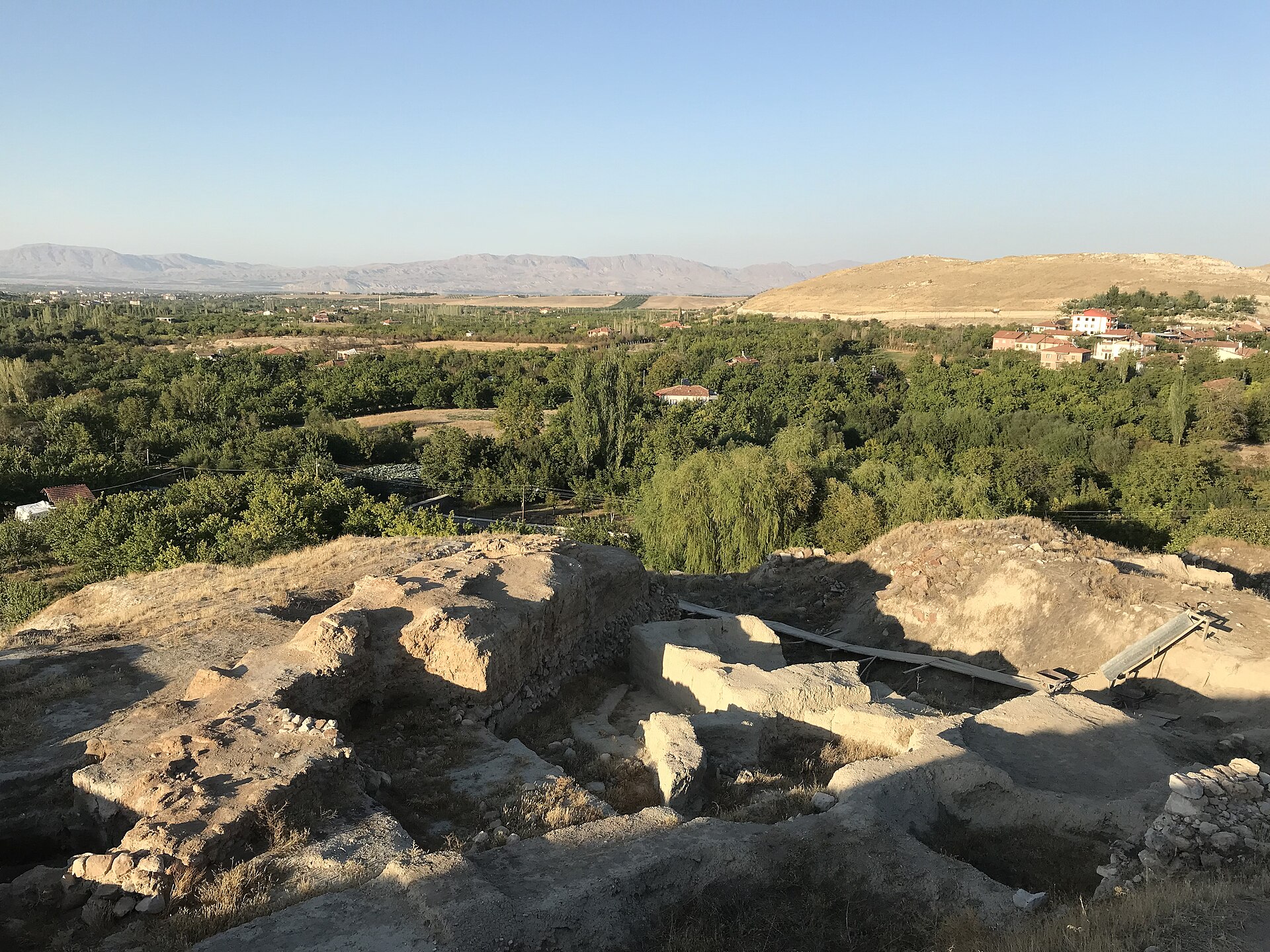
Key facts
- Location: Malatya plain, about 7 km north-east of Malatya, eastern Türkiye
- Distance: Malatya airport about 30 km north-west of the city; flights from Istanbul about 2 hours
- Type and height: Tell about 4.5 ha and 30 m high
- Key period: Late Chalcolithic palace, 3400-3100 BCE
- UNESCO status: Inscribed 2021, criterion (iii); 4.85 ha, buffer 69.22 ha
- Best season: Early autumn and late spring
- Typical visit time: About 2 hours; half day with travel
- Current status: Reported closed for maintenance in 2025; check the official page
- Entrance: See official page (Ministry of Culture and Tourism)
What is Arslantepe Mound and why visit?
Arslantepe Mound is an archaeological tell about 7 km north-east of Malatya in eastern Türkiye, UNESCO-listed in 2021. It rises 30 m above the Malatya plain and holds layers from about 6,000 years of settlement. Visit it for the earliest known evidence of state administration, but check first that the site is open.
The site is quieter and more technical than many Turkish landmarks. Moreover, its value lies in what archaeologists learned, not in tall monuments. As a result, it suits readers who enjoy prehistory and museums, and it rewards a guide or a good background reading.
Important practical note: Wikipedia and Wikivoyage both reported the site closed for maintenance or renovation in 2025. Therefore confirm the current status on the official page before you plan a trip. Malatya also works as a base for Mount Nemrut and eastern Anatolia routes.
What is the history of Arslantepe?
Arslantepe was occupied from at least the 6th millennium BCE until the late Roman period. Its peak came in the Late Chalcolithic, when a palace complex stood on the mound about 3400-3100 BCE. Later layers include an Early Bronze Age Royal Tomb, Hittite levels and a Neo-Hittite city called Melid.
UNESCO stresses the Late Chalcolithic palace. It is the largest unitary complex known from that period, and a sudden, violent destruction in the late 4th millennium BCE sealed the evidence in place. Therefore archaeologists can reconstruct elite life and early administration in great detail.
Wikipedia adds that the earliest known swords, dated to the 33rd-31st centuries BCE, were found here. Around 3000 BCE a large fire ended the Uruk-linked settlement, and Kura-Araxes pottery appears afterwards. The “Royal Tomb” of the early 3rd millennium BCE held rich metal goods.
Later the city was called Melid, a name linked to the Hittite word for honey. The Hittite king Šuppiluliuma I conquered it around 1350 BC. After the Hittite empire, it became the capital of the Neo-Hittite state of Kammanu, until the Assyrian king Sargon II sacked it in 712 BC. Excavation began with Louis Delaporte in 1932-39, and Italian teams have worked since 1961.
What are the highlights of Arslantepe, and what can you see?
The main highlights are the Late Chalcolithic palace complex, the sheltered mud-brick walls, the Royal Tomb layer and Hittite and Neo-Hittite remains. Roof shelters protect the fragile adobe. The best finds are in the Museum of Anatolian Civilisations in Ankara, with replicas on site, so a museum visit adds context.
Use this list to prepare your visit, and check what is currently open.
- Late Chalcolithic palace: terraced buildings with temples and storerooms, dated to 3400-3100 BCE.
- Roof shelters: two shelters protect the fragile mud-brick walls and plaster.
- Royal Tomb layer: a large cist burial from the early 3rd millennium BCE.
- Neo-Hittite remains: lion sculptures and a palace from the Iron Age city of Melid.
- Replicas: copies of finds, such as a Hittite royal statue, stand on site according to Wikivoyage.
- Malatya Archaeology Museum: Kültür Portalı notes that finds from the site are displayed there.
The table below gives an at-a-glance summary of the main layers of the mound.
| Period | Approximate date | What it shows |
|---|---|---|
| Late Chalcolithic palace | 3400-3100 BCE | Early state administration and elite life |
| Early Bronze Age Royal Tomb | Early 3rd millennium BCE | High-status burial with metal goods |
| Hittite period | From about 1350 BC | Fortified regional city |
| Neo-Hittite Melid | 12th-7th centuries BC | Palace and lion sculptures |
| Late Roman levels | Up to the late Roman period | End of long occupation |
Why is Arslantepe a UNESCO World Heritage Site?
UNESCO inscribed Arslantepe Mound in 2021 under criterion (iii). The core property covers 4.85 ha and the buffer zone covers 69.22 ha. UNESCO values it as an exceptional testimony to early administrative elites and the earliest forms of state administration in the Late Chalcolithic.
UNESCO also notes that no reconstructions have been undertaken. The mud-brick walls remain as excavated, with minor repairs in original materials. In short, what you see is authentic, although fragile and carefully protected.
This table summarises the World Heritage details.
| Item | Detail |
|---|---|
| Inscription year | 2021 |
| Criterion | (iii) |
| Property | 4.85 ha |
| Buffer zone | 69.22 ha |
| Tell | About 4.5 ha and 30 m high |
| Key period | Late Chalcolithic, 3400-3100 BCE |
How do you get to Arslantepe and get around?
Fly to Malatya Erhaç Airport, then take a taxi or private transfer to the mound, about 7 km north-east of the city. The airport is 30 km north-west of Malatya and has no bus, according to Wikivoyage. Flights from Istanbul take about two hours. Check the current timetable.
Rail access is limited because the 2023 earthquake wrecked Malatya railway station, and Wikivoyage says it has not been rebuilt. Malatya lies on the D-300 highway, so road transport is practical. Inside the site you walk.
This table compares ways to reach Arslantepe, with typical durations from public sources.
| From | Mode | Typical duration | Note |
|---|---|---|---|
| Istanbul | Flight to Malatya | About 2 hours | Several flights a day per Wikivoyage |
| Malatya airport | Taxi or transfer | Check route time | About 30 km to the city; no bus |
| Malatya centre | Taxi or private transfer | Short drive; check traffic | About 7 km |
| Ankara | Train or bus | Check current timetable | Station facilities limited after 2023 |
| Malatya centre | Guided half-day trip | Half day | Add the museum and local food |
When is the best time to visit Arslantepe?
Early autumn and late spring are the most comfortable seasons. Malatya lies at about 954 m, with cold, snowy winters, a wet spring and sweltering summers. Wikivoyage calls early autumn pleasant. Always check the site status first, because it was reported closed for maintenance.
This table shows weather, crowds and notes by season.
| Season | Weather | Crowds | Notes |
|---|---|---|---|
| Spring (Mar-May) | Wet, mild | Low | Check access after rain |
| Summer (Jun-Aug) | Sweltering | Low | Visit early; carry water and a hat |
| Autumn (Sep-Oct) | Pleasant | Low | Good season for walking and photography |
| Winter (Dec-Feb) | Cold, snowy | Very low | Check road and site conditions |
How long should you stay at Arslantepe?
Allow about two hours at the mound when it is open. A half day covers the site and the drive from Malatya. A full day adds the Malatya museum and the city centre, and a two-to-three-day trip adds Mount Nemrut and the surrounding region.
The table below suggests three plans by available time.
| Time | Plan |
|---|---|
| Half day | Arslantepe visit and return to Malatya, if the site is open |
| 1 day | Arslantepe, Malatya Archaeology Museum, bazaar and apricot products |
| 2-3 days | Add Mount Nemrut in Adıyaman province and other eastern Anatolia sites |
What practical tips should you know before visiting Arslantepe?
Check the official page for tickets, opening status and guided access before you travel. Wikipedia and Wikivoyage reported the site closed for maintenance in 2025. Do not assume entry. Ask for current information first, and keep a flexible plan for Malatya in case the mound is closed.
These tips combine public guidance and common sense.
- Tickets and status: see the official page of the Ministry of Culture and Tourism.
- Dress: sun hat and sturdy shoes in summer; warm layers in winter.
- Accessibility: the mound is a hill with uneven ground, so mobility may be limited.
- Photography: ask the staff about rules around protected shelters.
- Etiquette: do not climb on mud-brick walls; they are fragile and protected under roof shelters.
- Reading ahead: Wikipedia and UNESCO pages help you understand what you see.
- Use the museum: the Malatya Archaeology Museum displays finds from the site.
Where should you stay and eat near Arslantepe?
Stay in Malatya city. It is the nearest base, with hotels and restaurants in the centre. The site itself has no overnight options. Malatya is a large city, so booking ahead is rarely a problem, but check availability in peak holiday weeks.
Malatya is known for apricots, so look for dried apricots and apricot sweets. Moreover, local kitchens serve regional meat dishes and fresh bread. As a result, lunch after a site visit is easy to find.
What are the nearby places and day trips from Arslantepe?
Malatya is a convenient stopover for Mount Nemrut. The Malatya Archaeology Museum shows finds from the mound. Further afield are the Euphrates region, Adıyaman province and the Divriği Great Mosque. Each needs a separate day, so choose by interest and season.
Consider these add-ons when you plan the route.
- Malatya Archaeology Museum and the old city of Battalgazi.
- Mount Nemrut in Adıyaman province.
- Divriği Great Mosque and Hospital, another UNESCO site in Sivas province.
Plan this with TurkGT
TurkGT is an Istanbul-based travel company. We offer guided trips, private transfers, local guides and interpreter services for eastern Anatolia, including Malatya and Mount Nemrut. Send us your dates, group size and interests, and our team will propose a route and confirm every detail with you by WhatsApp.
Frequently asked questions
Where is Arslantepe?
Arslantepe is a tell on the Malatya plain, about 7 km north-east of Malatya in eastern Türkiye.
Why is Arslantepe important?
Its Late Chalcolithic palace complex, dated to about 3400-3100 BCE, is the largest unitary complex known from that period and shows early state administration.
When was Arslantepe inscribed by UNESCO?
UNESCO inscribed it in 2021 under criterion (iii).
Is Arslantepe open to visitors?
Wikipedia and Wikivoyage reported it closed for maintenance or renovation in 2025. Check the official page for the current status.
How do you get to Arslantepe from Malatya?
Use a taxi or private transfer for the short drive of about 7 km. Check the current timetable for any shared transport.
Where are the finds from Arslantepe?
The Malatya Archaeology Museum displays finds, and Wikivoyage says the best findings went to the Museum of Anatolian Civilisations in Ankara, with replicas on site.
How tall is the Arslantepe mound?
UNESCO describes it as a tell about 30 m high and about 4.5 ha in extent.
What can you combine with Arslantepe?
Combine it with the Malatya Archaeology Museum and, on a longer trip, Mount Nemrut and other eastern Anatolia sites.
Sources
- UNESCO World Heritage Centre: Arslantepe Mound
- Arslantepe Ören Yeri Açık Hava Müzesi – Kültür Portalı
- Wikipedia: Arslantepe
- Wikipedia: Malatya
- Wikivoyage: Malatya
Last reviewed: 2026-11-17. Opening hours, ticket prices and other changeable details are not listed because they change; check the official source before you travel.