
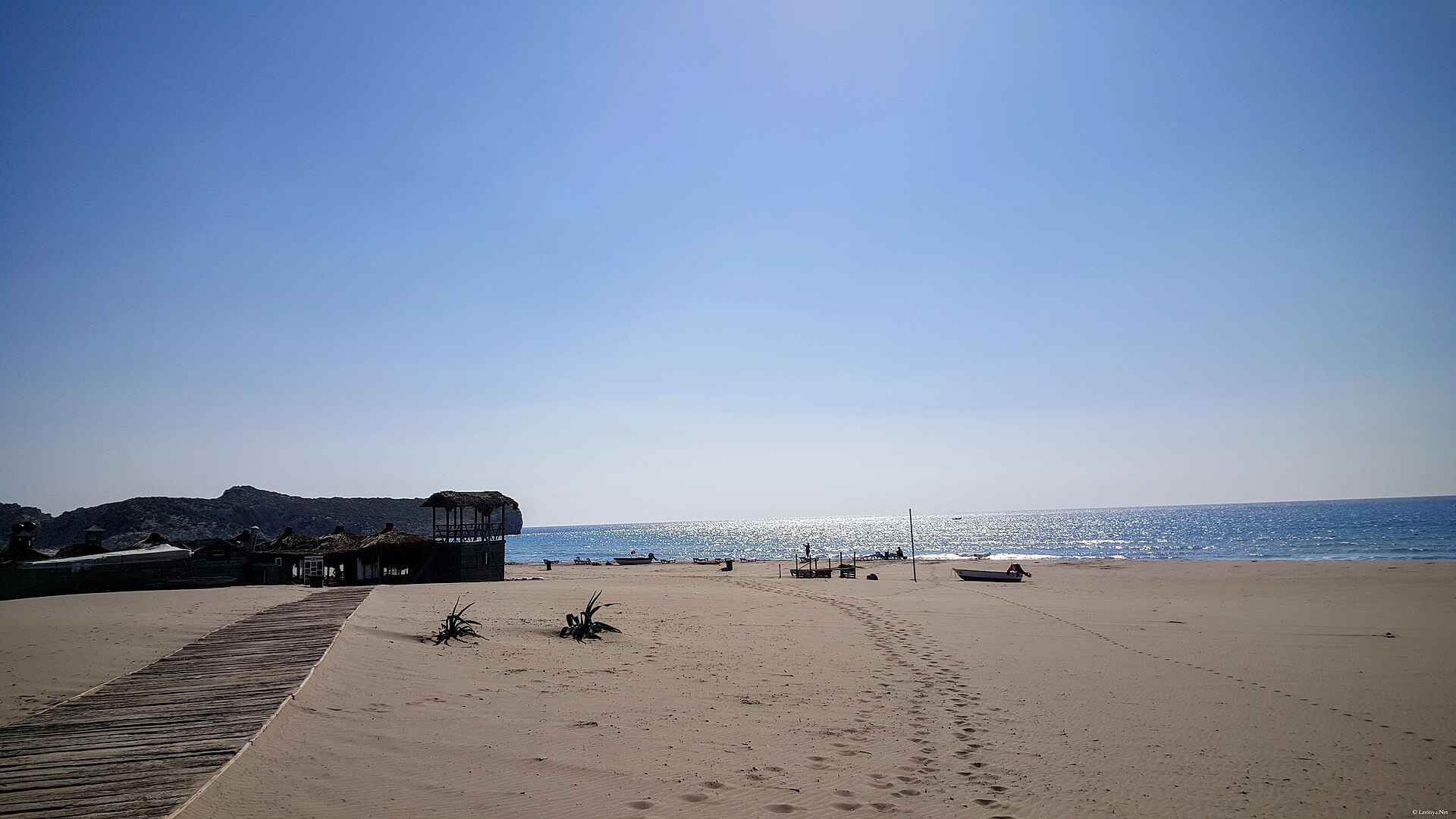
Patara Beach is a long beach on the Turkish Riviera in Antalya Province, right next to the ancient Lycian city of Patara. The Culture Portal gives its length as twelve kilometres. The ruins, once the capital of Lycia, lie beside it near the village of Gelemiş.
Key facts
- Location: Beside the ancient city of Patara, near Gelemiş, Antalya Province
- Length: 12 km (Culture Portal)
- Nearest airports: Dalaman (DLM) and Antalya (AYT); both are a long road transfer
- Coast: Turkish Riviera, Lycian coast
- Ancient site: Patara, capital of Lycia and a leading city of the Lycian League
- Excavations: Continuing since 1988
- Best season: Late spring to early autumn for swimming
- Typical visit time: Half a day for the ruins, a full day with the beach
- UNESCO status: Not listed; the nearby Xanthos-Letoon is a World Heritage Site
- Entrance: See the official Ministry page for the ruins and beach rules
What is Patara Beach and why visit?
Patara Beach is a long sandy beach on the Lycian coast, beside the ruins of ancient Patara. It combines a swim with a visit to Roman and Lycian monuments. Therefore, it suits travellers who want both history and a quiet shoreline.
The Culture Portal describes a splendid twelve-kilometre beach right beside the ancient city. Wikipedia notes a desert-like sand cliff that is popular with visitors. As a result, the area offers dunes, sea and ruins in one place.
Visitors usually come for these reasons:
- A long, open sandy beach rather than a small cove.
- The Roman triumphal arch that marks the entrance to the ruins.
- The ancient lighthouse and the theatre.
- The link with Saint Nicholas, born in Patara according to tradition.
- Quiet evenings in the village of Gelemiş.
What is the history of Patara?
Patara was a Lycian port city and, for a period, the capital of Lycia. It was the main seaport of Lycia and a leading city of the Lycian League. Romans annexed it in 43 AD. After the Seljuks took it in 1211, it declined and appears to have been deserted by 1340.
A Hittite text names the city as Patar. Ancient writers noted its temple and oracle of Apollo, second only to Delphi. Moreover, the Lycian League was formally established in 176 BC, and Patara held three votes, the maximum.
Patara appears in the New Testament as the place where Paul and Luke changed ships. Saint Nicholas was born here around 270 AD and lived most of his life in nearby Myra. In contrast, the harbour silted up over time and is now a swamp.
The table below summarises the main periods of Patara.
| Period | Date | What happened |
|---|---|---|
| Hittite period | 13th century BC | City mentioned as Patar in Hittite texts |
| Hellenistic | 333 BC onwards | Surrenders to Alexander; first walls built |
| League | 176 BC | Lycian League formally established |
| Roman | From 43 AD | Annexed by Rome; lighthouse built 60 AD |
| Byzantine | Middle Ages | Pilgrim and trade way-point; taken by the Sultanate of Rum in 1211 |
| Late medieval | By 1340 | Appears deserted |
What are the highlights of Patara Beach and the ruins?
The highlights are the beach, the dune, the Arch of Medustus, the main colonnaded street, the theatre, the bouleuterion, the lighthouse and Hadrian’s Granary. You can see them in one walk. The beach lies a short distance beyond the ruins.
Wikipedia says the Arch of Medustus is a triple-vaulted triumphal arch of about 100 AD. The theatre was rebuilt in 147 AD after an earthquake. The Culture Portal calls the restored lighthouse the oldest lighthouse in the world, while Wikipedia says it is one of the oldest surviving.
These are the sights to plan around:
- The Roman triumphal arch at the entrance.
- The main street with Ionic colonnades.
- The theatre and the bouleuterion, the Lycian League’s assembly hall.
- The lighthouse of 60 AD, rising 26 m.
- Hadrian’s Granary beside the old harbour.
- The 12 km beach and its sand cliff.
Here are the highlights at a glance.
| Sight | What it is | Note |
|---|---|---|
| Arch of Medustus | Triumphal arch, about 100 AD | North gate of the city |
| Theatre | Rebuilt 147 AD | Excavated from sand; capacity about 6000 |
| Bouleuterion | Assembly hall, early 1st century BC | Seat of the Lycian League |
| Lighthouse | Built 60 AD | 26 m, three-tiered base |
| Hadrian’s Granary | Built 131 AD | 75 m by 25 m, eight sections |
| Beach | 12 km of sand | Next to the ruins |
How do you get to Patara Beach and get around?
Patara lies on the Lycian coast near Gelemiş, between Fethiye and Kaş. Most visitors arrive by road from Dalaman, Antalya, Kalkan or Fethiye. Public buses and dolmuşes serve the coast, but timetables change. Check the current schedule before you travel.
Wikivoyage says that Dalaman Airport is the closest airport to Kalkan, with a drive of about two and a half hours. Buses from Antalya to Kaş take about four hours. Moreover, dolmuşes run along the coast to Kalkan and Demre.
Gelemiş is small, so you walk or use a local minibus to reach the ruins and the beach.
This table compares the common ways to reach Patara.
| Option | Typical duration | Notes |
|---|---|---|
| Private transfer from Dalaman | Long drive; confirm with the driver | Easiest for luggage |
| Bus from Antalya to the Kaş area, then a local ride | About 4 hours to Kaş (Wikivoyage) | Check the timetable and the last connection |
| Dolmuş along the coast | Varies | Common between Kalkan, Kaş and nearby villages |
| Rental car | Varies | Parking near the ruins; coastal road is winding |
When is the best time to visit Patara Beach?
Late spring and early autumn suit both swimming and walking. Summer is hot and busy, so visit the ruins early. Winter is mild but stormy, and the beach is quiet. The Culture Portal relates beach hours to turtle nesting; check current rules.
Go Türkiye says the beach is used by visitors between 08.00 and 20.00 and by Caretta caretta turtles between 20.00 and 08.00. Therefore, respect the evening restrictions during nesting season.
The table below shows what to expect.
| Season | Weather | Crowds | Notes |
|---|---|---|---|
| Spring | Warm and pleasant | Moderate | Good for ruins; sea still cool |
| Summer | Hot, dry | High | Swim and visit the ruins early |
| Autumn | Warm | Moderate to low | Sea warm into autumn |
| Winter | Mild, stormy spells | Low | Few services open; check weather |
How long should you stay at Patara Beach?
Plan half a day for the ruins and a few more hours for the beach. A full day lets you swim and see the lighthouse and theatre. Two days allow time for Xanthos, Letoon and Kalkan. The plans below show typical choices.
Do not rush the heat of the day. As a result, split the visit into morning ruins and afternoon beach.
Three sample plans follow.
| Plan | Time | What to do |
|---|---|---|
| Half day | 3 to 4 hours | Ruins in the morning, beach for a swim |
| One day | Full day | Ruins, lunch in Gelemiş, beach until sunset hours allow |
| Two to three days | 2-3 days | Add Xanthos-Letoon, Kalkan and Kaş |
What practical tips help at Patara Beach?
Bring sun protection, water and sturdy shoes for the ruins. Check the official page for ticket and beach rules. The beach is a protected area with nesting turtles, so follow all signs. Services on the beach can be limited. Plan shade and water.
Go Türkiye says Patara Beach has been declared a Special Environmental Protection Area. Moreover, Wikipedia notes that parts of the site have faced illegal construction, so respect fences and signs.
Practical points:
- Respect the beach hours and the turtle-nesting rules.
- Do not take sand, stones or pottery from the site.
- Bring shade and water; facilities can be limited.
- Wear shoes for the hot sand and ancient paving.
- Be careful with currents; swim near others.
- Check the official page for tickets and opening hours.
Where can you stay and eat near Patara Beach?
Most visitors stay in Gelemiş, Kalkan or Kaş. Gelemiş is small and close to the ruins. Kalkan and Kaş have more restaurants and boutique stays. Local food includes fish and meze. Book ahead in summer. Book early for summer weekends.
Wikivoyage describes Kaş as a Lycian beach resort with small beaches, so many visitors choose Patara for a longer sandy beach.
Choose a base by plan:
- Gelemiş: closest to the ruins and the beach.
- Kalkan: harbour town with views and restaurants.
- Kaş: lively small resort with day trips.
What can you visit near Patara Beach?
Nearby you can visit Xanthos-Letoon, Kalkan and Kaş. Xanthos-Letoon is a UNESCO World Heritage Site and lies close to Patara. Antalya, with its museum and old town, is a long drive east. The coast has more Lycian ruins to see. Plan the route by road, and check distances before you go.
Many travellers combine Patara with Lycian sites in one trip along the coast.
Related places:
- Xanthos-Letoon, a World Heritage Site.
- Kalkan, a small harbour town.
- Kaş, a Lycian beach resort.
- Antalya Museum and Kaleiçi.
- Aspendos and Perge for Roman sites.
Plan this with TurkGT
TurkGT is an Istanbul-based travel company. We can arrange guided trips, private transfers, licensed guides and interpreters for the Lycian coast. Send your dates and group size on WhatsApp, and we will confirm the details with you.
Frequently asked questions
Where is Patara Beach?
Next to the ancient city of Patara, on the Turkish Riviera in Antalya Province, near the village of Gelemiş.
How long is Patara Beach?
The Ministry of Culture and Tourism portal gives its length as twelve kilometres.
What is Patara known for?
It was for a period the capital of Lycia, a leading city of the Lycian League, and the birthplace of Saint Nicholas.
What can you see at the ruins?
The triumphal arch, main street, theatre, bouleuterion, lighthouse and Hadrian’s Granary.
Are there turtles on the beach?
Go Türkiye says Caretta caretta turtles use the beach at night. Follow the posted rules.
How do I get there?
By road from Dalaman, Antalya, Kalkan or Fethiye. Check current bus and dolmuş timetables.
When is the best time to go?
Late spring to early autumn for swimming; spring and autumn for ruins.
Is there an entrance fee?
Check the official Ministry of Culture and Tourism page for the ruins and beach rules.
Related on TurkGT
- Part of Antalya
- Düden Waterfalls
- Konyaaltı Beach
- Lara Beach
- Aspendos Theatre
- Perge Ancient City
- Köprülü Canyon
Sources
- Türkiye Kültür Portalı: Patara
- Wikipedia: Patara, Lycia
- Wikipedia: Patara Beach
- Wikivoyage: Kaş
- Go Türkiye: Antalya
Last reviewed: 2026-11-18. Opening hours, ticket prices and other changeable details are not listed because they change; check the official source before you travel.