
Xanthos-Letoon is a UNESCO World Heritage Site in south-west Türkiye, inscribed in 1988. It joins Xanthos, the capital of ancient Lycia, with Letoon, the federal sanctuary of the Lycian League, about 4 km away. Visit it for Lycian tombs, three temples and a trilingual stele.
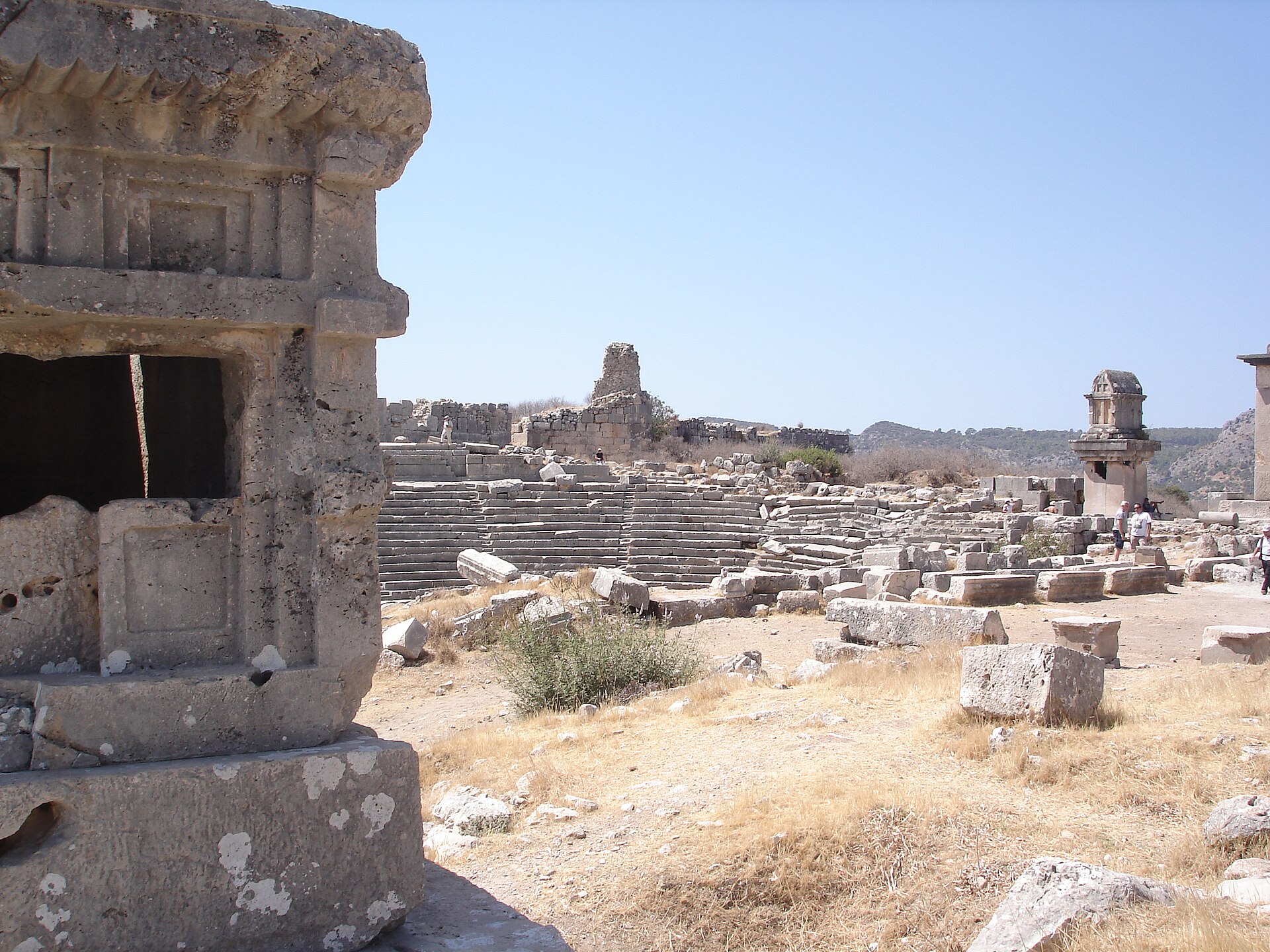
Key facts
- Location: Near Kınık, Antalya and Muğla provinces, south-west Türkiye
- From airports and cities: Dalaman Airport is about 1 hour from Fethiye; check current routes onward
- UNESCO status: Inscribed 1988, criteria (ii) and (iii)
- Civilisation: Lycian
- Components: Xanthos (capital) and Letoon (sanctuary), about 4 km apart
- Best season: Spring and autumn; little shade in summer
- Typical visit time: 2-3 hours for both parts
- Entrance: See official page
What is Xanthos-Letoon and why visit?
Xanthos-Letoon is a UNESCO World Heritage Site in south-western Türkiye made of two neighbouring ancient settlements. Xanthos was the capital of ancient Lycia. Letoon was its cult centre and the federal sanctuary of the Lycian League of Cities. UNESCO inscribed both in 1988.
The site rewards visitors who like quiet ruins and early civilisations. In contrast to crowded coastal attractions, it sits in a river valley near the village of Kınık. Moreover, the finds here helped scholars decipher the Lycian language.
The Lycian tombs are the best-known feature. Rock-cut tombs, pillar tombs and pillar-mounted sarcophagi stand beside Hellenistic and Roman remains, so you can read several centuries of local history in one walk.
Why travellers add it to a Lycian Coast itinerary:
- Lycian funerary architecture of unusual types
- A trilingual inscription of 337 BC in Lycian, Greek and Aramaic
- Three temples at Letoon dedicated to Leto, Artemis and Apollo
- A low-key visit within reach of Fethiye, Kaş and Kalkan
- A simple way to add context to Patara, Saklıkent and other Lycian sites
What is the history of Xanthos and Letoon?
Xanthos was the principal city of the Lycians. The Persian general Harpagus defeated a small Lycian army north of the city in about 540 BC, according to Wikipedia. Later, Alexander the Great passed through, and the city was rebuilt under Mark Antony after Rome besieged it.
Letoon lies about 4 km south of Xanthos. It was continuously occupied from the 8th century BC to the end of the Roman period. As a result, it shows how a regional sanctuary developed under Lycian, Hellenistic and Roman rule.
Many sculptures left the site in the 19th century. UNESCO notes that some architectural and sculptural pieces were taken to England, and the Nereid Monument is in the British Museum. The Harpy Tomb remains at Xanthos with replica reliefs, and the originals are exhibited in London.
A short chronology:
- 8th century BC: Letoon occupied
- c. 540 BC: Persian conquest under Harpagus
- 337 BC: date of the trilingual inscription
- Roman period: city rebuilt under Mark Antony
- Later: city abandoned; 19th-century removals of sculpture
- 1950s onwards: French excavations at Letoon
The table shows how the two settlements relate.
| Feature | Xanthos | Letoon |
|---|---|---|
| Role | Capital of ancient Lycia | Cult centre and federal sanctuary |
| Highlights | Rock-cut tombs, pillar tombs, Harpy Tomb | Three temples, nymphaeum, Hellenistic theatre |
| Distance | Main city on a hill by the river | About 4 km south of Xanthos |
| Key evidence | Nereid Monument influence on Halicarnassus | Trilingual stele of 337 BC |
What should you see at Xanthos-Letoon?
At Xanthos, look for the Lycian tombs and the Harpy Tomb. At Letoon, look for the three temples, the nymphaeum and the theatre. UNESCO notes that the funerary architecture at Xanthos is unique.
The Nereid Monument directly inspired the Mausoleum at Halicarnassus, according to Wikipedia, and UNESCO says Xanthos-Letoon influenced Patara, Pınara and Myra. Therefore the site matters for the study of Lycian architecture across the region.
At Letoon, three temples stand side by side. The central one was dedicated to Artemis, and the others to at least one of the other Letoids. Spring water once emerged from the nymphaeum.
Highlights worth planning around:
- Pillar tombs and rock-cut tombs at Xanthos
- The Harpy Tomb in its original location, with replica reliefs
- The three adjacent temples at Letoon
- The nymphaeum and spring area at Letoon
- The Hellenistic theatre at Letoon
- The Lycian, Greek and Aramaic stele, a key source for the Lycian language
This at-a-glance table summarises the main stops.
| Stop | Period | What to notice |
|---|---|---|
| Harpy Tomb | Lycian | Replica reliefs; originals in London |
| Pillar tombs | Lycian | Tomb chambers raised on pillars |
| Leto, Artemis, Apollo temples | Hellenistic-Roman | Three temples side by side |
| Nymphaeum | Hellenistic-Roman | Water feature in the sanctuary |
How do you get to Xanthos-Letoon?
Xanthos-Letoon lies near Kınık, between Fethiye and Kalkan. Dalaman Airport is the usual arrival point for Fethiye, about one hour west on the D400 according to Wikivoyage. Kaş Wikivoyage places the ruins of Xanthos and Letoon northwest of Kaş, near Kınık.
Public transport reaches the area by bus along the coast, then local minibuses (dolmuş). In addition, many visitors use a rental car or a private transfer. Always check the current timetable, as seasonal services change.
The two settlements are about 4 km apart, so allow a car or taxi to link them. Furthermore, driving gives flexibility to combine the site with Patara or Saklıkent.
Planning notes:
- Base yourself in Fethiye, Kalkan or Kaş and go by dolmuş, car or transfer
- Dolmuş services in Fethiye run until about 23:00 according to Wikivoyage; check locally
- Fetch an offline map; signage is limited in the valley
- Ask your guide or driver about the Letoon turnoff
Indicative routes to the site follow; durations depend on traffic and season.
| From | Route | Indicative info |
|---|---|---|
| Dalaman Airport | Road D400 to Fethiye, then onward | About 1 hour to Fethiye (Wikivoyage) |
| Fethiye | Dolmuş or car to Kınık | Check current service |
| Kaş / Kalkan | Coastal road northwest | Check current service |
| Antalya | Bus to Kaş or Fethiye, then local transport | Antalya to Kaş about 4 hours by bus (Wikivoyage) |
When is the best time to visit?
Spring and autumn are the most comfortable seasons for Xanthos-Letoon. The site has little shade, so summer middays are demanding. Wikivoyage notes that September in the area has warm seas without the sweltering summer heat.
Winter is quieter but rainy, and some facilities close. Check opening arrangements on the official page before you travel.
The season table compares weather and crowds.
| Season | Weather | Crowds | Notes |
|---|---|---|---|
| Spring | Mild, green valley | Low to moderate | Good for walking the ruins |
| Summer | Hot, little shade | Moderate | Visit early morning or late afternoon |
| Autumn | Warm, easing | Moderate | Sea still warm; pleasant for a coastal trip |
| Winter | Cool and wet | Low | Some coastal facilities closed |
How long should you stay?
Plan two to three hours for both parts of the site, or longer if you read the inscriptions. A day trip from Fethiye or Kalkan fits easily. If you add Patara, Saklıkent and a beach, plan a full day or two.
However, avoid squeezing it between long transfers. The valley deserves a relaxed visit.
This table offers three simple plans.
| Time | Plan | Suits |
|---|---|---|
| Half day | Xanthos then Letoon | Quick cultural stop |
| 1 day | Add Patara or Saklıkent | Active coastal trip |
| 2-3 days | Base in Kalkan or Kaş and explore Lycia | Slow travel, history interest |
What practical tips should you know?
Wear sturdy shoes, a hat and sun protection, and bring water. The ground is uneven and there is little shade. Check the official page for tickets, opening hours and any current restoration closures.
Photography is generally welcome outdoors. Respect fences around tombs and do not climb on monuments. In addition, keep to marked paths in wet weather, as Letoon can be muddy.
Quick checklist:
- Sturdy footwear and sun protection
- Water and snacks; facilities are limited
- Check the official page for fees and hours
- Accessibility: ground is uneven; ask on arrival about easier routes
- Stay on paths and do not climb tombs
Where should you stay and eat?
Most visitors stay in Fethiye, Kalkan or Kaş. Fethiye is the largest base, with a fish market where you buy fish and take it to a nearby restaurant to be cooked, per Wikivoyage. Kalkan and Kaş are smaller harbour towns with a quieter pace.
In the valley itself, expect simple local cafés in Kınık and surrounding villages. Therefore bring your own water and plan your main meal in a base town.
Neighbourhood-level options:
- Fethiye: widest choice of hotels and restaurants
- Kalkan: small harbour town, quieter evenings
- Kaş: relaxed old town and harbour
- Kınık: basic local services
What can you visit nearby?
Patara Beach and the Lycian ruins at Patara are close. Saklıkent Gorge is about 40 km south-east of Fethiye. Ölüdeniz, Dalyan and Iztuzu Beach, and Kaş and Kalkan also make good additions. These places fit naturally into a Lycian Coast route.
Related TurkGT pages cover Patara Beach, Saklıkent Gorge, Fethiye, Kaş, Kalkan and the wider Antalya and Muğla provinces.
Plan this with TurkGT
TurkGT is an Istanbul-based travel company. We offer guided trips, private transfers, and guide or interpreter services for visits like this one. Message us on WhatsApp with your dates and group size, and we will confirm options directly.
Frequently asked questions
Where is Xanthos-Letoon?
It is in south-western Türkiye, spread across Antalya and Muğla provinces, near Kınık. UNESCO describes two neighbouring settlements.
When did UNESCO inscribe Xanthos-Letoon?
UNESCO inscribed it in 1988 under criteria (ii) and (iii).
What was Xanthos?
Xanthos was the capital of ancient Lycia, according to UNESCO. It has rock-cut tombs, pillar tombs and pillar-mounted sarcophagi.
What was Letoon?
Letoon was the cult centre of Xanthos and the federal sanctuary of the Lycian League. It has three temples dedicated to Leto, Artemis and Apollo.
How far is Letoon from Xanthos?
About 4 km, according to Wikipedia and the Turkish Culture Portal.
What is the trilingual inscription?
It is a stele dated to 337 BC with texts in Lycian, Greek and Aramaic, which helped scholars decipher Lycian.
How do you get there from Fethiye?
Use a car, taxi or dolmuş towards Kınık. Check the current timetable and ask your driver for Xanthos and Letoon separately.
What is the best time to visit?
Spring and autumn are comfortable. Summer is hot with little shade, so go early or late in the day.
Related on TurkGT
- Part of Antalya
- Düden Waterfalls
- Konyaaltı Beach
- Lara Beach
- Aspendos Theatre
- Perge Ancient City
- Köprülü Canyon
Sources
- UNESCO World Heritage Centre: Xanthos-Letoon
- Letoon Antik Kenti – Kültür Portalı
- Wikipedia: Xanthos
- Wikipedia: Letoon
- Wikivoyage: Fethiye
- Wikivoyage: Kaş
- Turkish Ministry of Culture and Tourism: Türkiye on the World Heritage List
Last reviewed: 2026-11-17. Opening hours, ticket prices and other changeable details are not listed because they change; check the official source before you travel.