
Zinciriye Madrasa, also called Sultan Isa Medrese, is a historic complex in Mardin completed in 1385 under the Artuqid sultan Isa. It combines a madrasa, a mosque and a mausoleum around two courtyards. Visitors come for the muqarnas portal, the ribbed domes and the terraces with views over the Mesopotamian plain.
Key facts
- Location: Old city of Mardin, on the southern slope facing the plain
- Also called: Sultan Isa Medrese; Isa Bey Medresesi
- Completed: 1385 (inscription date 3 February 1385)
- Builder: Sultan Isa, Artuqid ruler of Mardin (r. 1376-1407)
- From the airport: Mardin Airport is about 20 km from the old town
- Best season: Spring and autumn; summers are very hot
- Typical visit time: 45-90 minutes, longer with the old town
- UNESCO status: Mardin is on the UNESCO Tentative List (February 2000); not inscribed
- Entrance: See official page; check current opening and access locally
What is Zinciriye Madrasa and why visit?
Zinciriye Madrasa is a 14th-century Artuqid religious complex in Mardin, also known as Sultan Isa Medrese. It was completed in 1385. The building joins a madrasa, a mosque and a mausoleum. Visitors come for its carved portal, domes and terraced courtyards.
Moreover, it is one of the clearest places to see Mardin’s stone-carving tradition. As a result, it suits both architecture enthusiasts and first-time visitors who want a single, compact monument in the old city.
These features draw most visitors:
- A portal about 12 metres tall with a muqarnas vault.
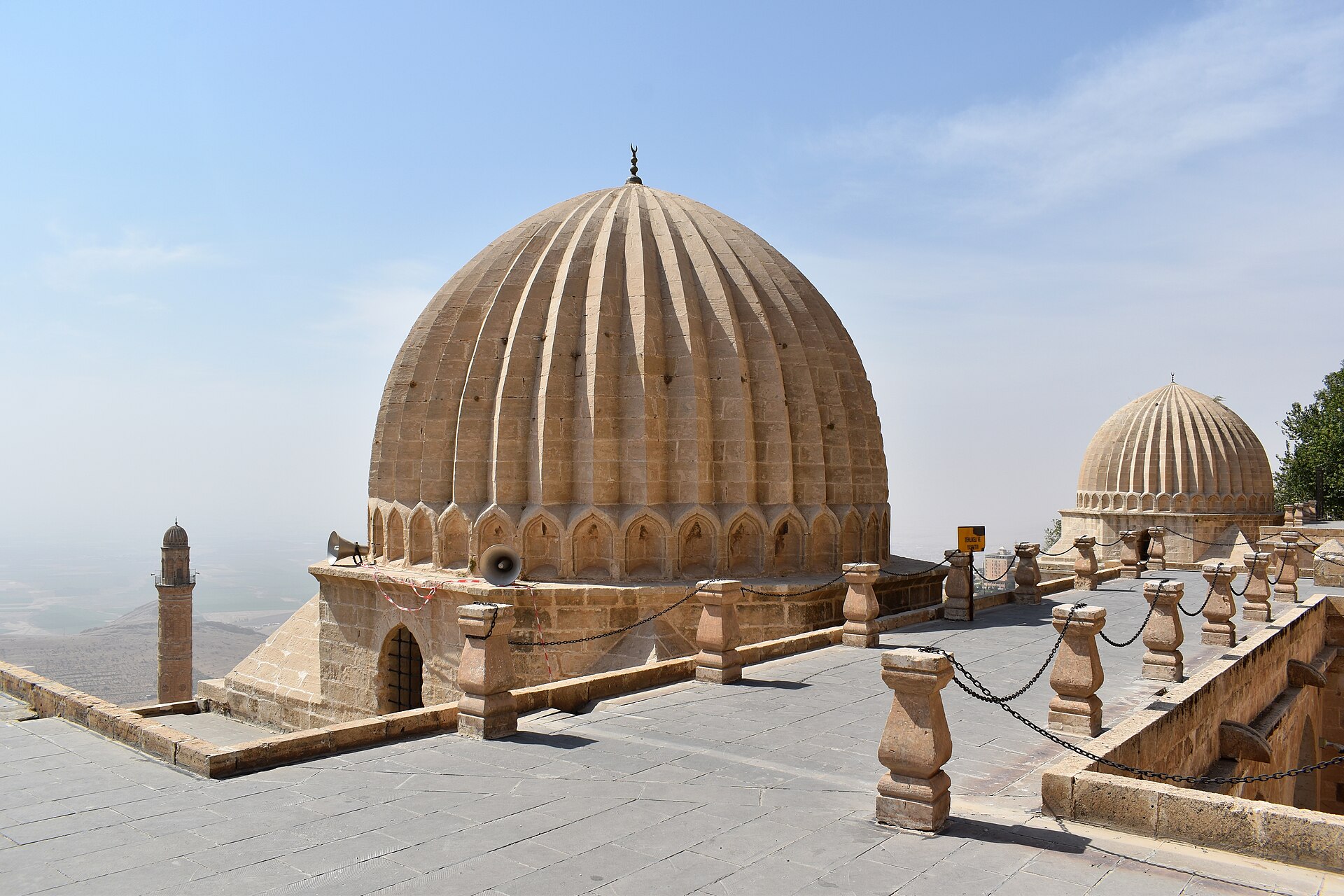
- Two fluted domes that mark the mosque and the mausoleum.
- Two courtyards on two terraced levels.
- Ablaq stonework in light stone and dark basalt.
- Views over the Mesopotamian plain from the southern portico.
What is the history of the madrasa?
Sultan Isa, the penultimate Artuqid ruler of Mardin, commissioned the complex, and inscriptions date it to 2 Muharram 787 AH, or 3 February 1385. He never lay in the mausoleum chamber. Later generations repaired the building several times. Dates here follow inscriptions and published studies.
In contrast to the founder’s plan, the building changed in use. It was a school, then a dormitory in the 1960s, and it later housed the Mardin Museum. Therefore the walls you see combine medieval work with later repairs.
The table lists the documented stages.
| Date | Event | Note |
|---|---|---|
| 1376-1407 | Reign of Sultan Isa | Penultimate Artuqid ruler of Mardin |
| 1385 | Construction completed | Dated by inscription |
| 1797 | Documented repair under the Ottomans | Stated on an inscription |
| 1963-1966 | Comprehensive restoration | Upper porticos rebuilt |
| c. 2006 | Restoration and cleaning | Much old masonry replaced |
What is special about the architecture?
The plan has two courtyards, which is unusual for a madrasa. Most had one central courtyard. Wikipedia calls this the culmination of an Artuqid design trend. The complex measures about 45 m by 25 m and climbs the slope on two terraces.
Inside, a mosque with a dome on muqarnas squinches and a water basin in the main courtyard shape the visit. The mausoleum chamber is domed and decorated with ablaq stonework.
Look for these architectural details:
- The muqarnas portal and the calligraphic medallion above the door.
- The mosque with three square bays and a central dome.
- The ground-floor courtyard with a rectangular water basin and an iwan.
- The vaulted southern portico with city views.
- The upper courtyard with rooms that may have served as cells.
The table gives the main parts at a glance.
| Part | Description | What to notice |
|---|---|---|
| Portal | About 12 m tall, muqarnas vault | Inscription bands and medallions |
| Mosque | Three square sections, central dome | Stone mihrab and minbar |
| Courtyard | Water basin and iwan | Wall fountain with ablaq trim |
| Mausoleum | Square domed chamber | Never used for Sultan Isa’s burial |
| Upper level | Second courtyard with rooms | Terrace views |
How do you get to Zinciriye Madrasa and get around Mardin?
Mardin Airport lies about 20 km from the old town, so a taxi or transfer is the simplest route. Within the old city, the streets climb steeply, so walking is practical but tiring. Check the current timetable for flights and buses.
Wikipedia notes that Mardin’s old city sits on a hill slope, so allow time for stairs and slopes. Moreover, the madrasa stands above the lower town, so the walk uphill is part of the visit.
The table compares the main options.
| Route | Option | Notes |
|---|---|---|
| Istanbul to Mardin | Flight to Mardin Airport | Check the current timetable |
| Airport to old town | Taxi or transfer, about 20 km | Arrange in advance if possible |
| Within the old city | On foot | Steep streets and steps |
| To Midyat and Mor Gabriel | Car, taxi or guided trip | Plan a separate half or full day |
When is the best time to visit?
Spring and autumn offer the most comfortable weather. Mardin has very hot, dry summers, and temperatures can reach 40 °C. Winters are chilly and wet, and wintry weather is common from December to March. Plan around heat, rain and daylight, and check the forecast a few days before you travel.
In summer, therefore, go in the early morning or at dusk. The terrace views are also pleasant at golden hour.
The table shows each season.
| Season | Weather | Notes |
|---|---|---|
| Spring | Mild and comfortable | Good for walking the old town |
| Summer | Very hot and dry | Go early or late; carry water |
| Autumn | Warm and clearer | Comfortable for the slopes |
| Winter | Chilly and wet, sometimes snowy | Quieter; wear grip shoes |
How long should you stay?
Allow 45 to 90 minutes inside the madrasa. Add a half day for the old town’s streets and the Mardin Museum. Two to three days let you add Midyat, Mor Gabriel and Deyrulzafaran. This estimate assumes a normal pace with short breaks, so add time if you travel with children.
Therefore, plan the madrasa as part of a wider walk, not a stand-alone trip.
Use these plans as a starting point.
| Plan | Include | Pace |
|---|---|---|
| Half day | Zinciriye, Great Mosque, old streets | Relaxed |
| 1 day | Add Mardin Museum and Kasımiye Medrese | Full |
| 2-3 days | Add Midyat, Tur Abdin and Mor Gabriel | Comfortable |
What practical tips should you know?
Dress modestly, because the complex includes a mosque. Wear shoes with grip for stone steps. Check the official page for access, fees and opening times, since we do not quote them here. The building was restored many times, so some areas may be closed.
Ask before photographing people. Moreover, avoid leaning on carved elements and stay within marked routes.
Keep these tips in mind:
- Dress modestly and cover shoulders and knees.
- Wear shoes with grip for steps.
- Carry water in summer.
- Check the official page for access and fees.
- Photograph worshippers only with permission.
- Expect uneven stairs and stone floors; mobility access is limited.
Where should you stay and eat?
Stay in the old city if you want evening views and short walks. Newer districts on lower ground to the north-west offer modern hotels. Eat in the old town’s lanes, where restaurants often serve regional dishes in courtyard settings. Choose by walking distance to the main sights, because transfers and parking add time in busy periods.
Wikipedia notes the stepped houses of the old town centre on internal courtyards. As a result, many stays and meals feel like a visit to a historic home.
Neighbourhood-level ideas include:
- Old city streets for atmosphere and walking.
- Lower-town districts for easier parking and larger hotels.
- Terrace restaurants with views of the plain.
What is nearby and what day trips work?
Mardin‘s old city holds the Great Mosque, Latifiye Mosque and the Mardin Museum. Kasımiye Medrese lies just outside the town. Midyat and Mor Gabriel Monastery make a longer trip into Tur Abdin. Check road conditions and opening times for each stop, and allow extra time between sites.
In addition, Şanlıurfa and Gaziantep join Mardin on a wider southeast route.
Useful nearby stops:
- Great Mosque of Mardin, dated by a minaret inscription to 1176.
- Mardin Museum in the former Syriac Catholic Patriarchate.
- Kasımiye Medrese, begun by Sultan Isa.
- Mor Gabriel Monastery near Midyat.
- Harran and Balıklıgöl in Şanlıurfa.
Plan this with TurkGT
TurkGT is an Istanbul-based travel company. We offer guided tours, private transfers, licensed guide and interpreter services, and multi-day trips that can include Mardin and Zinciriye Madrasa. We can arrange a guide for the old city and combine Mardin with Midyat, Mor Gabriel and a Şanlıurfa extension.
Tell us your dates, group size and interests on WhatsApp. We confirm the route, timing and what is included in writing before you book, and we do not quote prices on this page.
Frequently asked questions
What is Zinciriye Madrasa?
It is a madrasa, mosque and mausoleum complex in Mardin, also called Sultan Isa Medrese. It was completed in 1385.
Who built it?
Sultan Isa, the penultimate Artuqid ruler of Mardin (r. 1376-1407), commissioned it.
Is Sultan Isa buried there?
No. Wikipedia says the mausoleum chamber seems intended for him, but he was never buried there.
Why does it have two courtyards?
Wikipedia calls the two-courtyard plan the culmination of an Artuqid design trend. Most madrasas had a single courtyard.
How far is the airport?
Mardin Airport is about 20 km from the old town. Check the current timetable and transfer options.
When should I visit?
Spring and autumn. Summers are very hot and winters can be cold and wet.
Is Mardin a UNESCO site?
Mardin has been on the UNESCO Tentative List since February 2000. That is a candidate status, not an inscription.
Is the Mardin Museum still in the madrasa?
Wikipedia says the building previously housed the Mardin Museum. The museum opened in 2000 in the former Syriac Catholic Patriarchate building. Check locally for what is open.
Related on TurkGT
Sources
Last reviewed: 2026-11-18. Opening hours, ticket prices and other changeable details are not listed because they change; check the official source before you travel.