
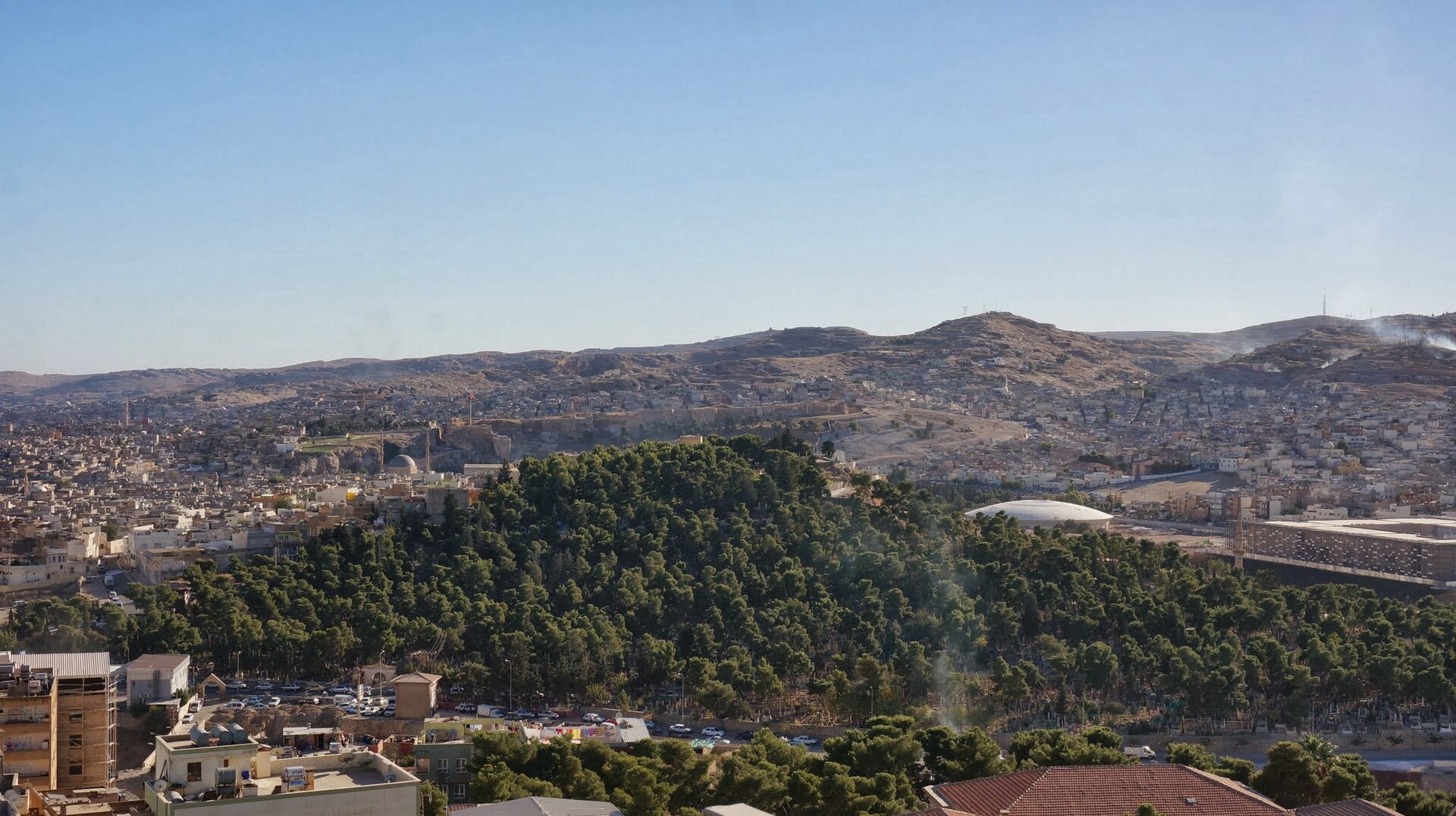
Şanlıurfa, or Urfa, is a city in south-eastern Türkiye that holds Göbekli Tepe, the Balıklıgöl pools and the nearby town of Harran. Visit for Neolithic monuments, pilgrimage heritage and regional food.
Key facts
- Location: South-eastern Türkiye
- From Istanbul: Flight or long bus; check current timetable
- Göbekli Tepe: About 12 km north-east of the city
- Best season: Spring and autumn
- Typical visit time: 2 days
- UNESCO status: Göbekli Tepe, inscribed 2018
- Written history: About 4,500 years
- Climate: Extremely hot dry summers, cool moist winters
- Entrance: See official page
What is Şanlıurfa and why visit it?
Şanlıurfa, usually called Urfa, is a city in south-eastern Türkiye and the capital of Şanlıurfa Province. It is known for Göbekli Tepe, the Balıklıgöl pools and the beehive houses of Harran. Visitors come for prehistory, pilgrimage heritage and regional cuisine.
GoTürkiye calls Şanlıurfa one of the oldest centres in the history of civilization and a centre of many beliefs, from polytheistic to monotheistic religions. The Culture Portal adds that Urfa has been one of the busiest meeting points of east and west since ancient times.
Therefore the city rewards both archaeology fans and cultural travellers. In contrast to coastal destinations, it offers a dry, historic Mesopotamian-edge setting, close to the borderlands of the Euphrates basin.
Visitors typically choose Urfa for these reasons.
- Göbekli Tepe, a UNESCO World Heritage Site inscribed in 2018.
- Balıklıgöl and Aynzeliha pools in the city centre.
- Harran and its beehive houses.
- Urfa Castle and remains of Roman Edessa.
- Regional food and bazaar culture.
What is the history of Şanlıurfa?
Urfa’s written history spans about 4,500 years, according to the Culture Portal. It was founded as Edessa by the Seleucid king Seleucus I Nicator in 302 or 303 BC, per Wikipedia. Earlier, Göbekli Tepe shows hunter-gatherer building in the Pre-Pottery Neolithic.
The Culture Portal lists Harran, Urfa, Suruç, Birecik, Samsat and Rakka among the old cities of the region. As a result, Urfa sits in a dense network of ancient settlements.
Wikipedia also records a legend that Urfa was the hometown of Abraham, which explains the pilgrimage atmosphere around Balıklıgöl. Moreover, the heritage of Roman Edessa survives in columns at the site of Urfa Castle.
Göbekli Tepe adds the deepest layer. Wikipedia says the settlement was inhabited from around 9500 BCE to at least 8000 BCE, and UNESCO dates its monumental structures to between 9,600 and 8,200 BCE.
In short, Urfa layers prehistory, Hellenistic and Roman foundations, and a long religious tradition. This depth explains why the Culture Portal and GoTürkiye both stress its role as a crossroads. Consequently, a visit is more rewarding when you read a little background beforehand or travel with a guide.
The dated points below come from our sources.
- 9,600-8,200 BCE: Göbekli Tepe structures (UNESCO).
- 302 or 303 BC: Seleucus I founds Edessa.
- About 4,500 years of written history (Culture Portal).
- 1995: excavations begin at Göbekli Tepe under Klaus Schmidt.
- 2018: Göbekli Tepe inscribed by UNESCO.
What are the main things to see in Şanlıurfa?
The main sights are Göbekli Tepe, Balıklıgöl and Aynzeliha pools, Urfa Castle, the old bazaar quarter and Harran. Göbekli Tepe needs its own half day, while the city centre fits in another half day. The table summarises each sight.
Göbekli Tepe lies about 12 km north-east of the city. UNESCO describes monumental round-oval and rectangular megalithic structures in the Germuş mountains of south-eastern Anatolia. Wikipedia notes that the pillars in the enclosures are T-shaped, and that the site lies near the village of Örencik.
Balıklıgöl, in the south-west of the city centre, and the neighbouring Aynzeliha pool are among the most visited places in Şanlıurfa. Harran is famous for its beehive houses.
Urfa Castle and the bazaar quarter complete the picture. The castle area preserves columns from Roman Edessa, so it links the Hellenistic and Roman layers to the older Neolithic story. Furthermore, the surrounding old town streets and courtyards show how the historic city is organised around its pools and markets.
Build your list from these highlights.
- Göbekli Tepe and its T-shaped pillars.
- Balıklıgöl and Aynzeliha pools.
- Urfa Castle with Roman columns.
- Old bazaar streets and courtyards.
- Harran beehive houses.
- Local museums; check the official page for details.
This table gives each sight at a glance.
| Sight | Location | Interest | Typical visit |
|---|---|---|---|
| Göbekli Tepe | About 12 km north-east of the city | Neolithic monuments, UNESCO | Half day |
| Balıklıgöl | South-west of the centre | Pools, pilgrimage heritage | 1-2 hours |
| Urfa Castle | City centre | Roman Edessa columns | 1 hour |
| Bazaar quarter | Old town | Crafts, food | 1-2 hours |
| Harran | Province, outside the city | Beehive houses | Half day |
How do you get to Şanlıurfa and get around?
Most visitors reach Şanlıurfa by air or intercity bus, then use taxis or a private driver for Göbekli Tepe and Harran. Check the current timetable for flights and buses. In the old centre, walking works for the pools, castle and bazaar.
Flights from Istanbul and other cities serve the region; our encyclopedia has Istanbul airport transfer guides for the first leg. Moreover, Göbekli Tepe, Harran and the city are spread out, so a private transfer or guided trip saves time.
Wikipedia lists public access to Göbekli Tepe as limited, so check the official page before you go.
Typical options are listed here; check current timetables.
| Route | Mode | Notes |
|---|---|---|
| Istanbul to Şanlıurfa | Flight or long bus ride | Check current timetable |
| City to Göbekli Tepe | Taxi, car or guided trip | About 12 km north-east |
| City to Harran | Car or guided trip | Province outing; check road conditions |
| Old centre | Walking | Pools, castle and bazaar are close |
When is the best time to visit Şanlıurfa?
Spring and autumn suit Şanlıurfa best. Wikipedia describes extremely hot, dry summers and cool, moist winters. Therefore visit open-air sites like Göbekli Tepe early in the morning in summer, or choose the milder shoulder seasons.
Winter can be cool and rainy, which keeps crowds low. In contrast, summer afternoons are very hot, so plan indoor stops then.
Therefore a spring or autumn trip lets you spend longer at the open-air sites. Pack a hat, water and comfortable shoes, and keep a light layer for cooler evenings. Moreover, ask your driver about the current conditions on the roads to Harran before you set out.
The table compares seasons.
| Season | Weather | Crowds | Notes |
|---|---|---|---|
| Spring | Mild | Moderate | Comfortable for outdoor sites |
| Summer | Extremely hot and dry | Lower by day | Go early; carry water |
| Autumn | Mild to warm | Moderate | Good for Harran and Göbekli Tepe |
| Winter | Cool and moist | Low | Bring a waterproof layer |
How long should you stay in Şanlıurfa?
Two days cover the essentials: one for Göbekli Tepe and Harran, one for the city. A single day works only with an early start and a private driver. Three days allow a slower pace and nearby provinces.
Because the sites are spread out, rushing leaves little time for the Balıklıgöl area at dusk. However, a two-day plan balances archaeology and city life.
Pick a plan from the table.
| Duration | Suggested plan | Best for |
|---|---|---|
| Half day | Balıklıgöl, castle and bazaar | Stopover |
| 1 day | Göbekli Tepe in the morning, city in the afternoon | Tight schedules |
| 2-3 days | Add Harran, food stops, and Mardin or Gaziantep | Culture and food travellers |
What practical tips should you know?
Dress modestly, especially around Balıklıgöl, which has a religious setting. Carry water and sun protection for the open sites. We quote no fees; see the official page for Göbekli Tepe tickets and access rules.
Accessibility varies, and the old town has uneven stone streets. Photography is usually allowed outdoors, but respect worshippers. Moreover, a guide can explain the Neolithic enclosures far better than signage alone.
Keep these tips in mind.
- Entrance and hours: see the official page.
- Dress: covered shoulders and knees.
- Etiquette: quiet and respectful near the pools.
- Heat: plan around midday in summer.
- Safety: keep valuables close in bazaars.
- Photography: ask before photographing people.
Where should you stay and eat?
Stay in or near the old centre for walkable access to the pools and bazaar. Eat regional specialities in the bazaar quarter and local restaurants. We name no businesses; ask TurkGT for current suggestions.
Central areas suit short stays, while quieter districts suit longer trips. Meanwhile, bazaar streets offer local snacks and sweets.
The table compares areas.
| Area | Suits | Notes |
|---|---|---|
| Around Balıklıgöl | First-time visitors | Walkable to main sights |
| Bazaar quarter | Food seekers | Lively by day |
| Outer districts | Drivers | Quieter, needs transport |
What nearby places and day trips can you add?
Nearby options include Harran, Mardin, Gaziantep and Adıyaman for the Nemrut area. Göbekli Tepe is the key day outing. These links make Urfa a hub for south-eastern Türkiye.
Mardin offers a stone-built old town, and Gaziantep adds mosaics and food. Adıyaman is the access point for the Nemrut statues.
Related pages in our encyclopedia.
- Göbekli Tepe.
- Balıklıgöl and Harran Houses.
- Mardin.
- Gaziantep and Adıyaman.
Plan this with TurkGT
TurkGT is an Istanbul-based travel company offering guided trips, private transfers, and guide or interpreter services for south-eastern itineraries including Şanlıurfa. Share your dates and interests, and we propose a plan. We confirm details with you by WhatsApp.
Frequently asked questions
Where is Şanlıurfa?
In south-eastern Türkiye; it is the capital of Şanlıurfa Province.
How far is Göbekli Tepe?
About 12 km north-east of the city, per Wikipedia.
Is Göbekli Tepe a UNESCO site?
Yes, inscribed in 2018.
How old is Göbekli Tepe?
UNESCO dates its monuments to 9,600-8,200 BCE.
What is Balıklıgöl?
A pool in the south-west of the city centre, among the most visited places.
What is Harran known for?
Its beehive houses.
How many days do I need?
Two days cover the city, Göbekli Tepe and Harran.
Do I need tickets?
Check the official page for current entrance details; access to Göbekli Tepe is listed as limited.
Related on TurkGT
- Places and guides in Şanlıurfa:
- Harran
- Halfeti
- Göbekli Tepe
- Balıklıgöl
- Harran Houses
Sources
- GoTürkiye: Şanlıurfa
- Türkiye Kültür Portalı: Şanlıurfa (general information)
- Wikipedia: Şanlıurfa
- UNESCO World Heritage Centre: Göbekli Tepe
- Wikipedia: Balıklıgöl
- Wikipedia: Harran
Last reviewed: 2026-11-17.