
Konya is a province in south-west Central Anatolia, and Wikipedia gives it as the largest province in Türkiye by area. Visit for the Mevlâna Museum, Seljuk madrasas and the Neolithic site of Çatalhöyük. High-speed trains link it with Ankara in 1 hr 45 min, according to Wikivoyage.
Key facts
- Location: South-west Central Anatolia; city at 1016 m elevation (Wikivoyage)
- From Ankara: High-speed train about 1 hr 45 min (Wikivoyage); check current timetable
- From Istanbul: Train about 4 hr 45 min via Eskişehir; flights from both Istanbul airports (Wikivoyage)
- Best season: Spring and autumn; December for Şeb-i Arus
- Typical visit time: 1 day for the city; 2 days with Çatalhöyük
- Traffic code: 42
- Key sites: Mevlâna Museum, Seljuk madrasas, Çatalhöyük
- UNESCO: Çatalhöyük is a World Heritage property
- Entrance: See official page
What is Konya and why visit it?
Konya is a province and metropolitan municipality in south-west Central Anatolia, and Wikipedia calls it the largest province in Türkiye by area. The city holds the Mevlâna Museum and Seljuk madrasas. The province also includes Çatalhöyük, a Neolithic settlement. Visit for Sufi heritage, Seljuk architecture and prehistory.
The city is the spiritual home of the Mevlevi tradition. Moreover, it carries a deep layer of Seljuk art, visible in tilework and stone portals. In contrast to the coast, Konya is an inland, high, dry destination, so the experience is about culture rather than beaches.
Therefore Konya suits travellers who enjoy history, architecture and quiet, reflective sightseeing. It also fits a route between Ankara and Cappadocia.
The main reasons to visit are easy to list.
- Mevlâna Museum: the green-tiled mausoleum of Mevlana Celaleddin-i Rumi.
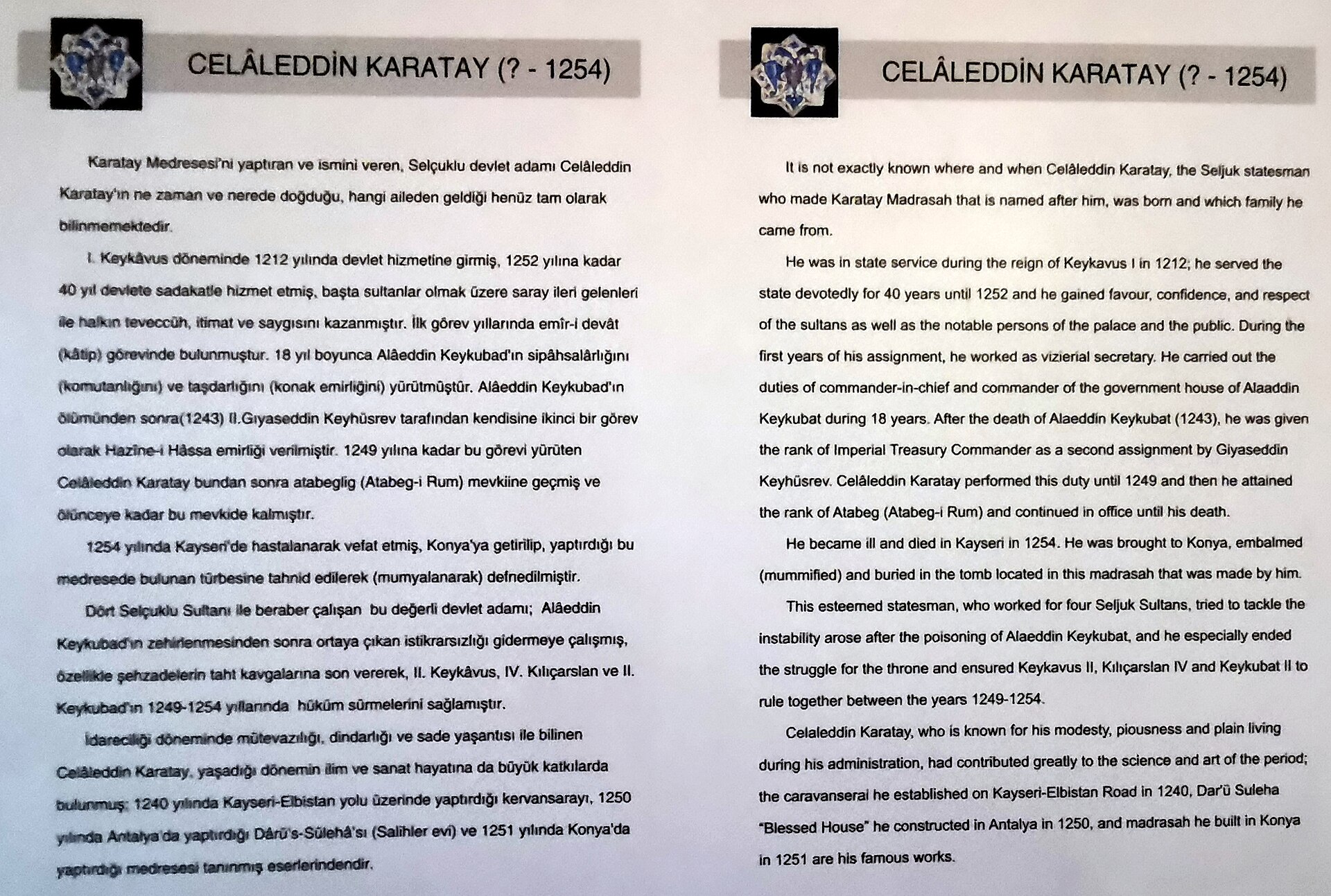
- Seljuk monuments: İnce Minare Madrasa, Karatay Madrasa, Sahib Ata Complex and Sırçalı Medrese.
- Çatalhöyük: a Neolithic settlement about an hour’s drive away.
- Whirling dervish tradition: the Sema ceremony and the December Şeb-i Arus commemoration.
- Natural sites: Çamlık Caves National Park, Lake Meke and Meyil Sinkhole on the Obruk Plateau.
What is the history of Konya?
The Ministry of Culture and Tourism’s Culture Portal calls Konya one of the world’s most important ancient cities and says urban life here began in prehistoric times. Çatalhöyük is known as the oldest and most developed Neolithic settlement discovered so far. Therefore the province links prehistory, Seljuk rule and Mevlevi culture.
The Mevlevi legacy centres on Mevlana Celaleddin-i Rumi. According to GoTürkiye, he founded a Sufi order known in the West as the Whirling Dervishes. As a result, Konya remains a pilgrimage and cultural destination for visitors from many countries.
The Seljuk buildings in the city add another layer. However, this page does not give construction dates for them, because we have not verified them from a source we fetched. Check the museum or Ministry page for exact dates.
The table summarises the main historical layers.
| Layer | What it means | Where to see it |
|---|---|---|
| Neolithic | Early settled life at Çatalhöyük | Çatalhöyük site, about 1 hour from Konya (Wikivoyage) |
| Seljuk era | Madrasas and complexes | İnce Minare, Karatay, Sahib Ata, Sırçalı Medrese |
| Mevlevi tradition | Rumi and the Sufi order | Mevlâna Museum |
| Modern | Metropolitan municipality, largest province by area | City and province |
What should you see in Konya? (highlights at a glance)
Begin with the Mevlâna Museum, then walk to the Seljuk madrasas nearby, and add the Konya Archaeological Museum. Reserve a separate half day or full day for Çatalhöyük. Wikipedia’s places list names all of these sites.
Wikivoyage describes the mausoleum as part of a museum that displays relics of Mevlana’s life and times. The green-tiled mausoleum is the most famous building in Konya, according to GoTürkiye.
This list shows the core stops in a sensible order.
- Mevlâna Museum: mausoleum and relics.
- İnce Minare Madrasa and Karatay Madrasa: Seljuk madrasas.
- Sahib Ata Complex and Sırçalı Medrese: more Seljuk-era sites.
- Konya Archaeological Museum and Ethnography Museum: local collections.
- Çatalhöyük: prehistoric settlement outside the city.
The table compares the main sights.
| Sight | Type | Typical time | Best for |
|---|---|---|---|
| Mevlâna Museum | Museum and mausoleum | 1-2 hours | Sufi heritage |
| Seljuk madrasas | Monuments | 30-60 minutes each | Architecture and tilework |
| Archaeological Museum | Museum | 1-2 hours | Prehistory and local finds |
| Çatalhöyük | UNESCO prehistoric site | Half day with transfer | Neolithic history |
| Obruk Plateau, Lake Meke | Natural sites | Half to full day | Landscape |
How do you get to Konya and get around?
The easiest options are the high-speed train and the flight. Wikivoyage says five trains a day run from Ankara and take 1 hr 45 min, and four run from Istanbul via Eskişehir in 4 hr 45 min. Check the current timetable before you book.
The airport has three flights a day from both Istanbul airports, according to Wikivoyage. Buses from Istanbul run every one to two hours and take 11 hours. Therefore trains and flights save much time.
Inside the city, the main sights cluster in the centre. In contrast, Çatalhöyük needs a car, tour or transfer.
The table lists typical routes using Wikivoyage figures.
| Route | Mode | Typical duration | Note |
|---|---|---|---|
| Ankara to Konya | High-speed train | 1 hr 45 min, five a day (Wikivoyage) | Check current timetable |
| Istanbul to Konya | Train via Eskişehir | 4 hr 45 min, four a day (Wikivoyage) | Check current timetable |
| Istanbul to Konya | Bus | About 11 hours (Wikivoyage) | Runs every 1-2 hours |
| Istanbul (IST/SAW) to Konya | Flight | Check current schedule | 3 flights a day per Wikivoyage |
| Konya to Çatalhöyük | Car or tour | About 1 hour (Wikivoyage) | Arrange transport in advance |
When is the best time to visit Konya?
Spring and autumn are comfortable for walking. Summers are hot and dry, according to Wikivoyage, although the city lies at 1016 m elevation so nights can be chilly. December is special for the Şeb-i Arus ceremonies, held in the first half of the month.
The table gives a seasonal overview.
| Season | Weather (general) | Crowds | Notes |
|---|---|---|---|
| Spring | Mild | Moderate | Good for walking and Çatalhöyük |
| Summer | Hot, dry (Wikivoyage); chilly nights | Moderate | Visit outdoors early in the day |
| Autumn | Cooler | Light to moderate | Comfortable for city walks |
| Winter / December | Cold | Busy around Şeb-i Arus | Ceremony in first half of December (GoTürkiye); book early |
How long should you stay in Konya?
A single day covers the city’s core. Two days allow Çatalhöyük. Many travellers stop in Konya on a route between Ankara and Cappadocia, so a one-night stay is common.
These plans show typical choices.
| Time | Suggested plan | Who it suits |
|---|---|---|
| Half day | Mevlâna Museum and one madrasa | Stopover travellers |
| 1 day | Museum, madrasas, archaeological museum, local lunch | First-time visitors |
| 2-3 days | Add Çatalhöyük and a nature trip | Culture and archaeology fans |
What practical tips help in Konya?
Konya is a conservative, religious city, so dress modestly. For tickets and fees, see the official museum page. Check opening hours and any ceremony schedule on official pages, because they change.
These tips cover most visits.
- Dress code: cover shoulders and knees; carry a scarf for mosque areas.
- Tickets: see official page (muze.gov.tr) for current fees and hours.
- Sema ceremony: check the official schedule; Wikivoyage says it is a dervish ceremony held at set times in the Centre.
- Accessibility: older buildings may have steps; ask ahead.
- Photography: follow signs; avoid photographing worshippers without permission.
- Etiquette: stay quiet in the mausoleum and keep phones silent.
Where should you stay and eat in Konya?
Stay in the centre near the Mevlâna Museum for easy walking. For food, try etliekmek, which Wikivoyage describes as a very long thin pizza with meat or cheese. Choose a local restaurant in the old centre and ask for the house speciality.
Neighbourhood-level notes:
- Centre near Mevlâna: walkable and quiet at night.
- Around the railway station: practical for early trains.
- Local food: etliekmek, plus regional bread and pastries.
What are the nearby places and day trips from Konya?
The top day trip is Çatalhöyük, about an hour away by Wikivoyage’s figure. Natural sites such as the Obruk Plateau and Lake Meke suit a longer trip. Link Konya with Ankara and Cappadocia in a wider Anatolia route.
Related pages:
- Mevlana Museum
- Neolithic Site of Çatalhöyük
- Ankara
- Anıtkabir
- Cappadocia (Göreme)
Plan this with TurkGT
TurkGT is an Istanbul-based travel company that arranges guided trips, private transfers, and guide or interpreter services. Send us your route and dates, and we will confirm options by WhatsApp. Prices are given only after we confirm availability.
Frequently asked questions
Why is Konya famous?
Konya is famous for the Mevlâna Museum and the Mevlevi (Whirling Dervish) tradition, and for Seljuk monuments and nearby Çatalhöyük.
How long is the train from Ankara to Konya?
Wikivoyage gives 1 hr 45 min, with five trains per day. Check the current timetable.
How long is the train from Istanbul to Konya?
Wikivoyage gives 4 hr 45 min via Eskişehir, with four trains per day. Check the current timetable.
When is the Şeb-i Arus ceremony?
GoTürkiye says it is held in the first half of December each year. Check official dates.
Is Çatalhöyük near Konya?
Yes. Wikivoyage says it is about one hour’s drive away.
What is the traffic code for Konya?
The traffic code is 42, according to Wikipedia.
What should I eat in Konya?
Etliekmek, a long thin pizza with meat or cheese, is the local dish noted on Wikivoyage.
How much is entry to the Mevlâna Museum?
Fees change. See the official museum page for current prices.
Related on TurkGT
- Places and guides in Konya:
- Neolithic Site of Çatalhöyük
- Mevlana Museum
Sources
- Konya Province – Wikipedia
- Konya – Ministry of Culture and Tourism, Culture Portal (general information, Turkish)
- Konya Top Attractions – GoTürkiye
- Konya – Wikivoyage
Last reviewed: 2026-11-17. Opening hours, ticket prices and other changeable details are not listed because they change; check the official source before you travel.