
Kastamonu is a heavily forested province in northern Türkiye with Black Sea coast to the north and Ilgaz Mountain to the south. It has a Byzantine-origin castle, wooden mosques, Pompeiopolis and two national parks. Visit for heritage, hiking and mountain scenery.
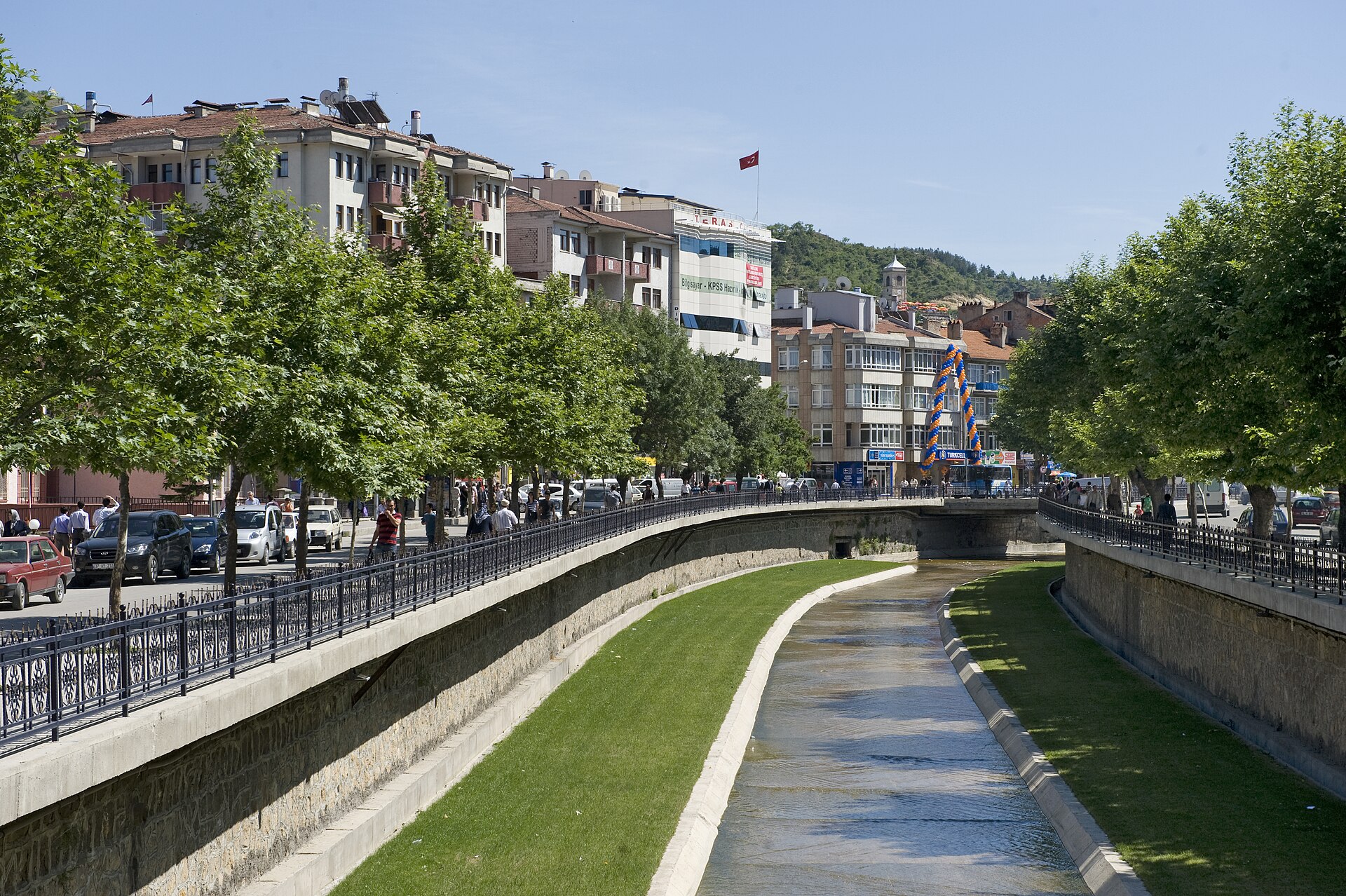
Key facts
- Location: Western Black Sea region, northern Türkiye
- Provincial capital: Kastamonu, altitude 900 m
- Area / population: 13,064 km2 / 378,115 (2022)
- From Istanbul: About 75 minutes by air; 8-9 hours by bus
- Airport: 12 km south of the city
- Best season: Late spring to early autumn; winter for skiing
- Typical visit time: 2 to 4 days
- UNESCO status: Mahmud Bey Mosque is part of the Wooden Hypostyle Mosques of Medieval Anatolia
- Entrance: Entrance: see official page
What is Kastamonu Province and why visit?
Kastamonu is a large, heavily forested province in northern Türkiye, with Black Sea coast in the north and the Ilgaz Mountains in the south. Visitors come for Ottoman-era old houses, a Byzantine-origin castle, wooden mosques, Ilgaz National Park, Küre Mountains National Park and the coastal town of İnebolu.
The province covers 13,064 km2, so distances are long. As a result, it rewards a slow itinerary. Moreover, it is quieter than many Turkish destinations and keeps strong craft, food and mountain traditions.
What is the history of Kastamonu?
Kastamonu has been a regional centre since antiquity. The Greeks and Romans called it Timonion, it was the capital of the Candaroğlu petty kingdom from the 13th to 15th century, and Mehmed II incorporated the region into the Ottoman Empire in 1461. The name comes from the Byzantine castra.
The Byzantines built the castle in the 10th century, and the castra gives Kastamonu its name. The name Kastama turned into Kastamonu over time, and Komnen refers to the Komnenos dynasty, whose emperors settled the region. After the Ottoman conquest, Kastamonu was a provincial capital untroubled by warfare. Ibn Battuta described it as one of the largest and finest cities, where commodities are abundant and prices low.
In the 20th century, Kastamonu supplied ammunition and troops to the İnebolu-Ankara front during the War of Independence, and the İnebolu port was bombarded from the sea on 9 June 1921. Atatürk made his Hat and Dress Revolution speech during a visit to Kastamonu in 1925. Therefore the city also appears in the history of the early republic.
The table below sets out the key dates.
| Period | Event | Where to see it |
|---|---|---|
| 64 BC | Taşköprü area enters the Roman Empire | Pompeiopolis, Taşköprü |
| 10th century | Byzantine castle built | Kastamonu Castle |
| 13th-15th centuries | Candaroğlu capital | Kastamonu |
| 1366 | Wooden mosque built (Mahmud Bey) | Kasaba village |
| 1461 | Ottoman incorporation | Province |
| 1921 | İnebolu bombarded | İnebolu |
| 1925 | Atatürk’s Hat Revolution speech | Kastamonu |
What are the main things to see in Kastamonu?
The main sights are Kastamonu Castle and the old town, the Mahmud Bey wooden mosque, Pompeiopolis near Taşköprü, Ilgaz National Park, Küre Mountains National Park and the coastal houses of İnebolu. Roughly a week would cover everything, but three days gives a good selection.
These are the highlights.
- Kastamonu Castle: built by the Byzantines in the 10th century.
- Mahmud Bey Mosque: a remarkable wooden mosque built in 1366; no nails were used.
- Pompeiopolis: remains of the capital of the Roman Paphlagonia-Bithynia combination, near Taşköprü.
- Ilgaz National Park: a winter sports destination 63 km south of the centre.
- Küre Mountains National Park: canyons, caves and old-growth forest to the northwest.
- İnebolu: the closest Black Sea town, with red-painted timber houses on its hillsides.
- Taşköprü: known for its garlic, a protected designation of origin.
This table gives the sights at a glance.
| Sight | Type | Best for | Notes |
|---|---|---|---|
| Kastamonu Castle | History | Views, old town | Byzantine origin |
| Mahmud Bey Mosque | Mosque | Wooden architecture | Remove shoes; dress modestly |
| Pompeiopolis | Archaeology | Ruins | Near Taşköprü, 42 km away |
| Ilgaz National Park | Nature | Skiing, hiking | Highest peak 2587 m |
| Küre Mountains NP | Nature | Canyons, caves | Plan with a guide |
| İnebolu | Coastal town | Timber houses | About 92 km from the city |
How do you get to Kastamonu and get around?
Kastamonu is reached by air, with an airport 12 km south of the city and most days a flight from Istanbul taking 75 minutes, or by bus in 8 to 9 hours from Istanbul. Check current timetable before booking. Local buses and dolmuşes serve downtown.
Beyond the city, public transport is thin. İnebolu is 92 km north through the mountains, and Ilgaz National Park lies 63 km south. Therefore a car or private transfer is the practical way to see the national parks and villages. In winter, check mountain road conditions, because one section crosses the Ilgaz Mountains at 1800 m.
This table compares the main options.
| Option | Route | Typical duration | Notes |
|---|---|---|---|
| Flight | Istanbul to Kastamonu | About 75 minutes | Airport 12 km south; most days |
| Bus | Istanbul to Kastamonu | 8-9 hours | Every 2-3 hours |
| Car or transfer | City to Ilgaz NP | Check route | 63 km south |
| Car or transfer | City to İnebolu | Check route | 92 km north |
| Local bus | Inside the city | Short | Check current timetable |
When is the best time to visit Kastamonu?
Late spring to early autumn suits sightseeing and hiking, while winter suits skiing at Ilgaz. Precipitation is evenly spread through the year, with a noticeable increase in spring. The city lies at 900 m altitude, so evenings can be cool even in summer.
The table below summarises the seasons.
| Season | Weather | Crowds | Notes |
|---|---|---|---|
| Spring | Changeable, wetter | Low | Green hills; check mountain roads |
| Summer | Warm, cool evenings | Moderate | Best for coast and parks |
| Autumn | Cooler | Low | Forest colours |
| Winter | Cold, snow in mountains | Ski visitors at Ilgaz | Check road conditions |
How long should you stay in Kastamonu?
Two days cover the city and one nearby sight; four days add a national park and the coast. The province is big, so choose a region rather than trying to see everything.
Use this table to choose a plan.
| Plan | Route | Best for |
|---|---|---|
| Half day | Castle and old town | Stopover |
| 1 day | City, Mahmud Bey Mosque, Taşköprü | Heritage focus |
| 2-3 days | City, Ilgaz or Küre, İnebolu | Nature and coast |
What practical tips should you know before visiting Kastamonu?
Dress modestly for mosques and remove shoes. Carry layers, because the city stands at 900 m. For tickets and fees, see the official page of each site. Roads in the mountains can be slow, so allow extra time.
Photography is permitted outdoors, but ask before photographing people. Moreover, many villages have limited services, so carry cash. Accessibility is limited at the castle and old houses.
Remember these points.
- Check winter road conditions before driving over the Ilgaz Mountains.
- Try etli ekmek and çekme helva.
- Respect prayer times in mosques.
- Check hours on the official page for each site.
Where should you stay and eat in Kastamonu?
Stay in the city centre for services, or in İnebolu for the coast. Wikivoyage mentions an atmospheric hotel in a former caravanserai, but warns that live music can run late. Etli ekmek is a local style of pizza, topped by cheese and spicy bacon, and çekme helvası is the dessert. Taşköprü garlic is a regional product.
What are the nearby places and day trips from Kastamonu?
Sinop lies to the east, Bartın and Karabük to the west, Çankırı to the south. Safranbolu is a classic extension. The Mahmud Bey Mosque is part of the Wooden Hypostyle Mosques of Medieval Anatolia, see our dedicated page. Küre Mountains National Park spans Kastamonu and Bartın.
Plan this with TurkGT
TurkGT is an Istanbul-based travel company that arranges guided tours, private transfers, local guides and interpreter support across Türkiye. For Kastamonu, we can build a private route that links the main stops, handle the long road transfers and adapt the pace to your group.
Send us your dates and interests by WhatsApp and our team will confirm what is available. We do not publish fixed prices on this page, so every offer is confirmed individually.
Frequently asked questions
Where is Kastamonu?
In northern Türkiye, in the western Black Sea region, with coast to the north and the Ilgaz Mountains to the south.
How big is Kastamonu Province?
13,064 km2, with 378,115 inhabitants in 2022.
How do I get there from Istanbul?
By flight (about 75 minutes) or bus (8-9 hours); check current timetable.
What is Kastamonu famous for?
Forests, the Byzantine-origin castle, wooden mosques, Taşköprü garlic and Ilgaz National Park.
How far is Ilgaz National Park?
63 km south of the provincial centre.
What is Pompeiopolis?
The remains of the Roman capital of Paphlagonia-Bithynia near Taşköprü.
What local food should I try?
Etli ekmek, a local pizza style, and çekme helvası.
How much are entrance fees?
Fees change, so see the official page of each site.
Sources
- Kastamonu Province – Wikipedia
- Kastamonu – Türkiye Culture Portal (Ministry of Culture and Tourism)
- Kastamonu – GoTürkiye (Türkiye Tourism Promotion and Development Agency)
- Kastamonu – Wikivoyage
- Kastamonu – Wikipedia
- Taşköprü, Kastamonu – Wikipedia
- Ilgaz National Park – Wikipedia
Last reviewed: 2026-11-18. Opening hours, ticket prices and other changeable details are not listed because they change; check the official source before you travel.