
Van is a city and province in Eastern Anatolia on Lake Van, near the Iranian border. Visit for Urartian history, Van Castle, Akdamar Island and high mountain scenery.
Key facts
- Location: Eastern Anatolia, east shore of Lake Van
- From Istanbul: Flight; check current timetable
- Elevation: About 1,750 m
- Best season: Late spring to early autumn
- Typical visit time: 2-3 days
- Key sites: Van Castle, Akdamar, Hoşap Castle
- Lake: 3,755 km2, saline soda lake
- UNESCO status: Not asserted here; see official page
- Entrance: See official page
What is Van and why visit it?
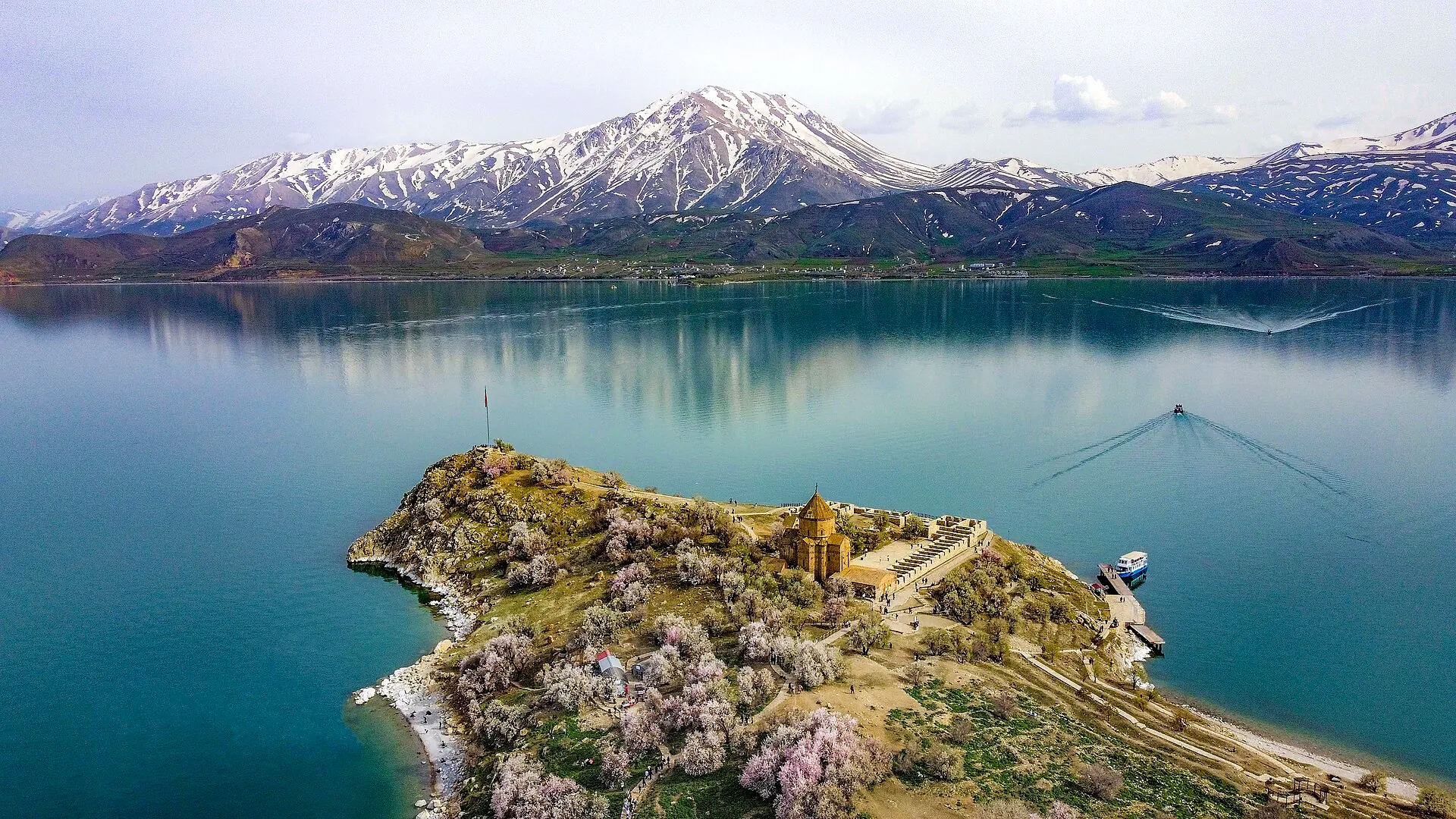
Van is a city and province in Eastern Anatolia, on the eastern shore of Lake Van and near the Iranian border. It is known for Urartian history, Akdamar Island and its large soda lake. Visitors come for ancient fortresses, island churches and mountain scenery.
The province covers 20,921 km2 and had 1,128,749 residents in 2022. It has 13 districts and neighbours Bitlis, Siirt, Şırnak, Hakkâri and Ağrı. GoTürkiye notes that Van has the largest interior basin in Anatolia and nearly seven thousand years of cultural background.
Therefore Van suits travellers who want history and scenery together. In contrast to western Türkiye, the landscape is high, open and lake-centred.
Moreover, Lake Van is endorheic, meaning it has no outlet, according to Wikipedia. This explains its salty, soda-rich water. As a result, the lake feels different from the freshwater lakes of western Türkiye, and swimming and boating conditions are specific to this setting.
Visitors typically choose Van for these reasons.
- Van Castle and Urartian heritage.
- Akdamar Island and its Armenian church.
- Lake Van, a saline soda lake.
- Hoşap Castle and Muradiye Waterfall in the province.
- Mountains such as Erek, Artos and Süphan area lakes.
What is the history of Van?
Van’s best-known early history is Urartian. The Culture Portal says the Urartian state, with its capital at Tuşba (Van), was founded around 900 BC. Van Castle was built in the 9th century BC by King Sarduri. Later layers include Armenian, Ottoman and modern periods.
Wikipedia says the early settlement centred on the steep-sided bluff now known as Van Castle. As a result, the castle remains the clearest anchor for ancient Van.
Akdamar Island hosts the Holy Cross Cathedral, a 10th-century Armenian church and monastic complex, per Wikipedia. Go Türkiye adds that Akdamar Church is known for its stone reliefs. Meanwhile, the Meher Gate is another Urartian monument.
The city also experienced a 7.2 Mw earthquake on 23 October 2011, so the modern city is largely newer than the old one.
In short, Van offers three historical layers: Urartian, Armenian and modern. The Urartian fortress and inscriptions anchor the earliest layer, Akdamar anchors the medieval Armenian layer, and the rebuilt city reflects recovery after earthquakes. Consequently, a guide can connect these periods far better than isolated site visits.
The dated points below come from our sources.
- About 900 BC: Urartu founded with capital Tuşba (Van).
- 9th century BC: Van Castle built by King Sarduri.
- 10th century: Akdamar church complex.
- 23 October 2011: 7.2 Mw earthquake.
What are the main things to see in Van?
The main sights are Van Castle, Akdamar Island, Hoşap Castle, Muradiye Waterfall, the Van Museum and Lake Van shoreline. Allow two days to cover the city and the island trip. The table summarises each stop.
Wikipedia names Hoşap Castle, Muradiye Waterfall, Akdamar Island, Van Castle, Lake Turna, Lake Akgöl and the Van Museum as the main places with tourism potential. Moreover, Lake Van covers 3,755 km2 at 1,640 m above sea level.
Akdamar is the visual highlight for many travellers. The boat crossing gives views back to the shore, and the church stands on a small island. Furthermore, the stone reliefs mentioned by Go Türkiye reward a slow look, so bring good light and patience. For Van Castle, climb early in the day for cooler air and clearer views across the plain and the lake.
Plan your route around these highlights.
- Van Castle on its bluff.
- Akdamar Island and Holy Cross Cathedral.
- Hoşap Castle.
- Muradiye Waterfall.
- Van Museum.
- Meher Gate and other Urartian monuments.
This table gives each sight at a glance.
| Sight | Type | Interest | Typical visit |
|---|---|---|---|
| Van Castle | Urartian fortress | Sarduri era bluff | 1-2 hours |
| Akdamar Island | Island church | 10th-century church, reliefs | Half day with boat |
| Hoşap Castle | Castle | Province outing | 1 hour |
| Muradiye Waterfall | Natural site | Scenery | 1 hour |
| Van Museum | Museum | Regional finds | 1-2 hours |
How do you get to Van and get around?
Most visitors fly to Van, since Wikipedia says Ferit Melen Airport has daily flights to Istanbul, Ankara and other major cities. Check the current timetable. Within the province, use taxis, a private driver or a guided trip for the sights.
The sights are spread across the province, so a car or driver saves time. Moreover, Akdamar needs a boat crossing, and schedules vary, so check the current timetable.
Overall, plan transport in advance. Because the province is large, a driver who knows the roads and boat schedules turns a rushed day into a relaxed one. Therefore many visitors book a private transfer for the island and fortress outings.
Typical options are listed here; check timetables.
| Route | Mode | Notes |
|---|---|---|
| Istanbul to Van | Flight | Daily flights per Wikipedia; check timetable |
| Airport to city | Taxi or transfer | Check current options |
| City to Akdamar | Car plus boat | Boat times vary |
| City to Hoşap Castle | Car or guided trip | Province outing |
When is the best time to visit Van?
Late spring to early autumn suits Van. Wikipedia describes cold, snowy winters and very warm, dry summers. At 1,750 metres, the city is high, so evenings can be cool even in summer.
Winter brings snow and fewer services, so check road conditions. In contrast, summer is better for the lake and island trips. Therefore most itineraries fall between May and October.
The table compares seasons.
| Season | Weather | Crowds | Notes |
|---|---|---|---|
| Spring | Cool to mild | Low to moderate | Snow may linger on mountains |
| Summer | Very warm, dry | Highest | Best for Akdamar and lake |
| Autumn | Cool, clear | Low | Good light |
| Winter | Cold, snowy | Low | Check road conditions |
How long should you stay in Van?
Two days cover Van Castle, the museum and Akdamar. One day covers the city only. Three days add Hoşap Castle, Muradiye Waterfall and the lake shore.
Because distances are long, a two-day minimum is sensible. However, a slower pace gives time for lakeside stops.
Pick a plan from the table.
| Duration | Suggested plan | Best for |
|---|---|---|
| Half day | Van Castle and museum | Stopover |
| 1 day | Castle plus Akdamar | Tight schedules |
| 2-3 days | Add Hoşap, Muradiye and lake shore | Heritage and nature travellers |
What practical tips should you know?
Dress in layers because of altitude, and dress modestly at religious sites. We quote no fees; see the official page for tickets and boat information. Carry sun protection and water on open sites.
The region is high and weather shifts quickly. Moreover, check current travel conditions for eastern routes before you go. Photography is generally fine outdoors.
Van breakfast is a regional tradition, so plan a slow morning meal with local cheeses, honey and breads. Moreover, tea houses and bakeries near the centre give an easy introduction to local flavours without needing a reservation.
Keep these tips in mind.
- Entrance: see the official page.
- Layers: temperatures vary with altitude.
- Etiquette: modest dress at religious sites.
- Boat: confirm current timetable.
- Safety: follow official travel advice.
- Photography: respect signs.
Where should you stay and eat?
Stay in the city centre for services, or near the lake for views. Van is known for its breakfast culture and the Van cat. We name no businesses; ask TurkGT for current suggestions.
Wikipedia notes the Van cat is a breed native to the town. Meanwhile, central districts offer the widest food choice.
The table compares areas.
| Area | Suits | Notes |
|---|---|---|
| City centre | Services and food | Easy to arrange transfers |
| Lake shore | Views | Quieter |
| Outside districts | Drivers | Limited services |
What nearby places and day trips can you add?
Nearby options include Bitlis, Kars, Ağrı and the Ani ruins further north-east. Ishak Pasha Palace lies near Doğubayazıt. These form a classic eastern loop.
Akdamar has its own page. Kars and Ani suit a longer eastern route, and Bitlis neighbours Van on the west.
Related pages in our encyclopedia.
- Akdamar Church.
- Bitlis.
- Kars and Ani.
- Ishak Pasha Palace.
- Ağrı.
Plan this with TurkGT
TurkGT is an Istanbul-based travel company offering guided trips, private transfers, and guide or interpreter services for eastern itineraries including Van. Share your dates and interests, and we propose a plan. We confirm details with you by WhatsApp.
Frequently asked questions
Where is Van?
In Eastern Anatolia, on the eastern shore of Lake Van, near the Iranian border.
What is Lake Van?
A saline soda lake of 3,755 km2 at 1,640 m above sea level.
What is Akdamar?
An island with a 10th-century Armenian church complex.
Who built Van Castle?
The Culture Portal credits King Sarduri in the 9th century BC.
How do I get there?
Ferit Melen Airport has daily flights to Istanbul and Ankara; check the timetable.
What is the climate?
Cold, snowy winters and very warm, dry summers.
How many days do I need?
Two days cover the city and Akdamar.
Do I need tickets?
Check the official page for current entrance details.
Related on TurkGT
- Places and guides in Van:
- Akdamar Island
- Akdamar Church (Holy Cross)
Sources
- Van – Wikipedia
- Van general information – Turkish Ministry of Culture and Tourism, Culture Portal (in Turkish)
- Van – GoTürkiye (Türkiye Tourism Promotion and Development Agency)
Last reviewed: 2026-11-17.