
Bursa and Cumalıkızık is a UNESCO World Heritage Site in north-western Turkey, inscribed in 2014. Bursa was the first Ottoman capital, and the nearby village of Cumalıkızık supported it through the waqf system. It suits a one-day or overnight trip from Istanbul.
Key facts
- Location: Bursa and Cumalıkızık, south Marmara region, slopes of Uludağ
- From Istanbul: Intercity bus about 2 hr 10 min non-stop (Wikivoyage); check timetable
- Cumalıkızık distance: About 10 km east of Bursa centre
- UNESCO status: Inscribed 2014; criteria (i), (ii), (iv), (vi)
- UNESCO area: 27.467 ha, buffer zone 249.266 ha; 8 components
- Best season: Spring and autumn
- Typical visit time: 1 day for the city and village
- Entrance: See the official page for each monument
What are Bursa and Cumalıkızık, and why visit?
Bursa and Cumalıkızık form a UNESCO World Heritage Site in north-western Turkey, on the slopes of Uludağ. Bursa was the first Ottoman capital, and Cumalıkızık is a nearby village tied to it. Visitors see early mosques, tombs, covered markets and timber houses.
Moreover, the site shows how early sultans built a city. Complexes called kulliyes grew around mosques, schools, baths and kitchens. In contrast to a single monument, the value here lies in the whole urban and rural system.
Bursa is also easy to reach from Istanbul, so many travellers add it as a day trip or overnight stay. Therefore it fits well beside an Istanbul stay.
This page explains the following.
- What UNESCO protects and why
- Early Ottoman history in Bursa
- Which monuments and districts to visit
- Transport, seasons, timing and practical tips
Why is it a UNESCO World Heritage Site?
UNESCO inscribed Bursa and Cumalıkızık in 2014 under criteria (i), (ii), (iv) and (vi). It is a serial property of eight component sites in the city and the nearby village. The core area covers 27.467 hectares, with a buffer zone of 249.266 hectares.
In short, the listing recognises an urban planning model of the early Ottoman state. It links city complexes to rural support through the waqf (endowment) system. As a result, Cumalıkızık counts as part of the story, not only as a scenic village.
The table below explains each UNESCO criterion in plain terms.
| Criterion | UNESCO reasoning (summary) | What it means for visitors |
|---|---|---|
| (i) | Innovative urban planning by the first sultans | Kulliyes with mosques, baths and kitchens |
| (ii) | Reference for later Ottoman cities | Public complexes built outside the old walled core |
| (iv) | Early Ottoman architectural plan (inverted T plan) | Early mosques with guest rooms |
| (vi) | Link to early Ottoman events, myths and traditions | Sultans’ tombs; Karagöz and Hacivat stories |
What is the history of Bursa?
Bursa became the first Ottoman capital in the early 14th century. Earlier, it was the Bithynian and Roman city of Prusa. Wikipedia dates the Ottoman capture from the Byzantines to 1326, and UNESCO ties the sultan’s seat there to the early 14th century.
Five sultans shaped the city: Orhan Ghazi, Murad I, Yıldırım Bayezid, Çelebi Mehmed and Murad II. Each built a complex on a hill. Subsequently houses gathered around these kulliyes and became neighbourhoods.
Cumalıkızık supported this system. Historical documents show it provided income for the Orhan Ghazi Kulliye. Thus the village and the city worked as one economic unit.
The main steps of the story are these.
- 202 BC: Prusa founded and named for King Prusias of Bithynia (Wikivoyage)
- 74 BC: Romans annex Bithynia
- 1326: Ottoman capture (Wikipedia)
- Early 14th century: first Ottoman capital and sultan’s seat
- 1396-1400: Grand Mosque of Bursa built (Wikipedia)
- 2014: UNESCO inscription
This table shows the history at a glance.
| Era | Development | Trace today |
|---|---|---|
| Bithynian and Roman | Prusa and thermal springs of Çekirge | Çekirge spa district |
| Early Ottoman | First capital; kulliye system | Orhan Ghazi Kulliye, tombs |
| Bayezid era | Grand Mosque built 1396-1400 | Grand Mosque of Bursa |
| Rural system | Waqf village Cumalıkızık | Timber houses and lanes |
What should you see in Bursa and Cumalıkızık?
Start with the early Ottoman monuments in central Bursa, then visit Cumalıkızık. The Grand Mosque, the Orhan Ghazi complex, the covered markets and the sultans’ tombs form the core. Cumalıkızık adds a rural view of the same system, so allow a few hours for each part of the trip.
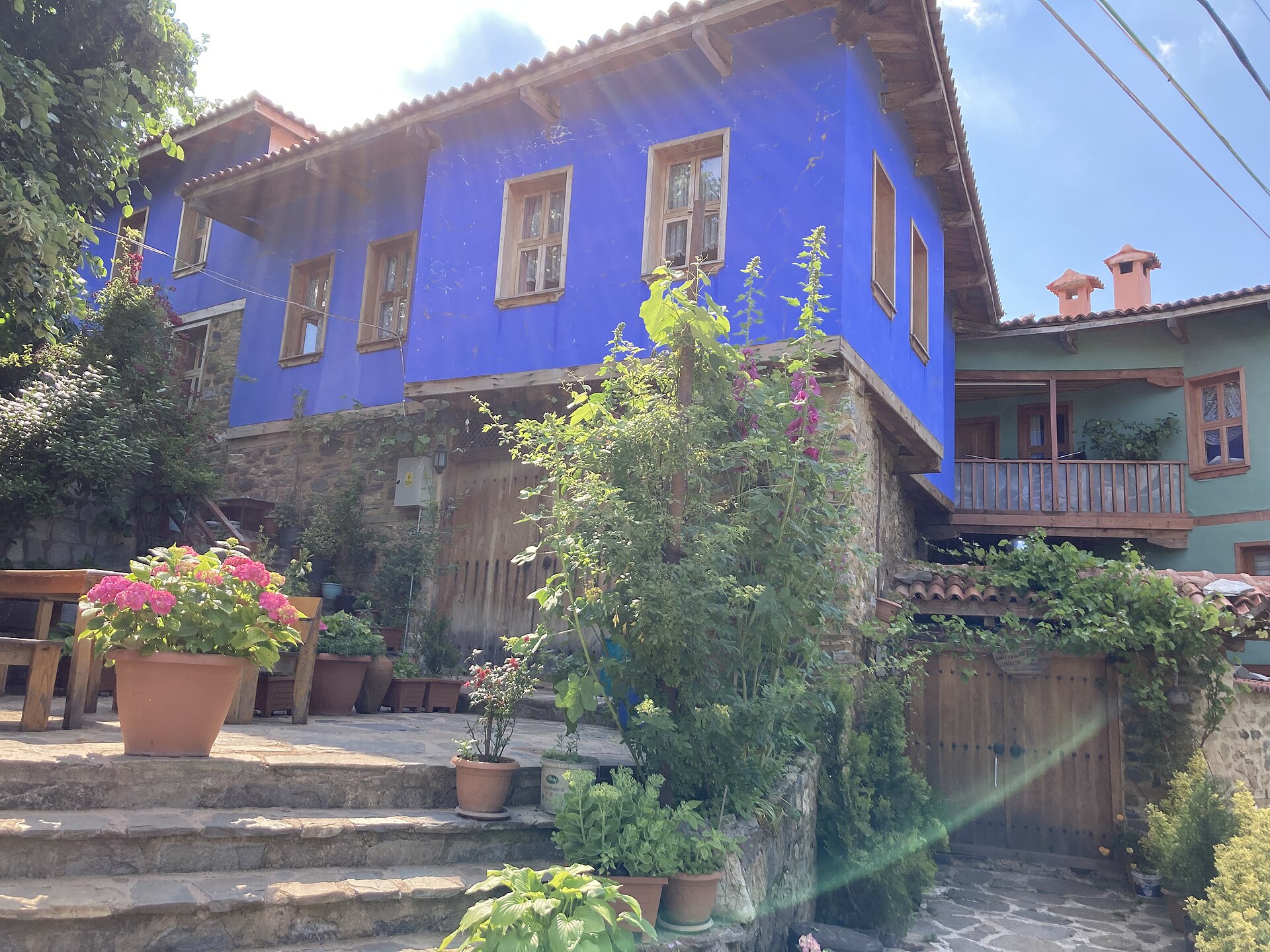
Wikivoyage describes Cumalıkızık as a village with 265 half-timbered houses, most still inhabited. Because people live there, behave as you would in any residential area.
Consider these stops.
- Grand Mosque of Bursa and nearby bazaar streets
- Orhan Ghazi Kulliye and Osman and Orhan tombs
- Koza Han, the silk caravanserai
- Green Mosque and Green Tomb district
- Cumalıkızık village lanes and houses
- Uludağ cable car or road for mountain views
This table gives an overview of the key places.
| Place | Type | Notes |
|---|---|---|
| Grand Mosque of Bursa | Mosque | Built 1396-1400 (Wikipedia) |
| Orhan Ghazi Kulliye | Kulliye | Named in UNESCO text |
| Koza Han | Caravanserai | Cited by Wikipedia as an Ottoman-era han |
| Cumalıkızık | Waqf village | About 10 km east of the city |
How do you get to Bursa and get around?
Bursa lies south of the Marmara Sea and is usually reached from Istanbul by bus, ferry or car. Wikivoyage lists a non-stop bus from Istanbul at about two hours ten minutes. Check current timetables, because services change by season and by day of the week.
From Sabiha Gökçen Airport, airport buses to Bursa operate; check operators for current times. Inside the city, trams, metro and local buses link the sights. Cumalıkızık lies about 10 km east, so a taxi, minibus or tour is practical.
The table below compares common routes.
| From | Mode | Typical duration |
|---|---|---|
| Istanbul | Intercity bus | Around 2 hr 10 min non-stop (Wikivoyage); check timetable |
| Istanbul | Ferry plus bus or road | Varies; check current schedules |
| Sabiha Gökçen Airport | Airport bus | Check current timetable |
| Bursa centre to Cumalıkızık | Taxi, local bus or tour | About 10 km; short ride |
| Bursa bus terminal to centre | Local bus or taxi | Terminal is about 10 km north of centre |
When is the right time to visit?
Spring and autumn suit walking the hills and the village lanes. Summer is warm, though Bursa‘s slopes and parks stay green. Winter brings a mountain setting and ski season on Uludağ. Check the weather forecast before you travel, since mountain weather can change quickly.
However, weekends bring local crowds to Cumalıkızık, so weekday mornings are calmer. Therefore plan early if you want quiet lanes for photos.
The table below compares the seasons.
| Season | Weather (general) | Crowds | Notes |
|---|---|---|---|
| Spring | Mild, some rain | Medium | Gardens bloom; pleasant for walking |
| Summer | Warm to hot | High at weekends | Start early; shade in courtyards |
| Autumn | Mild | Medium | Soft light in the village |
| Winter | Cool, wet or snowy | Lower in town | Uludağ ski season; slippery lanes |
How long should you stay?
One day covers the main monuments and Cumalıkızık if you start early. A two-day stay allows slower visits, thermal baths and Uludağ. Most visitors from Istanbul choose one or two days, depending on travel time and interests, and many prefer an overnight stay.
Because sights cluster on several hills, use public transport or a driver. This saves energy for the village in the afternoon.
This table suggests plans by available time.
| Time | Plan | Includes |
|---|---|---|
| Half day | Central Bursa highlights | Grand Mosque, tombs, covered markets |
| 1 day | City plus Cumalıkızık | Add the village and lunch |
| 2-3 days | Slow route | Add Çekirge, İznik day trip and Uludağ |
What practical tips help?
Dress modestly for mosques and tombs, carry a scarf if needed, and remove shoes at the door. Check opening hours and prayer times before you visit, because mosques may close to tourists during worship. For entrances and fees, see the official page of the museum or monument.
Moreover, Cumalıkızık is a living village, so ask before photographing residents. Streets are cobbled and uneven. Accessibility is therefore limited in the old lanes.
Keep these tips in mind.
- Entrance: see official pages for current fees
- Mosques: cover shoulders and knees; women usually cover hair
- Footwear: comfortable shoes for cobbles
- Photography: do not photograph worshippers or private courtyards
- Etiquette: speak quietly in tombs and mosques
- Safety: normal city care for bags and phones
Where should you stay and eat?
Stay in central Bursa near the Ulu Cami and Tophane area for walkable sights, or in Çekirge for thermal-bath hotels. Eat local dishes in the old bazaar area. Choose a restaurant in the centre rather than at the village if you want a full meal.
Typical Bursa foods include İskender kebab, chestnut candy and fresh fruit from the surrounding plain. Moreover, Cumalıkızık has small cafés for tea and village breakfast.
Consider these areas.
- Tophane and the old centre: walkable to tombs
- Çekirge: thermal hotels and spas
- Nilüfer: modern district with cafés
- Cumalıkızık: tea and breakfast stops
What is nearby and which day trips combine with Bursa?
İznik lies north-east of Bursa and holds Byzantine and Ottoman layers. Uludağ rises directly behind the city. Istanbul is the common starting point for all of these routes, and each can be done by road or with a private driver in a day.
As a result, you can build a loop from Istanbul that includes Bursa, İznik and Cumalıkızık. In addition, the Çekirge thermal district offers a relaxed end to a day of walking. Therefore a two-day plan balances culture and rest well. For longer stays, ask us to extend the route toward the Aegean coast.
The table below lists nearby places.
| Place | Direction | Idea |
|---|---|---|
| Cumalıkızık | 10 km east | Part of the UNESCO property |
| İznik | North-east | Walls and tiles history |
| Uludağ | South | Cable car and winter sports |
| Istanbul | North | Return by ferry or bus |
Plan this with TurkGT
TurkGT is an Istanbul-based travel company that arranges guided trips, private transfers, licensed guides and interpreters across Turkey. Tell us your dates, group size and interests, and we will propose a plan for this visit. We confirm every booking by WhatsApp, so you always know the arrangement before you travel.
Frequently asked questions
Where are Bursa and Cumalıkızık?
Bursa is in north-western Turkey on the slopes of Uludağ. Cumalıkızık is a village about 10 km east of the city centre.
When did UNESCO list the site?
UNESCO inscribed Bursa and Cumalıkızık in 2014 under criteria (i), (ii), (iv) and (vi).
What is a kulliye?
A kulliye is a complex of mosque, madrasah, hamam, imaret and tombs, according to UNESCO.
How many components does the property have?
UNESCO lists eight component sites in Bursa and Cumalıkızık.
Can I visit Bursa from Istanbul in one day?
Yes, many travellers do. Check current bus, ferry and road timings, and start early.
How far is Cumalıkızık from Bursa?
About 10 km east of the city, at the foot of Mount Uludağ.
How much are tickets?
Fees vary by monument, so see the official pages for current prices and any pass options.
What should I wear?
Dress modestly for mosques and tombs, and wear sturdy shoes for the cobbled village lanes.
Related on TurkGT
Sources
- UNESCO World Heritage Centre: Bursa and Cumalıkızık
- Wikipedia: Bursa
- Wikipedia: Cumalıkızık
- Wikivoyage: Bursa
- Go Türkiye: Bursa – Smell
Last reviewed: 2026-11-17.