
The Spice Bazaar (Mısır Çarşısı, or Egyptian Bazaar) is a historic covered market in Eminönü, in Istanbul’s Fatih district. Building began in 1660 as part of the New Mosque complex. Today shops sell spices, Turkish delight, sweets, dried fruit, nuts and souvenirs. It sits beside the Golden Horn ferry piers.
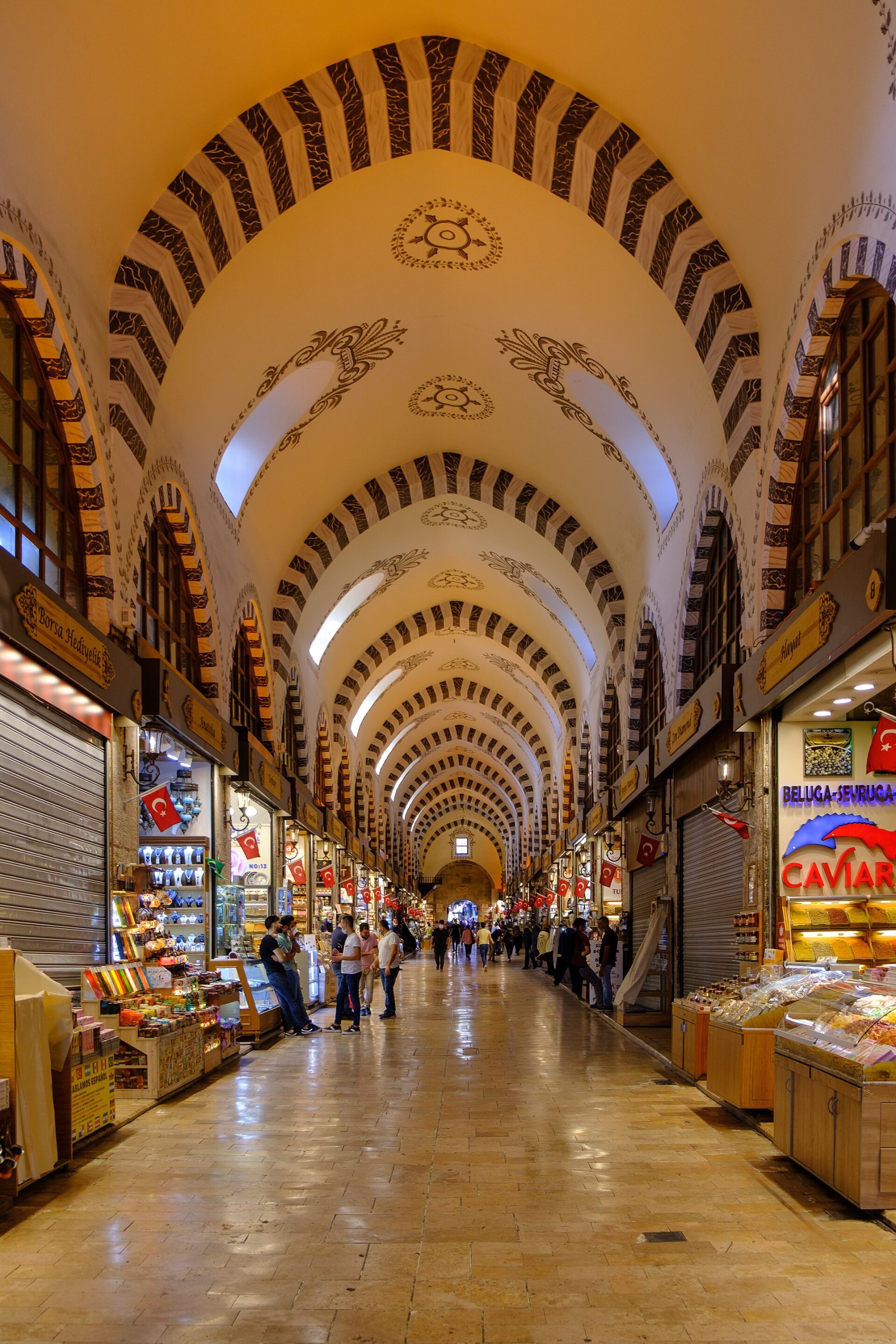
Key facts
- Turkish name: Mısır Çarşısı (Egyptian Bazaar)
- Location: Eminönü, Fatih district, European side of Istanbul
- Construction: Begun 1660; completed 1664 according to the Municipality
- Part of: The New Mosque (Yeni Cami) complex
- Shape and gates: L-shaped market with six gates (Municipality)
- Distance from the airports: Road or rail transfer to Eminönü; see our airport guides
- Best season: Spring and autumn for comfortable walking; mornings are calmer all year
- Typical visit time: About 45 minutes to 2 hours, longer with the surrounding streets
- UNESCO status: Close to the UNESCO-listed Historic Areas of Istanbul; the bazaar itself is not a separate site
- Entrance: Free to walk in as a market; check the official page for opening days and hours
What is the Spice Bazaar and why visit?
The Spice Bazaar is a covered Ottoman market in Eminönü, built from 1660. It trades in spices, sweets, dried fruit, nuts and gifts. Visitors come for the vaulted hall, the colours and the smells. It is also an easy stop between the Galata Bridge, the New Mosque and Sultanahmet.
Wikipedia calls it the most famous covered shopping complex after the Grand Bazaar. In contrast to its larger neighbour, it is smaller in surface area, according to the Municipality, so a visit stays manageable. As a result, it suits first-time visitors who want a market without a long walk.
Moreover, the bazaar works as living history. It was built to pay for a mosque, and rent from its shops still tells that story. Food shoppers, souvenir hunters and photographers all find something here.
What is the history of the Spice Bazaar?
The bazaar dates from 1660, after Istanbul’s Great Fire of that year. Sultan Mehmed IV’s mother, Turhan Hatice, commissioned it as part of the New Mosque complex. Egyptian revenues paid for it, which explains the name. It reached its present form after a renovation in 1940–1943.
Why Egyptian? The Turkish word mısır means both Egypt and maize, so the name is sometimes wrongly translated as Corn Bazaar. The Municipality says it was built with taxes from Cairo. The Culture Portal adds that its shops mostly sold goods and spices from Egypt. First called the New Bazaar or the Valide Bazaar, it has been called Egyptian Bazaar since the 18th century.
Who built it? Wikipedia credits the court architect Koca Kasım Ağa, with Mustafa Ağa supervising later construction. The Municipality says Mustafa Ağa completed it in 1664. The bazaar served as the arasta of the New Mosque. Rent from its shops paid for the mosque’s upkeep.
Fires and renovation. The Municipality says the bazaar was badly damaged in a fire on 2 January 1691. It burned again in 1940, so the form seen today comes from the 1940–1943 renovation.
This list gives the key dates at a glance.
- 1660: Great Fire of Istanbul; construction begins on Turhan Hatice’s order.
- 1664: completion under Mustafa Ağa (Municipality).
- 1691: severe fire damage in January.
- 18th century onward: the public calls it the Egyptian Bazaar.
- 1940: another fire; 1940–1943 renovation gives the current form.
What to see and buy at the Spice Bazaar
Inside you find spice stalls, Turkish delight, baklava-style sweets, dried fruit, nuts, tea and souvenirs. Wikipedia counts 85 shops and the Municipality 86. Shops of other types are gradually replacing spice sellers, so look carefully and compare several stalls before buying.
Spices and herbs are the traditional core. Turkish delight, sweets, dried fruit and nuts are the most popular gifts. Jewellery and souvenirs fill many corners. In addition, shop owners often offer samples, so taste before you buy.
These are the main categories visitors look for.
- Spices: pepper, sumac, mint, saffron-type blends and tea mixes.
- Turkish delight (lokum) and other sweets.
- Dried fruit and nuts, often sold by weight.
- Souvenirs and jewellery.
- Architecture: the L-shaped hall, six gates and the vaulted ceiling.
This table sets out the main stalls and what to know about each.
| Category | What it is | Tip |
|---|---|---|
| Spices and herbs | Ground and whole spices, tea blends | Ask for small packs; check packaging and origin |
| Turkish delight and sweets | Lokum, sweets, nougat | Taste first; vacuum packs travel well |
| Dried fruit and nuts | Figs, apricots, pistachios | Compare prices between shops |
| Souvenirs | Ceramics, textiles, gifts | Quality varies; ask about materials |
| Architecture | Vaulted L-shaped hall with six gates | Look up and visit at quieter hours |
How do I get to the Spice Bazaar?
The bazaar stands at Eminönü beside the Galata Bridge and the Golden Horn piers. Take the tram or a ferry to Eminönü, or walk from Sultanahmet. Wikivoyage lists Eminönü as a stop for the T5 tram and ferries to the Asian side. Check the current network map before travel.
Sirkeci railway station is also close. Marmaray links Sirkeci and Üsküdar, according to Wikivoyage, so visitors from the Asian side can arrive by rail. Our guide on Istanbul public transport explains cards and lines.
This table compares the usual routes to Eminönü.
| From | How | Notes |
|---|---|---|
| Sultanahmet | Tram or walk downhill | Check the current tram route |
| Galata and Karaköy | Walk across the Galata Bridge | Short walk on foot |
| Üsküdar or Kadıköy | Ferry or Marmaray to Eminönü/Sirkeci | Check the current timetable |
| Taksim | Metro, funicular and tram | Use the transport guide |
| Airports | Taxi, shuttle or private transfer | See our airport guides |
When is the best time to visit?
Go in spring or autumn for comfortable walking weather. Weekdays and early mornings are usually calmer than weekends. The hall is covered, so it works in rain and heat, but the streets outside are open. Opening days and hours can change, so check the official page.
Ramadan and holidays change shop hours and crowds, so plan flexibly.
This table shows the seasons and what changes.
| Season | Weather | Crowds | Notes |
|---|---|---|---|
| Spring (Mar–May) | Mild | Moderate to high | Good walking weather |
| Summer (Jun–Aug) | Hot | High | Covered hall gives shade; go early |
| Autumn (Sep–Nov) | Mild | Moderate | Comfortable, fewer queues |
| Winter (Dec–Feb) | Cool, wet | Lower | Covered hall is sheltered; check hours |
How long should I stay?
Most visitors need between 45 minutes and two hours inside the bazaar. A half day adds the New Mosque and the waterfront. A full day links Eminönü with the Grand Bazaar and Sultanahmet. These are planning estimates only, because crowds and shopping habits differ.
Food-focused travellers can add tastings and a market tour.
This table suggests plans for different time budgets.
| Time | Plan |
|---|---|
| Half day | Spice Bazaar, New Mosque, Galata Bridge and a ferry |
| 1 day | Spice Bazaar, Grand Bazaar, Sultanahmet highlights |
| 2–3 days | Add Galata, Karaköy, the Bosphorus and the Asian side |
What practical tips should I know?
Entry to the market hall is free as a public space, but shops set their own prices. Compare before buying, ask for small trial amounts and keep bags closed in crowds. Check the official pages for hours, as we do not list times here.
Dress is casual, though modest dress is wise near the New Mosque. Photography is generally fine, but ask before photographing people. Accessibility: cobbled approaches and crowds can be hard for wheelchair users.
These tips cover the common questions.
- Prices: compare several stalls; bargaining is normal for souvenirs but not for packaged goods with fixed prices.
- Safety: watch for pickpockets and keep valuables in front pockets.
- Food gifts: check weights and sealed packaging; ask about customs rules for your destination.
- Etiquette: greet shopkeepers and decline politely if not buying.
- Tickets: no ticket is needed for the market; see official pages for opening days.
Where should I stay and eat?
Stay in Sultanahmet for history, or Karaköy and Galata for cafés and ferry access. Eat near Eminönü and Karaköy, where small restaurants and bakeries serve local snacks. Avoid choosing a place only for its position next to the bazaar entrance. Compare menus first.
Sirkeci and Eminönü have quick local stops, and Karaköy offers coffee and desserts. The Istanbul Market Day food tour lists Spice Bazaar tasting as part of a wider market walk.
This table compares areas for a stay.
| Area | Why stay | Trade-off |
|---|---|---|
| Sultanahmet | Walk to major sights | Tourist-oriented |
| Karaköy / Galata | Cafés, ferry piers | Hilly streets |
| Beyoğlu | Nightlife, transport | Busy and noisy |
What is nearby?
Near the bazaar stand the New Mosque, the Galata Bridge, Sirkeci station and Sultanahmet. On foot you can reach the Grand Bazaar, Hagia Sophia and Topkapı Palace. Wikipedia’s nearby-sites list includes Hagia Sophia and Topkapı Palace.
By ferry from Eminönü you reach the Asian side and the Bosphorus piers, and from the wider city you can continue to the Princes’ Islands. Use our linked pages to continue your plan, compare districts and choose the area that fits your route and time.
Plan this with TurkGT
TurkGT is an Istanbul-based travel company. We offer guided tours, private transfers, licensed guides and interpreter support, including a Grand Bazaar and Spice Bazaar shopping tour and an Istanbul market food day. Message us on WhatsApp with your dates, and we confirm the plan there.
Frequently asked questions
Where is the Spice Bazaar?
It is in the Eminönü quarter of the Fatih district, beside the New Mosque and the Golden Horn waterfront.
Why is it called the Egyptian Bazaar?
It was built with revenues from the Ottoman province of Egypt. The Turkish word mısır also means maize, so the name is sometimes mistranslated as Corn Bazaar.
When was the Spice Bazaar built?
Construction began in 1660. The Municipality gives 1664 as the completion date.
Who commissioned it?
Turhan Hatice, the mother of Sultan Mehmed IV, ordered it as part of the New Mosque complex.
What can I buy there?
Shops sell spices, Turkish delight and other sweets, jewellery, souvenirs, dried fruit and nuts.
How many shops are there?
Wikipedia counts 85 shops and the Municipality counts 86, so the figure depends on the source.
How do I get to the Spice Bazaar?
Take the tram or a ferry to Eminönü, or walk from Sultanahmet or across the Galata Bridge. Check current timetables.
Is there a guided option?
Yes. TurkGT can arrange a guide and transfers on request. Contact us on WhatsApp to confirm.
Related on TurkGT
Sources
- Spice Bazaar – Wikipedia
- Spice Bazaar – Istanbul Metropolitan Municipality
- Mısır Çarşısı – Kültür Portalı
- Istanbul/Asian Side – Wikivoyage
Last reviewed: 2026-11-18. Opening hours, ticket prices and other changeable details are not listed because they change; check the official source before you travel.