
Topkapı Palace is a large museum and library in Istanbul’s Fatih district. It served as the administrative centre and main residence of the Ottoman sultans from the 1460s, and today displays the Harem, treasury and imperial collections. It is part of the Historic Areas of Istanbul.
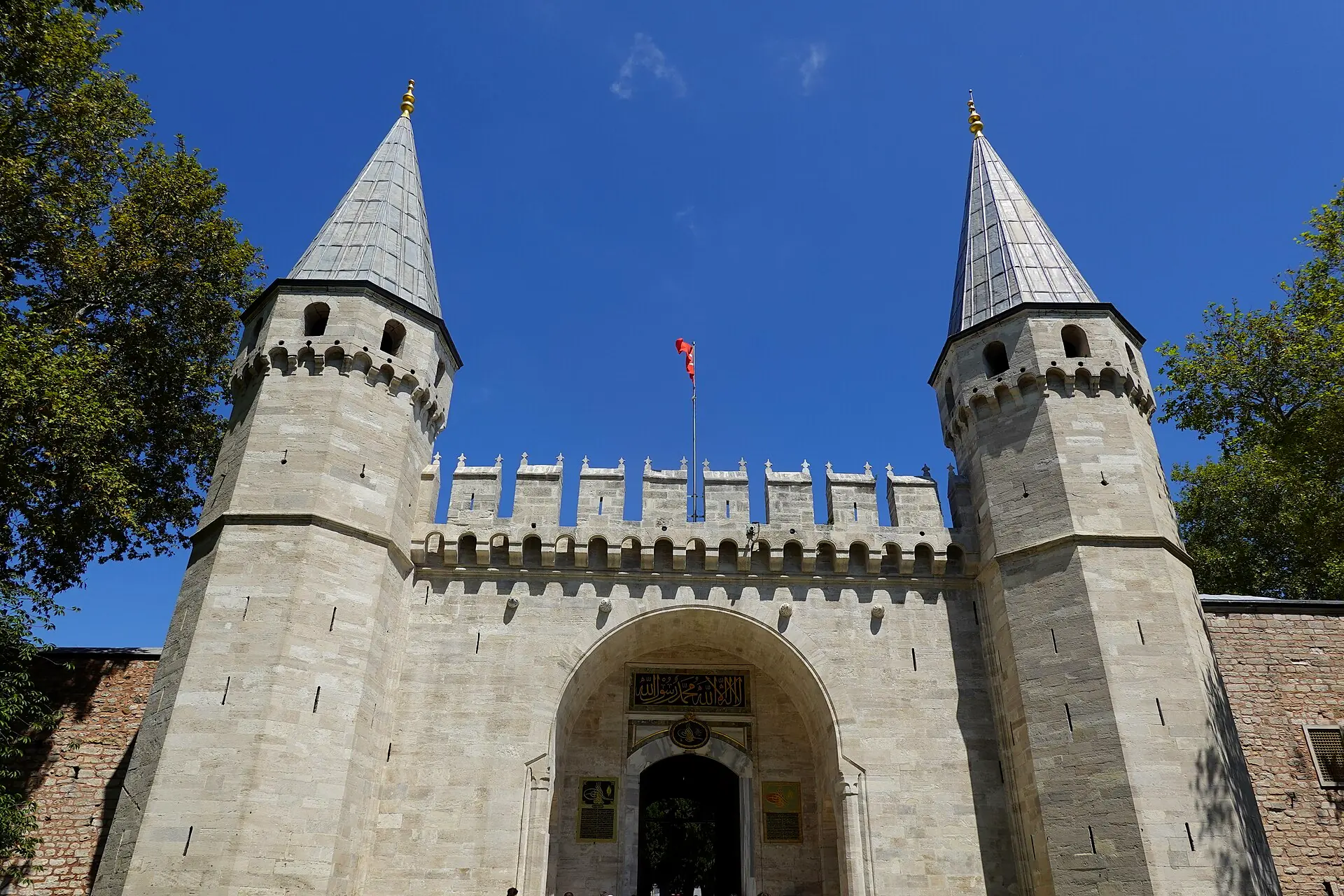
Key facts
- Location: Fatih, historic peninsula, near Sultanahmet and Gülhane Park
- Distance: Short walk from Sultanahmet; see airport guides for transfers
- Construction began: 1459, by Mehmed the Conqueror
- Museum since: 1924
- UNESCO: Historic Areas of Istanbul, 1985
- Best season: Spring and autumn; early mornings
- Typical visit time: 2-3 hours; half day with Harem
- Entrance: See official page
What is Topkapı Palace and why visit?
Topkapı Palace is a large museum and library in the Fatih district of Istanbul, and from the 1460s it served as the administrative centre and main residence of the Ottoman sultans. Visitors come for the courtyards, the Imperial Harem, the treasury and the collections. It is part of the UNESCO-listed Historic Areas of Istanbul.
Unlike a single building, the palace is a complex of courtyards and smaller pavilions. Moreover, it explains how the Ottoman state was governed and how the sultan’s household lived. Therefore it works well as the second stop after Hagia Sophia and the Blue Mosque.
What is the history of Topkapı Palace?
Mehmed the Conqueror ordered construction, which began in 1459, six years after the conquest of Constantinople. It was first called the New Palace and received the name Topkapı, meaning Cannon Gate, in the nineteenth century. A decree of 3 April 1924 turned it into a museum.
The complex grew over time, with major renovations after the 1509 earthquake and the 1665 fire. After a great fire destroyed the Old Palace in 1541, Hürrem Sultan moved the Imperial Harem to Topkapı. This broke with custom, since Mehmed had decreed that no women should reside where government affairs were conducted. As a result, Topkapı became both the seat of government and the family home, and the Harem contained more than 400 rooms.
Later sultans preferred new palaces on the Bosphorus. In 1856 Sultan Abdulmejid I moved the court to the newly built Dolmabahçe Palace, although Topkapı kept functions such as the imperial treasury, library and mint. The Ministry of Culture and Tourism now administers the museum.
The table below sets out the main milestones.
| Date | Event | Significance |
|---|---|---|
| 1459 | Construction ordered by Mehmed the Conqueror begins | Six years after the conquest |
| 1509 | Earthquake | Major renovations |
| 1541 | Fire destroys the Old Palace; Harem moves to Topkapı | Palace becomes the family home too |
| 1665 | Fire | Further renovation |
| 1856 | Court moves to Dolmabahçe Palace | Topkapı keeps treasury, library, mint |
| 1924 | Decree of 3 April | Becomes a museum |
What are the highlights of Topkapı Palace?
The highlights are the four main courtyards, the Imperial Harem, the Imperial Council building and the treasury, known as the hazine. The treasury displays the Spoonmaker’s Diamond and the Topkapı Dagger. In addition, the collections include Ottoman clothing, weapons, armour, miniatures, religious relics and illuminated manuscripts.
The Harem deserves special attention because it explains the palace’s shift from a purely administrative centre to a family home. Moreover, the treasury and collections show Ottoman craftsmanship, from weapons and armour to miniatures and illuminated manuscripts.
Plan your route around these areas.
- The four courtyards and many smaller buildings.
- The Imperial Harem, home to female members of the sultan’s family.
- The Imperial Council building, where the Grand Vizier and senior officials met.
- The treasury (hazine) with the Spoonmaker’s Diamond and the Topkapı Dagger.
- Collections of clothing, weapons, armour, miniatures, relics and manuscripts.
- Which sections are open changes over time; check the official page.
This at-a-glance table maps the main areas.
| Area | What it is | Notes |
|---|---|---|
| Courtyards | Four main courtyards | Organise the visit |
| Harem | Residence of the sultan’s family | Over 400 rooms; ticket rules on official page |
| Imperial Council | Meeting place for state officials | Where the Grand Vizier sat |
| Treasury | Hazine with jewels and dagger | Spoonmaker’s Diamond, Topkapı Dagger |
| Collections | Clothing, arms, miniatures, relics | Illuminated manuscripts |
How do you get to Topkapı Palace and get around?
Topkapı Palace is in Fatih, at the tip of the historic peninsula next to Gülhane Park and Sultanahmet. Take the T1 tram to Sultanahmet or Gülhane and walk. Check the current timetable of the operator. Taxis and private transfers can also reach the palace gates, although traffic varies.
The table compares the usual routes.
| Option | How it works | Notes |
|---|---|---|
| T1 tram | Ride to Sultanahmet or Gülhane, then walk | Check the current timetable |
| From the airports | Shuttle, metro plus tram, or private transfer | See our airport guides |
| Ferry plus walk | Cross to Eminönü or Sarayburnu and walk uphill | Check ferry timetable |
| Taxi or transfer | Drop-off near the palace entrance | Traffic varies |
| On foot | Walk from Hagia Sophia through Gülhane Park | Close to Sultanahmet |
When is the best time to visit Topkapı Palace?
Go early in the day, and choose spring or autumn for mild weather. The palace has many open-air courtyards, so heat and rain both matter. Opening days and closing days change, so check the official page before you set the day.
The table summarises the seasons.
| Season | Weather | Crowds | Notes |
|---|---|---|---|
| Spring (Mar-May) | Mild | Busy around holidays | Courtyards at their best |
| Summer (Jun-Aug) | Hot | Highest | Start early; carry water |
| Autumn (Sep-Nov) | Mild to cool | Moderate | Comfortable for outdoor courtyards |
| Winter (Dec-Feb) | Cool and rainy | Lowest | Shorter days; bring an umbrella |
How long should you stay at Topkapı Palace?
Allow two to three hours for the palace, and more if you add the Harem and treasury. A half day is realistic with a guide. Therefore it is best not to pair it with more than one other major sight.
This table gives three plans.
| Plan | What it covers | Pace |
|---|---|---|
| Half day | Palace courtyards, treasury and Harem | Focused |
| 1 day | Add Hagia Sophia and the Blue Mosque | Full |
| 2-3 days | Add the Basilica Cistern, Dolmabahçe Palace and the bazaars | Easy pace |
What are the practical tips for visiting Topkapı Palace?
Plan the visit around the courtyards. The Harem and other sections can need separate tickets or different rules, so always read the official page. We do not quote prices because they change. Wear comfortable shoes, as the courtyards are large and paved.
Moreover, the palace is large, and a licensed guide can help you choose what to see in the time available. As a result, many visitors prefer a guided route through the Harem and treasury rather than wandering unprepared.
These points help you plan.
- Tickets and fees: see the official page; the Harem may be separate.
- Opening days: check which days the palace is closed.
- MuseumPass Istanbul exists; check whether it covers the sections you want.
- Accessibility: expect cobbles and steps; ask official sources about routes.
- Photography: rules vary by room; follow signs and staff.
- Dress: modest, comfortable clothing and walking shoes.
- Safety: beware of unofficial guides at the gates.
Where should you stay and eat near Topkapı Palace?
Choose a neighbourhood by mood rather than distance, since the area is compact and well linked by tram. Sultanahmet is the closest base, with guesthouses and a quiet atmosphere at night. In contrast, Karaköy and Galata have more cafes across the Golden Horn. Eminönü and Fatih have local eateries.
Try lokantas with home-style dishes, kebab houses and bakeries. Gülhane Park is a pleasant place for a break after the palace.
What is near Topkapı Palace and what day trips work?
The main sights of the historic peninsula lie close together near the Topkapı Palace, so you can combine several in one day. The palace is next to other main sights of the historic peninsula, so a plan can combine several. Use the list to pick what fits.
Gülhane Park lies beside the palace and gives a quiet green break. Beyond it, the Golden Horn and the Bosphorus are within a short tram or ferry ride, and Dolmabahçe Palace shows the later phase of Ottoman court life.
Nearby options include these.
- Hagia Sophia and the Blue Mosque, a short walk away.
- The Basilica Cistern near Sultanahmet Square.
- Gülhane Park beside the palace.
- Dolmabahçe Palace, the later royal residence on the Bosphorus.
- The Grand Bazaar and Spice Bazaar.
- Bosphorus cruise or Princes’ Islands for a change of scene.
Plan this with TurkGT
TurkGT is an Istanbul-based travel company offering guided tours, private transfers, licensed guide and interpreter services, and tailored itineraries. Tell us your dates and interests, and we confirm the plan and availability by WhatsApp. For tickets and opening times, we point you to the official page first.
Our Topkapi Palace and Harem Guided Visit With a Licensed Guide and the 3-Day Istanbul Historical and Cultural Tour with Guide include this site.
Frequently asked questions
When was Topkapı Palace built?
Construction was ordered by Mehmed the Conqueror and began in 1459.
Why is it called Topkapı?
It was first called the New Palace and received the name Topkapı, meaning Cannon Gate, in the nineteenth century.
Is it a museum?
Yes. A decree dated 3 April 1924 transformed it into a museum, now administered by the Ministry of Culture and Tourism.
What is in the treasury?
The hazine displays the Spoonmaker’s Diamond and the Topkapı Dagger.
Do I need a separate Harem ticket?
Check the official page, because ticket rules change.
Is it a UNESCO site?
It is part of the Historic Areas of Istanbul, recognised in 1985.
How long should I allow?
Two to three hours, longer with the Harem and treasury.
What is nearby?
Hagia Sophia, the Blue Mosque, the Basilica Cistern and Gülhane Park.
Related on TurkGT
Sources
- Wikipedia: Topkapı Palace
- Türkiye Kültür Portalı: Topkapı Sarayı
- Ministry of Culture and Tourism: MuseumPass Istanbul
Last reviewed: 2026-11-17. Opening hours, ticket prices and other changeable details are not listed because they change; check the official source before you travel.