
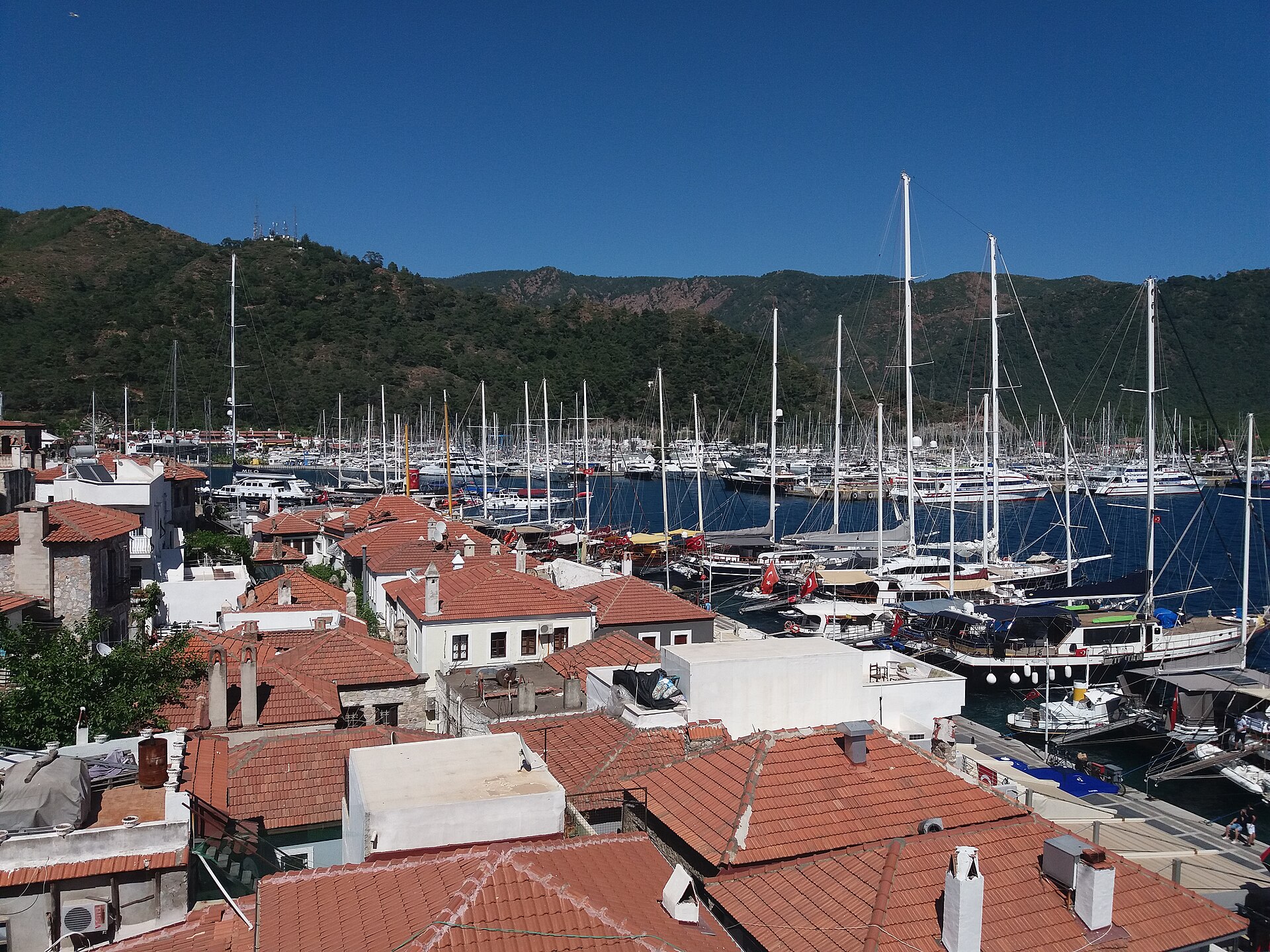
Muğla is a province in the south-west corner of Türkiye, on the Aegean Sea, with a coastline of 1,100 km, the longest of any Turkish province. Resorts such as Bodrum, Marmaris, Fethiye and Ölüdeniz lie on the coast, while the provincial seat, the city of Muğla, sits about 20 km inland.
Key facts
- Location: South-west Türkiye, Aegean and Mediterranean coast; seat Muğla about 20 km inland
- Airports: Dalaman (DLM) for Fethiye and Marmaris; Milas-Bodrum (BJV) for Bodrum. Check current timetables
- Distances: Dalaman to Fethiye about 1 hour by road; Milas-Bodrum Airport about 35 km northeast of Bodrum town
- Best season: September-October for warm sea and cooler air; summers are hot and winters rainy with some facilities closed
- Typical visit time: 4 to 7 days for one or two resort areas; 10 days to combine Bodrum, Datça and Fethiye
- UNESCO status: Letoon, near Fethiye, is part of the Xanthos-Letoon World Heritage Site
- Area and population: 12,654 km²; 1,048,185 inhabitants (2022)
- Ancient region: Caria; Halicarnassus at Bodrum
- Marinas: Bodrum, Marmaris, Fethiye and Güllük
- Entrance: See official page of each museum and site
What is Muğla and why visit?
Muğla Province is a coastal region at Türkiye’s south-western corner, between the Aegean and the Mediterranean. It has the longest coastline of any Turkish province at 1,100 km. Visitors come for Bodrum, Marmaris, Fethiye, Ölüdeniz, Datça, Göcek and Dalyan, and for ancient Caria.
However, the province is more than resorts. The city of Muğla lies inland, the Datça Peninsula reaches into the sea, and two large lakes, Lake Bafa and Lake Köyceğiz, shape the scenery. As a result, the region suits boat trips, coves, hikes and ruins in one trip.
Because the coast is long, base choice matters. Each resort has a different character and its own airport link.
What is the history of Muğla?
The region between the Menderes and Dalaman rivers was called Caria, home to the Carians and Leleges. Greek colonists built cities such as Knidos and Halicarnassus (Bodrum). The Menteshe beylik took the region in 1261, and the Ottomans took Muğla in 1390.
Around Fethiye, ruins remain of Telmessos, Xanthos, Patara and Tlos. Persians conquered the coast and Alexander the Great later removed them. In addition, Suleiman the Magnificent launched his campaign against Rhodes from Marmaris.
Wikivoyage adds that Mausolos, satrap of Caria, ruled from Halikarnassos and commissioned a vast tomb that gave the word mausoleum. Moreover, the Knights Hospitaller arrived in Bodrum in 1402 and rebuilt the castle.
The table sets out the main phases.
| Period | Event | What remains |
|---|---|---|
| Ancient Caria | Carians, Leleges, then Greek colonists | Knidos, Halicarnassus, Telmessos |
| 353 BC | Death of Mausolos, tomb unfinished | Mausoleum site, castle stones |
| 1261 | Menteshe beylik controls Muğla | Milas and Beçin heritage |
| 1402 | Knights Hospitaller rebuild Bodrum Castle | Bodrum Castle |
| 1522 and after | Ottoman rule; Rhodes campaign from Marmaris | Old towns and harbours |
What should you see in Muğla?
The main sights are Bodrum Castle, Butterfly Valley, Saklıkent Gorge, İztuzu Beach, Ölüdeniz and the Lycian ruins around Fethiye. Add boat days from Marmaris, Göcek or Bodrum. Wikipedia records over 100 excavated sites in the province. Use the list and table below to choose between the main sights.
Wikivoyage notes the Blue Lagoon at Ölüdeniz, 14 km south of Fethiye, and the abandoned village of Kayaköy. Therefore, Fethiye works well as a base for a mix of beach and ruins.
The list below groups the main places by type.
- Bodrum Castle, rebuilt by the Knights Hospitaller in 1402.
- Ölüdeniz and its Blue Lagoon, 14 km south of Fethiye.
- Butterfly Valley, near the village of Faralya.
- Saklıkent Gorge, 40 km southeast of Fethiye.
- İztuzu Beach at Dalyan, beside the Köyceğiz lake system.
- Tlos and Kayaköy for ruins and a deserted Greek village.
- Datça and Knidos on the long Datça Peninsula.
This at-a-glance table maps the main bases.
| Base | Main sights | Typical time |
|---|---|---|
| Bodrum | Castle, harbour, peninsula villages | 2 to 3 days |
| Marmaris and Datça | Marina, bays, Knidos | 2 to 3 days |
| Fethiye and Ölüdeniz | Rock tombs, Blue Lagoon, Kayaköy, Saklıkent | 3 to 4 days |
| Göcek and Dalyan | Boat trips, İztuzu Beach, Köyceğiz lake | 1 to 2 days |
| Muğla city | Old streets, inland base | Half day |
How do you get to Muğla and get around?
Fly to Dalaman (DLM) for Fethiye, Göcek and Marmaris, or to Milas-Bodrum (BJV) for Bodrum. Both serve domestic and international flights. Check current timetables, because charter and domestic schedules vary by season. Private bus lines also link the coast with İzmir, Antalya, Ankara and Istanbul.
Wikivoyage says Dalaman is about one hour west of Fethiye, with a Havaş bus timed to connect with domestic flights. Milas-Bodrum airport is 35 km northeast of Bodrum. In addition, the coast has marinas at Bodrum, Marmaris, Fethiye and Güllük for those arriving by yacht.
The table lists typical routes and durations.
| Route | Typical duration | Notes |
|---|---|---|
| Dalaman airport to Fethiye | About 1 hour | Bus via Göcek; check current timetable |
| Milas-Bodrum airport to Bodrum | 35 km northeast | Package visitors are bused to hotels |
| Istanbul to Bodrum by bus | About 11 hours overnight | Check current timetable |
| Istanbul to Fethiye by bus | About 14 hours | Hourly departures |
| Izmir to Bodrum by bus | Hourly service | Check current timetable |
| Fethiye to Rhodes by ferry | 1 hour 45 minutes | April to October; check current timetable |
When is the best time to visit Muğla?
September and October suit most visitors. Wikivoyage says the air has cooled while the sea around Fethiye is still about 24°C. Summers are hot and dry, averaging 30 to 35°C and topping 40°C on the hottest days. The table below compares each season.
Winters are mostly mild but bring heavy rain and strong winds, and many tourist facilities close. Spring returns in March. Consequently, plan boat trips between spring and autumn.
The table compares the seasons.
| Season | Weather | Crowds and notes |
|---|---|---|
| Spring (Mar-May) | Warm and fresh | Facilities reopen; good for hiking |
| Summer (Jun-Aug) | Hot, dry, 30-35°C | Peak season; book ahead |
| Autumn (Sep-Oct) | Cooler air, sea about 24°C | Good for swimming and boat trips |
| Winter (Nov-Feb) | Mild, rainy, windy | Many facilities close |
How long should you stay in Muğla?
Four to seven days suit one or two resort areas, and ten days allow a loop between Bodrum, Datça and Fethiye. Distances are long by winding coast road, so avoid changing base each night. These are planning guides. Use the table below to match a plan to your time.
Furthermore, flights arrive at either Dalaman or Milas-Bodrum, so pick the base that matches your airport.
This table suggests plans for different lengths of stay.
| Time | Suggested plan | Pace |
|---|---|---|
| Half day | Bodrum Castle and harbour, or Fethiye rock tombs | Easy |
| 1 day | Boat trip from Bodrum, Göcek or Fethiye | Full |
| 2 to 3 days | One base with two day trips | Comfortable |
| 5 to 7 days | Add Dalyan, Saklıkent and Kayaköy | Relaxed |
| 10 days | Bodrum, Datça and Fethiye loop | Relaxed |
What practical tips help in Muğla?
Carry water and sun protection, wear sturdy shoes for Saklıkent and Butterfly Valley, and check each site’s official page for fees and hours. Wikivoyage advises stout shoes for Saklıkent Gorge. Book summer boat trips and rooms early. These points are general advice.
Respect local dress norms away from the beach. Therefore, carry a cover-up when visiting villages, mosques and museums.
The following points cover access, safety and etiquette.
- Tickets: see the official page of each museum, castle and archaeological site.
- Dress: beachwear is fine at the beach; cover up in villages and mosques.
- Accessibility: castles, valleys and coves involve steps and uneven ground.
- Safety: follow flag warnings at beaches and use licensed boat operators.
- Photography: follow signs in museums and ruins; ask before photographing locals.
- Winter: many businesses close, so confirm opening before you travel.
Where should you stay and eat in Muğla?
Choose Bodrum for a lively harbour town, Marmaris for a large marina resort, Datça for a quieter peninsula, Fethiye and Ölüdeniz for beach and ruins, and Göcek or Dalyan for boat trips. Wikivoyage describes Bodrum as a budget, mass-market destination with facilities to match.
Eat grilled fish, meze, olive oil dishes and Aegean herbs. Moreover, harbour restaurants in each resort serve the daily catch.
The table compares the bases.
| Area | Suits | Trade-off |
|---|---|---|
| Bodrum | Nightlife, harbour, castle | Busy in summer |
| Marmaris | Boats, marina, bays | Resort feel |
| Datça | Quiet bays and Knidos | Longer transfers |
| Fethiye and Ölüdeniz | Beach, ruins, hiking | Crowded in July and August |
| Göcek and Dalyan | Boat trips, lake and beach | Fewer nightlife options |
What are the nearby places and day trips from Muğla?
From Bodrum, Kos is a day trip 20 km southwest. From Fethiye, ferries run to Rhodes from April to October. Inland, Muğla city and Milas show another side. Check ferry timetables and passport rules before you plan a crossing. Related pages cover Antalya, İzmir and the nearby sights.
Wikivoyage also lists Priene, Miletus and Didyma, three Greek ruins on a ridge 80 km north of Bodrum.
These places connect with Muğla.
- Kos by boat from Bodrum.
- Rhodes by ferry from Fethiye or Marmaris (seasonal).
- Priene, Miletus and Didyma north of Bodrum.
- Ephesus and Kuşadası beyond that ridge.
- Kaş and Patara east towards Antalya Province.
Plan this with TurkGT
TurkGT is an Istanbul-based travel company. We arrange guided tours, private transfers, licensed guides and interpreters, and can connect an Istanbul stay with the south-west coast. Message us on WhatsApp with your dates, and we confirm the plan there. Our team can also help with hotel timing, airport pickups and local advice.
Frequently asked questions
What is Muğla known for?
Its coast. Muğla has the longest coastline of any Turkish province at 1,100 km, with resorts such as Bodrum, Marmaris, Fethiye and Ölüdeniz.
Which airports serve Muğla?
Dalaman and Milas-Bodrum. Check current timetables.
Is the city of Muğla on the coast?
No. It is about 20 km inland.
What was the area called in ancient times?
Caria, between the Menderes and Dalaman rivers.
When should I visit?
September and October offer cooler air and warm sea. Winters are rainy and many facilities close.
How many days do I need?
Four to seven days for one or two bases. Ten days for a loop.
Is there a UNESCO site?
Yes. Letoon, near Fethiye, is part of the Xanthos-Letoon World Heritage Site.
Which marinas are there?
Bodrum, Marmaris, Fethiye and Güllük.
Related on TurkGT
- Places and guides in Muğla:
- Bodrum
- Fethiye
- Ölüdeniz
- Marmaris
- Datça
- Göcek
- Dalyan
- Bodrum Castle
- Butterfly Valley
- Saklıkent Gorge
- İztuzu Beach
Sources
- Muğla Province (Wikipedia)
- Bodrum (Wikivoyage)
- Fethiye (Wikivoyage)
- Muğla (GoTürkiye)
- The finest of the Aegean and the Mediterranean meet in Muğla – GoTürkiye
Last reviewed: 2026-11-17.