
The Zeugma Mosaic Museum is an archaeology museum in Gaziantep, in southern Türkiye. It opened on 9 September 2011 and Wikipedia describes it as the biggest mosaic museum in the world. Its Hellenistic Greek and Roman mosaics come mainly from the ancient city of Zeugma, including the Gypsy Girl.
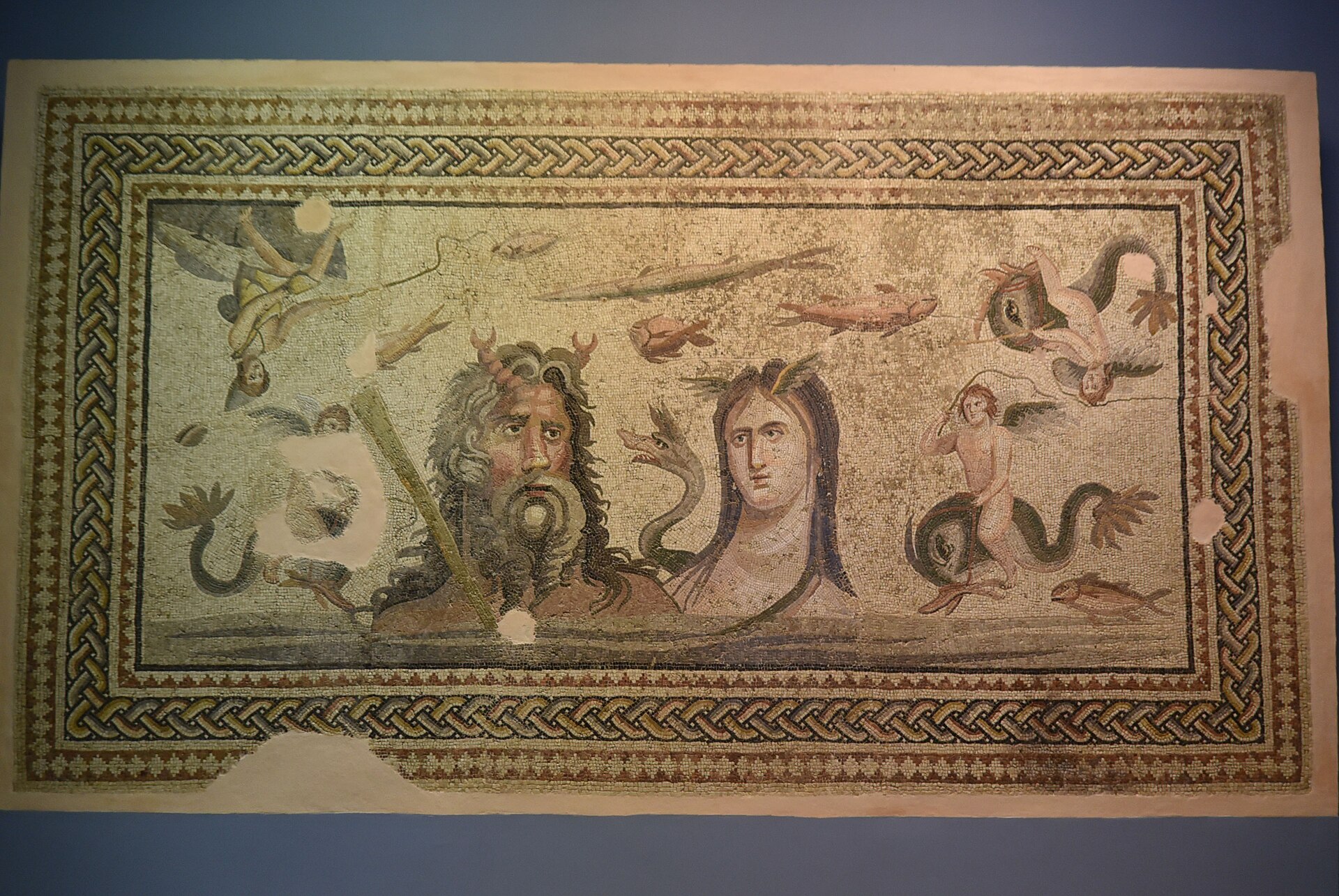
Key facts
- Location: Gaziantep, southern Türkiye
- Opened: 9 September 2011
- Collection: Hellenistic Greek and Roman mosaics from Zeugma
- From the airport: Gaziantep is served by Oğuzeli Airport; check the current road time to the museum
- From other cities: About 185 km east of Adana; check current bus and rail timetables
- Best season: Spring and autumn; summers are very hot
- Typical visit time: 1.5-3 hours
- UNESCO status: Zeugma site on the Tentative List since 2012; the museum is not a World Heritage site
- After 2023 earthquake: Building survived; reopened April 2023
- Entrance: See official page; check current hours and fees
What is the Zeugma Mosaic Museum and why visit?
The Zeugma Mosaic Museum in Gaziantep displays Roman and Hellenistic mosaics rescued from the ancient city of Zeugma. It opened in 2011. Visitors come to see large floor mosaics, the Gypsy Girl and the story of a rescue excavation on the Euphrates.
Moreover, the museum explains why Gaziantep is called the City of Mosaics. As a result, it suits art lovers, history readers and families, and it fits neatly into a Gaziantep food-and-culture day.
Visitors usually come for these reasons:
- Hellenistic Greek and Roman mosaics from Zeugma.
- The Gypsy Girl, displayed in a special room.
- The story of the emergency excavation before the dam flooding.
- A modern museum building that survived the 2023 earthquake.
- An easy link to Gaziantep’s bazaars and cuisine.
What is the history of Zeugma and the museum?
Zeugma was founded soon after 300 BC by Seleucus I Nicator. Wikipedia says it was named for the bridge of boats over the Euphrates. Rome took control in 64 BC, and up to 70,000 people lived there. The Sassanids destroyed it in 253 AD, and it was later rebuilt.
In 2000, the Birecik Dam flooded part of the site. Consequently, an emergency excavation saved many mosaics, with a USD 5 million donation from philanthropist David W. Packard. The finds first went to the Gaziantep Museum, and the new museum opened on 9 September 2011.
The table lists the main steps.
| Date | Event | Source note |
|---|---|---|
| After 300 BC | Zeugma founded by Seleucus I Nicator | Wikipedia |
| 64 BC | Roman Republic gains control | Wikipedia |
| 253 AD | Destroyed by the Sassanids; later rebuilt | Wikipedia |
| 2000 | Birecik Dam flooding; emergency excavation | Wikipedia |
| 9 September 2011 | Museum opens | Wikipedia |
| April 2023 | Reopens after the February earthquake | Wikipedia |
What can you see at the museum?
You can see Hellenistic Greek and Roman mosaics from Zeugma, including the Gypsy Girl. The collection concentrates on Zeugma. Wikipedia noted in 2011 that many mosaics remained covered while researchers continued their work. Check the current layout on arrival, since displays can change.
Wikipedia gives different figures for mosaic area, 1,700 m2 in one place and 2,448 m2 in another, so we do not state a single total. Moreover, glass mosaics found in 2014, including one of the nine Muses, add to the site’s interest.
Look for these highlights:
- The Gypsy Girl mosaic in its special room.
- Large mosaics from Zeugma.
- Displays on Zeugma’s history on the Euphrates.
- Explanations of the dam rescue excavation.
- Views of the museum’s galleries and walkways.
The table gives the highlights at a glance.
| Highlight | What it is | Why see it |
|---|---|---|
| Gypsy Girl | Well-known mosaic in its own room | Icon of the collection |
| Zeugma mosaics | Hellenistic and Roman works from Zeugma | Scale and detail |
| Rescue story | Dam flooding and emergency dig | Context |
| Glass mosaics | Large works found in 2014, including nine Muses | Later discoveries |
How do you get to the museum and get around Gaziantep?
Gaziantep is served by Oğuzeli Airport and a central railway station. From the city, a taxi is the simplest way to reach the museum. Check current timetables for flights, trains and buses, because services change. Plan extra time for the airport transfer and for finding a taxi in the city.
Gaziantep lies about 185 km east of Adana and 97 km north of Aleppo. Therefore many visitors combine it with Şanlıurfa or Mardin on a southeast route.
The table compares the options.
| Route | Option | Notes |
|---|---|---|
| Istanbul to Gaziantep | Flight to Oğuzeli Airport | Check the current timetable |
| Rail | Gaziantep Railway Station | Check current services |
| City centre to museum | Taxi or local transport | Check current routes |
| Gaziantep to Şanlıurfa | Road trip | Check current bus services |
When is the best time to visit?
Spring and autumn are best. Gaziantep has very hot, dry summers and cool, wet, often snowy winters. The museum is indoors, so you can visit in any season. In summer, go in the morning and plan food stops in the evening.
However, check opening hours in winter and on public holidays.
The table shows each season.
| Season | Weather | Notes |
|---|---|---|
| Spring | Mild | Good for combining museum and bazaars |
| Summer | Very hot, dry | Museum is a cool indoor stop |
| Autumn | Warm | Comfortable for walks |
| Winter | Cool, wet, sometimes snowy | Quieter museum |
How long should you stay?
Plan 1.5 to 3 hours at the museum. A full day lets you add Gaziantep Castle’s area, the bazaars and a long meal. Two or three days let you reach Şanlıurfa and Göbekli Tepe. This estimate assumes a normal pace with short breaks, so add time if you travel with children.
Therefore, schedule the museum in the morning and the bazaars later.
Use these plans as a starting point.
| Plan | Include | Pace |
|---|---|---|
| Half day | Zeugma Mosaic Museum and a nearby meal | Relaxed |
| 1 day | Add the Zincirli Bedesten and coppersmith bazaar | Full |
| 2-3 days | Add Şanlıurfa, Harran and Göbekli Tepe | Comfortable |
What practical tips should you know?
Check the official page for fees, hours and any timed entry, since we do not quote them here. Wear comfortable shoes and carry a light layer for air conditioning. Do not touch the mosaics. Check the official page for current rules before you go, because they can change without notice.
Photography rules vary by gallery, so look for signs. Moreover, the museum survived the 2023 earthquake, but some other buildings in Gaziantep were damaged, so check what is open.
Keep these tips in mind:
- Check fees and hours on the official page.
- Do not touch the mosaics.
- Follow photography signs.
- Wear comfortable shoes.
- Visit early to avoid midday crowds.
- Check which historic buildings are open after the 2023 earthquake.
Where should you stay and eat?
Stay near the city centre for easy access to the bazaars and restaurants. Gaziantep is known for its cuisine. UNESCO designated it a City of Gastronomy in 2015, and its baklava has a protected designation of origin. Choose by walking distance to the main sights, because transfers and parking add time in busy periods.
Pistachio is the main ingredient in much of the local cooking. Moreover, the Emine Göğüş Cuisine Museum is in a restored 1904 stone house.
Neighbourhood-level ideas include:
- City centre for hotels and access to the museum.
- The castle and bazaar area for local food.
- Modern districts for larger hotels and parking.
What is nearby and what day trips work?
Gaziantep‘s bazaars, castle area and cuisine museum are the closest stops. The Zeugma ruins themselves lie by the town of Nizip, and Rumkale lies further north. Şanlıurfa is the natural next city. Check road conditions and opening times for each stop, and allow extra time between sites.
As a result, the museum is a good opening for a southeast Anatolia route.
Useful nearby stops:
- Zincirli Bedesten and the coppersmith bazaar.
- Zeugma ruins near Nizip.
- Balıklıgöl and the Şanlıurfa museums.
- Harran and its beehive houses.
- Göbekli Tepe, a UNESCO World Heritage site.
Plan this with TurkGT
TurkGT is an Istanbul-based travel company. We offer guided tours, private transfers, licensed guide and interpreter services, and multi-day trips that can include the Zeugma Mosaic Museum. We can combine Gaziantep with Şanlıurfa and Mardin, and arrange a guide to explain the mosaics and the dam rescue story.
Tell us your dates, group size and interests on WhatsApp. We confirm the route, timing and what is included in writing before you book, and we do not quote prices on this page.
Frequently asked questions
When did the museum open?
It opened to the public on 9 September 2011.
What is the Gypsy Girl?
It is a well-known mosaic from Zeugma, displayed in a special room in the museum.
Where do the mosaics come from?
They come mainly from Zeugma, an ancient city on the Euphrates founded after 300 BC.
Did the 2023 earthquake damage it?
Wikipedia says the building and artifacts survived unscathed, and the museum reopened in April 2023.
Is it the largest mosaic museum?
Wikipedia describes it as the biggest mosaic museum in the world. Published area figures differ between sources.
How do I get to Gaziantep?
Gaziantep is served by Oğuzeli Airport and a railway station. Check current timetables.
Is Zeugma a UNESCO site?
Zeugma has been on the UNESCO tentative list since 2012. That is a candidate status, not an inscription.
What else should I see?
The Zincirli Bedesten, the coppersmith bazaar and Gaziantep’s cuisine. Şanlıurfa is a natural next stop.
Related on TurkGT
- Part of Gaziantep
Sources
- Wikipedia: Zeugma Mosaic Museum
- Wikipedia: Zeugma (Commagene)
- Wikipedia: Gaziantep
- Türkiye Kültür Portalı: Gaziantep (general information)
- GoTürkiye: Gaziantep
Last reviewed: 2026-11-18. Opening hours, ticket prices and other changeable details are not listed because they change; check the official source before you travel.