
Adana is a province in central Cilicia, on the Çukurova plain of southern Türkiye, and its city sits on the Seyhan River 35 km inland. Visitors come for Roman and Ottoman landmarks, a major archaeology museum, Adana kebab and the Mediterranean plain. Çukurova Airport is the gateway.
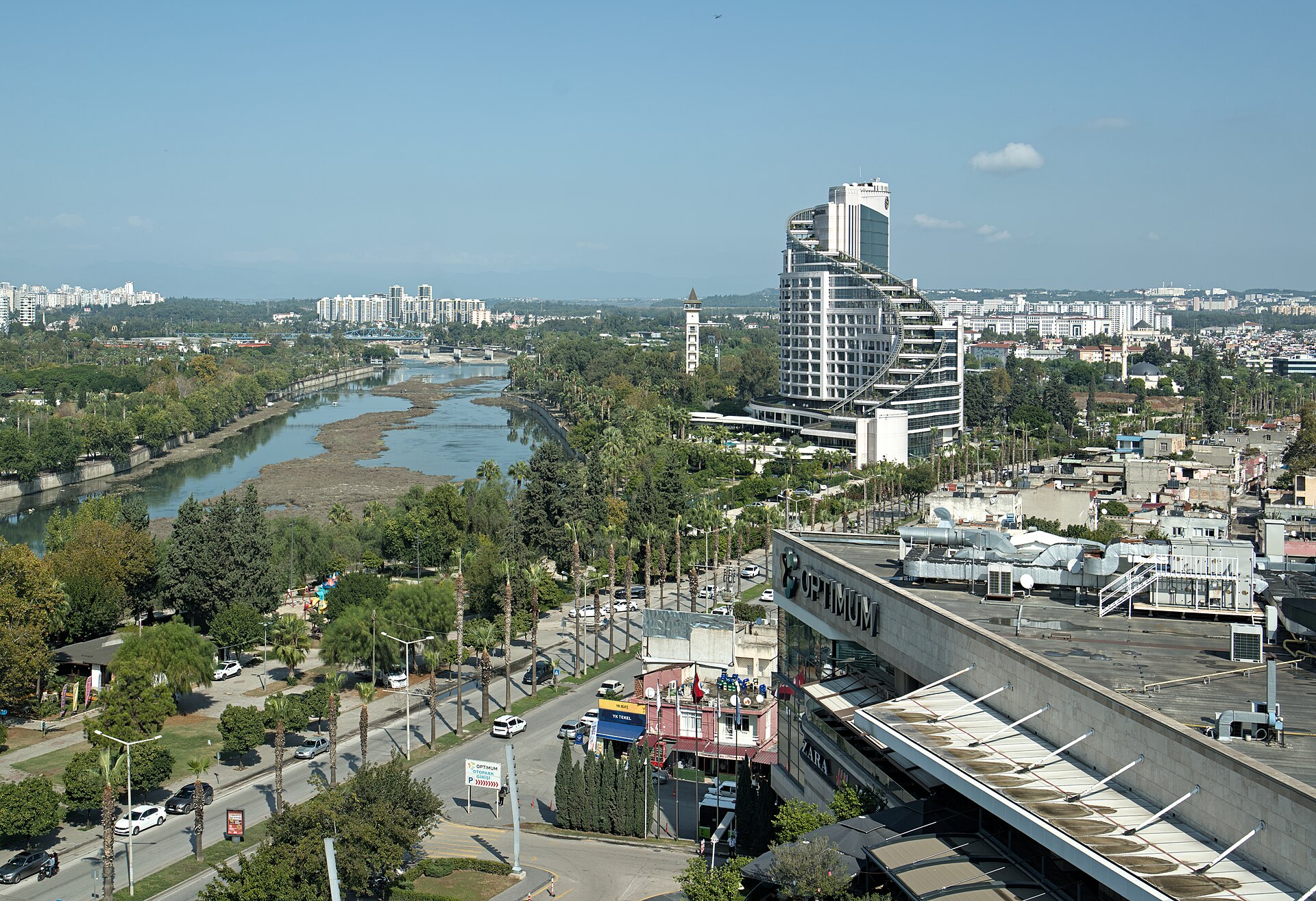
Key facts
- Location: Central Cilicia, southern Türkiye; Seyhan River, 35 km inland from the Mediterranean
- Population: Metro area about 1.8 million (Wikipedia); province 2,274,106 (2022)
- Airport: Çukurova International Airport, 34 km from the city centre (Wikipedia)
- From other cities: Hatay about 200 km southeast; Kahramanmaraş about 230 km by road (Wikivoyage)
- Best season: Spring and autumn; summers are long, hot and humid
- Typical visit time: 1 to 2 days in the city; 3 days with Misis, Karatepe region and the coast
- UNESCO status: No inscribed World Heritage Site in the province
- Local specialities: Adana kebap and regional dishes
- Festivals: Orange Blossom Carnival in April; Altın Koza Film Festival in June (Wikipedia)
- Entrance fees: See the official museum page; fees change
What is Adana and why visit it?
Adana is a large city and province in southern Türkiye, on the Çukurova plain beside the Seyhan River. Visitors come for the Archaeological Museum, the Roman Taşköprü, Ottoman mosques, the kebap tradition and easy access to Hatay, Mersin and Osmaniye. It works well as a regional base.
The city lies in the heart of Cilicia, a region important in the classical world because of its pass in the Taurus Mountains. The province borders Mersin, Hatay, Osmaniye, Kahramanmaraş, Kayseri and Niğde. Moreover, the province has 160 km of coastline that is largely free from heavy development, plus national parks and plateaus in the Taurus.
Reasons to include Adana in a route.
- Taşköprü, a Roman-era bridge over the Seyhan.
- Ulu Cami, Yağ Camii and the Great Clock Tower.
- Adana Archaeological Museum and the Misis Mosaic Museum.
- Adana kebap and other regional food.
- Gateway to Hatay, Osmaniye and Mersin.
What is the history of Adana?
Adana is one of the oldest settlements in Cilicia. Hittite texts show Kizzuwatna ruling Adana by 1335 BC. Romans, Byzantines and Arab dynasties followed, then the Ramadanid Emirate from 1352. Selim I added the city to the Ottoman Empire in 1517.
The Culture Portal says the Tepebağ mound in the city centre belongs to the Neolithic period. Legend links the name to Adanus, a son of Uranus. In 625 Heraclius defeated Sasanian forces at the Battle of Sarus, near the bridge Justinian built, now called Taşköprü. As a result, the bridge is the city’s best-known ancient landmark.
In contrast to earlier centuries, the 19th century brought Egyptian rule: the Convention of Kütahya ceded Cilicia in 1833, and the city walls and castle were demolished in 1836. The Ottomans regained control in 1840. On 31 October 1918 Mustafa Kemal arrived in Adana and took over the Yıldırım Army Group command.
The table lists the main periods.
| Period | Event |
|---|---|
| By 1335 BC | Kizzuwatna rules Adana under Hittite protection |
| Neolithic | Tepebağ mound settled in the city centre |
| 625 | Battle of Sarus; Heraclius defeats Sasanian forces |
| 1352-1517 | Ramadanid Emirate with Adana as capital |
| 1517 | Selim I incorporates the emirate into the Ottoman Empire |
| 1833-1840 | Egyptian control of Cilicia |
| 1918 | Mustafa Kemal takes over Yıldırım Army Group command in Adana |
What are the main places to see in Adana?
Key sights are Taşköprü, Ulu Cami, Yağ Camii, the Great Clock Tower and the Archaeological Museum. Sabancı Central Mosque is the most visited mosque. In the wider province, Misis, Kozan and Akyatan Lagoon add variety. Check official pages for opening arrangements.
Ulu Cami dates from 1541 and is known for its Iznik tiles. The Yağ Camii began as the Church of St. James. The Archaeological Museum opened in 1924 and holds the Achilles Sarcophagus and statues of Augustus, and in 2019 it moved to a new location. Moreover, the Misis Mosaic Museum belongs to the province’s museums.
Highlights in the city and province.
- Taşköprü: the old bridge over the Seyhan.
- Ulu Cami (1541): Ramadanid-era külliye with tiles.
- Yağ Camii: a former church turned mosque.
- Büyük Saat: the Great Clock Tower of 1882.
- Sabancı Central Mosque: opened in 1998, six minarets.
- Misis Mosaic Museum and Toprakkale (Misis).
- Akyatan Lagoon: a bird refuge about 30 km south.
- Aladağlar National Park: Taurus peaks north of the city.
This at-a-glance table groups the sights.
| Sight | Type | Area | Note |
|---|---|---|---|
| Taşköprü | Bridge | City centre | Roman-era bridge over the Seyhan |
| Ulu Cami | Mosque complex | City centre | Built 1541; Iznik tiles |
| Yağ Camii | Mosque | City centre | Former Church of St. James |
| Archaeological Museum | Museum | City | Achilles Sarcophagus; check official page |
| Sabancı Central Mosque | Mosque | West bank of the Seyhan | Opened 1998; respect prayer times |
| Akyatan Lagoon | Nature reserve | 30 km south | Bird migration stopover |
How do you get to Adana and get around?
Most visitors arrive at Çukurova International Airport, 34 km from the centre, or by intercity bus and train. Wikipedia lists frequent domestic flights, including Istanbul and Ankara. Check the current timetable, because the airport replaced the old Şakirpaşa airport in 2024.
TCDD runs long-distance lines to Ankara, Kayseri, Karaman, Konya and Elazığ, and a regional line to Mersin. However, Wikivoyage reported the Mersin line suspended until 2026 for tunnel works, so verify before planning. Adana Metro M1 runs 14 km with 13 stations. Therefore, the metro and taxis cover most city trips, while a car or private transfer suits the province.
The table compares the main options.
| Option | Typical duration or distance | Notes |
|---|---|---|
| Çukurova Airport to city | 34 km (Wikipedia) | Taxi, shuttle or transfer; check current options |
| Flight from Istanbul | Check current timetable | Frequent domestic flights reported |
| TCDD train | Check current timetable | Lines to Ankara, Konya, Kayseri and others |
| Adana to Antakya | About 200 km (Wikivoyage) | Road; check conditions |
| Adana Metro M1 | About 20 minutes end to end | 14 km line, 13 stations |
| Car or private transfer | Depends on route | Best for Misis, Karatepe region and Kozan |
When is the best time to visit Adana?
Spring and autumn are the best seasons for sightseeing. Adana has a hot-summer Mediterranean climate, with long, hot, humid summers and mild, wet winters. Heatwaves often reach 40 °C. Therefore plan outdoor visits for the cooler months. Check the weather forecast shortly before you travel, and confirm site closures with official pages.
Wikipedia records a high of 46.7 °C on 9 August 2025. April also brings the Orange Blossom Carnival and the Sabancı Theatre Festival.
Seasonal guidance in one table.
| Season | Weather | Crowds | Notes |
|---|---|---|---|
| Spring | Mild; orange blossom in April | Moderate | Carnival and theatre festival in April |
| Summer | Long, hot, humid; often 40 °C or more | Low | Start early; use air-conditioned museums |
| Autumn | Warm to mild | Low to moderate | Comfortable for walking |
| Winter | Mild and wet; rare snow | Low | Bring a rain jacket |
How long should you stay in Adana?
Allow one to two days for the city, or three days to add Misis, Karatepe area and the coast. A half day covers Taşköprü, Ulu Cami and the museum. Adana also works as a base for Hatay and Osmaniye. Your own pace, interests and transport choices also change the time you need, so treat these plans as a starting point.
Suggested plans.
| Plan | What it covers |
|---|---|
| Half day | Taşköprü, Ulu Cami, Yağ Camii and kebap lunch |
| 1 day | City sights plus the Archaeological Museum and Sabancı Central Mosque |
| 2-3 days | City, Misis, Akyatan Lagoon or Kozan, and an onward trip to Osmaniye or Hatay |
What practical tips help when visiting Adana?
Carry water and plan around the heat. Dress modestly at mosques, and respect prayer times. For museum fees, use the official page. We do not list prices here. These habits apply across Türkiye, and they make the visit smoother for you and respectful for local people.
Moreover, the city is spread across both banks of the Seyhan, so use the metro or taxis between districts. Ask before photographing people. Accessibility varies, with older mosques having steps, so confirm with the site.
Quick checklist.
- Check the official page for museum hours and fees.
- Carry water and sun protection from May to September.
- Use the metro or taxis between districts.
- Confirm rail timetables before booking.
Where should you stay and eat in Adana?
Stay near the centre around Seyhan for sightseeing, or near the Sabancı Central Mosque on the west bank. Choose by transport needs. We name no businesses. Neighbourhood choice matters more than any single venue, so pick the area first and the exact place second.
Adana kebabı, made from minced meat, is the most popular dining choice in the city. Try regional sweets, and look for lokantas around the old centre.
What are the nearby places and day trips from Adana?
Neighbouring provinces include Mersin, Hatay, Osmaniye and Kahramanmaraş. Antakya is about 200 km away, and Tarsus lies between Adana and Mersin. Within the province, Misis, Akyatan Lagoon and the Taurus plateaus suit day trips. These links help you build a longer route, and each destination has its own TurkGT guide you can read next.
Plan this with TurkGT
TurkGT is an Istanbul-based travel company. We offer guided trips, private transfers and guide or interpreter services that can include Adana and the Çukurova region. Send your dates by WhatsApp, and we confirm the plan with you there. There is no obligation: you can ask questions first, and we only confirm a plan once you agree to it.
Frequently asked questions
Where is Adana?
Adana is in central Cilicia in southern Türkiye. Its city lies on the Seyhan River, 35 km inland from the Mediterranean.
Which airport serves Adana?
Çukurova International Airport, 34 km from the city centre, is the closest public airport.
What is Adana famous for?
Adana is famous for Adana kebap, the Seyhan River bridges, the Archaeological Museum and its Çukurova plain.
How did Adana get its name?
Legend links the name to Adanus, a son of Uranus. Wikipedia notes that the name has been used for over four millennia.
What is Taşköprü?
Taşköprü is the old bridge over the Seyhan, linked in sources to the bridge built under Emperor Justinian.
What is the weather like in summer?
Summers are long, hot, humid and dry, and heatwaves often reach 40 °C or more.
Is there a metro in Adana?
Yes. Adana Metro M1 runs 14 km with 13 stations, according to Wikipedia.
How many days do I need in Adana?
One to two days suit the city. Three days add Misis, the coast or Kozan.
Sources
- Adana Province (Wikipedia)
- Adana (Wikipedia)
- Antakya (Wikivoyage)
- Adana: general information (Culture Portal)
- Go Türkiye: Adana
Last reviewed: 2026-11-18. Opening hours, ticket prices and other changeable details are not listed because they change; check the official source before you travel.