
Göbekli Tepe is a Pre-Pottery Neolithic site near Şanlıurfa in south-eastern Türkiye, about 20 km from the city centre, with enclosures of T-shaped pillars built by hunter-gatherers. UNESCO inscribed it in 2018. Visit it for some of the oldest known monumental architecture, usually as a half-day trip from Urfa.
Key facts
- Location: Near Örencik village, Şanlıurfa Province, Taş Tepeler region
- Distance: About 20 km north-east of Şanlıurfa city centre; airport about 36 km north of the centre
- Period: Pre-Pottery Neolithic, about 9500-8000 BCE
- UNESCO status: Inscribed 2018, criteria (i), (ii), (iv); 126 ha, buffer 461 ha
- Best season: Spring and autumn; May and October suggested; summers very hot
- Typical visit time: About 1 hour on site; half day with travel
- Key feature: T-shaped limestone pillars, some up to 5.5 m tall
- Base city: Şanlıurfa
- Entrance: See official page (Ministry of Culture and Tourism)
What is Göbekli Tepe and why visit?
Göbekli Tepe is a Pre-Pottery Neolithic site near Şanlıurfa in south-eastern Türkiye, with circular enclosures of carved T-shaped pillars built about 11,000 years ago. UNESCO listed it in 2018. Visit it to see some of the oldest known monumental architecture, and combine it with Urfa, one of the region’s oldest cities.
Moreover, the site changes how people think about early societies. Hunter-gatherers raised these structures before pottery and before farming was established. As a result, Göbekli Tepe sits at the centre of debates on the Neolithic transition.
The site is compact and works well as a half-day trip from Urfa. Check the official page for ticket and entry rules before you go.
What is the history of Göbekli Tepe?
Göbekli Tepe was occupied from about 9500 BCE to at least 8000 BCE, during the Pre-Pottery Neolithic. The oldest enclosures belong to the late 10th millennium BCE. Builders added rectangular rooms later, then the site lost its role, and parts were buried by landslides and later fill.
The site was first noted in a 1963 survey. Klaus Schmidt recognised its significance in 1994 and began excavation in 1995. After his death in 2014, a joint project of Istanbul University, the Şanlıurfa Museum and the German Archaeological Institute continued the work under Necmi Karul.
Researchers still debate what the site was. No definitive purpose has been determined, although ritual use is widely proposed. However, findings published in 2019 suggest a settlement with domestic buildings, cereal processing and a water supply. In contrast to the older view of a pilgrimage centre, this points to people living there for at least part of the year.
In addition, the neighbouring Taş Tepeler sites, such as Karahan Tepe, share the architecture and imagery. Therefore Göbekli Tepe is now read as part of a regional network. Only about 10% of the mound had been excavated by 2021, so new finds are likely.
What are the highlights of Göbekli Tepe, and what can you see?
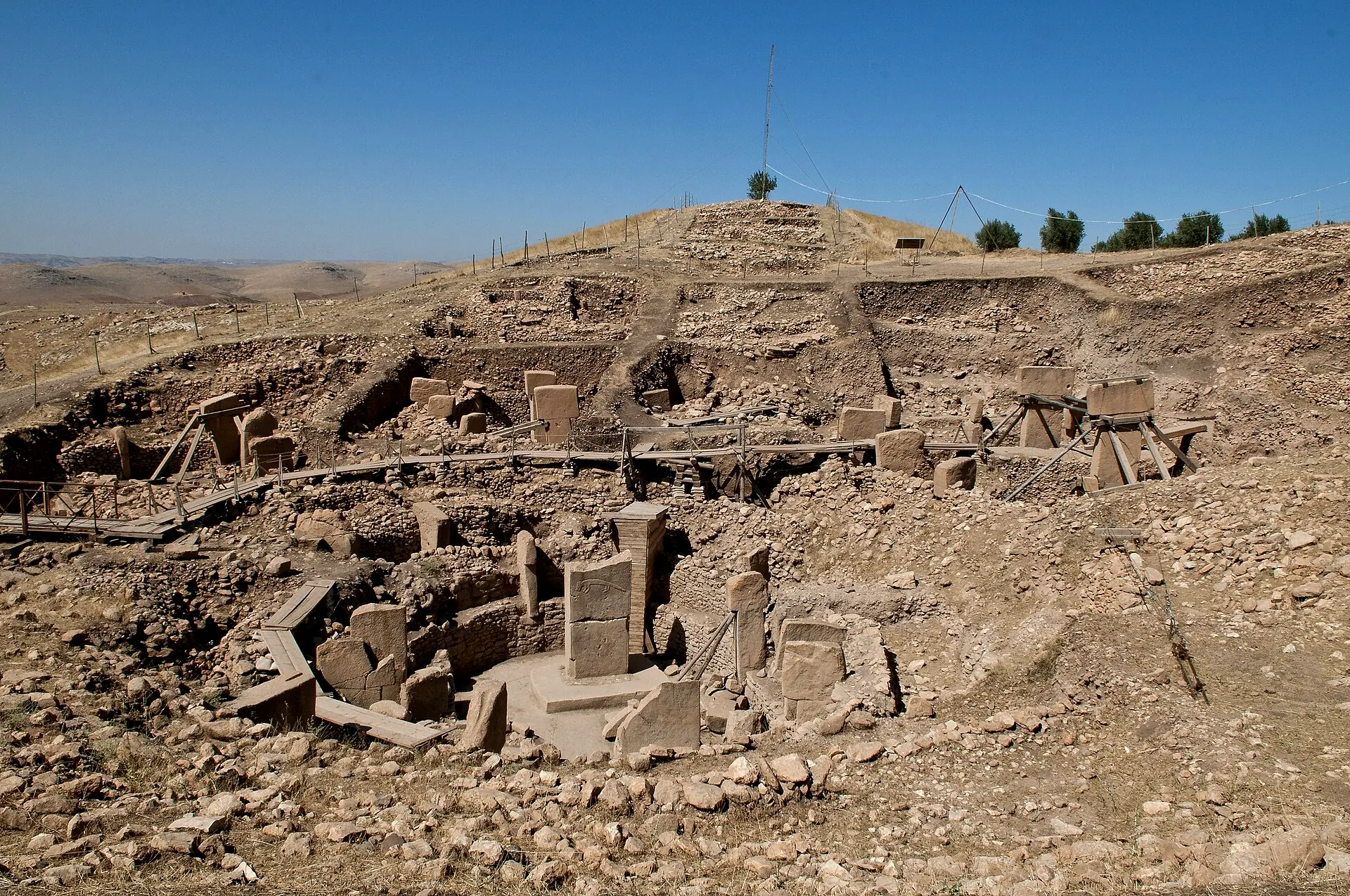
The highlights are the large circular enclosures with central T-shaped pillars, the carved animal reliefs, the smaller rectangular rooms and the rock-cut cisterns. Pillars reach about 5.5 m in height. Check the current visitor layout and any exhibition before you go.
Look for these features while you walk the visitor route.
- T-shaped pillars: limestone monoliths, some up to 5.5 m tall, with arms and belts carved in relief.
- Animal reliefs: wild animals appear on many pillars; one enclosure is known as the lion pillar building.
- Circular enclosures: stone-ringed rooms with a pair of tall pillars at the centre.
- Rectangular rooms: later buildings with lime floors and smaller T-pillars.
- Rock-cut cisterns: part of a rainwater harvesting system used by the settlement.
- The Harran plain view: the mound overlooks the plain from the edge of the Taş Tepeler hills.
The table below gives an at-a-glance summary of what you will see.
| Feature | What to look for | Why it matters |
|---|---|---|
| T-shaped pillars | Carved arms, belts, animals | Unique to the Urfa region |
| Large enclosures | Round rooms with central pillar pairs | Among the world’s oldest known megaliths |
| Later rectangular rooms | Lime floors and benches | Show how the site changed |
| Cisterns and channels | Rock-cut water storage | Evidence of daily settlement |
| Plateau and tell | Limestone ridge about 15 m high | Setting above the Harran plain |
Why is Göbekli Tepe a UNESCO World Heritage Site?
UNESCO inscribed Göbekli Tepe in 2018 under criteria (i), (ii) and (iv). The protected property covers 126 ha with a 461 ha buffer zone. UNESCO calls it one of the first manifestations of human-made monumental architecture and notes the craftsmanship of the T-shaped pillars.
UNESCO also warns that the buffer zone is vulnerable to infrastructure projects and rising visitor numbers. Therefore access rules and visitor routes matter. Follow signs and staff instructions on site.
This table summarises the UNESCO listing.
| Item | Detail |
|---|---|
| Inscription year | 2018 |
| Criteria | (i), (ii) and (iv) |
| Property | 126 ha |
| Buffer zone | 461 ha |
| Period | Pre-Pottery Neolithic, 10th-9th millennia BC |
| Management | Şanlıurfa Museum with the German Archaeological Institute |
How do you get to Göbekli Tepe and get around?
Fly to Şanlıurfa GAP Airport, then travel about 20 km north-east from the city centre to the site by organised transport, taxi or the local bus. Wikivoyage lists an hourly bus from the Archaeology Museum, but check the current timetable. Inside the site, you walk.
The airport has several flights a day from Istanbul, and it lies about 36 km north of the city centre. Most sights in Urfa are within walking distance, so you can base yourself in the old centre and visit the site as a half-day trip.
This table compares ways to reach the site, with typical durations from public sources.
| From | Mode | Typical duration | Note |
|---|---|---|---|
| Istanbul | Flight to Şanlıurfa GAP | Check airline schedule | Several flights a day |
| Airport | Airport bus or taxi to city | About 45 minutes by bus | Check current timetable |
| Urfa Archaeology Museum | Bus to the site | Check current timetable | About 20 km, hourly per Wikivoyage |
| Urfa city centre | Taxi or private transfer | About 30 minutes, check traffic | Flexible waiting time |
| Urfa city centre | Guided tour | Half day | Combines site and museum |
When is the best time to visit Göbekli Tepe?
Spring and autumn suit Göbekli Tepe best. Wikivoyage suggests May and October, because summers in Urfa are baking hot, often above 38 C. Visitors in summer should go early and carry water. Winter is cool and wetter, and March and April can bring storms.
This table shows weather, crowds and notes by season.
| Season | Weather | Crowds | Notes |
|---|---|---|---|
| Spring (Apr-May) | Warm; storms possible in March-April | Moderate | Good light, green hills in spring |
| Summer (Jun-Sep) | Very hot and dry | Moderate | Visit at opening time; carry water and a hat |
| Autumn (Oct-Nov) | Warm to mild | Moderate | Comfortable for walking |
| Winter (Dec-Feb) | Cool, wetter, occasional frost | Low | Check weather and daylight hours |
How long should you stay at Göbekli Tepe?
Plan about half a day. Wikivoyage says an hour is enough on the site itself, while travel from Urfa and the museum add time. A full day lets you add Urfa’s old town and Balıklıgöl. A two-to-three-day trip adds Harran and the wider Taş Tepeler region.
The table below suggests three plans by available time.
| Time | Plan |
|---|---|
| Half day | Göbekli Tepe site visit and return to Urfa |
| 1 day | Archaeology Museum, Göbekli Tepe, and the Balıklıgöl area in the evening |
| 2-3 days | Add Harran beehive houses, Urfa bazaar, local food and other Taş Tepeler sites where open |
What practical tips should you know before visiting Göbekli Tepe?
Check the official page for tickets, opening hours and entry rules before you travel. Our fee check on 16 November 2026 listed the site as valid with the MuseumPass on the official table. Expect strong sun and a lot of walking.
These tips come from public guidance and common sense.
- Tickets and fees: see the official page of the Ministry of Culture and Tourism.
- Dress: sun hat, sunglasses and light, covered clothing in summer; warm layers in winter.
- Accessibility: check current access and surfaces for visitors with reduced mobility.
- Safety: stay on marked routes and do not touch the pillars.
- Photography: personal photos are usually fine; ask about drones and tripods.
- Etiquette: respect the site and local customs; dress modestly in Urfa’s religious areas.
- Combine with the Şanlıurfa Archaeology Museum, which shows life-size reconstructions of the site.
Where should you stay and eat near Göbekli Tepe?
Stay in Şanlıurfa city. The old centre around Balıklıgöl is walkable, and hotels range from simple guesthouses to larger properties. The site itself has no overnight stay. Book a room close to the Archaeology Museum or the bazaar for easy evenings.
Urfa is known for its kebab culture, spiced meat dishes and sweets. Moreover, the covered bazaar has many small eateries. As a result, lunch after the site is easy to arrange. Ask your hotel for current recommendations.
What are the nearby places and day trips from Göbekli Tepe?
Urfa itself offers Balıklıgöl, the Archaeology Museum and the bazaar. Harran, about 40 km south, is known for its beehive houses. Mardin, Mount Nemrut and Gaziantep are the usual next stops in south-eastern Anatolia, and each needs a separate day.
Consider these add-ons when you plan the route.
- Balıklıgöl and the old city in Şanlıurfa.
- Harran beehive houses, about 40 km south of Urfa.
- Mount Nemrut in Adıyaman province.
- Mardin and its stone old town.
Plan this with TurkGT
TurkGT is an Istanbul-based travel company. We offer guided trips, private transfers, local guides and interpreter services for south-eastern Anatolia, including Göbekli Tepe. Send us your dates, group size and interests, and our team will propose a route and confirm every detail with you by WhatsApp.
Frequently asked questions
Where is Göbekli Tepe?
It is near the village of Örencik in Şanlıurfa Province, south-eastern Türkiye, about 20 km north-east of Şanlıurfa city centre.
How old is Göbekli Tepe?
Wikipedia dates occupation from about 9500 BCE to at least 8000 BCE. UNESCO places the monuments in the 10th-9th millennia BC.
When was Göbekli Tepe inscribed by UNESCO?
UNESCO inscribed it in 2018 under criteria (i), (ii) and (iv).
How long do you need at Göbekli Tepe?
Wikivoyage says about an hour is enough on site. Plan half a day including travel from Urfa.
How do you get from Şanlıurfa to Göbekli Tepe?
Use a taxi, a private transfer, a guided tour or the local bus from the Archaeology Museum. Check the current timetable.
Is Göbekli Tepe the world’s oldest temple?
It is often described that way. No definitive purpose has been determined, so archaeologists treat the label with caution.
When is the best season for Göbekli Tepe?
Wikivoyage suggests May and October. Summers in Urfa are very hot, so go early or choose another season.
What can you combine with Göbekli Tepe?
Combine it with the Şanlıurfa Archaeology Museum, Balıklıgöl, Harran and, on a longer trip, Mount Nemrut or Mardin.
Related on TurkGT
Sources
- UNESCO World Heritage Centre: Göbekli Tepe
- Wikipedia: Göbekli Tepe
- Göbeklitepe Örenyeri – Kültür Portalı
- Wikivoyage: Şanlıurfa
- Wikipedia: Şanlıurfa
- Ministry of Culture and Tourism: museum and site fees
Last reviewed: 2026-11-17. Opening hours, ticket prices and other changeable details are not listed because they change; check the official source before you travel.