
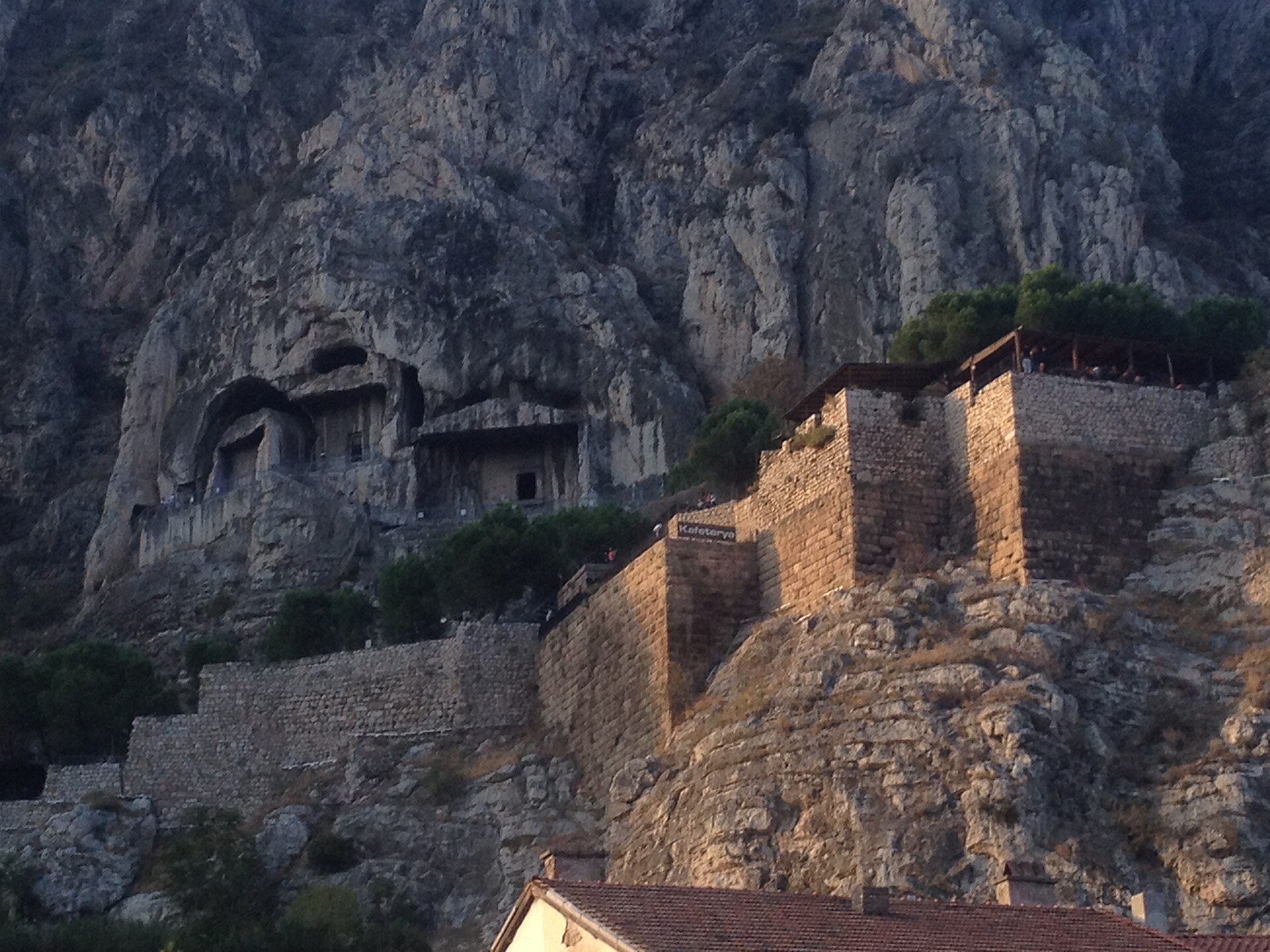
Amasya is a city and province in northern Türkiye, on the Yeşilırmak River, and the ancient Amaseia where the geographer Strabo was born. Pontic kings cut their tombs into the cliff above the river, and Ottoman houses line the water. It is a compact, walkable stop between Ankara, Çorum and Samsun.
Key facts
- Location: Central Black Sea region, 333 km northeast of Ankara, in the Yeşilırmak gorge
- From Istanbul: Daily flights to Merzifon airport take about 90 min; overnight buses about 11 hr (Wikivoyage); check current timetable
- From Ankara: About 4 hr by bus via Çorum (Wikivoyage)
- Best season: Spring and autumn for walking; check summer heat
- Typical visit time: 1 day, or 2 days at an easy pace
- UNESCO status: Mount Harşena and the Rock Tombs of the Pontic Kings are on the Tentative List (2015)
- Known for: Apples, rock tombs, Ottoman houses, madrasas
- Population: About 116,000 in the city (2023, Wikivoyage)
- Entrance fees: See official page for each site
What is Amasya and why visit?
Amasya is a historic river city in the Central Black Sea region. It is the ancient Amaseia, once a royal capital. Visitors come for the rock tombs, riverside Ottoman houses, Harşena Castle and its views. In short, it packs a lot of history into a small centre.
Wikivoyage describes a well-preserved old town in the gorge of the Yeşilırmak. Moreover, the main sights stand within walking distance of the river. Therefore Amasya suits visitors who prefer short walks to long drives.
Reasons to visit:
- Pontic rock tombs cut into the cliff in the city centre
- Yalıboyu Ottoman houses along the river
- Harşena Castle with city views
- Ottoman madrasas, mosques and a medieval hospital
- Apple orchards and local food
What is the history of Amasya?
Amasya’s history spans Hittite, Pontic, Roman and Ottoman times. The Culture Portal says Hittite documents give the earliest known name as Hakmiş. Wikipedia adds that the city was capital of the Kingdom of Pontus from 333 BC to 26 BC.
In Ottoman times, as a result of its status, it was customary for young princes to be sent to Amasya to govern and gain experience. Wikipedia also notes the city was known for madrasas and as a centre of the Khalwati Sufi order. Strabo, born here, wrote about his home city under the name Amaseia.
The table lists the main periods and their names.
| Period | Detail |
|---|---|
| Hittite | Earliest known name Hakmiş (Culture Portal) |
| Pontic kingdom | Capital 333 BC to 26 BC; royal tombs in the cliff |
| Roman | Coins support Hermes as founding god |
| Ottoman | Princes sent to govern; madrasas; Khalwati order |
| Modern | Apple growing province |
What are the highlights of Amasya?
The core sights are the Pontic rock tombs, Harşena Castle, the riverside houses, Bayezid II Mosque, Kapıağa Madrasa and the Ilkhanid Bimarhane. Most sit within a short walk of each other. Check the official page for current opening hours.
Wikipedia counts 18 rock tomb units. GoTürkiye says Harşena Castle sits atop Mount Harşena in the city centre and has three main sections. The same source says the mount and tombs were added to the UNESCO Tentative List in 2015.
What to see:
- Rock Tombs of the Pontic Kings, above the riverbank
- Harşena Castle and the hill views
- Yalıboyu houses, now cafes, restaurants and hotels
- Mosque of Bayezid II and the octagonal Kapıağa Madrasa
- Ilkhanid Bimarhane, a 14th-century hospital with reliefs, linked to Sabuncuoğlu Şerefeddin
This at-a-glance table groups the sights.
| Sight | Type | Notes |
|---|---|---|
| Pontic rock tombs | Archaeological | 18 tomb units; check access |
| Harşena Castle | Fortress | Hill above the city; views |
| Yalıboyu houses | Ottoman architecture | Riverside, mostly cafes and hotels |
| Bayezid II Mosque | Mosque | Dress modestly |
| Kapıağa Madrasa | Madrasa | Octagonal plan |
| Bimarhane | Museum / hospital | 14th century; check hours |
How do you get to Amasya and get around?
Most visitors arrive by bus from Ankara or by air to Merzifon. Wikivoyage says Merzifon airport has daily flights from Istanbul taking about 90 min, and buses from Ankara take about 4 hours. Check the current timetable for all routes.
Wikivoyage also lists overnight buses from Istanbul at about 11 hours. The old town is easy on foot, and the main streets are traffic-restricted in places. For this reason you rarely need a car inside the centre.
The table compares the main ways to arrive.
| From | Mode | Typical duration |
|---|---|---|
| Istanbul | Flight to Merzifon | About 90 min (check current timetable) |
| Istanbul | Bus | About 11 hr overnight |
| Ankara | Bus via Çorum | About 4 hr |
| Samsun | Bus | About 3 hr (Wikivoyage) |
| Within the city | Walking | Old town is compact |
When is the best time to visit Amasya?
Spring and autumn are the most comfortable seasons for walking the old town. Wikipedia classes the climate as hot-summer Mediterranean (Csa), so summer afternoons can be hot. In contrast, winters are cold, and some mornings are frosty.
Wikipedia records a high of 45.0 °C in July 2000 and a low of -21.0 °C in January 2008. These are extremes, but they show the range.
The table shows a seasonal guide.
| Season | Weather | Crowds | Notes |
|---|---|---|---|
| Spring | Mild | Moderate | Green hills; good for walking |
| Summer | Hot | Moderate | Walk early or late |
| Autumn | Mild | Moderate | Apple harvest period; check local events |
| Winter | Cold | Low | Quieter; dress warmly |
How long should you stay?
One day covers the main sights at a steady pace. Two days allow a slower visit with a museum or two and an evening on the river. A third day fits a side trip to Tokat or Çorum.
These plans suit different schedules.
| Time | Plan |
|---|---|
| Half day | Rock tombs, riverside walk, one museum |
| 1 day | Add Harşena Castle and the madrasa area |
| 2-3 days | Add Merzifon or a day trip to Tokat or Çorum |
What practical tips should you know?
Wear good shoes for the castle and tomb paths, because they are steep. Tickets and hours change, so check the official page for each museum. Carry water in summer and a scarf for mosques.
Amasya’s old streets are narrow, and some are traffic-restricted, so plan to walk. Moreover, evening light on the rock tombs and river is good for photography. Ask the staff of each museum about photo rules.
Useful points:
- Dress modestly in mosques; carry a scarf
- Avoid the hottest hours in summer
- Ask permission before photographing people
- Steps and slopes limit access for some visitors, so ask about accessibility
- Check the official page for tickets and hours
Where should you stay and eat?
Stay on or near the river in the centre so you can walk to the sights. Wikivoyage mentions a riverbank konak and hotels on the edge of town. We name no businesses, so please check current reviews.
For food, Wikivoyage points to mantı, a homemade pasta with various toppings. Moreover, Amasya is known for apples, and Wikipedia also lists tobacco, peaches, cherries and okra as local crops.
What are the nearby places and day trips?
Tokat, Çorum and Samsun are all reachable by road, and Hattusa lies beyond Çorum. Sivas continues east. Use our linked pages to plan a loop through the Central Black Sea region.
Plan this with TurkGT
TurkGT is an Istanbul-based travel company. We can arrange guided trips, private transfers, a local guide or an interpreter for this area. Send us your dates and group size on WhatsApp, and we confirm the plan with you there before anything is booked. We do not publish fixed prices on this page.
Frequently asked questions
Where is Amasya?
In northern Türkiye on the Yeşilırmak River, about 333 km northeast of Ankara.
What is Amasya known for?
Rock tombs of Pontic kings, Ottoman riverside houses, Harşena Castle and apples.
Who was born in Amasya?
The geographer and historian Strabo.
How do I get to Amasya from Istanbul?
Fly to Merzifon (about 90 min) or take an overnight bus (about 11 hr). Check current timetables.
How many rock tombs are there?
Wikipedia counts 18 rock tomb units.
Is Amasya a UNESCO World Heritage site?
Not yet inscribed. Mount Harşena and the Rock Tombs of the Pontic Kings were added to the Tentative List in 2015.
What is the best time to visit?
Spring and autumn for walking; summers can be hot.
How long do I need?
One day for the highlights, two for an easy pace.
Sources
- Amasya Province – Wikipedia
- Amasya – Wikipedia
- Amasya – Wikivoyage
- Amasya – Culture Portal
- Top Things to See in Amasya – GoTürkiye
Last reviewed: 2026-11-18. Opening hours, ticket prices and other changeable details are not listed because they change; check the official source before you travel.