
Bolu is a forested province in north-western Türkiye, halfway between Istanbul and Ankara, with Bolu city as its capital. It is known for Lake Abant, Yedigöller National Park, Gölcük Nature Park, Kartalkaya ski resort and the Ottoman towns of Mudurnu and Göynük. It works well for nature weekends and road-trip stops.
Key facts
- Location: North-western Türkiye, between Istanbul (about 260 km) and Ankara (about 190 km)
- Capital: Bolu (altitude about 742 m)
- Area / population: 8,313 km² / 320,824 (2022)
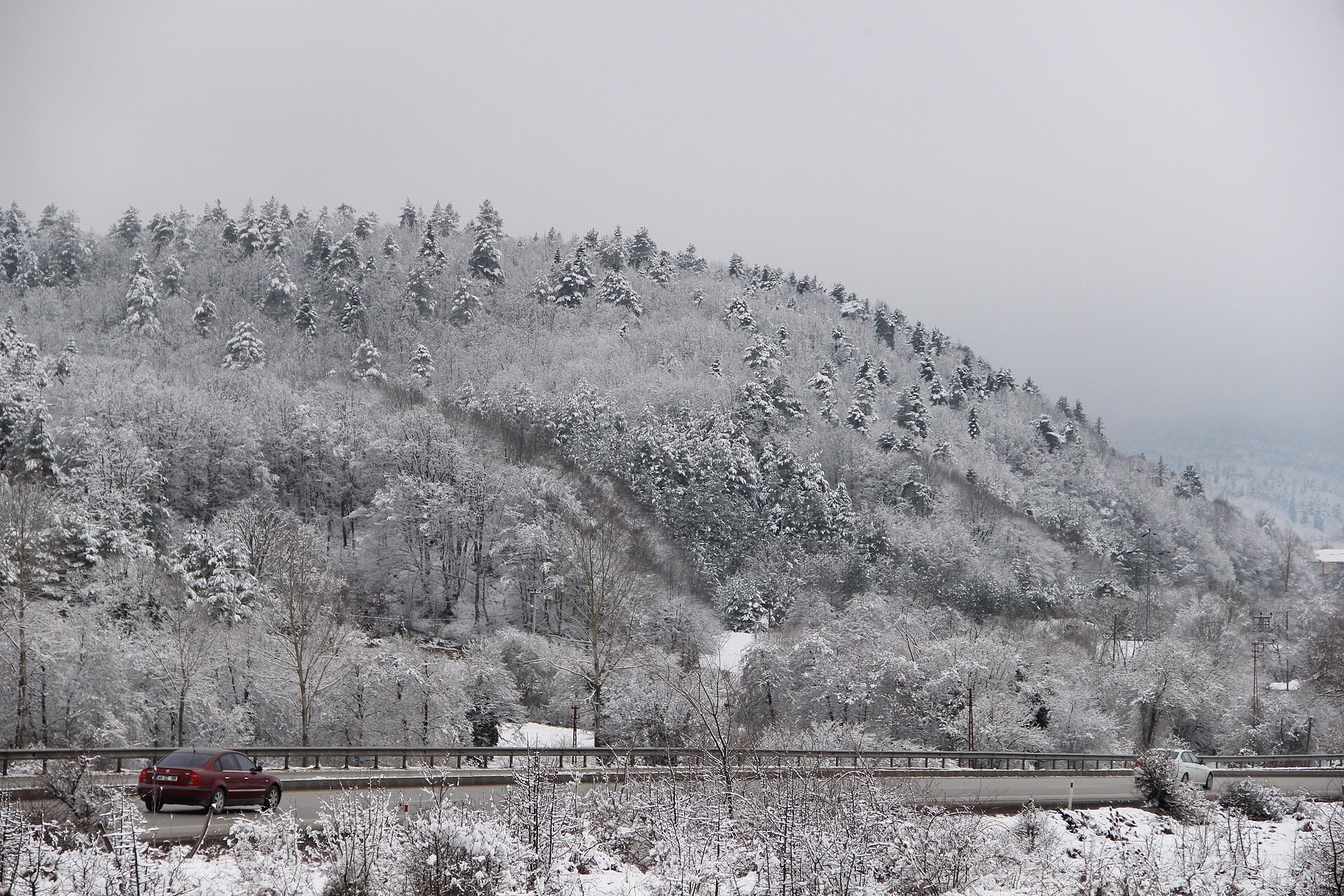
- Forest cover: About 65% of the province
- From Istanbul: Buses 4–5 hours per Wikivoyage; check current timetable
- Best season: Spring to autumn for lakes; winter for skiing at Kartalkaya
- Typical visit time: 1 day to a weekend
- UNESCO status: None in the province
- Protected areas: Yedigöller National Park, Lake Abant National Park, Gölcük Nature Park
- Entrance: National parks and museums: see official page for fees and hours
What is Bolu and why visit?
Bolu is a green mountain province on the main Istanbul–Ankara route. It offers lakes, forests, ski slopes and well-preserved Ottoman towns. Visit it for a short nature break, a ski day or a scenic stopover.
Wikivoyage notes that the city itself has a few antiquities but is otherwise modern, while the surrounding forested mountains hold lakes, ski resorts and villages with traditional architecture. Moreover, about 65 percent of the province is forest, according to the Culture Portal. Therefore, most trips focus on the countryside rather than the city.
Reasons to go:
- Lake Abant and Yedigöller for forest walks
- Kartalkaya and Sarıalan for winter sports
- Mudurnu and Göynük for Ottoman houses
- Hot springs near Karacasu and Seben
- Simple access by motorway from Istanbul and Ankara
What is the history of Bolu?
Bolu’s history runs from prehistoric settlement through Bithynia, Rome and Byzantium to the Turks and Ottomans. The Romans called the town Claudiopolis, and the Ottomans took it in the 14th century.
Archaeological findings suggest people lived here about 100,000 years ago. The area lay in eastern Bithynia and southwestern Paphlagonia, and the last Bithynian king, Nicomedes IV, bequeathed the kingdom to Rome. Furthermore, after the victory at Manzikert in 1071, Turkmens settled in Bolu in 1074.
Seljuk and later Ottoman rule followed. The western part fell to Orhan in the early to mid-1300s, and Mehmed II reunited the two areas in 1461. In 1864, Bolu became an independent sanjak. As a result, much of today’s architecture reflects the long Ottoman period.
Key dates:
- c. 375 BCE: Bithynia gains independence from Persia
- 1074: Turkmens settle in Bolu
- Early to mid-1300s: Ottoman conquest of the west
- 1461: Mehmed II reunites the area
- 1864: Bolu becomes an independent sanjak
What are the main things to see in Bolu?
The main sights are Abant, Yedigöller, Gölcük, the Ottoman towns of Mudurnu and Göynük, and Bolu’s central mosques and museum. A good first day combines the city with one lake. Check official pages for park fees and hours.
Yedigöller National Park was established in 1965 and holds seven landslide-formed lakes. Lake Abant, at 1,328 m, became Türkiye’s 48th national park in 2022. In Bolu city, the museum shows exhibits from the Neolithic to Byzantine periods.
Highlights to plan around:
- Yedigöller: seven lakes, streams and trekking paths
- Abant: crater-barrier lake with endemic species
- Gölcük Nature Park: lake and walking trail
- Mudurnu and Göynük: Ottoman houses, tombs and hammams
- Kartalkaya: ski resort in the Köroğlu Mountains
The table below shows the main places at a glance.
| Place | Type | Why go | Time needed |
|---|---|---|---|
| Bolu city | Museum and mosques | Bolu Museum, Beyazıt Mosque, Taşhan | 2–3 hours |
| Lake Abant | National park | Forest lake walks and horse riding | Half a day |
| Yedigöller | National park | Seven lakes, autumn colours | Half to full day |
| Mudurnu / Göynük | Ottoman towns | Historic houses, tombs, local food | Half a day |
| Kartalkaya | Ski resort | Winter sports | Full day |
How do I get to Bolu and get around?
Bolu lies on the Istanbul–Ankara motorway, so buses and cars reach it easily. Wikivoyage lists hourly buses from Istanbul taking 4–5 hours and about three hours from Ankara. Check the current timetable before travel.
However, local sights lie outside the city. Therefore, a car or private driver is the practical way to reach Abant, Yedigöller and Mudurnu. In the city, the compact centre is easy to walk.
This table compares the main routes.
| Route | Typical duration | Notes |
|---|---|---|
| Bus from Istanbul | 4–5 hours per Wikivoyage | Check current timetable; bus station about 3 km west of centre |
| Bus from Ankara | About 3 hours | Check current timetable |
| Car via O-7 / E80 | Check a route planner | Toll motorway |
| Bolu to Abant | About 34–40 km | Car or taxi |
| Bolu to Yedigöller | About 25–42 km | Winter access may use a different road; check conditions |
When is the best time to visit Bolu?
Late spring through autumn suits lakes and forests, and autumn is especially scenic at Yedigöller. Winter brings snow and skiing at Kartalkaya. Wikivoyage gives summer highs around 28 °C and winter lows around -2 °C in the city.
This table summarises the seasons.
| Season | Weather | Crowds | Notes |
|---|---|---|---|
| Spring | Cool to mild | Low | Wild flowers; some tracks muddy |
| Summer | Warm; highs around 28 °C in town | Moderate to high | Cooler in the mountains |
| Autumn | Mild, crisp | High at weekends | Best colours at Yedigöller |
| Winter | Cold, snow | High at ski resorts | Check road conditions |
How long should I stay in Bolu?
One day covers the city and one lake, while two days allow Yedigöller and Mudurnu. A weekend suits skiers.
These plans fit different schedules.
| Time | Plan | Highlights |
|---|---|---|
| Half a day | Lake Abant | Walk around the lake |
| 1 day | Bolu city plus Abant or Yedigöller | Museum, mosques, forest walk |
| 2–3 days | Add Mudurnu, Göynük and thermal springs | Ottoman houses, spa, ski slopes |
What practical tips should I know?
Bring warm layers year-round, check road conditions in winter and verify park fees on official pages. Dress modestly in mosques and tombs.
Useful tips:
- Mountain weather changes quickly; carry a waterproof layer
- Check winter road access to Yedigöller and Abant
- Respect wildlife: forests are home to three deer species
- Cover shoulders and knees in mosques
- Accessibility: lake paths are mostly flat, but forest tracks vary
- Parts of the province are vulnerable to earthquakes; follow local guidance
- Ask before photographing locals in villages
Where should I stay and eat in Bolu?
Stay in Bolu city for convenience, at Abant for lake views or in Mudurnu and Göynük for Ottoman houses. Try local dishes in converted old houses in Mudurnu.
Neighbourhood guidance:
- Bolu centre: hotels near the main square and mosques
- Abant and Gölcük: lodges and picnic areas
- Mudurnu: old houses turned into restaurants
- Karacasu: spa hotels
What nearby places and day trips fit with Bolu?
Bolu borders Düzce, Sakarya, Kastamonu and Ankara areas and links Istanbul with the capital.
Good pairings:
- Sakarya: Lake Sapanca and Taraklı
- Düzce: neighbouring Black Sea province
- Zonguldak and Karabük: coal-coast and Safranbolu direction
- Ankara: three hours by bus
- Istanbul: motorway return
Plan this with TurkGT
TurkGT is an Istanbul-based travel company offering guided tours, private transfers, licensed guides and interpreter services. We can arrange a Bolu, Abant and Mudurnu itinerary with a driver. Message us on WhatsApp with your dates, and we will confirm details there.
Frequently asked questions
Where is Bolu Province?
Bolu is in north-western Türkiye, between Ankara and Istanbul.
How forested is Bolu?
The Culture Portal says forests cover 65 percent of the province.
What is Yedigöller?
A national park with seven landslide-formed lakes, established in 1965.
Is Lake Abant a national park?
Yes, it was declared Türkiye’s 48th national park on 10 June 2022.
Can I ski in Bolu?
Kartalkaya and Sarıalan are ski resorts in the Köroğlu Mountains. Check current conditions.
How long does it take to reach Bolu from Istanbul?
Wikivoyage says buses take 4–5 hours. Check the current timetable.
What is Mudurnu known for?
Well-preserved Ottoman houses and a historic preservation district.
Is there a UNESCO site in Bolu?
No. The province is known for its natural parks.
Related on TurkGT
- Places and guides in Bolu:
- Abant
- Yedigöller
- Yedigöller National Park
- Abant Lake
Sources
- Bolu Province – Wikipedia
- Bolu – Wikivoyage
- Yedigöller National Park – Wikipedia
- Lake Abant – Wikipedia
- Mudurnu – Wikipedia
- Göynük – Wikipedia
- Bolu – Türkiye Kültür Portalı
Last reviewed: 2026-11-18. Opening hours, ticket prices and other changeable details are not listed because they change; check the official source before you travel.