
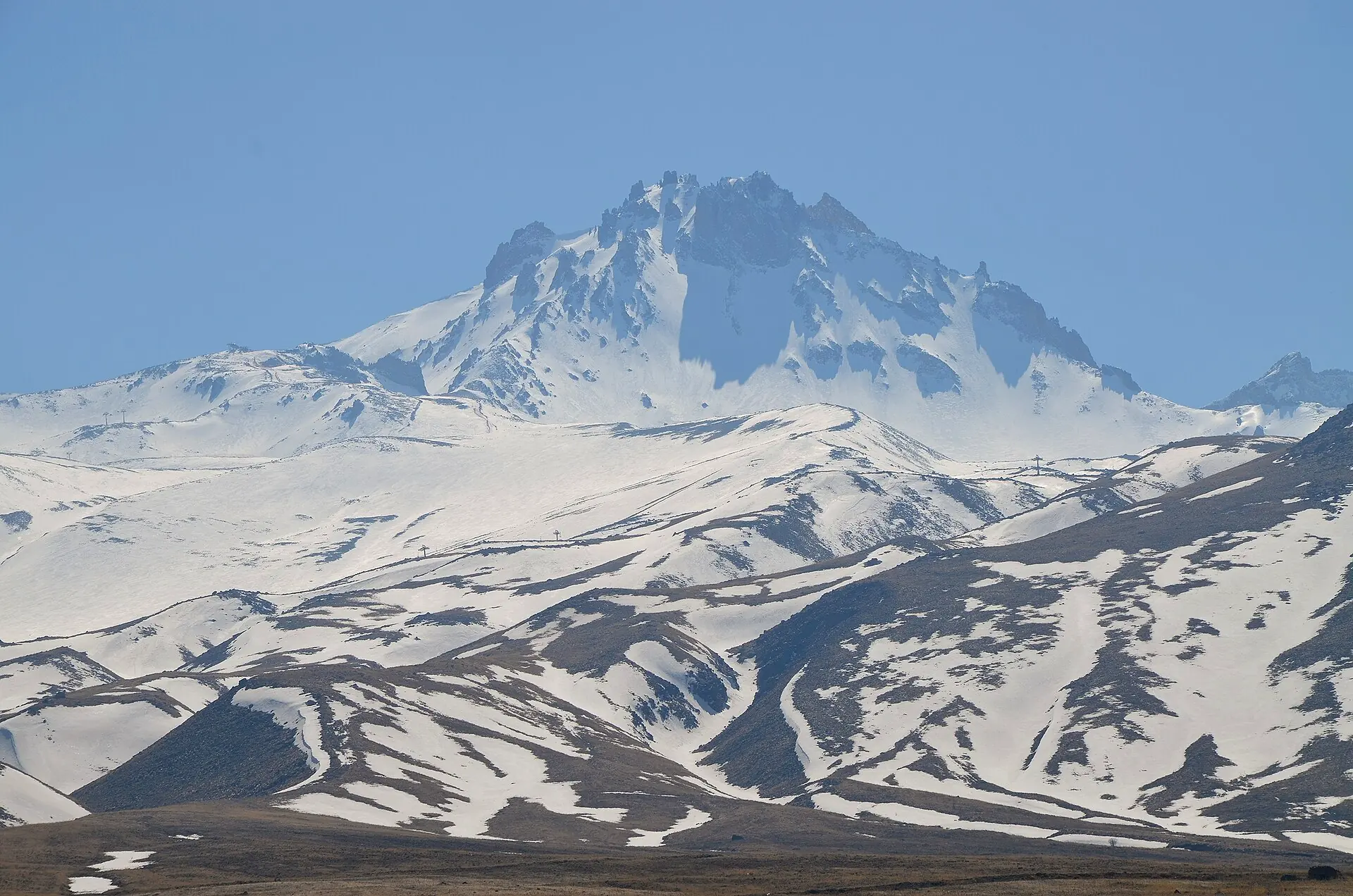
Kayseri is a city and province in central Türkiye, 350 km southeast of Ankara, at the foot of Mount Erciyes. It is known for Seljuk monuments, the Kültepe site, local food and as a gateway to Cappadocia.
Key facts
- Location: Central Türkiye, 350 km southeast of Ankara
- From airports: Erkilet Airport is about 5 km north of the centre
- Elevation of Erciyes: About 3,916 m
- Best season: Spring and autumn; winter for skiing
- Typical visit: 1 to 3 days
- Historic role: Seljuk second capital 1178 to 1243
- Key sites: Castle, Hunat Hatun Complex, Çifte Medrese, Kültepe
- UNESCO status: Kültepe is on the Tentative List (2014)
- Entrance: See official page
What is Kayseri and why visit?
Kayseri is a city and province in central Türkiye, 350 km southeast of Ankara, at the foot of Mount Erciyes. Visit for Seljuk-era monuments, the Kültepe archaeological site, local food such as pastırma and mantı, and winter skiing on Erciyes. It is also a practical gateway to Cappadocia.
Moreover, Kayseri was named the Cultural Capital of the Turkic World for 2027 by TURKSOY. As a result, the city is investing in museums and public spaces. In contrast to Cappadocia’s crowds, the old centre is quieter.
The table summarises Kayseri at a glance.
| Item | Detail |
|---|---|
| Region | Central Anatolia, central Türkiye |
| Province area | 16,970 km² |
| Mountain | Mount Erciyes, about 3,916 m |
| Historic names | Mazaka, Caesarea, Kayseriye |
| Cultural title | Cultural Capital of the Turkic World 2027 (TURKSOY) |
| Main themes | Seljuk monuments, Kültepe, Erciyes, regional food |
What is the history of Kayseri?
Kayseri has three golden ages, according to Wikipedia. The first was around 2000 BC, when the city served as a trade post between Assyrians and Hittites. The second came under Roman rule. The third was the Seljuk period from 1178 to 1243, when it was the second capital of the Sultanate of Rum.
The earliest name was Mazaka. In 14 AD the last king of Cappadocia renamed it Caesarea in honour of Caesar Augustus. After the Turkish conquest the name became Kayseriye and then Kayseri. Moreover, Kültepe, the ancient Kaneš about 20 km northeast, holds over 23,000 cuneiform tablets and was added to Türkiye’s World Heritage Tentative List in 2014.
The city also suffered repeatedly. Alp Arslan’s forces demolished it in 1067, and the Danishmendids rebuilt it in 1134. The Seljuks then left the monuments that define the centre today. The Ottomans took Kayseri in 1515 and kept the Seljuk buildings in good repair. Sinan, the great Ottoman architect, was born in Kayseri.
Key dates from the sources:
- About 2000 BC: Assyrian and Hittite trade at Kaneš.
- 14 AD: the city is renamed Caesarea.
- 1067: Alp Arslan’s forces demolish the city.
- 1134: the Danishmendids rebuild it.
- 1178 to 1243: the Seljuk golden age.
- 1206: the Gevher Nesibe hospital is completed.
- 1515: the Ottomans take the city.
- 2027: Cultural Capital of the Turkic World.
What should you see in Kayseri?
Start at the citadel and basalt walls, then walk to the Hunat Hatun Complex, the Çifte Medrese and the Grand Mosque. Add the Seljuk Civilisation Museum and the covered bazaar. Outside the centre, Kültepe and Erciyes fill a second day.
The main places named in our sources:
- Kayseri Castle: a 15th-century citadel with the Archaeology Museum inside.
- Hunat Hatun Complex: a 13th-century mosque, tomb, madrasa and hamam still in use.
- Çifte Medrese: twin Seljuk seminaries; one served as a hospital.
- Sahabiye Medresesi: a madrasa dated 1267 with a typical Seljuk portal.
- Ulu Camii: the Grand Mosque near the bazaar, started by a Danishmend emir and completed by the Seljuks.
- Seljuk Civilisation Museum: an interactive museum on the Seljuk era.
- Kapalı Çarşı: the covered bazaar, worth exploring even without shopping.
- Kültepe: the Assyrian trading settlement about 20 km northeast.
The table lists key sites with their period.
| Site | Type | Period or note |
|---|---|---|
| Basalt city walls | Fortifications | Sixth century, repaired many times |
| Kayseri Castle | Citadel | Present form 15th century |
| Hunat Hatun Complex | Mosque, madrasa, hamam | 13th century; hamam 1238 |
| Sahabiye Medresesi | Madrasa | 1267 |
| Çifte Medrese | Twin seminaries, hospital | 12th to 13th century |
| Kültepe (Kaneš) | Archaeological site | Bronze Age; Tentative List 2014 |
How do you get to Kayseri and get around?
Kayseri has its own airport 5 km north of the centre, with flights from Istanbul of about 80 minutes. Trains and buses link it to Ankara. A tram and bus network serves the city. Check current timetables before you book.
Getting around:
- Trams and buses are run by the municipality.
- Tickets for trams and buses must be bought beforehand from kiosks.
- Taxis wait at the bus terminal.
- The old centre is walkable; Erciyes and Kültepe need a car or tour.
The table compares the main routes; times are typical and need checking.
| From | Mode | Typical duration |
|---|---|---|
| Istanbul | Flight | About 80 min |
| Istanbul | Bus | About 11 h |
| Ankara | Bus | About 5 h |
| Ankara | Train | About 7 h |
| Ankara | Road | About 3 h by car |
| Cappadocia | Road | Day trip from Kayseri |
When is the best time to visit Kayseri?
Spring and autumn suit city sightseeing, and winter suits skiing. Kayseri has a humid continental climate with cold, snowy winters and hot, dry summers with cool nights. Therefore pack layers outside the hottest months.
The seasonal summary below follows the climate source.
| Season | Weather | Crowds | Notes |
|---|---|---|---|
| Spring | Cool to mild | Low | Good for walking and Kültepe |
| Summer | Hot, dry; cool nights | Moderate | Erciyes lifts open to trails |
| Autumn | Mild, dry | Low | Good for city and bazaar |
| Winter | Cold, snowy | Higher on Erciyes | Skiing; lift queues possible |
How long should you stay in Kayseri?
One day covers the Seljuk centre. Two days add Kültepe and Erciyes. Three days suit those combining Kayseri with Cappadocia.
The plans below are suggestions.
| Plan | Itinerary | Best for |
|---|---|---|
| Half day | Castle, Hunat Hatun, Çifte Medrese | Transit stop |
| 1 day | City sights, museums, bazaar and food | First visit |
| 2 to 3 days | City, Kültepe, Erciyes, plus Cappadocia | Culture and mountains |
What practical tips help in Kayseri?
Dress modestly in mosques, confirm museum hours and use the official page for tickets. Meat specialities such as pastırma are best eaten before you travel home.
Practical points:
- Dress: cover shoulders and knees for mosques.
- Tickets: see the official museum pages for current fees.
- Accessibility: Seljuk courtyards have steps and stone floors.
- Safety: Erciyes summit is for experienced mountaineers only.
- Photography: ask before photographing people.
- Etiquette: remove shoes in mosques; keep voices low.
Where should you stay and eat in Kayseri?
Stay near the castle and Cumhuriyet Square for walking access, or along Kocasinan Boulevard near the railway station for budget to mid-price options. Eat pastırma, mantı and sucuk, the dishes the sources link with Kayseri.
In addition, try gilaburu juice, a local drink from Viburnum opulus, in small amounts. Shoppers may look at handwoven carpets in the covered bazaar.
Local foods and goods named in our sources:
- Pastırma: dried, salted beef with a caraway paste called çemen.
- Mantı: small dumplings of minced meat with sauce and yoghurt.
- Sucuk: a local sausage.
- Gilaburu: a juice that is acidic; drink small amounts.
- Handwoven carpets in the bazaar.
Which places are near Kayseri for day trips?
Cappadocia lies to the west and is the main day trip. Mount Erciyes is about 15 km south for skiing or summer trails, and Kültepe is about 20 km northeast. Sivas, Nevşehir and Niğde are neighbouring provinces.
Nearby places:
- Cappadocia and Göreme: fairy-chimney landscapes.
- Mount Erciyes: ski resort in winter.
- Kültepe: Assyrian trading site.
- Sivas: Seljuk madrasas.
- Ankara: the capital, northwest.
Plan this with TurkGT
TurkGT is an Istanbul-based travel company. We offer guided tours, private transfers, guides and interpreters, and we can combine Kayseri with Cappadocia in one route. Message us on WhatsApp and we will confirm the options.
Frequently asked questions
Where is Kayseri?
Kayseri is in central Türkiye, 350 km southeast of Ankara, at the foot of Mount Erciyes.
What is Kayseri famous for?
It is known for Seljuk monuments, Mount Erciyes, Kültepe, pastırma, mantı and sucuk.
How far is Kayseri from Cappadocia?
Kayseri borders Cappadocia, and its airport is the main landing point for Cappadocia tours.
How do I fly to Kayseri from Istanbul?
Flights take about 80 minutes. Check current schedules.
What is Kültepe?
It is the ancient Kaneš, an Assyrian trading settlement about 20 km northeast with over 23,000 cuneiform tablets.
Can you ski near Kayseri?
Yes. Mount Erciyes has a ski resort in winter, but queues can be long.
Why is Kayseri special in 2027?
TURKSOY selected it as the Cultural Capital of the Turkic World for 2027.
How many days do I need in Kayseri?
One day covers the centre. Add one or two days for Kültepe, Erciyes and Cappadocia.
Sources
- Wikipedia: Kayseri Province
- Türkiye Kültür Portalı: Kayseri
- GoTürkiye: Kayseri
- Wikivoyage: Kayseri
- Wikipedia: Kayseri
- Wikipedia: Kültepe
Last reviewed: 2026-11-18. Opening hours, ticket prices and other changeable details are not listed because they change; check the official source before you travel.