
Eskişehir is a city and province in northwestern Türkiye on the Porsuk River. Its ancient name was Dorylaion, a Phrygian city known for hot springs. Visit for Odunpazarı’s Ottoman houses, meerschaum, museums and Phrygian sites.
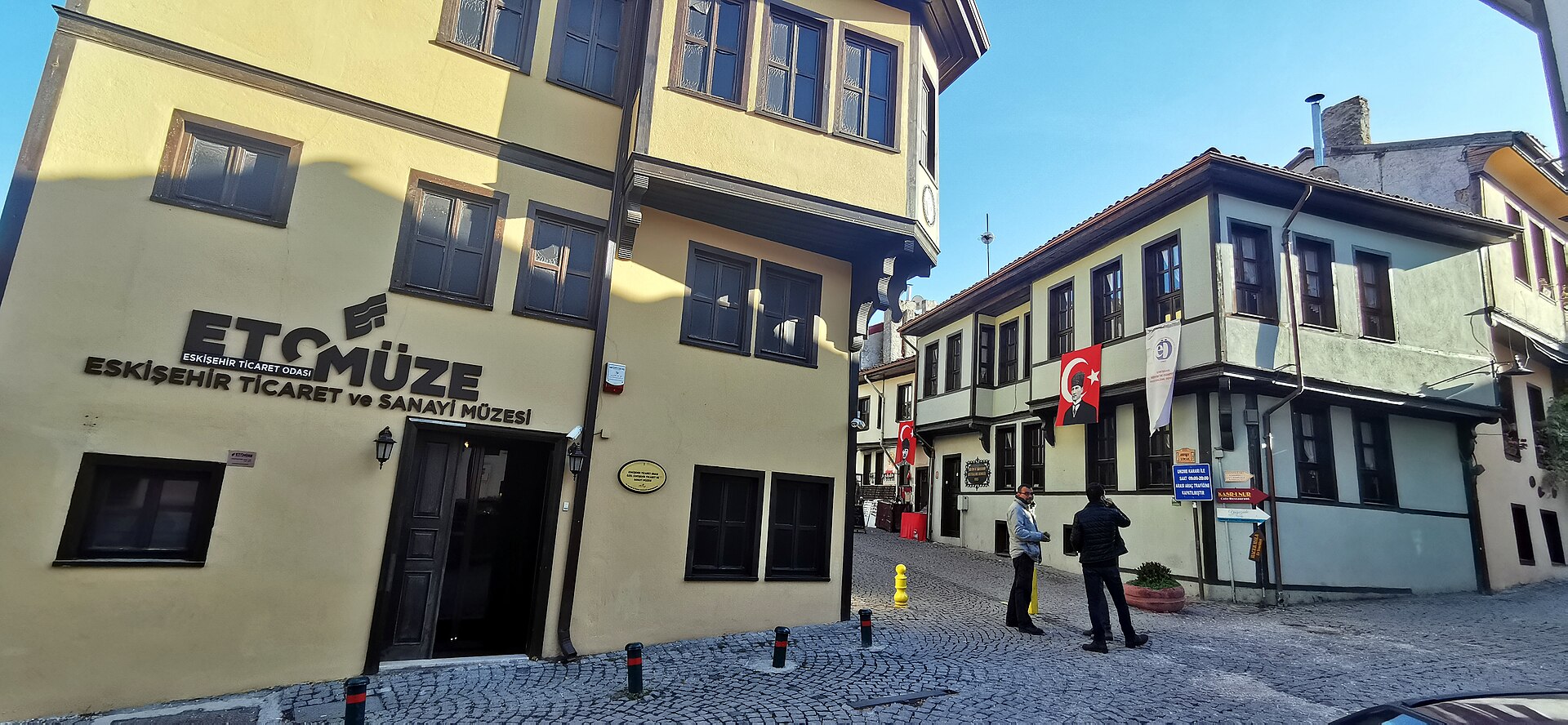
Key facts
- Location: Northwestern Türkiye, 233 km west of Ankara
- From airports: Limited flights at Hasan Polatkan; most visitors use Istanbul or Ankara
- Elevation: About 792 m
- Best season: Spring and autumn
- Typical visit: 1 to 2 days
- Historic role: Phrygian Dorylaion; Seljuk and Ottoman town
- Key sites: Odunpazarı, Kurşunlu complex, meerschaum, Sazova Park
- UNESCO status: None in our sources; Cultural Capital of the Turkish World 2013
- Entrance: See official page
What is Eskişehir and why visit?
Eskişehir is a city and province in northwestern Türkiye, about 233 km west of Ankara and 330 km southeast of Istanbul. It sits on the Porsuk River and is known for Odunpazarı‘s Ottoman houses, meerschaum, museums and a lively student life. It is also the gateway to the Phrygian Valley.
Moreover, high-speed trains connect it to Istanbul and Ankara, so a visit is easy. In contrast to the heavier sightseeing circuits, Eskişehir is relaxed and walkable.
The table summarises Eskişehir at a glance.
| Item | Detail |
|---|---|
| Region | Northwestern Türkiye, mostly Central Anatolia |
| Province area | 13,960 km² |
| Provincial capital | Eskişehir, on the Porsuk River at about 792 m |
| Ancient name | Dorylaion (Dorylaeum) |
| Universities | 3: Anadolu, Osmangazi and Eskişehir Technical |
| Main themes | Odunpazarı, meerschaum, Phrygian sites, museums |
What is the history of Eskişehir?
The Phrygians founded the city around 1000 BC, near their ancient city of Dorylaion. The site is Şarhöyük, where excavations since 1989 show continuous settlement back to the Early Bronze Age. The Seljuks gained the city after Kılıçarslan II defeated Manuel Komnenos in 1176.
The name Eskişehir means Old City in Turkish. In antiquity the city was famous for hot springs and for its location at a crossroads. As a result, trade made Dorylaion wealthy. In 1097 the Battle of Dorylaeum, during the First Crusade, was fought nearby.
In the modern era, railway workshops opened in 1894, and the city grew as an industrial centre. The first Turkish automobile, the Devrim, was built here in 1961. Moreover, Crimean Tatars and Balkan migrants shaped the city’s culture. Eskişehir was named Cultural Capital of the Turkish World in 2013.
Key dates from the sources:
- About 1000 BC: the Phrygians found the city.
- 1097: the Battle of Dorylaeum.
- 1176: Kılıçarslan II defeats Manuel Komnenos; Seljuk rule follows.
- 1525: the Kurşunlu Mosque complex is completed.
- 1894: railway workshops open.
- 1961: the Devrim car is produced.
- 2013: Cultural Capital of the Turkish World.
What should you see in Eskişehir?
Start in Odunpazarı, the old quarter, then walk to the Porsuk River and Adalar strip. Add the Meerschaum Museum, Odunpazarı Modern Museum and Sazova Park. For ancient history, visit the archaeology museum and the Phrygian Valley.
The main places named in our sources:
- Odunpazarı: renovated Ottoman houses on cobbled streets.
- Kurşunlu Mosque complex: 1525, now craft workshops and the Meerschaum Museum.
- Odunpazarı Modern Museum: a contemporary art museum in a wooden building.
- ETİ Archaeology Museum: local history from the Stone Ages to the Byzantine era.
- Typewriter and Woodworking museums: small museums near Kurşunlu.
- Sazova Park: a large leisure complex with zoo, aquarium and science centre.
- Kentpark and the Porsuk riverside: parks and promenades.
- Seyyid Battal Gazi complex and Yazılı: Seljuk and Phrygian sites south of the city.
The table lists key sights with their type.
| Site | Type | Notes |
|---|---|---|
| Odunpazarı | Old quarter | Compact, walkable |
| Kurşunlu Mosque complex | Mosque and workshops | Completed 1525 |
| Meerschaum Museum | Museum | Within Kurşunlu complex |
| Odunpazarı Modern Museum | Art museum | Wooden building |
| Sazova Park | Leisure park | About 5 km southwest |
| Karacahisar | Byzantine fortress ruins | About 10 km southwest |
| Yazılı Phrygian site | Rock-cut reliefs | About 70 km south |
How do you get to Eskişehir and get around?
The fastest way is the high-speed train from Istanbul, Ankara or Konya. The city’s own airport has only limited flights, so most visitors fly to Istanbul or Ankara first. Inside the city, trams and walking cover most sights. Check current timetables before booking.
Getting around:
- The railway station is about 3 km northwest of downtown; trams connect it.
- Tram lines connect the bus station, Odunpazarı, the centre and the universities.
- The old town is compact and walkable.
- Fayton horse-drawn carriages operate for fun rides.
The table compares the main routes; times are typical and need checking.
| From | Mode | Typical duration |
|---|---|---|
| Istanbul | High-speed train | About 3 h |
| Istanbul | Bus | About 5 to 6 h |
| Ankara | High-speed train | About 90 min |
| Konya | High-speed train | About 90 min |
| Bursa | Bus | About 2 h 15 min |
| Eskişehir airport | Flights | Limited seasonal flights; check |
When is the best time to visit Eskişehir?
Spring and autumn are mild and suit walking. Summers are hot and dry, and winters are cold and snowy. Therefore pack layers outside summer. Student life is livelier during the academic year.
The seasonal summary below follows the climate sources.
| Season | Weather | Crowds | Notes |
|---|---|---|---|
| Spring | Mild; short storm season | Low | Good for Odunpazarı walks |
| Summer | Hot, dry | Moderate | Riverside parks are pleasant in the evening |
| Autumn | Mild | Low | Comfortable for museums and excursions |
| Winter | Cold, snowy | Low | Museums and cafes suit indoor days |
How long should you stay in Eskişehir?
One day covers Odunpazarı and the river. Two days add the museums and Sazova Park. Three days let you visit the Phrygian Valley.
The plans below are suggestions.
| Plan | Itinerary | Best for |
|---|---|---|
| Half day | Odunpazarı, Kurşunlu complex, Porsuk riverside | Train stopover |
| 1 day | Old town, two museums, Sazova Park | First visit |
| 2 to 3 days | City plus Seyitgazi, Yazılı and the Phrygian Valley | History and countryside |
What practical tips help in Eskişehir?
Eskişehir is relaxed and student-friendly, but dress modestly in mosques. Confirm museum hours and use official pages for tickets. Young residents often speak English, which helps with directions.
Practical points:
- Dress: cover shoulders and knees in mosques.
- Tickets: see the official museum pages for current fees.
- Accessibility: cobbled streets in Odunpazarı can be uneven.
- Safety: use trams and licensed taxis at night.
- Photography: ask before photographing people.
- Etiquette: remove shoes in mosques; men and women use separate hamam sections.
Where should you stay and eat in Eskişehir?
Stay around Köprübaşı and the Porsuk riverside for restaurants and nightlife, or in Odunpazarı for historic atmosphere. Hamamyolu is a pedestrian street with cafes. Eat Anatolian staples and try local sweets.
Neighbourhoods to know:
- Odunpazarı: the old town.
- Köprübaşı and Adalar: the riverside centre.
- Hamamyolu: a pedestrian street.
- Hoşnudiye: the modern district around the station.
Which places are near Eskişehir for day trips?
The Phrygian Valley and Seyitgazi lie south of the city. Bursa, Kütahya and Ankara are neighbouring provinces and easy to reach. Afyonkarahisar and Konya lie further south.
Nearby places:
- Seyitgazi: the Seyyid Battal Gazi complex, 40 km south.
- Yazılı: Phrygian rock-cut reliefs, about 70 km south.
- Bursa: Ottoman capital, about 2 h 15 min by bus.
- Ankara: the capital, about 90 min by train.
- Konya: about 90 min by high-speed train.
Plan this with TurkGT
TurkGT is an Istanbul-based travel company. We offer guided tours, private transfers, guides and interpreters, and we can arrange an Eskişehir day or overnight from Istanbul by train or car. Message us on WhatsApp and we will confirm the options.
Frequently asked questions
Where is Eskişehir?
It is in northwestern Türkiye, about 233 km west of Ankara and 330 km southeast of Istanbul.
What is Eskişehir known for?
It is known for Odunpazarı, meerschaum, museums and its university life.
How do I get to Eskişehir from Istanbul?
High-speed trains take about 3 hours. Buses take about 5 to 6 hours. Check current timetables.
What is meerschaum?
It is a soft white stone used for pipes, called lületaşı in Turkish, mined mainly in Eskişehir Province.
What was Dorylaion?
It was the Phrygian city near modern Eskişehir, famous for hot springs and trade.
Is Eskişehir good for a day trip?
Yes. The old town and museums fit a day, and high-speed trains make it easy.
What is the Phrygian Valley?
An unofficial name for the rocky countryside south of the city with rock-cut tombs and reliefs.
How many days do I need in Eskişehir?
One day covers the city. Add one or two days for the Phrygian sites.
Related on TurkGT
- Places and guides in Eskişehir:
- Odunpazarı
Sources
- Wikipedia: Eskişehir Province
- Türkiye Kültür Portalı: Eskişehir
- GoTürkiye: Eskişehir
- Wikipedia: Eskişehir
- Wikivoyage: Eskişehir
Last reviewed: 2026-11-18. Opening hours, ticket prices and other changeable details are not listed because they change; check the official source before you travel.