
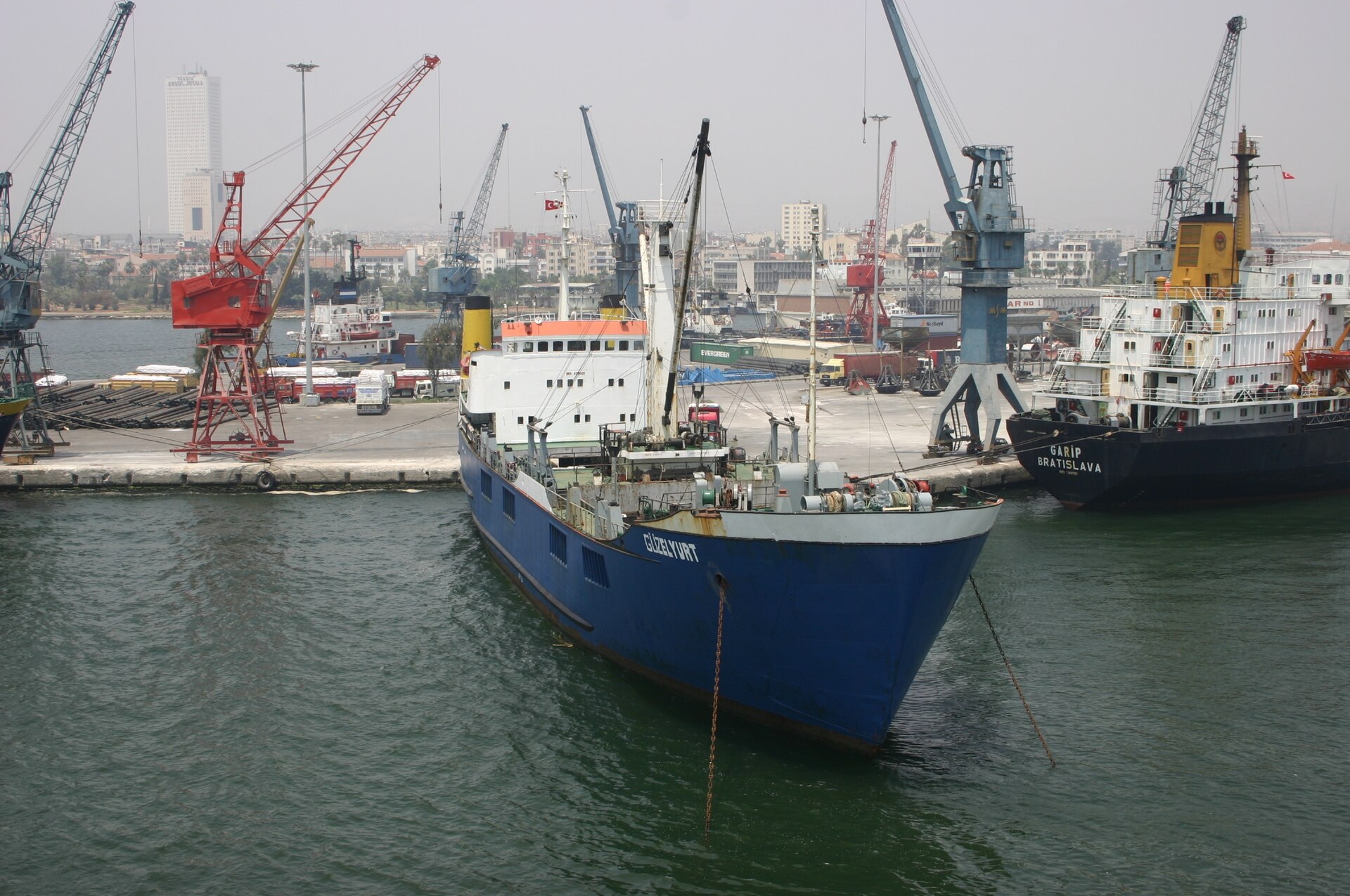
Mersin is a province on Türkiye’s Mediterranean coast between Antalya and Adana, named after its port city. It has 321 km of coastline, ancient Cilician cities such as Tarsus and Soli-Pompeiopolis, and Taurus mountains behind the coast. Çukurova Airport is about 50 km from the city.
Key facts
- Location: Mediterranean coast between Antalya and Adana, in the Çukurova region
- Main cities: Mersin (about 1.1 million in 2025, Wikivoyage); Tarsus is the next largest
- Airport: Çukurova Airport (COV), about 50 km east of Mersin (Wikivoyage)
- From Istanbul: Direct bus about 14 hours (Wikivoyage); flights to Çukurova; check current timetable
- Best season: Spring and autumn; summers are very hot, mountain towns are cooler
- Typical visit time: 1 day in the city; 3 days with Tarsus, Silifke and the coast
- UNESCO status: No inscribed World Heritage Site in the province
- Coastline: 321 km, much of it sandy beach; 87% of the land is mountain (Wikipedia)
- Name: Renamed Mersin on 28 June 2002 (formerly İçel)
- Entrance fees: See the official page of each site; fees change
What is Mersin and why visit it?
Mersin is a Mediterranean province between Antalya and Adana. Visitors come for ancient Cilician sites, the Tarsus pilgrimage heritage, coastal castles and cool mountain towns. The city itself is a working port with a waterfront park, and it is a convenient stop on a coastal route.
The province covers 16,010 km2 and has thirteen districts, from Anamur in the west to Tarsus in the east. Mountains make up 87% of the land, so the coastal strip is narrow. However, the coast has 321 km of shoreline, much of it sandy beach, and the Tarsus plain is fertile farmland.
In contrast to Antalya, Wikipedia notes that Mersin does not receive huge tourist volumes. Wikivoyage adds that the city has not much of a beach and no Western tourist scene. As a result, travellers who value history and local life over resorts often prefer it.
Reasons to include Mersin in a route.
- Tarsus, birthplace of Paul the Apostle.
- Soli-Pompeiopolis and Yümüktepe, ancient sites near the city.
- Castles such as Kızkalesi, Mamure and Namrun along the coast.
- Silifke with the church of Aya Tekla.
- Taurus mountain towns as a summer retreat.
What is the history of Mersin?
In antiquity this coast was part of Cilicia. Trade between Syria, Mesopotamia and central Anatolia passed through the Cilician Gates. Tarsus was the capital and Mersin its seaport. The modern city grew with cotton exports after the American Civil War, and the province took its present name in 2002.
Yümüktepe, excavated from the 1930s, shows 23 layers of occupation from the Neolithic in 6300 BC to about 200 AD. The Culture Portal says the bottom layer of the mound is Neolithic. Strabo divided Cilicia into Rugged and Flat Cilicia. Later the Seljuks captured the area from the Byzantines, the Crusaders followed, and the Ottomans held it until 1922.
Moreover, the province name changed several times. Until 1933 the western part was a separate province, İçel, centred on Silifke. The merged province took the name İçel and was renamed Mersin on 28 June 2002. The name itself comes from Myrsine, the myrtle.
The table lists the main points in order.
| Period | Event |
|---|---|
| From 6300 BC | Occupation of Yümüktepe begins in the Neolithic |
| Antiquity | Cilicia; Tarsus as capital and Mersin as seaport |
| Middle Ages | Seljuks, Crusaders and Ottomans hold the coast in turn |
| 1861-1865 | Cotton boom after the American Civil War |
| 1933 | Mersin and İçel merged under the name İçel |
| 2002 | Province renamed Mersin on 28 June |
What are the main places to see in Mersin?
Main sights in the city are Atatürk Park, the Atatürk House Museum, St Anthony Catholic Church, the Grand Mosque and Yümüktepe. Nearby are Soli-Pompeiopolis, Tarsus and Kızkalesi. Silifke and Anamur lie further along the coast. Check official pages for opening arrangements.
Atatürk Park runs 1.2 km along the waterfront. St Anthony Church was built in 1855 for Maronite and Syrian Christians, and the Atatürk House Museum is a villa of 1897. Soli-Pompeiopolis lies 11 km west and has about 40 re-erected columns. In addition, Tarsus has the house and well of St Paul as Christian pilgrimage sites.
Highlights from the city to the coast.
- Atatürk Park: a waterfront promenade.
- Yümüktepe: a mound with 23 layers of occupation.
- Soli-Pompeiopolis: a Roman colonnade near the sea.
- Tarsus: St Paul sites and historic Tarsus houses.
- Kızkalesi and Narlıkuyu: coastal castle and nearby chasms.
- Elaiussa Sebaste: an ancient city 55 km from Mersin.
- Anemurium: Roman ruins next to Anamur.
- Yerköprü Waterfall and Alahan Monastery in the hills.
This at-a-glance table groups the sights.
| Sight | Type | Where | Note |
|---|---|---|---|
| Atatürk Park | Promenade | Mersin city | 1.2 km along the coast |
| Yümüktepe | Archaeological mound | Toroslar, Mersin | Check the official page for access |
| Soli-Pompeiopolis | Roman ruins | 11 km west | About 40 columns re-erected |
| Tarsus | Historic city | East of Mersin | St Paul pilgrimage sites |
| Kızkalesi / Narlıkuyu | Castle and chasms | About 60 km west (Narlıkuyu) | Coastal day trip |
| Silifke | Ancient Seleucia | West on the coast | Church of Aya Tekla |
| Anemurium | Roman ruins | Next to Anamur | Further west on the coast |
How do you get to Mersin and get around?
Most visitors fly to Çukurova Airport, about 50 km east, or arrive by bus. Wikivoyage lists three direct buses a day from Istanbul, taking 14 hours, and four from Ankara taking four hours. Check the current timetable for every route.
The bus station is 8 km northwest of the centre, and a dolmuş runs downtown. Trains from Adana were reported suspended during tunnel work at Tarsus. Moreover, ferries sail from Kyrenia in Northern Cyprus, with fast boats in summer taking 80 minutes. Dolmuşes and taxis serve the sprawling city, so a car or transfer suits the coast.
The table compares the main options.
| Option | Typical duration or distance | Notes |
|---|---|---|
| Flight to Çukurova Airport | About 50 km east of Mersin | Frequent flights from Istanbul reported; check timetable |
| Bus from Istanbul | 14 hours (Wikivoyage) | Three direct buses a day reported |
| Bus from Ankara | 4 hours (Wikivoyage) | Four a day reported |
| Bus from Gaziantep | 4 hr 30 min via Osmaniye and Adana | Two a day reported |
| Train from Adana | Check current timetable | Reported suspended during Tarsus tunnel works |
| Ferry from Kyrenia | 80 min fast boat in summer | Car ferry runs year-round; check schedule |
When is the best time to visit Mersin?
Spring and autumn are the best seasons. The climate is Mediterranean, very hot and rainless in summer, and mild and wet in winter. Therefore avoid midday sightseeing in July and August, or head to the hills. Check the weather forecast shortly before you travel, and confirm site closures with official pages.
Wikipedia notes that it never snows on the coast, only in the mountains, and that heavy winter rain can cause flooding. In summer the hills are a popular retreat from the coastal heat and humidity.
This table summarises the seasons.
| Season | Weather | Crowds | Notes |
|---|---|---|---|
| Spring | Mild | Moderate | Good for ruins and coast |
| Summer | Very hot, humid, no rain | Domestic holidaymakers | Use mountains and early mornings |
| Autumn | Warm to mild | Low | Comfortable for Tarsus and Silifke |
| Winter | Mild and wet | Low | Heavy rain possible; snow only in the mountains |
How long should you stay in Mersin?
Allow one day for Mersin city and a day each for Tarsus and the western coast. A half day covers the waterfront and Yümüktepe. Three days let you reach Silifke, Narlıkuyu and Kızkalesi without rushing. Your own pace, interests and transport choices also change the time you need, so treat these plans as a starting point.
Suggested plans.
| Plan | What it covers |
|---|---|
| Half day | Atatürk Park, Yümüktepe and Soli-Pompeiopolis |
| 1 day | City sights plus Tarsus |
| 2-3 days | City, Tarsus, Narlıkuyu, Kızkalesi, Silifke and a mountain stop |
What practical tips help when visiting Mersin?
Plan around the heat, carry water and dress modestly at mosques and churches. Use the official museum page for fees and hours. We list no prices here. These habits apply across Türkiye, and they make the visit smoother for you and respectful for local people.
Moreover, the city is spread out, so use a dolmuş or taxi. Ask before photographing people. Mobile coverage is 4G from all Turkish carriers, according to Wikivoyage.
Quick checklist.
- Check official pages for hours and fees.
- Carry water and sun protection.
- Use a car or transfer for the western coast.
- Confirm train and ferry schedules before booking.
Where should you stay and eat in Mersin?
Stay near the waterfront around Atatürk Park for sightseeing, or on the coast west of the city for beaches. Wikivoyage notes a string of budget hotels east of the centre. We name no businesses. Neighbourhood choice matters more than any single venue, so pick the area first and the exact place second.
Try tantuni, a minced fried meat and onion wrap, plus künefe and cezerye, a carrot, fig and spice sweet. Wash it down with şalgam, a savoury fermented drink. Eating places are scattered downtown.
What are the nearby places and day trips from Mersin?
Narlıkuyu is 60 km west for Kızkalesi and the Cennet and Cehennem chasms. Silifke lies further west, and Tarsus to the east. Adana, Antalya and Karaman are also within reach on longer routes. These links help you build a longer route, and each destination has its own TurkGT guide you can read next.
Plan this with TurkGT
TurkGT is an Istanbul-based travel company. We offer guided trips, private transfers and guide or interpreter services that can include Mersin and the Cilician coast. Send your dates by WhatsApp, and we confirm the plan with you there. There is no obligation: you can ask questions first, and we only confirm a plan once you agree to it.
Frequently asked questions
Where is Mersin?
Mersin is on Türkiye’s Mediterranean coast between Antalya and Adana, in the Çukurova region.
Why was İçel renamed Mersin?
The merged province was called İçel from 1933 and was renamed Mersin on 28 June 2002, after its largest city.
What is Tarsus known for?
Tarsus is the birthplace of Paul the Apostle, and Wikipedia says Mark Antony and Cleopatra first met there. It has a history of over 6,000 years.
Which airport is closest to Mersin?
Wikivoyage names Çukurova Airport, about 50 km east, as the nearest. It opened in 2024.
Does Mersin have good beaches?
The province has 321 km of coastline, much of it sandy beach. Wikivoyage says the city itself has not much of a beach, and Soli, 12 km west, is the closest.
What can I see near Mersin city?
Yümüktepe, Soli-Pompeiopolis and Tarsus are close. Kızkalesi and Silifke are further west.
How is the weather in summer?
Summers are very hot and rainless. The hills behind the coast are a popular retreat.
How many days should I spend in Mersin?
One day covers the city. Three days add Tarsus, Silifke and the western coast.
Sources
- Mersin Province (Wikipedia)
- Mersin (Wikivoyage)
- Tarsus (Wikipedia)
- Mersin: general information (Culture Portal)
- Go Türkiye: Mersin
Last reviewed: 2026-11-18. Opening hours, ticket prices and other changeable details are not listed because they change; check the official source before you travel.