
Spend day one at the Mevlana Museum and the Seljuk-era city centre of Konya, and day two at Çatalhöyük, a UNESCO Neolithic site on the Konya plain. The order is an editorial suggestion. Check opening arrangements with the sites.
Key facts
- Mevlana tomb completed: 1274
- Mevlana Museum opened: 2 March 1927
- Çatalhöyük inscribed: 2012 (UNESCO World Heritage)
- Eastern mound: 7,400-6,200 BC
- Mevlevi Sema on UNESCO list: 2008
- Şeb-i Arus: First half of December
Planning notes
Konya was the capital of the Seljuk Turks’ Sultanate of Rum in the late Middle Ages. Today it is the spiritual centre of the Mevlevi Order, famous for its Whirling Dervishes.
The YHT high-speed network serves Konya.
The order of stops is an editorial suggestion. We give no distances between sites because none was verified, and no times, prices or opening hours.
Day 1: Mevlana Museum and central Konya
The Mevlana Museum began as the dervish lodge of the Mevlevi order and houses the mausoleum of Jalal ad-Din Muhammad Rumi. The mausoleum was completed in 1274, and the dome is covered with turquoise tiles.
An Atatürk decree of 6 April 1926 ruled that the mausoleum and lodge be turned into a museum. It opened on 2 March 1927.
The main gate leads into a marble-paved courtyard with 17 dervish cells. The ritual hall (Semahane) was where dervishes performed the sema.
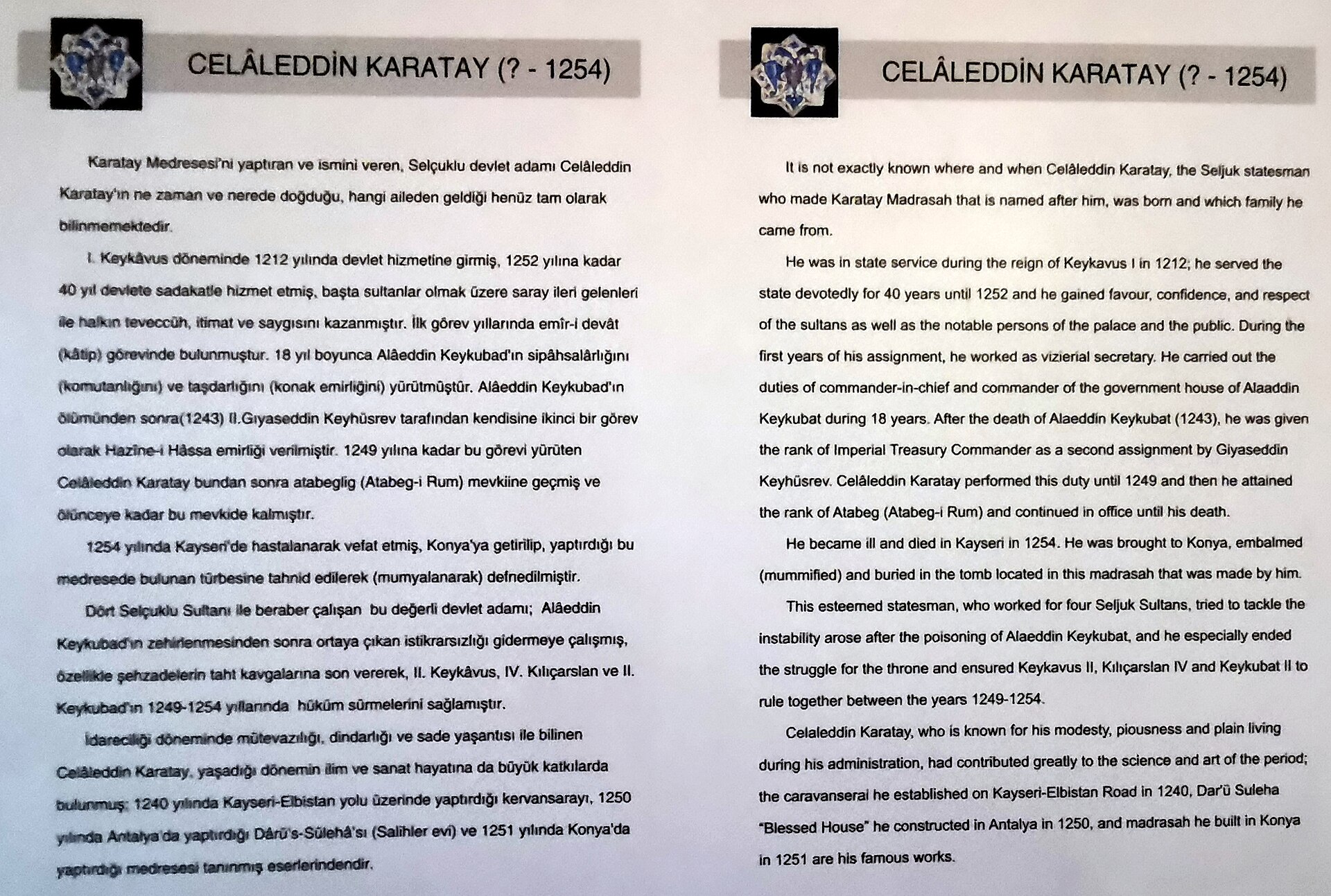
GoTürkiye says visitors of all faiths can visit the museum. Konya‘s listed sights also include the İnce Minaret, the Karatay Madrasa and the Archaeological Museum.
The Sema and Şeb-i Arus
The Mevlevi Sema ceremony was inscribed on the UNESCO intangible heritage list in 2008. The Culture Ministry also counts the dance of the Mevlana whirling dervishes among Turkey’s listed cultural practices.
GoTürkiye says the Şeb-i Arus ceremony is held in the first half of December each year. We found no official source for performance schedules, so none are given.
Day 2: Çatalhöyük
Çatalhöyük is two tells rising up to 20 m above the Konya plain. The eastern tell has 18 Neolithic levels dated 7,400-6,200 BC. The western tell is mainly Chalcolithic, 6,200-5,200 BC.
UNESCO describes back-to-back houses with roof access, and wall paintings and reliefs of the symbolic world. It inscribed the site in 2012.
UNESCO calls it the most significant settlement documenting early settled agricultural life.
Optional addition: Sille
Wikipedia lists Sille, 8 km north-west of the Mevlana Museum, as an antique village with mosques, churches, cave churches and catacombs. Add it only if time allows.
Frequently asked questions
What is the Mevlana Museum?
It is the former dervish lodge of the Mevlevi order and houses the mausoleum of Jalal ad-Din Muhammad Rumi. It has been a museum since 1927.
Why is Çatalhöyük on the UNESCO list?
UNESCO calls it the most significant settlement documenting early settled agricultural life. It was inscribed in 2012.
When is Şeb-i Arus?
GoTürkiye says it is held in the first half of December each year. Check the current programme.
Can I get to Konya by high-speed train?
Yes. The YHT network serves Konya, according to Wikipedia.
Related on TurkGT
- Konya
- Mevlana Museum
- Neolithic Site of Çatalhöyük
- 3 Days in Istanbul: Historic Peninsula, Bosphorus, Beyoğlu
- 3 Days in Antalya: Kaleiçi, Waterfalls, Aspendos and Perge
- 2 Days in Bursa: Ottoman Capital, Cumalıkızık and Uludağ
- 2 Days at Pamukkale and Laodicea: Travertines and Ruins
- 3 Days in Cappadocia: Göreme, Underground Cities, Valleys
Sources
- Wikipedia: Konya
- Türkiye Kültür Portalı
- GoTürkiye: Konya
- UNESCO World Heritage Centre: Çatalhöyük
- Wikipedia: Mevlâna Museum
- Daily Sabah: Hıdırellez joins UNESCO list
Last reviewed: 2026-11-16. Opening hours, ticket prices and other changeable visitor details are not listed here because we have not verified them; check the official source before you travel.