
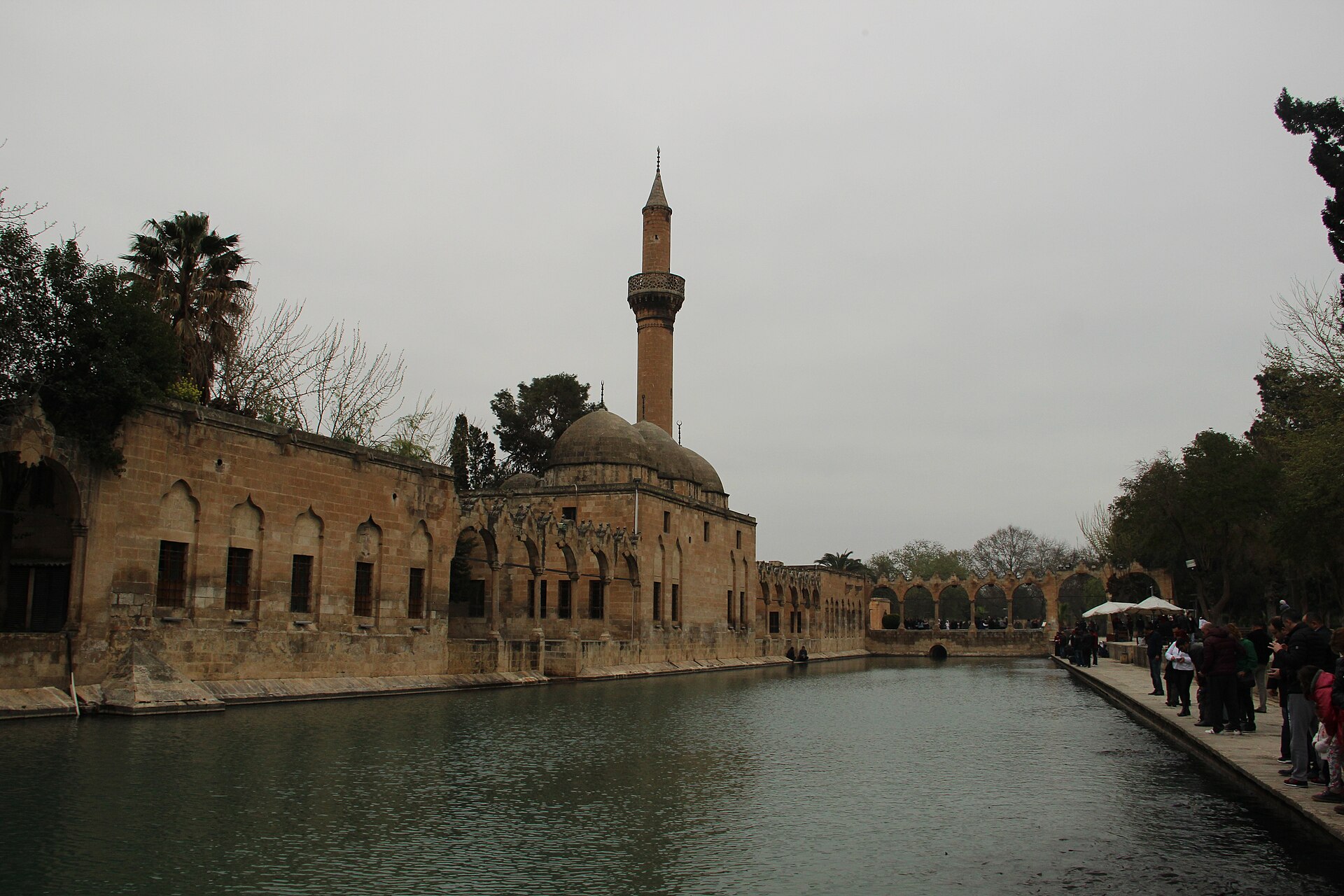
Balıklıgöl, also called the Pool of Abraham or Halil-Ür Rahman Lake, is a sacred pool in the south-west of Şanlıurfa’s old centre. Jewish and Islamic legends say Nimrod threw Abraham into a fire here. Today it is one of the most visited places in the city, with a garden, mosques and a bazaar close by.
Key facts
- Location: South-west of the city centre, Eyyübiye district, Şanlıurfa
- Also called: Pool of Abraham; Halil-Ür Rahman Lake
- Neighbouring pool: Aynzeliha
- From the airport: Şanlıurfa GAP Airport is about 34 km north-east of the city
- From Istanbul: Direct flights from Istanbul to Şanlıurfa exist; check the current timetable
- Earliest evidence: Neolithic statue, roughly 8000 BC
- Best season: Spring and autumn; summers are extremely hot
- Typical visit time: 1-2 hours, or half a day with the museums
- UNESCO status: Not a World Heritage site itself; nearby Göbekli Tepe is
- Entrance: See official page; check current rules and opening times locally
What is Balıklıgöl and why visit?
Balıklıgöl is a sacred pool in Şanlıurfa where carp swim beside historic mosques. It is the spiritual heart of the old city. Visitors come for the Abraham legend, the stone architecture and the calm gardens, and the site is easy to combine with the museums and the bazaar.
Moreover, the pool sits inside a larger complex. The Ministry of Culture and Tourism portal describes an area covering the Aynzeliha and Halilürrahman lakes and several religious and historic buildings. As a result, one walk takes you past water, domes, courtyards and old madrasas.
These are the main reasons visitors give for stopping here:
- The Abraham and Nimrod legend, shared by Jewish and Islamic tradition.
- The sacred carp, which visitors may feed but not catch.
- The Halil-Rahman and Rızvaniye mosques at the water’s edge.
- The nearby Urfa Castle hill and the covered bazaar.
- A short walk to the Haleplibahçe Mosaic Museum.
What is the history and legend of Balıklıgöl?
Balıklıgöl was venerated long before Abraham. A Neolithic statue found there dates to roughly 8000 BC. In the Hellenistic period the city was renamed Edessa, and the pools were linked to the goddess Atargatis. The Abraham story came later, through Jewish and then Islamic tradition.
In the Islamic telling, the flames became water and the burning logs became carp. The nearby Aynzeliha lake is said to have formed from the tears of Zeliha. These stories are traditions, not documented events, so treat them as local belief. In contrast, the Neolithic statue and the Edessa period are historical points.
The timeline below separates documented periods from tradition.
| Period | What the sources say | Type |
|---|---|---|
| c. 8000 BC | A statue from the Pre-Pottery Neolithic is found at the site | Archaeology |
| Hellenistic era | City renamed Edessa; sacred fish pools linked to Atargatis | History |
| 1st century AD | Jewish haggada by Pseudo-Philo outlines the Abraham and Nimrod story | Text |
| Late 4th century AD | Pilgrim Egeria describes fountains full of large fish | Eyewitness account |
| Later centuries | Halil-Rahman and Rızvaniye mosques built to honour Abraham’s deliverance | Architecture |
What should you see at Balıklıgöl?
Start at the two pools, then walk the mosques and courtyards around them. The Halil-Rahman and Rızvaniye mosques and madrasas frame the water. The Makam-ı İbrahim Mosque and cave stand to the south-east and are linked to Abraham’s birth by tradition.
Urfa limestone gives the complex its warm, pale colour. Wikipedia lists this stone as the main building material of the Halil ür-Rahman and Rızvaniye mosques.
Look for these features as you walk:
- The main pool with its carp and the arcaded edges.
- The smaller Aynzeliha pool in front of Urfa Castle.
- Halil-Rahman and Rızvaniye mosques and their madrasas.
- The Makam-ı İbrahim Mosque and cave, south-east of the pools.
- Courtyard houses and lanes of the surrounding old town.
This table summarises the sights at a glance.
| Sight | What it is | Why stop |
|---|---|---|
| Halilürrahman Lake | Main pool of sacred carp | The Abraham legend and the gardens |
| Aynzeliha pool | Smaller pool in front of the castle | Linked to Zeliha’s tears in tradition |
| Halil-Rahman Mosque | Mosque beside the water | Stone architecture and the pool view |
| Rızvaniye Mosque | Mosque with a madrasa | Courtyard and reflections |
| Makam-ı İbrahim cave | Cave tied to Abraham’s birth | Local belief and pilgrim interest |
How do you get to Balıklıgöl and get around?
Fly to Şanlıurfa GAP Airport, about 34 km north-east of the city, then take a taxi or transfer to the old centre. The pool is walkable from many central hotels. Check current timetables for flights and buses, because schedules change by season.
Direct flights connect the airport with Istanbul, Ankara and Izmir. Therefore most visitors from Istanbul fly in rather than travel overland. Inside the old city, walk, because lanes are narrow and the sights are close together.
The table compares the common ways to arrive.
| Route | Typical option | Notes |
|---|---|---|
| Airport to city | Taxi or private transfer, about 34 km | Check current timetable and arrival time |
| Istanbul to Şanlıurfa | Direct flight | Check the current timetable |
| Gaziantep to Urfa | Road via the Gaziantep highway | Bus or car; check current services |
| Within the old town | On foot | Wear comfortable shoes |
| To Harran or Göbekli Tepe | Taxi, car or guided trip | Plan a separate half or full day |
When is the best time to visit?
Spring and autumn are the most comfortable seasons. Urfa has a hot-summer Mediterranean climate, and summer highs often exceed 40 °C. Winters are cool and relatively wet. In summer, visit early morning or evening and rest in the shade at midday.
However, the pool area has trees and shade, so a short summer visit is still possible. Pack water and a hat.
This table sets out each season.
| Season | Weather | Crowds and notes |
|---|---|---|
| Spring | Warm and moderately dry | Comfortable for walking; popular with groups |
| Summer | Extremely hot and dry, often above 40 °C | Go at dawn or after sunset |
| Autumn | Warm and moderately dry | Good light and easier walking |
| Winter | Cool and relatively wet, frost is common | Quieter; bring a rain layer |
How long should you stay?
Allow one to two hours for the pools and mosques. A half day lets you add the Haleplibahçe museums and the bazaar. Two to three days let you add Harran and Göbekli Tepe without rushing. This estimate assumes a normal pace with short breaks, so add time if you travel with children.
Therefore choose your plan by your interests. History lovers need more time than visitors who want a short stop.
Use these plans as a starting point.
| Plan | What to include | Pace |
|---|---|---|
| Half day | Balıklıgöl, mosques, Kapalı Çarşı | Relaxed |
| 1 day | Add Haleplibahçe museums and Urfa Castle hill | Full |
| 2-3 days | Add Göbekli Tepe and Harran day trips | Comfortable |
What practical tips should you know?
Dress modestly, because this is an active place of worship. Cover shoulders and knees, and carry a scarf if needed. Remove shoes before entering mosques. Check the official page for any entrance rules or fees, since we do not quote them here.
Do not catch or eat the carp. Wikipedia notes that visitors are instead encouraged to feed them. Moreover, photograph people only with permission, and avoid photos of worshippers at prayer.
Keep these tips in mind:
- Dress modestly and carry a light scarf.
- Remove shoes at mosque doors.
- Do not catch the fish; feed them only where allowed.
- Carry water in summer and sun protection.
- Wear shoes with grip, because stone surfaces can be slippery near water.
- Check the official page for fees and opening times.
Where should you stay and eat?
Stay near the old centre or around Balıklıgöl for short walks to the sights. Newer districts offer more modern hotels and quieter streets. Wikipedia notes that Urfa’s cuisine is meat-based, with kebab and liver kebab common, and that çiğ köfte is widely believed to have originated here.
In the Kapalı Çarşı you can find spices and herbs, and it stays cool in summer. Therefore pair a bazaar walk with a local meal.
Neighbourhood-level ideas include:
- Old town near Balıklıgöl for walking access.
- Streets around the Kapalı Çarşı for local food stops.
- Modern districts for larger hotels and parking.
What is nearby and what day trips work?
Göbekli Tepe lies about 12 km north-east of the city, and Harran is about 40 km south-east. Within the city, the Haleplibahçe museum complex is close to the pool. You can also continue to Gaziantep or Mardin for a wider southeast route.
As a result, Balıklıgöl works well as the first stop of a Şanlıurfa day.
Useful nearby stops:
- Göbekli Tepe, a UNESCO World Heritage site.
- Harran and its beehive houses.
- Haleplibahçe Mosaic Museum and Şanlıurfa Museum.
- Zeugma Mosaic Museum in Gaziantep.
- Mardin and Zinciriye Madrasa.
Plan this with TurkGT
TurkGT is an Istanbul-based travel company. We offer guided tours, private transfers, licensed guide and interpreter services, and multi-day trips that can include Balıklıgöl and Şanlıurfa. We can combine the pool with Göbekli Tepe and Harran, and arrange an English-speaking guide for the legends and the architecture.
Tell us your dates, group size and interests on WhatsApp. We confirm the route, timing and what is included in writing before you book, and we do not quote prices on this page.
Frequently asked questions
What is Balıklıgöl?
Balıklıgöl is the Pool of Abraham in Şanlıurfa, also called Halil-Ür Rahman Lake. It is known in Jewish and Islamic legends as the place where Nimrod threw Abraham into a fire.
Why are there sacred fish?
Wikipedia says the carp are considered sacred and people may not catch or eat them. In the Islamic telling, the burning logs became carp. Visitors are encouraged to feed them.
How old is the site?
A statue found there dates to the Pre-Pottery Neolithic, roughly 8000 BC. Wikipedia concludes it was venerated long before Abraham’s time.
Is the Abraham story historical?
It is a tradition, not a documented event. The story goes back to a first-century AD Jewish text and later entered Islamic tradition. We record it as local belief.
How far is the airport?
Şanlıurfa GAP Airport is about 34 km north-east of the city. Direct flights serve Istanbul, Ankara and Izmir. Check the current timetable.
When should I visit?
Spring and autumn are the most comfortable. Summer highs often exceed 40 °C, so visit early or late in the day.
What should I wear?
Dress modestly with shoulders and knees covered. Remove shoes at mosque doors. A light scarf is useful.
What is nearby?
Göbekli Tepe is about 12 km north-east of the city, and Harran lies about 40 km south-east. The Haleplibahçe museums and the Kapalı Çarşı are close by.
Related on TurkGT
Sources
- Wikipedia: Balıklıgöl
- Wikipedia: Şanlıurfa
- Balıklıgöl – Kültür Portalı (Ministry of Culture and Tourism)
- GoTürkiye: Şanlıurfa
Last reviewed: 2026-11-18. Opening hours, ticket prices and other changeable details are not listed because they change; check the official source before you travel.