
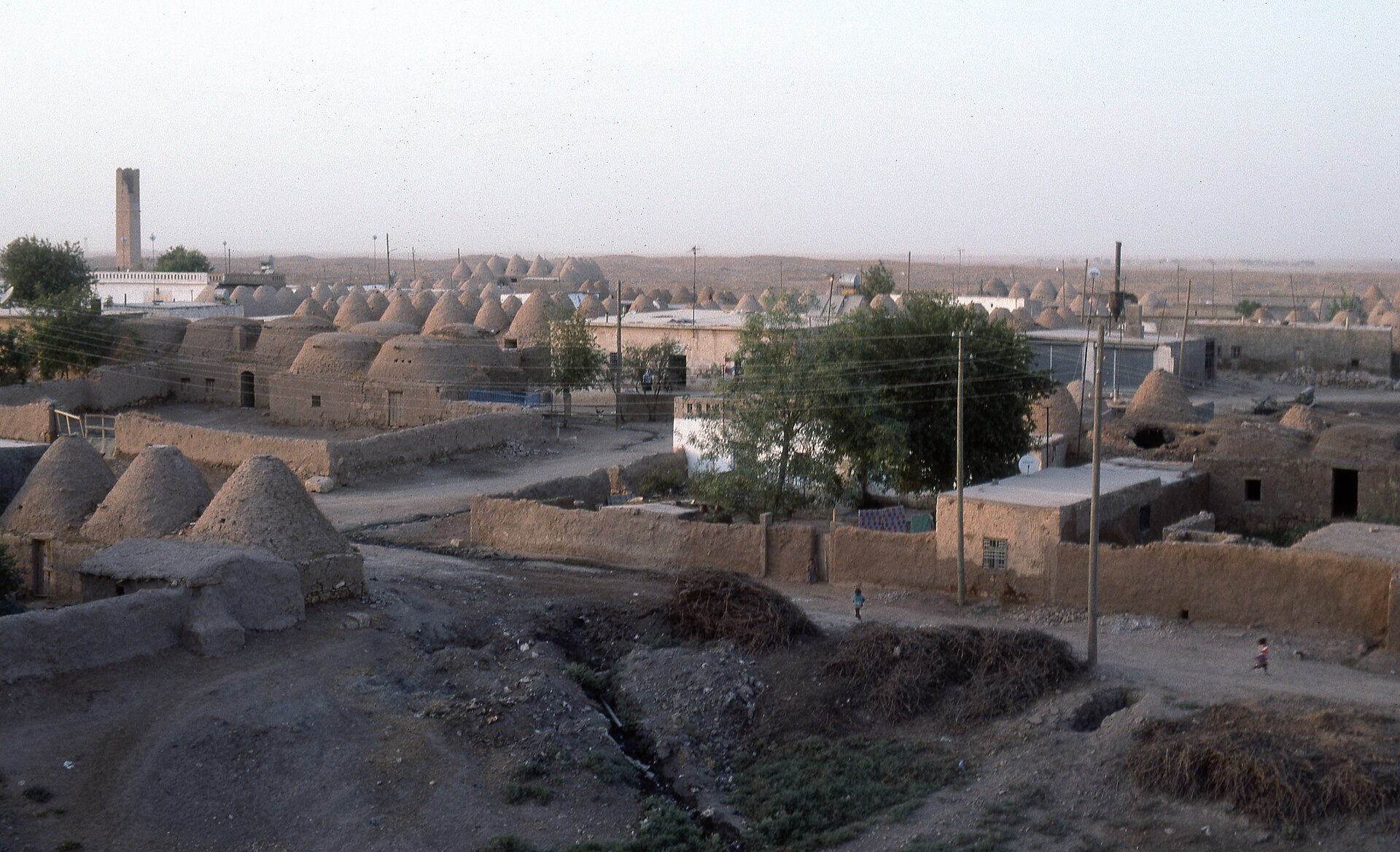
The beehive houses of Harran are conical-domed mud-brick homes, called kümbets, in the old town of Harran, about 40 km south-east of Şanlıurfa. Wikipedia says this building type is not seen elsewhere in Türkiye. Visitors also see the castle and the ruins of the oldest mosque in Anatolia.
Key facts
- Location: Harran district, Şanlıurfa province, near the Syrian border
- Distance: About 40 km south-east of Urfa; about 20 km from the Akçakale crossing
- Airport: Şanlıurfa GAP Airport, about 34 km north-east of Urfa city
- Local name: Kümbet (beehive house)
- Heritage status: Registered as a site in 1979; on the UNESCO Tentative List since 2000 (Kültür Portalı)
- Best season: Spring and autumn; summers are extremely hot
- Typical visit time: Half a day from Urfa
- Other sights: Harran Castle, Grand Mosque ruins, Harran Culture House
- Entrance: See official page; check current rules and opening times locally
What are the Harran beehive houses and why visit?
The Harran beehive houses are domed homes made of mud-brick and stone, found in Harran in Şanlıurfa province. They are the main reason people visit the town today. Wikipedia describes the type as not seen elsewhere in Türkiye and rare in the rest of the world.
Moreover, Harran is more than its houses. The town has the ruins of a castle and a Grand Mosque, and its name appears in cuneiform records. As a result, one short trip combines architecture, archaeology and a taste of rural life on the Harran plain.
Visitors usually come for these reasons:
- The conical domes and the cool interiors of the kümbets.
- The ruins of the Grand Mosque and its tall minaret.
- The brick castle and the ancient city walls.
- The Harran Culture House, a museum and restaurant in a beehive complex.
- The wide plain landscape, close to the Syrian border.
What is the history of Harran?
Harran is an ancient crossroads city. Wikipedia says it was founded between the 25th and 20th centuries BC, possibly as a merchant colony of Sumerian traders from Ur. It later became a centre of the moon-god Sin and, briefly, the last capital of the Neo-Assyrian Empire.
In 53 BC the Battle of Carrhae took place here. In the Islamic period the city hosted the first Islamic university and the oldest mosque in Türkiye. However, the Mongols largely destroyed it in 1271, so the present houses are much younger than the town.
The table below places Harran’s main periods in order.
| Period | Event | Why it matters |
|---|---|---|
| 25th-20th century BC | City founded, possibly by Sumerian traders from Ur | Early merchant crossroads |
| 612-609 BC | Final capital of the Neo-Assyrian Empire | Political peak |
| 53 BC | Battle of Carrhae near the city | Roman military history |
| 744-750 | Capital of the Umayyad Caliphate under Marwan II; Grand Mosque built | Islamic-era importance |
| 1271 | Largely destroyed and left abandoned after the Mongol conquest | Long decline |
| 1987 | Regained district status | Modern revival |
How were the beehive houses built, and how old are they?
The houses are built of stone, brick and mud, with thick walls and a domed roof. Wikipedia says most present houses date to the early twentieth century, and none have stood longer than since the mid-19th century. Assyrian reliefs from the 7th century BC show similar shapes.
The form is old, but the buildings are recent. Therefore, do not describe any single house as thousands of years old. Builders learned the technique from excavated ancient buildings and reused bricks from the ruins.
Key design points explain why the houses stay cooler than concrete:
- Walls are usually 50-60 cm thick; domes are about 20-30 cm thick.
- An opening at the top of the dome lets air circulate.
- Local materials suit a region where wood is rare.
- The plaster is weak, so the houses need repair every 1-3 years.
The table sums up the building facts.
| Feature | Detail | Source note |
|---|---|---|
| Material | Stone, brick and mud | Wikipedia: Harran |
| Wall thickness | 50-60 cm | Wikipedia: Harran |
| Dome thickness | 20-30 cm | Wikipedia: Harran |
| Count in 2002 | 2,760 houses; now a few dozen in the old town | Wikipedia: Harran |
| Conservation | Under conservation since 1979 | Wikipedia: Harran |
What should you see in Harran?
See the beehive houses first, then the Grand Mosque ruins and the castle. The Harran Culture House gives a close look inside a beehive complex. Most sights sit within a short walk of each other, so a half day is enough.
The Grand Mosque was built by Marwan II in 744-750, and its minaret stands 33.3 m tall. The castle is a large brick fortress of unknown date. In addition, the old burial mound lies at the centre of the archaeological site.
This table lists the highlights at a glance.
| Sight | What it is | Note |
|---|---|---|
| Beehive houses | Domed kümbet homes in the old town | Mostly used as stores and barns today |
| Harran Culture House | Museum and restaurant in a beehive complex | Rebuilt for tourism in 1999 |
| Grand Mosque ruins | Oldest mosque built in Anatolia | Minaret 33.3 m tall |
| Harran Castle | Large brick fortress | Partly excavated and reconstructed |
| Burial mound | Used from the 3rd century BC to the 13th century AD | Inscriptions from several cultures |
How do you get to Harran and get around?
Most visitors go from Şanlıurfa, about 40 km north-west of Harran. Take a taxi, a private car or a guided trip. Public services change, so check the current timetable. Within the old town, you can walk between the houses and ruins.
Fly to Şanlıurfa GAP Airport, about 34 km north-east of Urfa, with direct flights from Istanbul. Moreover, Harran lies about 20 km from the Akçakale border crossing, so carry your passport for checkpoints and follow local advice.
The table compares the main options.
| Route | Option | Notes |
|---|---|---|
| Istanbul to Şanlıurfa | Direct flight | Check the current timetable |
| Airport to Urfa city | Taxi or transfer, about 34 km | Arrange in advance if possible |
| Urfa to Harran | Private car, taxi or tour, about 40 km | Check current services |
| In Harran | On foot | Shade is limited; bring water |
When is the best time to visit?
Spring and autumn are the best seasons for walking. The Harran plain is hot in summer, and Urfa’s summer highs often exceed 40 °C. Winters are cool and wetter. Visit early in the morning in summer. Plan around heat, rain and daylight, and check the forecast a few days before you travel.
However, the thick-walled houses stay comparatively cool inside, so a short summer stop is possible. Carry water and a hat.
This table shows each season.
| Season | Weather | Notes |
|---|---|---|
| Spring | Warm, moderately dry | Comfortable for the open ruins |
| Summer | Extremely hot and dry | Go early; limited shade |
| Autumn | Warm, moderately dry | Good for photography |
| Winter | Cool and relatively wet | Mud on tracks; bring layers |
How long should you stay?
Plan half a day from Urfa. Allow about two to three hours in Harran itself. Add Göbekli Tepe and Balıklıgöl for a full Şanlıurfa day, or stay two to three days for a slower route. This estimate assumes a normal pace with short breaks, so add time if you travel with children.
Therefore, combine Harran with another stop rather than driving out for one hour only.
Use these sample plans.
| Plan | Include | Pace |
|---|---|---|
| Half day | Harran houses, castle, Culture House | Relaxed |
| 1 day | Add Göbekli Tepe or Balıklıgöl | Full |
| 2-3 days | Add Şanlıurfa museums, bazaar and Mardin | Comfortable |
What practical tips should you know?
Dress modestly and cover your head from the sun. Ask before photographing residents. The houses are conserved monuments, so do not climb on domes or remove bricks. Check the official page for fees and opening times, because we do not quote them here.
Moreover, take water, sun protection and cash for small purchases. The ruins are open-air, so footwear with grip is useful on uneven ground.
Keep these tips in mind:
- Dress modestly and carry a sun hat.
- Ask permission before photographing people.
- Do not climb on historic domes or walls.
- Carry water; shade is limited.
- Check the official page for fees and hours.
- Follow local advice near the border area.
Where should you stay and eat?
Most visitors stay in Şanlıurfa, near Balıklıgöl and the old bazaar, because Harran has few accommodation options. For meals, try Urfa’s meat-based cooking, such as kebab and çiğ köfte, which Wikipedia notes is widely believed to originate in Urfa. Choose by walking distance to the main sights, because transfers and parking add time in busy periods.
In Harran, the Culture House runs as a museum and restaurant. Check current opening details locally.
Neighbourhood-level ideas include:
- Old town around Balıklıgöl for walking access.
- Streets near the Kapalı Çarşı for local food.
- Modern districts for larger hotels and parking.
What is nearby and what day trips work?
Göbekli Tepe, Balıklıgöl and the Haleplibahçe museums are the closest companions to Harran. All lie around Şanlıurfa. Gaziantep and Mardin make longer extensions on a southeast route. Check road conditions and opening times for each stop, and allow extra time between sites.
As a result, Harran fits well into a two-day Urfa programme.
Useful nearby stops:
- Balıklıgöl, the Pool of Abraham in Şanlıurfa.
- Göbekli Tepe, a UNESCO World Heritage site.
- Zeugma Mosaic Museum in Gaziantep.
- Mardin and Zinciriye Madrasa.
Plan this with TurkGT
TurkGT is an Istanbul-based travel company. We offer guided tours, private transfers, licensed guide and interpreter services, and multi-day trips that can include Harran. We can combine Harran with Göbekli Tepe and Balıklıgöl, and arrange a guide who explains the architecture and the ruins.
Tell us your dates, group size and interests on WhatsApp. We confirm the route, timing and what is included in writing before you book, and we do not quote prices on this page.
Frequently asked questions
What are the Harran beehive houses?
They are domed houses, called kümbets, in the old town of Harran in Şanlıurfa province. Wikipedia says this type is not seen elsewhere in Türkiye.
How old are the houses?
Most present houses date to the early twentieth century, and none have stood longer than since the mid-19th century. The shape echoes Assyrian reliefs from the 7th century BC.
Can you stay in a beehive house?
Wikipedia says the houses are mainly used as stores and barns today and are under conservation. Check locally for any accommodation.
How far is Harran from Şanlıurfa?
Harran is about 40 km south-east of Urfa. Check current transport options before you travel.
Why are the houses cool inside?
They have thick walls, domed roofs and an opening at the top of the dome that lets air circulate.
What else is there to see?
The Grand Mosque ruins with a 33.3 m minaret, a brick castle, a burial mound and the Harran Culture House.
When is the best time to go?
Spring and autumn. Summers are extremely hot and often exceed 40 °C.
Is Harran a UNESCO site?
The Ministry of Culture and Tourism portal says the beehive houses have been on the UNESCO Tentative List since 2000. This is a candidate status, not an inscription.
Related on TurkGT
Sources
- Wikipedia: Harran
- Wikipedia: Şanlıurfa
- Harran Kümbet Evleri – Kültür Portalı (Ministry of Culture and Tourism)
- Türkiye Kültür Portalı: Şanlıurfa (general information)
Last reviewed: 2026-11-18. Opening hours, ticket prices and other changeable details are not listed because they change; check the official source before you travel.