
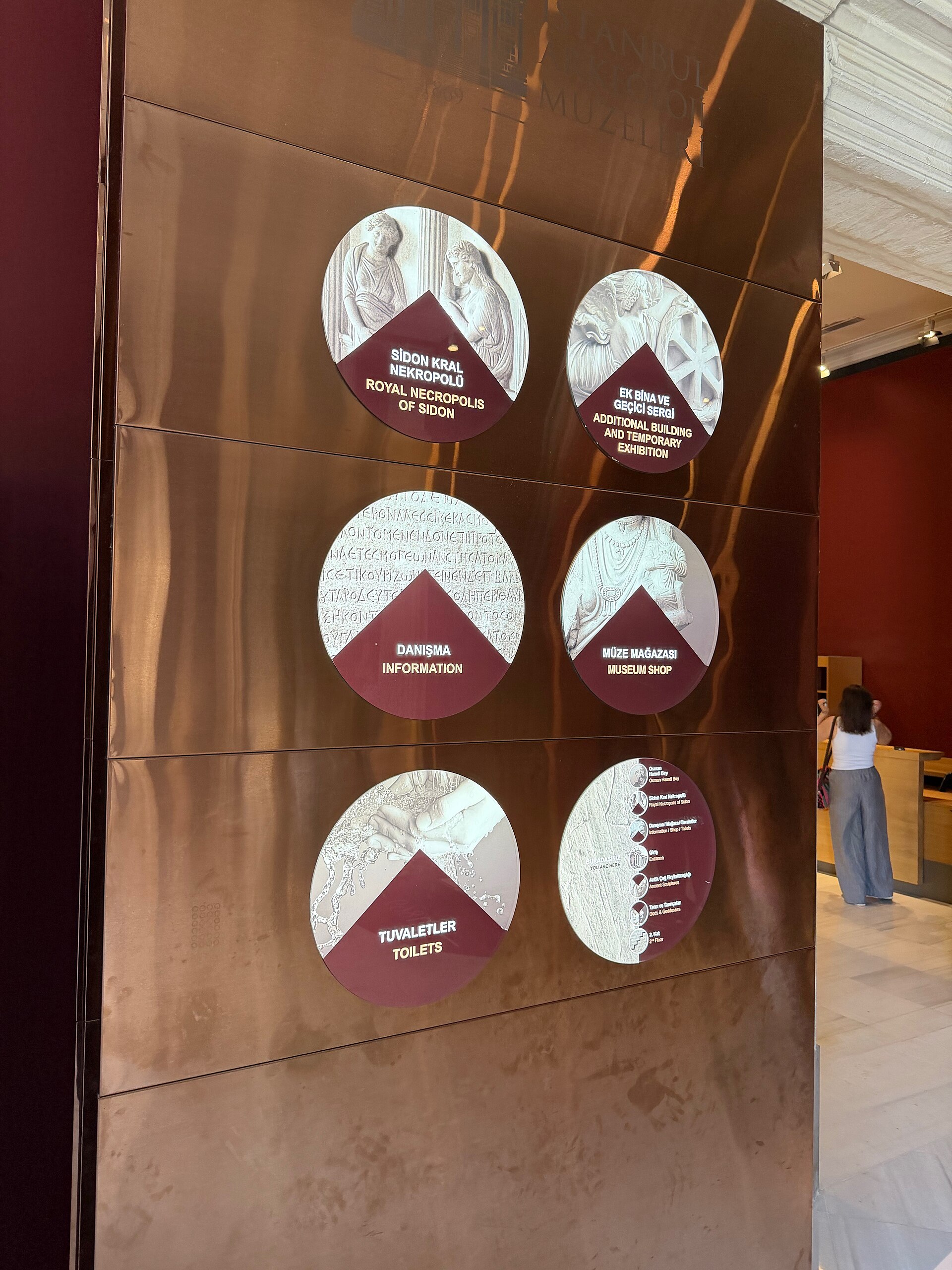
The Istanbul Archaeological Museums are three museums in Istanbul’s Sultanahmet area, beside Gülhane Park and Topkapı Palace. The Ministry of Culture and Tourism calls them Turkey’s first museum. Visitors come for the Alexander Sarcophagus, the Sidon royal necropolis finds and the Tiled Pavilion, and they usually combine the visit with Topkapı Palace.
Key facts
- Location: Alemdar Caddesi, Osman Hamdi Bey Yokuşu, Gülhane, Istanbul (Ministry address)
- Distance from airports and cities: In the historic peninsula; Istanbul Airport and Sabiha Gökçen are both well outside the old city, so see our airport guides
- Units: Archaeological Museum; Museum of Ancient Oriental Art; Tiled Pavilion Museum
- Founded: 1869, as the Imperial Museum (Müze-i Humayun)
- Main building opened: 1891, architect Alexander Vallaury
- Oldest building: The Tiled Pavilion, dated 1472
- Collection size: Nearly one million artefacts (Ministry); over one million (Wikipedia)
- Best season: Year-round indoor visit; see the season table below
- Typical visit time: Half a day for the museums; one day with Topkapı Palace
- UNESCO status: Lies in the historic peninsula covered by the Historic Areas of Istanbul property; not a separate listing
- Entrance: See official page (muze.gov.tr)
What are the Istanbul Archaeological Museums and why visit?
The Istanbul Archaeological Museums are a group of three museums beside Gülhane Park and Topkapı Palace. The Ministry of Culture and Tourism describes them as Turkey’s first museum. You visit them to see ancient sarcophagi, Hittite and Egyptian treaty tablets, Babylonian tile work and Turkish ceramics in one walkable complex.
The Ministry lists three units. The Archaeological Museum occupies the main neoclassical building. The Museum of Ancient Oriental Art stands in a building constructed in 1883 as the Academy of Fine Arts. The Tiled Pavilion Museum, dated to 1472, exhibits Turkish tiles and ceramics. Moreover, the complex sits a short walk from Hagia Sophia, the Basilica Cistern and Sultanahmet Square, so it fits naturally into an Old City day.
How did the museums begin? A short history
The museum began in 1869 as the Imperial Museum, called Müze-i Humayun. Antiquities collecting in the Ottoman Empire is older, but 1869 marks the start of institutional museology, according to the Ministry. Osman Hamdi Bey became director in 1881 and shaped the museum for decades.
Objects were first gathered in Hagia Irene Church, which forms the basis of the later collection. When that space became too small, the Tiled Pavilion was converted into a museum. Osman Hamdi Bey’s excavations at Sidon in 1887-1888 then brought the royal necropolis finds to Istanbul, including the Alexander Sarcophagus. The neoclassical main building by Alexander Vallaury opened in 1891. Its pediment reads Asar-ı Atika Museum and carries the tughra of Sultan Abdülhamid II.
The key dates are easy to scan in this list.
- 1472: the Tiled Pavilion is dated to this year, making it the oldest building in the complex.
- 1869: the Imperial Museum is founded.
- 1881: Osman Hamdi Bey is appointed director.
- 1883: the building now housing the Museum of Ancient Oriental Art is constructed.
- 1887-1888: excavations at Sidon bring the royal necropolis finds to Istanbul.
- 1891: the main museum building opens to visitors.
What should you see? Highlights at a glance
The best-known objects are the Alexander Sarcophagus and the Sarcophagus of the Mourning Women, both from the Sidon necropolis. The museums also hold tablets of the Egyptian-Hittite peace treaty and glazed tiles from the Ishtar Gate of Babylon. Therefore a short list of targets helps you plan the visit.
Wikipedia notes that the Alexander Sarcophagus was once believed to be prepared for Alexander the Great. The Kadesh treaty tablets are described there as the oldest known peace treaty in the world. In contrast, the Tiled Pavilion offers a quieter visit focused on Turkish tile and ceramic art.
These are the items most visitors ask about.
- Alexander Sarcophagus, from the Sidon royal necropolis.
- Sarcophagus of the Mourning Women.
- Tablets of the Egyptian-Hittite peace treaty.
- Glazed tile images from the Ishtar Gate of Babylon.
- Turkish tiles and ceramics in the Tiled Pavilion.
- The neoclassical facade of the main building itself.
The table below summarises the three units and what each offers.
| Unit | Building | What to expect |
|---|---|---|
| Archaeological Museum | Neoclassical main building by Vallaury, opened 1891 | Sarcophagi, sculpture and treaty tablets |
| Museum of Ancient Oriental Art | Built 1883 as the Academy of Fine Arts | Ancient Near Eastern objects |
| Tiled Pavilion Museum | Dated 1472, oldest building in the complex | Turkish tiles and ceramics |
How do you get there and get around?
The museums lie in the historic peninsula by Gülhane Park, a few minutes’ walk from Sultanahmet. The simplest approach is the T1 tram toward Sultanahmet or Gülhane, or a short walk from Hagia Sophia. Check the current timetable and route map before you travel, because services change.
From the airports, allow extra time. Istanbul Airport and Sabiha Gökçen are both far from the old city, so see our airport guides for options. Inside Sultanahmet you will mostly walk, because the main sights sit close together.
The table compares the usual ways to reach the museums.
| Option | How it works | Notes |
|---|---|---|
| Tram (T1) | Ride to Sultanahmet or Gülhane and walk down toward the park | Check the current timetable; busy at midday |
| On foot | From Hagia Sophia or Topkapı Palace via Gülhane Park | Gentle slopes; paths may be crowded |
| Taxi or private transfer | Door-to-door to the Gülhane entrance | Useful with luggage or reduced mobility; traffic varies |
| Ferry plus tram | Ferry to Eminönü, then tram or walk | Scenic but slower; check current ferry schedules |
When is the best time to visit?
Because the exhibits are indoors, you can visit in any season. Weekdays and early mornings are generally quieter than weekends. Summer brings crowds and heat outside, while winter gives shorter queues but cooler walks between units. Check the official page for opening days and closures before you go.
As a result, the season mainly affects your walk and the queues rather than the exhibits themselves.
This table outlines each season for a visit.
| Season | Weather | Crowds | Notes |
|---|---|---|---|
| Spring (Apr-May) | Mild, some showers | Moderate to high | Gülhane Park is green; good for a stroll |
| Summer (Jun-Aug) | Hot and humid | High | Go early; interiors give relief from the sun |
| Autumn (Sep-Nov) | Mild, cooling | Moderate | Comfortable for a full Old City day |
| Winter (Dec-Mar) | Cool, rain possible | Lower | Shorter queues; dress warmly for the walk |
How long should you stay?
Allow two to three hours for the main Archaeological Museum if you read labels, and more if you want all three units. A half day covers the museums alone. A full day lets you add Topkapı Palace next door. These are planning suggestions rather than official figures.
In contrast, a hurried visit of the highlights alone can be done in about ninety minutes, but you will skip much of the collection.
The table suggests three simple plans.
| Plan | What it covers | Fits who |
|---|---|---|
| Half day | Main building highlights plus the Tiled Pavilion | Travellers with limited time |
| 1 day | All three units, Gülhane Park and Topkapı Palace | First-time visitors, history fans |
| 2-3 days | Museums, Hagia Sophia, Basilica Cistern and the Grand Bazaar at an unhurried pace | Slow travellers and families |
What are the practical tips?
Check the official Ministry page for current tickets, opening days and Museum Pass rules, because these change. Wear comfortable shoes for stone floors and slopes. Photography rules vary by gallery, so follow posted signs. Bring a light layer, because indoor temperatures can feel cool.
Accessibility facilities and gallery closures for works should be confirmed on the official page, since we have not verified them.
These tips cover the points visitors ask about most.
- Tickets and fees: see the official page muze.gov.tr.
- Dress: no strict code, but modest, comfortable clothing suits the district.
- Accessibility: confirm current facilities with the museum.
- Photography: obey signs; flash is usually discouraged around ancient objects.
- Safety: watch for pickpockets in crowded Sultanahmet streets.
- Etiquette: queue patiently and keep voices low in the galleries.
Where should you stay and eat?
Sultanahmet is the most convenient base, because the museums, Hagia Sophia and the Blue Mosque lie within walking distance. Eminönü and Sirkeci offer easy tram and ferry links. For evenings, Karaköy and Beyoğlu across the Golden Horn have more varied dining.
Near the museums you will find simple cafés and traditional Turkish restaurants. Try Turkish breakfast, kebabs and baklava, and compare menus before you sit down.
What is nearby, and which day trips fit?
Topkapı Palace, Hagia Sophia, the Blue Mosque and the Basilica Cistern are all within a short walk. Gülhane Park links the museums to the palace gate. Therefore most visitors treat this as part of a wider Sultanahmet route.
For a longer outing, consider the Bosphorus by ferry or a day on the Asian side.
These nearby places pair well with the museums.
- Topkapı Palace, next to the museum complex.
- Hagia Sophia and the Blue Mosque in Sultanahmet Square.
- Basilica Cistern, a short walk away.
- Grand Bazaar, reachable on foot or by tram.
- Gülhane Park, the green link between the sights.
Plan this with TurkGT
TurkGT is an Istanbul-based travel company. We offer guided tours of the Old City, private transfers and licensed guides, including our Topkapi Palace and Harem Guided Visit, the Sultanahmet Walking Tour and an Istanbul Museum Pass Sightseeing Plan. Interpreter support can also be arranged. Details, availability and arrangements are confirmed by WhatsApp before you book, and we do not quote prices on this page.
Frequently asked questions
What are the Istanbul Archaeological Museums?
A group of three museums near Gülhane Park and Topkapı Palace: the Archaeological Museum, the Museum of Ancient Oriental Art and the Tiled Pavilion Museum.
Is it the first museum in Turkey?
The Ministry of Culture and Tourism describes it as Turkey’s first museum, founded in 1869 as the Imperial Museum.
Where is the Alexander Sarcophagus?
In the Istanbul Archaeological Museums. It came from Osman Hamdi Bey’s excavations at Sidon in 1887-1888.
Where is the museum located?
In the Gülhane area of the historic peninsula, near Topkapı Palace, at Alemdar Caddesi, Osman Hamdi Bey Yokuşu according to the Ministry.
Which building is the oldest?
The Tiled Pavilion, dated 1472, is the oldest building in the complex.
How many objects does the museum hold?
The Ministry says nearly one million artefacts, while Wikipedia says over one million. Sources differ.
How long does a visit take?
Plan a half day for the museums, or a full day if you add Topkapı Palace.
Where do I check tickets and opening hours?
On the official Ministry museums portal, muze.gov.tr. We do not quote fees or hours here.
Related on TurkGT
Sources
- Istanbul Archaeological Museums – Ministry of Culture and Tourism museums portal
- Istanbul Archaeology Museums – Wikipedia
Last reviewed: 2026-11-18. Opening hours, ticket prices and other changeable details are not listed because they change; check the official source before you travel.