
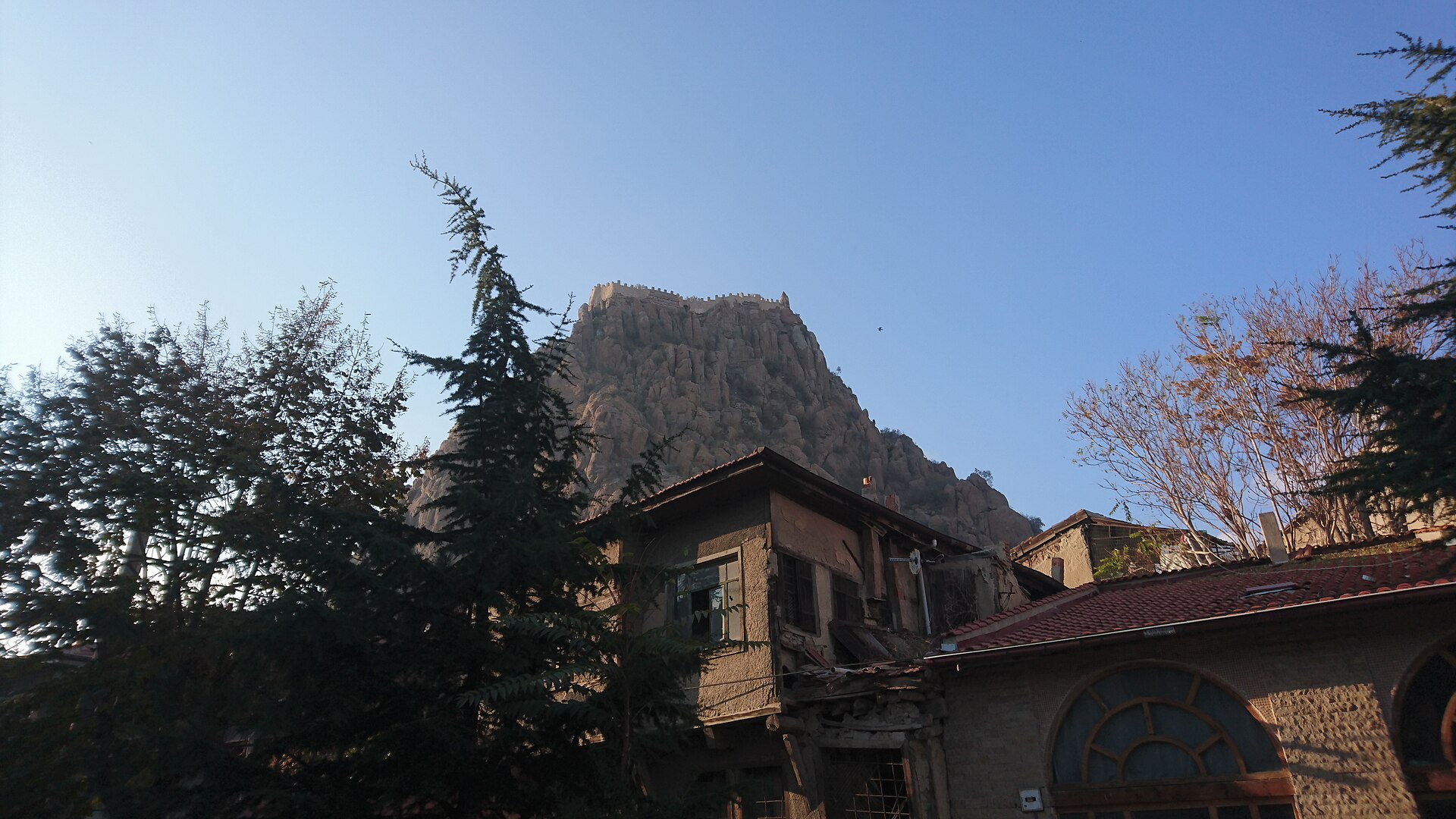
Afyonkarahisar, often shortened to Afyon, is a province in western Türkiye named for a black fortress on a volcanic crag and for the opium poppy once grown there. It is known for its castle, a medieval wooden mosque, hot springs and kaymak. It suits a short stop between Ankara, İzmir and Konya.
Key facts
- Location: Inner-West Anatolia, western Türkiye
- Travel from Ankara: About 3 h 30 min by bus (Wikivoyage); check timetable
- Area: 14,016 km²
- Castle hill: 226 m climb, about 800 steps
- Best season: Spring and autumn; winter for spas
- Typical visit time: Half day to 2 days
- UNESCO status: Afyon Ulu Camii is part of the Wooden Hypostyle Mosques of Medieval Anatolia (see our page)
- Entrance: Varies by site; see official page
What is Afyonkarahisar and why visit?
Afyonkarahisar, often called Afyon, is a province in western Türkiye in the Inner-West Anatolia part of the Aegean Region. It is known for a castle on a black volcanic crag, hot springs, a medieval wooden mosque, local kaymak and sucuk, and its role as a rail junction. It suits short stops between Ankara, İzmir and Konya.
Moreover, the province preserves Phrygian and Roman heritage, and in 1922 it saw key events of the Turkish War of Independence.
What is the history of Afyonkarahisar?
The castle hill has been fortified for a very long time. The Hittites called it Hapanuva, the Romans and Byzantines Akronion, and the Seljuks and Ottomans Karahisar, meaning black fortress. The region was called Phrygia Salutaris, healthy Phrygia, in the Roman and Byzantine periods.
Wikipedia says the Phrygians and Lydians occupied the area in the Iron Age, and that Turks could not firmly control the city until around 1210. The poppy has been grown here since the 2nd century BCE, and the name Afyon comes from the word for opium. Parliament changed the official name from Afyon to Afyonkarahisar in 2004. In 1922 the city was recovered on 27 August, a key moment in the Turkish counter-attack.
Names of the city through history:
- Hapanuva: the Hittite name.
- Akronion: used by Romans and Byzantines.
- Karahisar: black fortress, in Seljuk and Ottoman times.
- Afyon: from opium (afion), the poppy grown since the 2nd century BCE.
- Afyonkarahisar: official name since 2004.
What are the main things to see in Afyonkarahisar?
The main sight is the castle on its 226 m rock, reached by about 800 steps. In addition, the Great Mosque, with an array of wooden pillars, is one of five wooden mosques in Anatolia listed as World Heritage. Thermal areas such as Gazlıgöl, rock tombs at Ayazin and Lake Eber complete the picture.
Wikivoyage notes that its fortress perches on a black volcanic crag, an obvious defensive position.
Highlights in and around the city:
- Afyonkarahisar Castle: three rings of walls, panoramic views.
- Afyon Ulu Camii: wooden hypostyle mosque, World Heritage (see our page).
- Thermal springs and hotel spas around Gazlıgöl.
- Rock tombs in the village of Ayazin.
- Lake Eber.
- Kaymak, sucuk and lokum in the city centre.
The table shows the sights at a glance.
| Sight | Type | Notes |
|---|---|---|
| Castle | Fortress | About 800 steps; 226 m climb |
| Great Mosque | Mosque | Wooden pillars, 8 by 5 array |
| Gazlıgöl | Geothermal area | About 25 km north of town (Wikivoyage) |
| Ayazin | Village | Rock tombs |
| Lake Eber | Lake | Lake in the province |
| Victory Museum | Museum | Linked to 1922 headquarters |
How do you get to Afyonkarahisar and get around?
Afyon is an important rail junction between İzmir, Konya, Ankara and Istanbul. Wikivoyage says buses from Ankara run every 30 minutes and take about three and a half hours. The bus station is 3 km northwest of the centre. Check the current timetable for trains and buses, because high-speed rail lines were still under construction in the source.
Practical transport notes:
- By bus from Ankara: about 3 h 30 min.
- By rail: Konya Mavi Tren runs daily from Konya; check current timetable.
- In the city: walk or take local transport; the castle needs a climb.
- Thermal areas: taxi or car.
Options compared:
| Route | Mode | Typical duration |
|---|---|---|
| Ankara to Afyon | Bus | About 3 h 30 min |
| Konya to Afyon | Mavi Tren | Evening service; check timetable |
| Afyon centre to bus station | Local transport | About 3 km |
| Afyon to Gazlıgöl | Road | About 25 km north |
When is the best time to visit Afyonkarahisar?
Spring and autumn are comfortable for the castle climb and walking. Wikipedia says winters are cool and summers are warm and dry with cool nights, and rainfall mostly occurs in spring and autumn. Thermal spas work year-round, so winter suits wellness trips.
Seasonal conditions appear below.
| Season | Weather | Crowds | Notes |
|---|---|---|---|
| Spring | Mild, some rain | Low | Good for the castle |
| Summer | Warm, dry, cool nights | Moderate | Bring sun protection |
| Autumn | Cooling, some rain | Low | Comfortable sightseeing |
| Winter | Cool | Low | Best for thermal spas |
How long should you stay in Afyonkarahisar?
A half day covers the castle and mosque. One day adds food and a museum. Two days allow a spa stay or the Phrygian countryside.
Sample plans follow.
| Time | Plan | Coverage |
|---|---|---|
| Half day | Castle and Ulu Camii | Climb, mosque, kaymak |
| 1 day | City plus thermal | Add a spa or Gazlıgöl |
| 2-3 days | Province loop | Add Ayazin, Lake Eber and neighbouring Kütahya |
What practical tips help when visiting Afyonkarahisar?
Check official pages for fees and opening hours; we do not quote them. Wikivoyage says tap water is safe to drink, and the city has 4G from all Turkish carriers. Dress modestly for the mosque and wear sturdy shoes for the castle stairs.
Tips:
- Start the castle climb early in summer.
- Remove shoes in mosques.
- Try kaymak with honey and local sucuk.
- Check spa hygiene and rules before booking.
- Wikipedia notes chronic air pollution in the province; plan accordingly.
Where should you stay and eat in Afyonkarahisar?
Stay near the old town for walking access or in thermal hotels with spas. Cheap eating places cluster in the lanes southwest of the Birlik Caddesi roundabout. Wikipedia lists spicy beef sucuk, kaymak with honey and Turkish delight of cream as local specialities.
What are the nearby places and day trips from Afyonkarahisar?
Kütahya lies northwest, Uşak west, Denizli southwest, Eskişehir north and Konya east. Therefore Afyon links the Aegean, Ankara and Konya routes.
Day-trip ideas:
- Kütahya and Aizanoi.
- Uşak.
- Pamukkale and Hierapolis.
- Eskişehir.
- Konya and the Mevlana Museum.
Plan this with TurkGT
TurkGT is an Istanbul-based travel company. We organise guided trips, private transfers, local guides and interpreter support, and we can combine this destination with other stops in the Aegean and Anatolia.
Tell us your dates, group size and interests, and we will suggest a realistic route. Every booking and detail is confirmed with you by WhatsApp before you travel.
Frequently asked questions
Why is it called Afyonkarahisar?
Afyon comes from opium and Karahisar means black fortress, for the castle on its conical hill.
What was it called in Hittite times?
Hapanuva, according to the Culture Portal.
When did the name change to Afyonkarahisar?
Wikipedia says Parliament changed it from Afyon in 2004.
How many steps to the castle?
About 800 steps, a 226 m climb according to Wikivoyage.
What is Afyon famous for eating?
Sucuk, kaymak with honey and cream lokum.
Are there hot springs?
Yes, five main springs with temperatures between 40 and 100 degrees Celsius per Wikipedia.
How do I get there from Ankara?
By bus, about 3 h 30 min; check the current timetable.
Can TurkGT arrange a trip?
Yes, guided trips and private transfers, confirmed by WhatsApp.
Sources
- Wikipedia: Afyonkarahisar Province
- Türkiye Kültür Portalı: Afyonkarahisar
- GoTürkiye: Afyonkarahisar
- Wikipedia: Afyonkarahisar
- Wikivoyage: Afyonkarahisar
Last reviewed: 2026-11-18. Opening hours, ticket prices and other changeable details are not listed because they change; check the official source before you travel.