
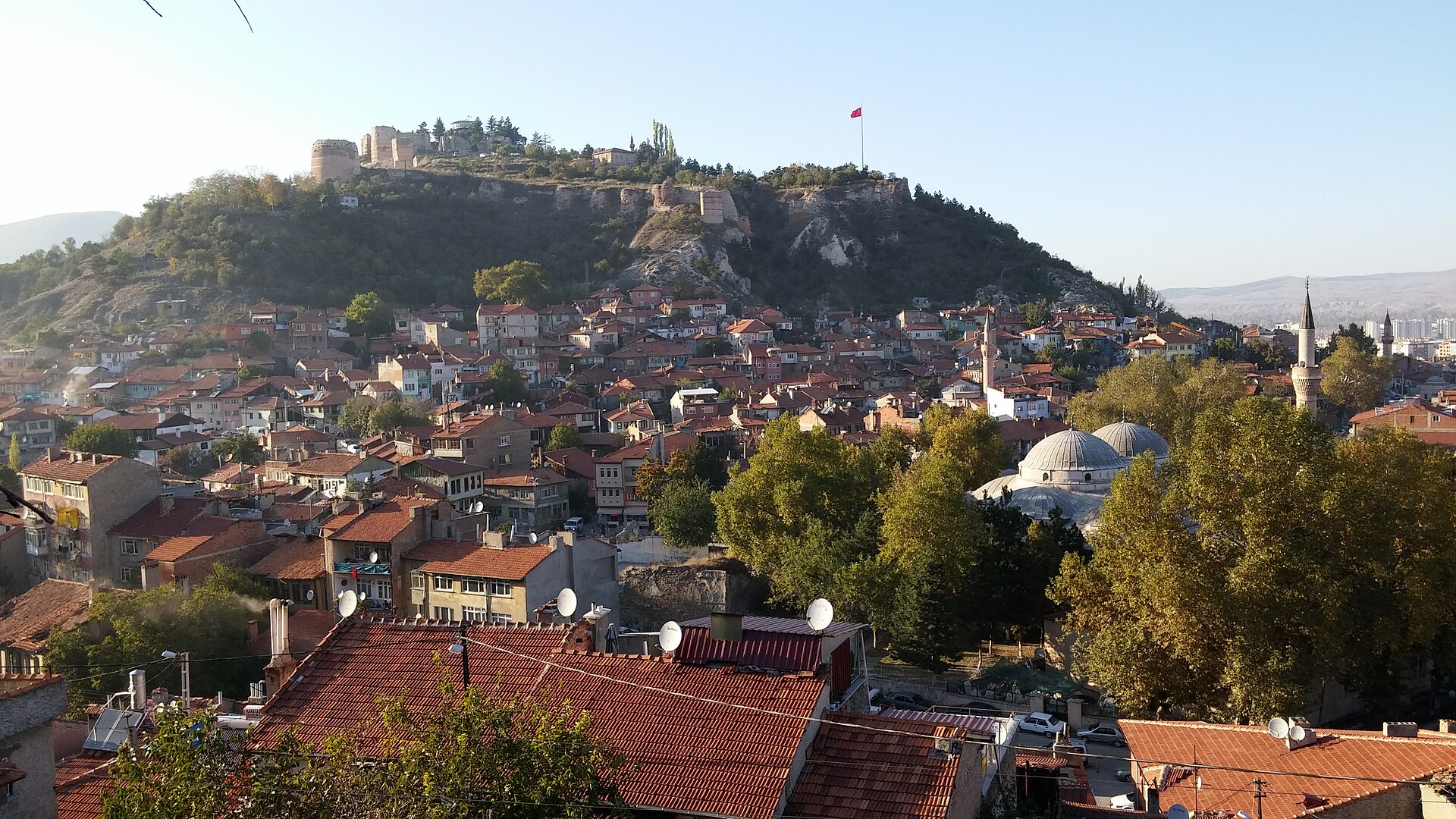
Kütahya is a province in the Aegean region of western Türkiye with about seven thousand years of recorded history. It is known for decorated tiles and ceramics, Ottoman mansions and the ancient city of Aizanoi with its Temple of Zeus. It suits a one-to-two-day stop between Istanbul, Ankara and İzmir.
Key facts
- Location: Aegean region, western Türkiye; valley city between mountains
- Travel from Istanbul: About 6 hours by bus (Wikivoyage); check current timetable
- Area: 11,634 km²
- Ancient name: Kotiaeion (Cotiaeum)
- Best season: Spring and autumn
- Typical visit time: 1 day to 2 days
- UNESCO status: No listed site confirmed in this page’s sources; check UNESCO for Aizanoi
- Entrance: Varies by site; see official page
What is Kütahya and why visit?
Kütahya is a province in the Aegean region of western Türkiye, famous for its decorated tiles and ceramics and for the ancient city of Aizanoi. Its Culture Portal entry traces its history back about seven thousand years. Visitors come for the Temple of Zeus, Ottoman mansions, a compact old quarter and traditional tilework.
Therefore Kütahya fits travellers crossing between Istanbul, Ankara and İzmir. Moreover, it pairs naturally with Eskişehir and Afyonkarahisar.
What is the history of Kütahya?
Kütahya’s history extends back to about 3000 BC. The Phrygians, who came to Anatolia in the late 12th century BCE, are the oldest people recorded as settling here. Ancient sources name the city Kotiaeion and cite it as the birthplace of the fabulist Aesop.
Alexander the Great established dominance in 334 BC, and after his death the area passed to his general Antigonos. Justinian I fortified the town with a double-line of walls and a citadel. In 1078 the Seljuk founder Suleyman ibn Qutalmish captured it. Later the Germiyanids held the city, and it joined the Ottomans, becoming a sanjak capital in 1429. As a result, Kütahya carries Phrygian, Roman, Byzantine, Seljuk, Germiyanid and Ottoman layers.
Principal historical stages:
- About 3000 BC: earliest history dated by Wikipedia.
- Late 12th century BCE: the Phrygians arrive in Anatolia.
- 334 BC: Alexander the Great establishes dominance.
- 1078: Seljuk capture under Suleyman ibn Qutalmish.
- 1429: becomes an Ottoman sanjak capital.
What are the main things to see in Kütahya?
The main sights are Aizanoi with its Temple of Zeus, the old quarter on Germiyan Street, the Great Mosque, the castle and the tile workshops. Wikivoyage calls Germiyan Street the best preserved part of the old town, a cobbled alley lined by restored Ottoman-era mansions.
In addition, Kütahya Museum and the Kossuth house museum show regional arts and history.
Visitors usually plan around these places:
- Aizanoi: Temple of Zeus, theatre and stadium.
- Germiyan Street: restored Ottoman mansions.
- Ulu Camii (Great Mosque) and other historic mosques.
- Clock tower on Zafer Meydanı.
- Kütahya Museum.
- Kossuth house: museum of the Hungarian statesman’s exile.
- Tile (çini) workshops and shops.
The table below gives an at-a-glance summary.
| Sight | Type | Why it matters |
|---|---|---|
| Aizanoi | Ancient city | Temple of Zeus, dedicated under Domitian |
| Germiyan Street | Old quarter | Restored Ottoman mansions |
| Ulu Camii | Mosque | One of several historic mosques |
| Kütahya Castle | Fortification | Byzantine castle and church ruins nearby |
| Kossuth house | Museum | Lajos Kossuth lived here in exile, 1850-1851 |
| Tile ateliers | Craft | Çini, Kütahya’s best-known product |
How do you get to Kütahya and get around?
Kütahya is reached by road, bus and rail. Wikivoyage says buses from Istanbul run every hour or two and take about six hours, and buses from İzmir take around five hours via Turgutlu, Salihli, Kula, Gediz and Çavdarhisar. Zafer Airport is active, and the city centre is compact enough to walk. Check the current timetable for each service.
Practical points:
- From Istanbul: bus about six hours (Wikivoyage).
- From Ankara: bus about 4 hours 15 minutes, or the high-speed train to Eskişehir and then onward.
- Havaş buses connect the airport to Kütahya, Afyon and Uşak.
- In town: walk; sights are central.
- To Aizanoi: car, taxi or guided transfer.
Compare the options below.
| Route | Mode | Typical duration |
|---|---|---|
| Istanbul to Kütahya | Bus | About 6 hours; check current timetable |
| İzmir to Kütahya | Bus | About 5 hours via Salihli and Kula |
| Ankara to Kütahya | Bus or YHT plus transfer | About 4 h 15 min by bus |
| Kütahya to Aizanoi | Road | Near Çavdarhisar village; short drive |
When is the best time to visit Kütahya?
Spring and autumn are the most comfortable. Wikipedia describes chilly, wet, often snowy winters and warm, dry summers, with precipitation mostly in winter and spring. Therefore outdoor sites such as Aizanoi suit late spring through early autumn.
Seasonal conditions are summarised in the table.
| Season | Weather | Crowds | Notes |
|---|---|---|---|
| Spring | Cool to mild, some rain | Low | Good for Aizanoi |
| Summer | Warm and dry | Low to moderate | Carry water |
| Autumn | Cooling | Low | Comfortable sightseeing |
| Winter | Chilly, wet, often snowy | Very low | Check roads |
How long should you stay in Kütahya?
One day covers the old town, tilework and Aizanoi at a steady pace. Two days allow a slower visit with museums and nearby towns.
Sample plans are listed below.
| Time | Plan | Coverage |
|---|---|---|
| Half day | Old town | Germiyan Street, Ulu Camii, clock tower |
| 1 day | City plus Aizanoi | Add Temple of Zeus and theatre-stadium |
| 2-3 days | Regional loop | Add Eskişehir, Afyonkarahisar or Uşak |
What practical tips help when visiting Kütahya?
Check official pages for museum hours and tickets, since we do not quote fees. Wikivoyage warns that goods touted as antique may well be fake, so ask for a workshop where tiles are made. Dress modestly in mosques.
Tips before you go:
- Confirm Aizanoi opening times on the official page.
- Buy tiles from workshops that explain their process.
- Wear sturdy shoes on uneven stone at Aizanoi.
- Wikivoyage notes smog can be trapped in the valley; check air conditions if sensitive.
- Ask permission before photographing craftspeople.
Where should you stay and eat in Kütahya?
Stay in the city centre, close to Germiyan Street and the main squares; Wikivoyage lists central, clean hotels. Expect regional dishes and bakery foods in the centre’s lokantas.
What are the nearby places and day trips from Kütahya?
Eskişehir lies east, Afyonkarahisar southeast, Uşak south, Bursa northwest and Bilecik north. Therefore Kütahya is a good midpoint on an inner-west circuit.
Day-trip ideas:
- Aizanoi near Çavdarhisar.
- Afyonkarahisar castle and thermal springs.
- Uşak and Ulubey Canyon.
- Eskişehir and Odunpazarı.
- Gordion area for Phrygian heritage.
Plan this with TurkGT
TurkGT is an Istanbul-based travel company. We organise guided trips, private transfers, local guides and interpreter support, and we can combine this destination with other stops in the Aegean and Anatolia.
Tell us your dates, group size and interests, and we will suggest a realistic route. Every booking and detail is confirmed with you by WhatsApp before you travel.
Frequently asked questions
How old is Kütahya’s history?
The Culture Portal says the province has a history reaching back seven thousand years.
What was Kütahya called in antiquity?
Wikipedia records ancient names as Kotiaeon, Cotiaeum and Koti.
Who were the first settlers?
The Phrygians are the oldest group recorded as settling in the province’s lands.
What is Kütahya famous for?
Tiles and pottery; Wikipedia calls it a renowned centre of the Ottoman ceramic industry.
What is Aizanoi?
A Roman-era city near Çavdarhisar whose Temple of Zeus was its main sanctuary.
How do I get there from Istanbul?
Buses take about six hours per Wikivoyage; check the current timetable.
When should I go?
Spring and autumn; winters are chilly and often snowy.
Can TurkGT arrange a trip?
Yes, guided trips and private transfers, confirmed by WhatsApp.
Sources
- Wikipedia: Kütahya Province
- Türkiye Kültür Portalı: Kütahya
- GoTürkiye: Kütahya
- Wikipedia: Kütahya
- Wikipedia: Aizanoi
- Wikivoyage: Kütahya
Last reviewed: 2026-11-18. Opening hours, ticket prices and other changeable details are not listed because they change; check the official source before you travel.