
The Antique Pool, popularly called Cleopatra’s Pool, is a warm thermal pool inside the Hierapolis site where bathers swim among fallen ancient columns. A separate swimming fee applies beyond the site ticket. Check the current amount and opening hours on the official page or Google Maps before you go.
Key facts
- Name: Antique Pool, popularly Cleopatra’s Pool
- Setting: Inside the Hierapolis archaeological site
- Water: Warm thermal spring water
- Feature: Submerged ancient column fragments
- Entry: Separate swimming fee beyond the site ticket
- Current price: Check the official page or Google Maps
- Best for: Families, swimmers, history lovers
- Nearby: Travertine terraces, theatre, museum
What is the Cleopatra Pool at Pamukkale?
The Cleopatra Pool, officially the Antique Pool, is a thermal swimming pool inside the Hierapolis ruins at Pamukkale. Warm mineral water fills it, and fragments of ancient columns lie under the surface. The popular name comes from tradition, not from a proven link to the queen.
Visitors swim among the columns after walking the ruins. Therefore the pool works as a rest stop in a long day, not only as a separate attraction.
How did we choose what to include?
We chose these places from official designations (UNESCO World Heritage listing), location inside the Denizli province, and details taken from official and reference sources. We do not accept payment for placement. Opening hours, ticket rules and conditions change, so check the place’s page or Google Maps before you go, and read current visitor feedback there.
This guide focuses on the pool and the sights around it that make the visit worth planning. We use only the facts from our registered sources, and we do not quote prices because they change.
What do you see and where does it fit?
The pool is part of the Hierapolis site, so a visit combines swimming with the ruins and the terraces. The cards below describe the pool and four nearby places that shape a good day. Moreover, they help you decide whether to swim first or walk first.
In general, swim after the main walk, when your legs are tired and the water feels most welcome.
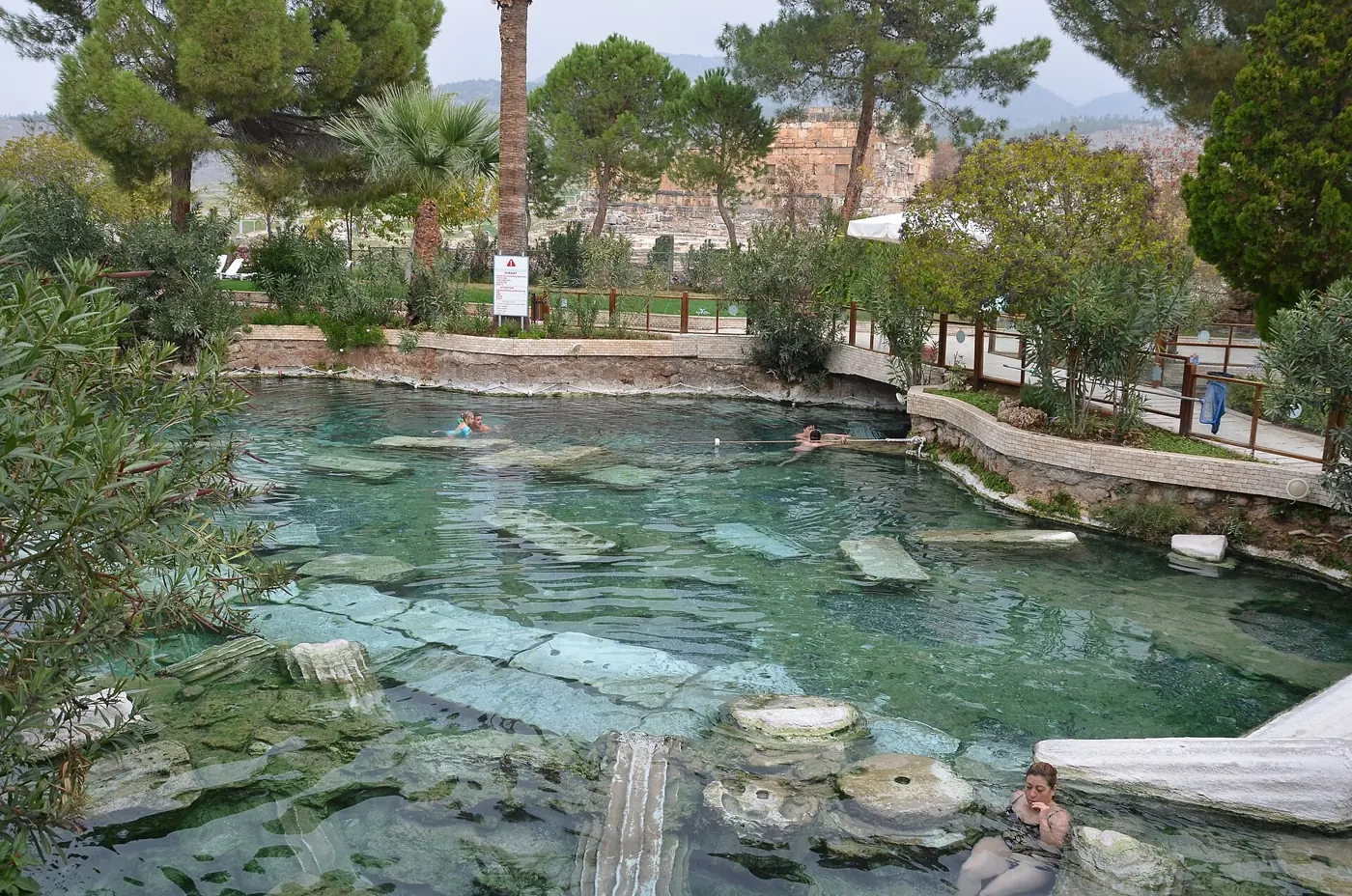
1 Antik Havuz
This thermal pool is inside the Hierapolis ruins, and bathers swim among fallen ancient columns. A separate swimming fee applies beyond the site ticket. It is the main subject of this guide.
- Setting: Inside Hierapolis archaeological site
- Entry: Separate swimming fee beyond site ticket
Show map
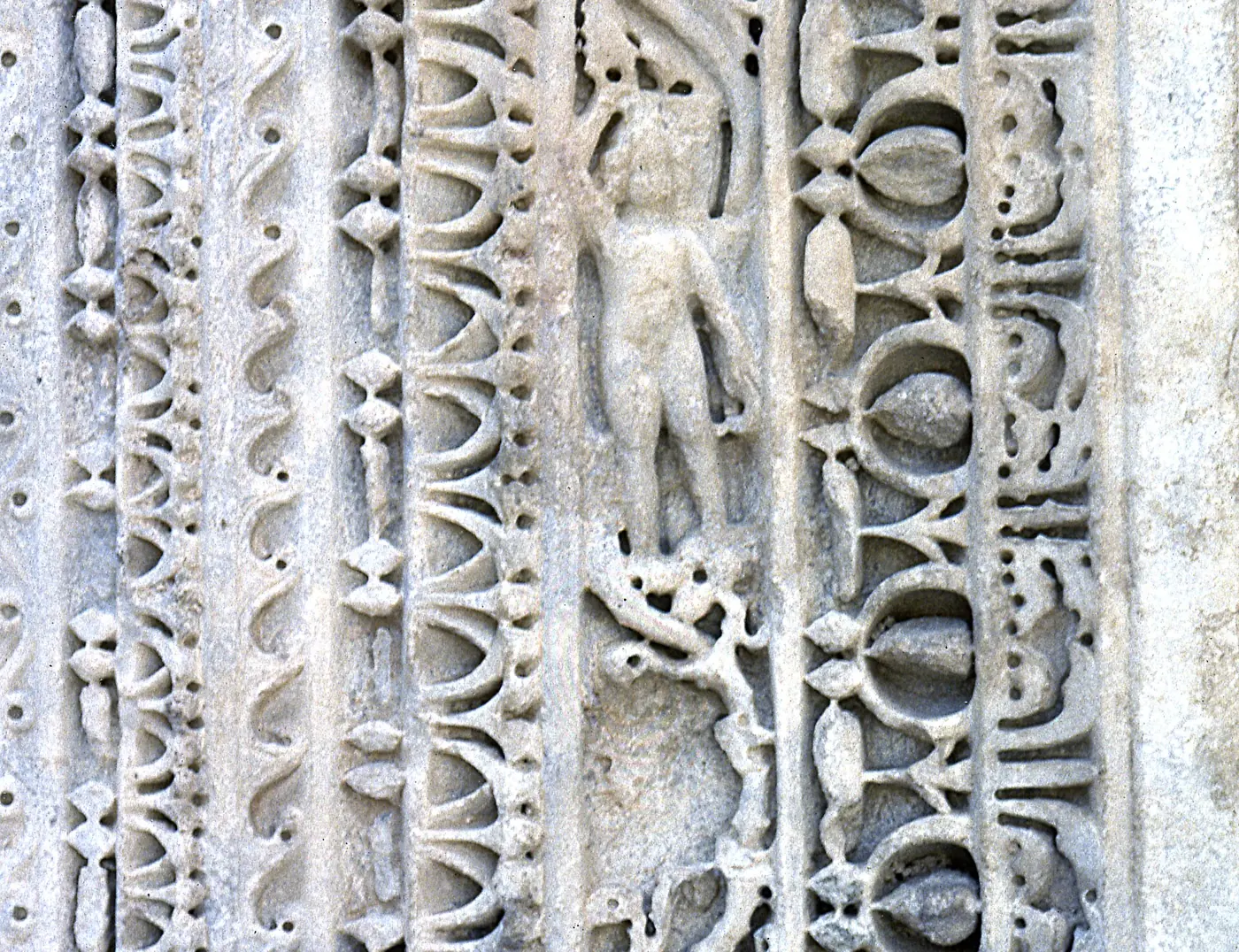
2 Hierapolis Antik Kenti
The pool lies within this Hellenistic and Roman spa city. Walk the theatre and the necropolis before you swim. The ruins explain why the pool exists.
- Era: Hellenistic and Roman
- Highlights: Theatre, necropolis, Antique Pool
Show map
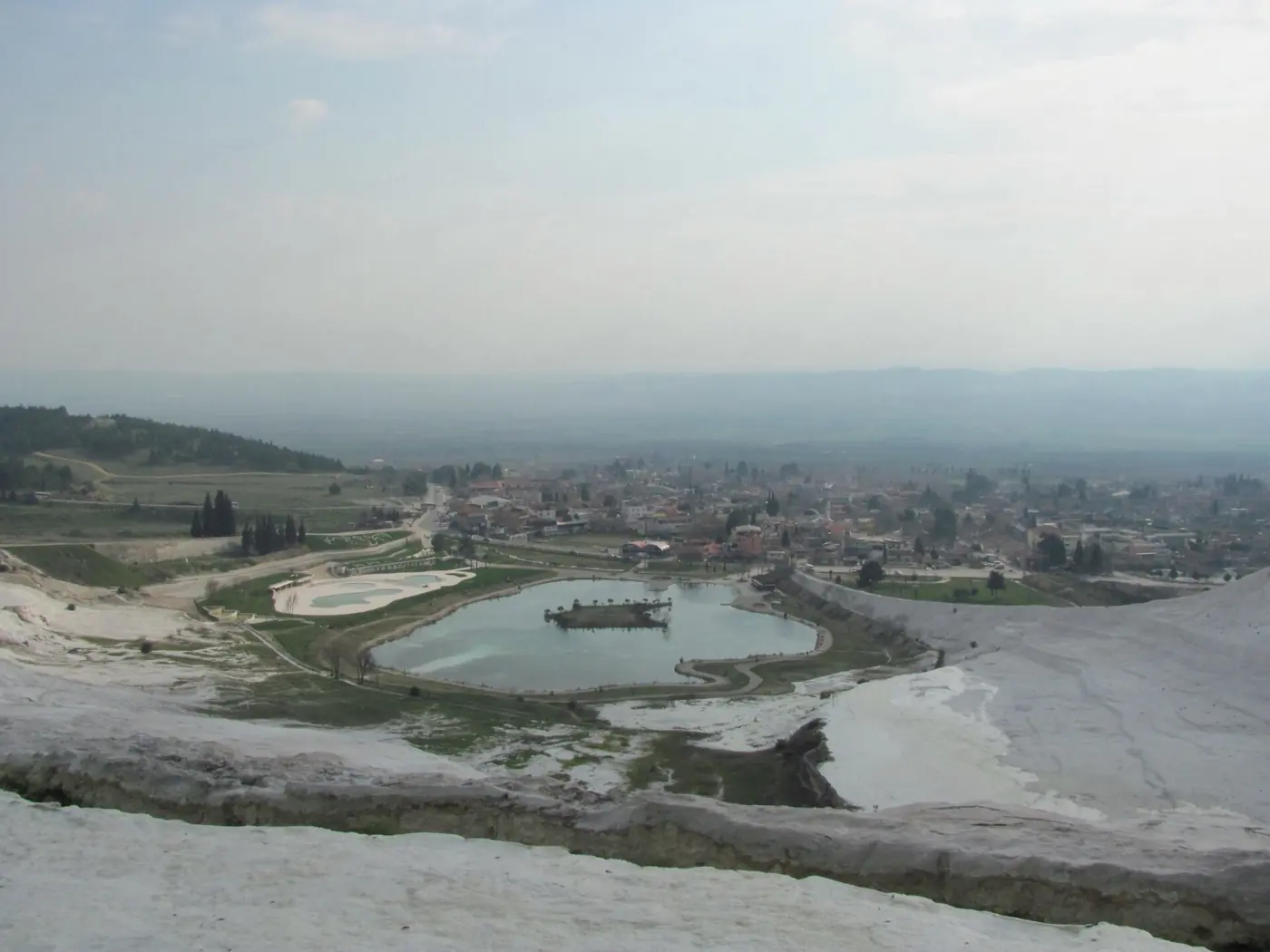
3 Pamukkale Travertenleri
The white terraces and thermal pools lie beside Hierapolis and are part of the same UNESCO World Heritage Site. Visit them before or after the pool. Follow posted rules, which can change.
- Site: Natural travertine terraces beside Hierapolis
- Highlight: Terraced thermal-water pools
Show map
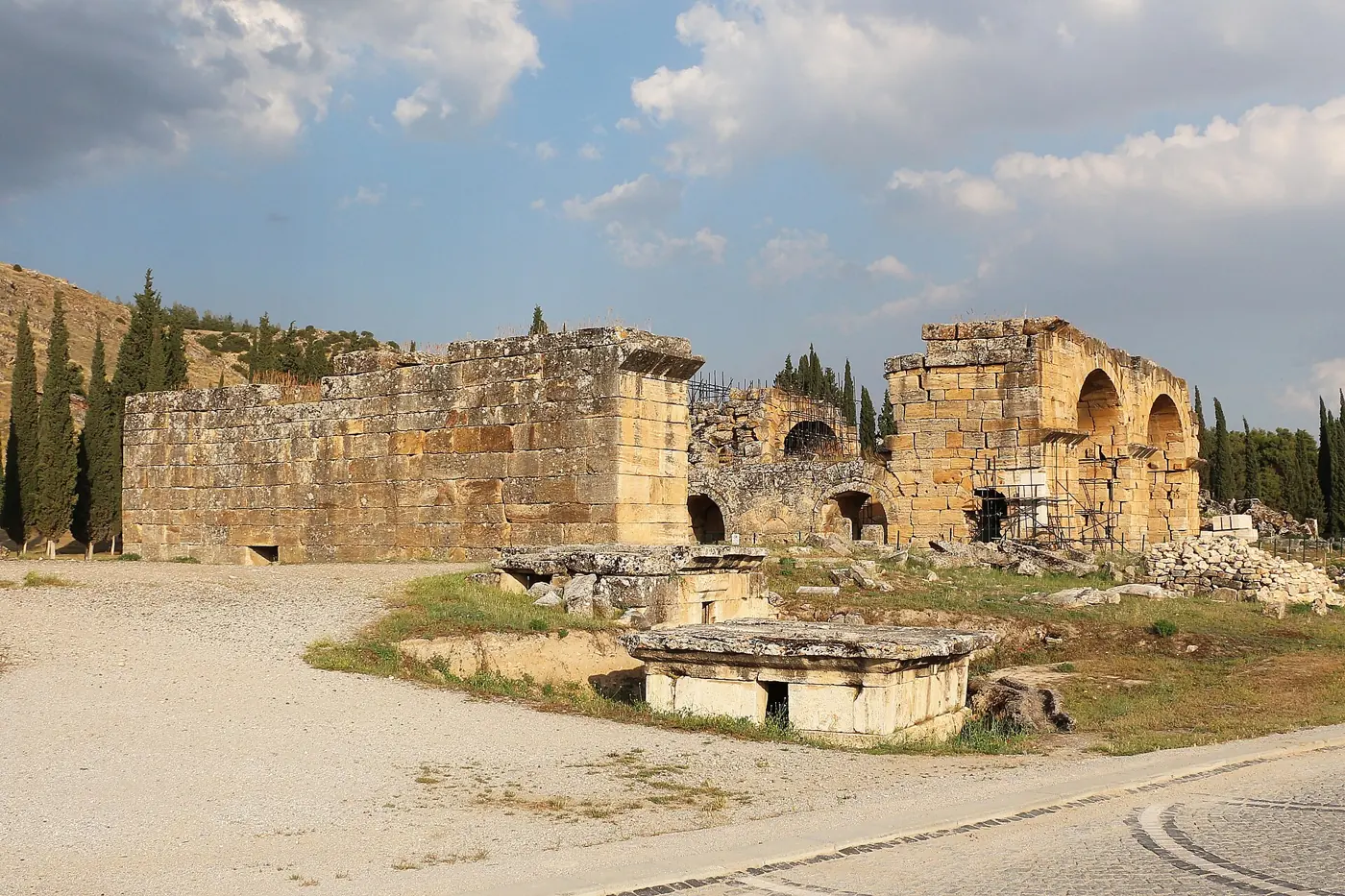
4 Hierapolis Bazilika Hamami
These ruined Roman baths show how bathing shaped the city. They give historical context for the modern swim. The vaulted halls are close to the main walking route.
- Type: Roman bath complex
- Period: Roman, with later Byzantine reuse
Show map
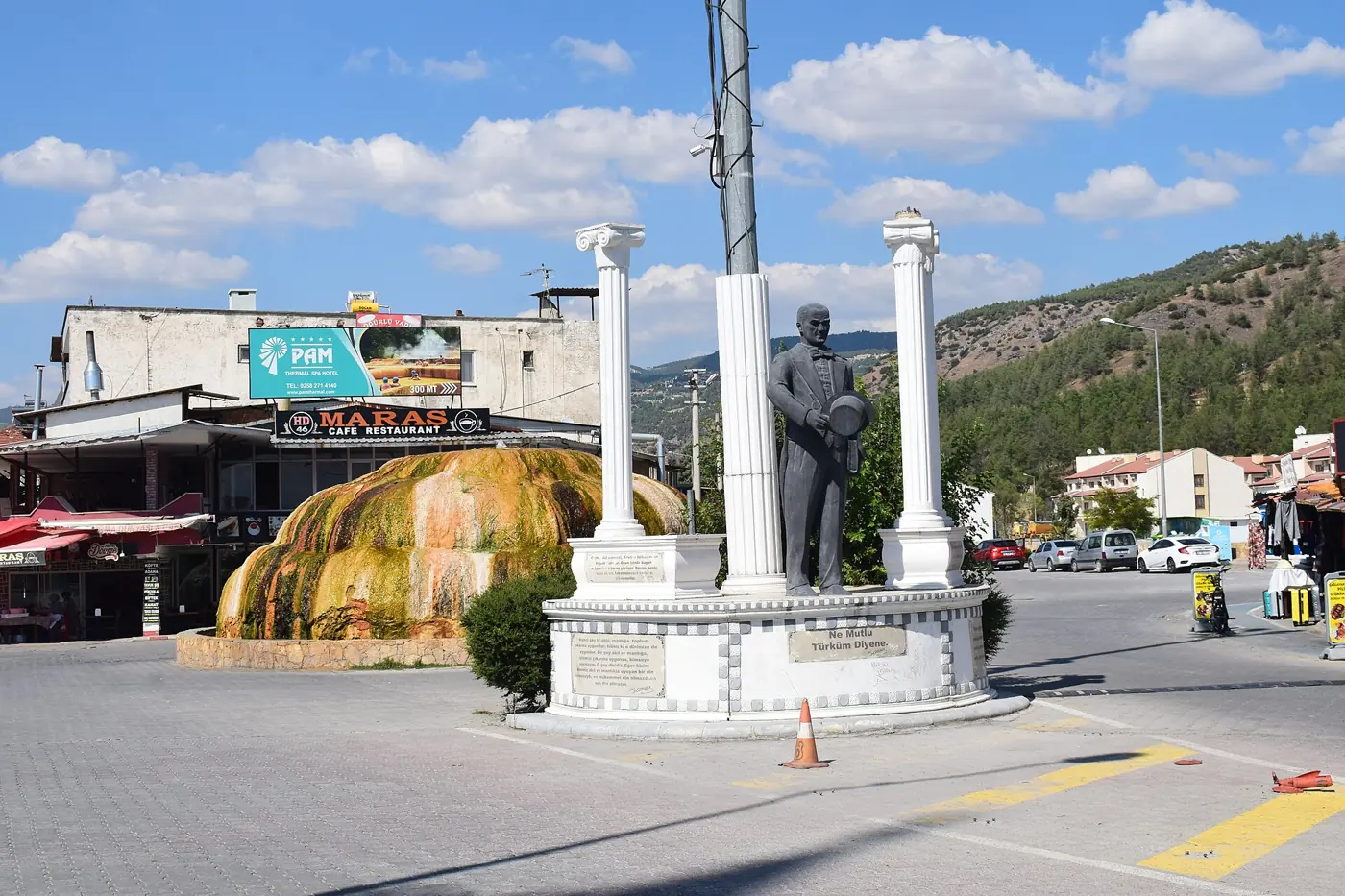
5 Karahayit Kirmizi Su
Karahayit lies near Pamukkale and has red-tinted thermal water coloured by iron oxide. It offers a different spa experience for the afternoon. Check access and conditions locally.
- Colour: Red from iron oxide
- Water: Thermal
Show map
How does the pool compare with other thermal options?
The table compares the Antique Pool with the terraces and the Karahayit springs. The pool is the only one where you swim among ancient columns. In contrast, the terraces are mainly for walking and photographs, and Karahayit is known for spa use.
Choose the pool for the historic setting and the springs for a quieter spa day.
The table compares three thermal experiences.
| Option | Main experience | Setting | Note |
|---|---|---|---|
| Antique Pool | Swim among ancient columns | Inside Hierapolis | Separate swimming fee |
| Travertine terraces | Walk and photograph white pools | Beside Hierapolis | Follow posted rules |
| Karahayit Red Spring | Red thermal water | Karahayit, near Pamukkale | Check access locally |
How do you get there?
The pool is inside the Hierapolis site, so you enter through the site gates and walk to it. A private car with a driver drops you at the gate closest to the pool and picks you up when you finish. This matters in the heat, because the walk between gates is long.
From Denizli the trip to Pamukkale is short by car. Ask your driver which gate suits your plan, and check the official page for current entry arrangements.
The table shows how to reach the pool.
| Starting point | Suggested way | Note |
|---|---|---|
| Denizli city | Private car or hotel transfer | Short drive to Pamukkale |
| Pamukkale hotel | Short transfer or walk to a gate | Confirm the gate with your driver |
| Karahayit | Short transfer | About 5 km from Pamukkale |
What practical tips help?
Bring a swimsuit, a towel and a change of clothes, since the pool is in an archaeological site. Use water shoes if you want extra grip, because submerged stone can be uneven. Furthermore, take care with the column fragments and follow the staff and signs.
Keep valuables to a minimum and check on-site storage arrangements. Visit in the morning or late afternoon if you prefer smaller crowds.
Pack and plan with this list.
- Bring a swimsuit, towel and spare clothes.
- Consider water shoes for uneven stone.
- Check the current swimming fee on the official page or Google Maps.
- Follow staff instructions and signs.
- Swim after the walk for the best rest.
- Keep valuables to a minimum.
What does a sample plan look like?
Start at the terraces in the morning, walk through Hierapolis to the theatre and necropolis, and swim at midday. Afterwards, rest and visit the museum if you have time. Therefore the pool becomes the centre of a relaxed day.
If you have little time, visit the pool and the nearest ruins only, and skip the museum.
The table gives one sample day.
| Time | Stop | Why |
|---|---|---|
| Morning | Travertine terraces | Softer light |
| Late morning | Theatre and necropolis | Walk while it is cooler |
| Midday | Antique Pool | Swim and rest |
| Afternoon | Basilica baths or museum | Indoor shade |
What is the history behind the Antique Pool?
The pool belongs to a spa city whose people valued thermal water. Fragments of ancient columns fell into the pool, and they remain under the water today. Moreover, the pool shows how natural springs and ancient architecture became part of one landscape.
The Cleopatra name is a popular label. Therefore do not expect a historical record that links the queen to this place. In contrast, the ruins around the pool offer real information about the Hellenistic and Roman city, and a guide can explain it as you walk.
Who is the pool best for, and who may prefer to skip it?
The pool suits families, couples, history lovers and anyone who wants a warm swim after a day on foot. It is less suitable for travellers who dislike crowds, because the pool can be busy at midday. Moreover, people with health conditions should ask a doctor before they use thermal water.
If you prefer a quieter experience, visit early or late in the day, or choose a spa in Karahayit instead. Check conditions on the day, because water access and rules can change. Furthermore, children need supervision near the submerged stone.
Finally, plan your swim as part of the whole visit and not as a rushed stop. Arrive with enough time to change, swim and dry before you continue. Moreover, keep your phone and valuables safe, because wet areas and crowds make accidents more likely. Therefore a calm start, clear meeting point with your group and a simple plan for belongings keep the experience enjoyable for everyone.
Use these points to decide.
- Choose the pool if you want a swim in a historic setting.
- Choose early or late hours if you dislike crowds.
- Ask a doctor first if you have a health concern.
- Supervise children near the submerged columns.
- Check the day’s conditions on the official page or Google Maps.
Frequently asked questions
Why is it called Cleopatra’s Pool?
It is a popular name for the Antique Pool. The name comes from tradition, and the pool is officially the Antique Pool.
Is there a separate fee to swim?
Yes. A separate swimming fee applies beyond the site ticket. Check the current amount on the official page or Google Maps.
Where is the pool?
It is inside the Hierapolis archaeological site at Pamukkale.
Is the water warm?
Yes. It is a warm thermal spring with submerged ancient column fragments.
Is it suitable for children?
Many families visit, but follow staff guidance and watch children near the column fragments.
What should I bring?
Bring a swimsuit, towel, spare clothes and water shoes if you like extra grip.
Can I combine it with the terraces?
Yes. The terraces and Hierapolis lie beside the pool and form one UNESCO World Heritage Site.
Where can I check hours?
Check the official page or Google Maps, because hours change.
Plan this with TurkGT
A private car with driver takes you to the best gate, and a licensed guide can lead the walk through Hierapolis before your swim. Send your dates and group size by WhatsApp or the inquiry form and we will build the day around you.
Request a booking
Related guides
- Pamukkale Thermal Pools and White Travertines: Visit Guide
- Lake Acıgöl, Karahayıt and Denizli’s Thermal Springs
- Pamukkale Balloon Flights and Activities: A Practical Guide
- Best 10 Hotels in Pamukkale: Thermal, Boutique and Village
- Best Restaurants in Pamukkale and Denizli: Top Picks
- Top Sights in Denizli Province: Visit Guide
- Best Shopping in Denizli: Malls, Bazaars and Sweet Shops
→ Denizli and Pamukkale travel guides
Related destinations and attractions
Explore more city guides
Sources
Last reviewed: 2026-11-21.