
Pamukkale is a hillside of white calcium-carbonate terraces and thermal pools, and it forms one UNESCO World Heritage Site together with Hierapolis. Visit early or late for softer light, wear suitable footwear and check the official page for current access rules. Add the Antique Pool and Hierapolis for a full day.
Key facts
- Site: Natural travertine terraces beside Hierapolis
- Designation: UNESCO World Heritage Site (with Hierapolis)
- Highlight: Terraced thermal-water pools
- Also nearby: Antique Pool, Karahayit Red Springs, balloon flights
- Best for: Families, photographers, spa and history lovers
- Suggested time: Half a day for the terraces, a full day with Hierapolis
- Access rules: Check the official page on the day
- Tickets and hours: Check the official page or Google Maps
What are the Pamukkale travertines?
The Pamukkale travertines are white calcium-carbonate terraces and thermal pools on a hillside above the town of Pamukkale. Warm mineral water flows over the rock and leaves white deposits. They form one UNESCO World Heritage Site with the ancient city of Hierapolis, which sits on top.
In contrast to many natural sights, you can combine the terraces with a Roman city and a swim among ancient columns. Therefore Pamukkale suits families, photographers and history lovers on the same trip.
How did we choose what to include?
We chose these places from official designations (UNESCO World Heritage listing), location inside the Denizli province, and details taken from official and reference sources. We do not accept payment for placement. Opening hours, ticket rules and conditions change, so check the place’s page or Google Maps before you go, and read current visitor feedback there.
This guide covers the terraces, the nearby thermal and spa places, and a few natural extras within a short drive of Pamukkale. We kept to places with registered sources and photos, and we use only the facts those sources give.
Which places make a good thermal and travertine day?
The core is the Pamukkale Travertines, with Hierapolis and the Antique Pool on top of the hill. Nearby, the Karahayit Red Springs offer an iron-rich contrast, and balloon flights give an aerial view. Mount Babadag and Kaklik Cave add nature options.
Each card below gives its main feature and how it fits a day plan. Moreover, the cards follow a sensible order from the terraces to the extras.
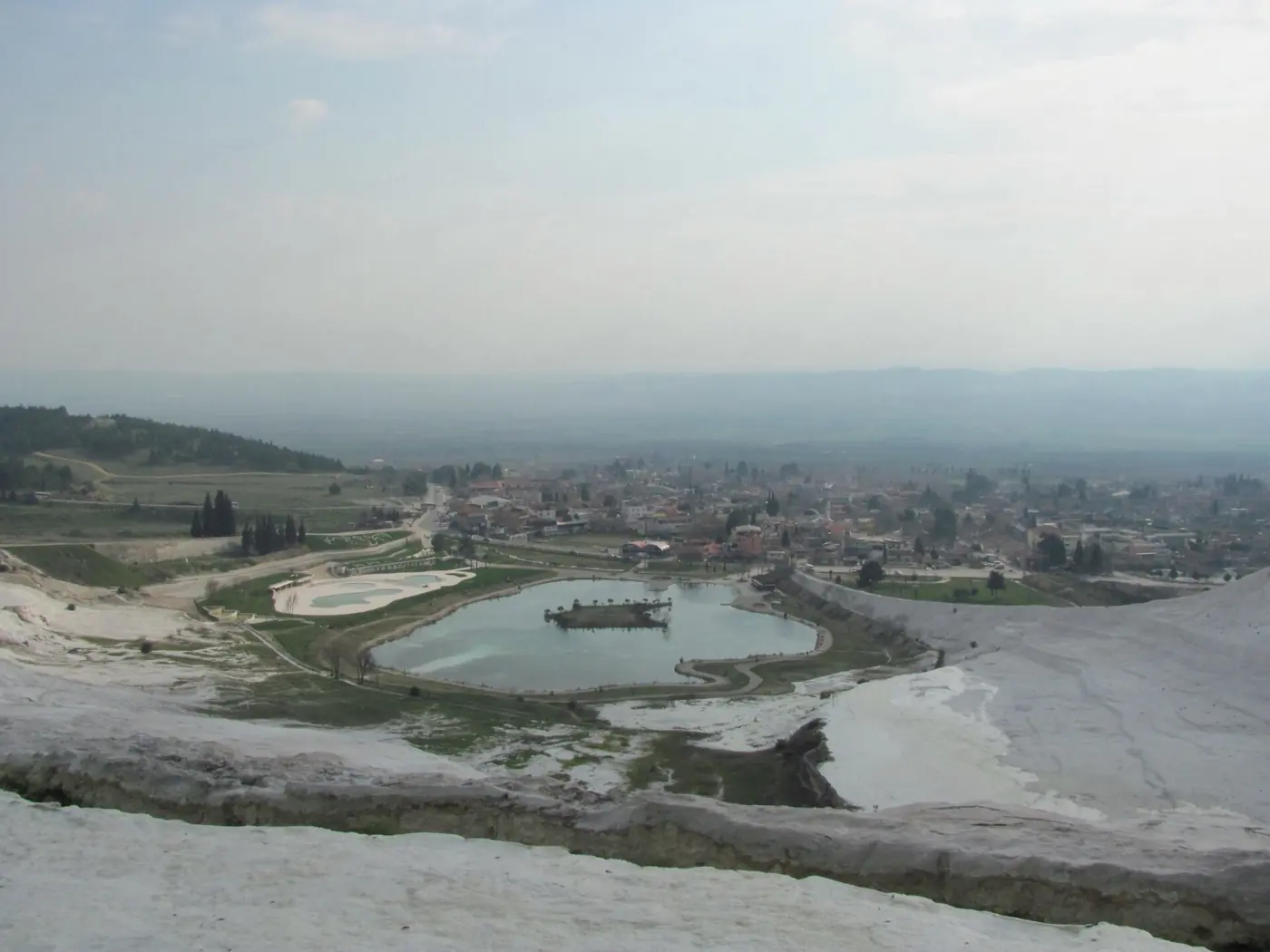
1 Pamukkale Travertenleri
These are the white terraces and thermal pools on the hillside above Pamukkale. They are part of a UNESCO World Heritage Site together with Hierapolis. Follow the posted paths and rules, which can change.
- Site: Natural travertine terraces beside Hierapolis
- Highlight: Terraced thermal-water pools
Show map
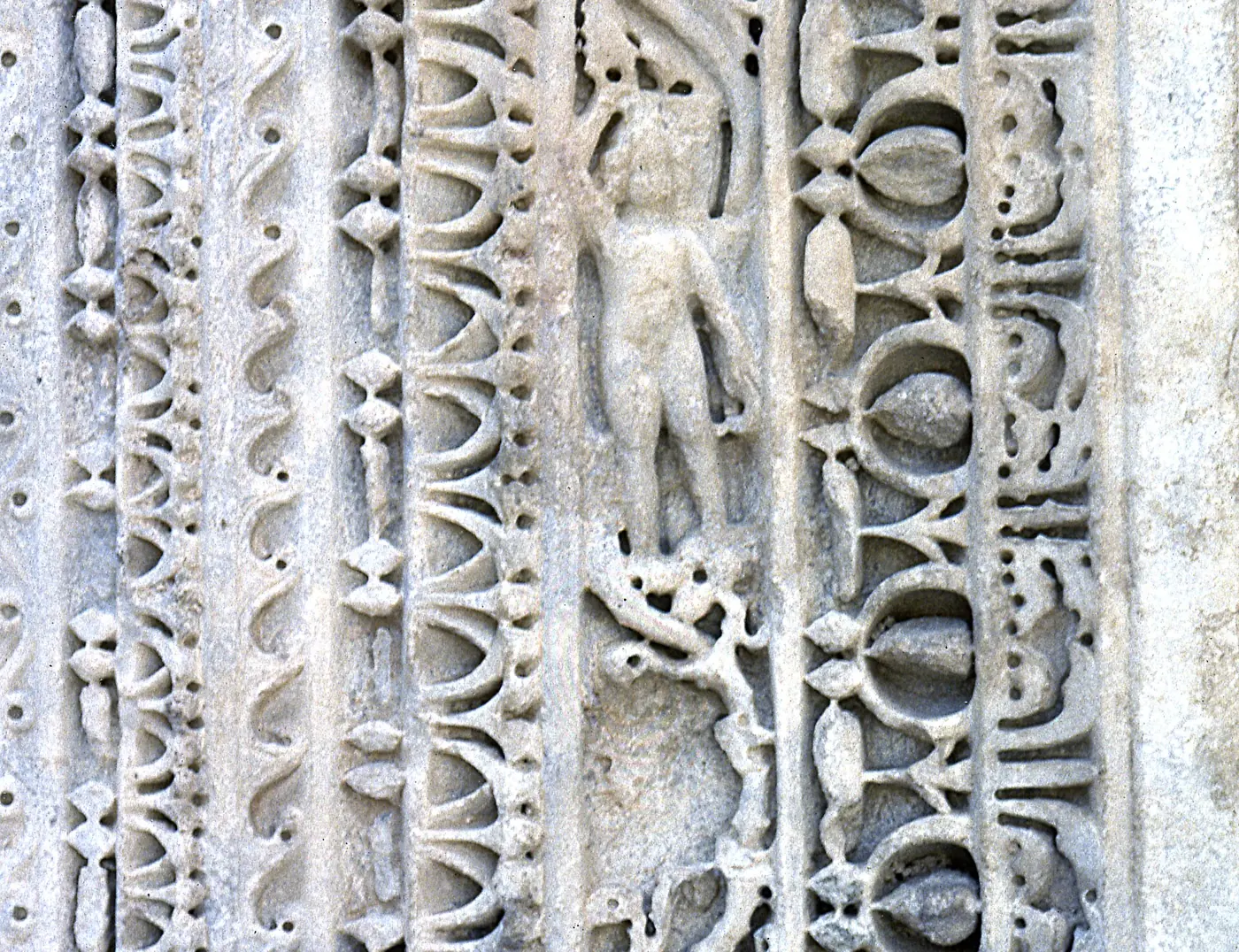
2 Hierapolis Antik Kenti
Hierapolis sits above the terraces and holds a large theatre, a necropolis and the Antique Pool. A walk through it adds history to the natural view. It is the natural second stop.
- Era: Hellenistic and Roman
- Highlights: Theatre, necropolis, Antique Pool
Show map
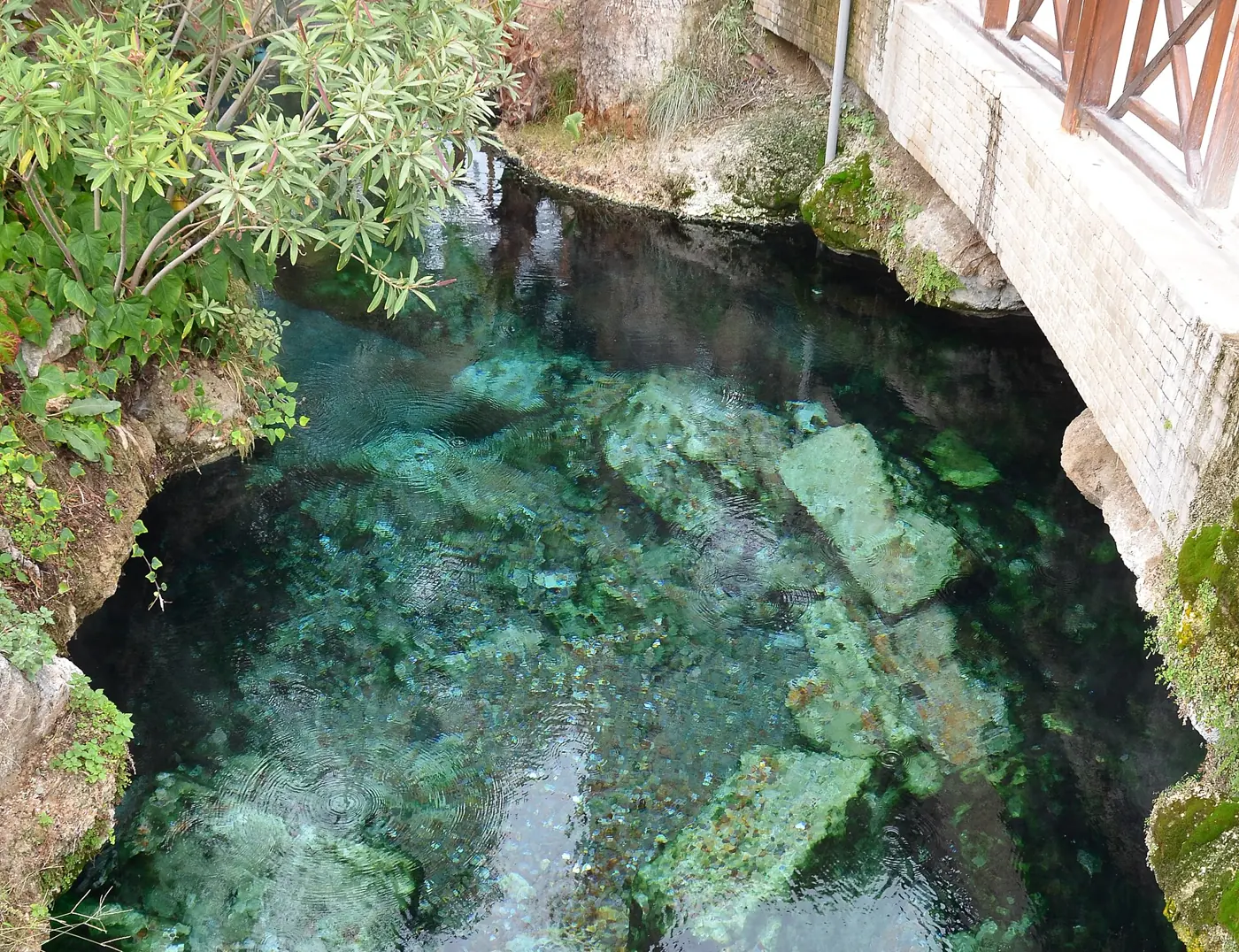
3 Antik Havuz
This thermal pool holds warm mineral water and submerged ancient column fragments inside the Hierapolis site. It is popularly called Cleopatra’s Pool. It suits swimmers of all ages who want a break from walking.
- Water: Warm thermal spring
- Feature: Submerged ancient columns
Show map
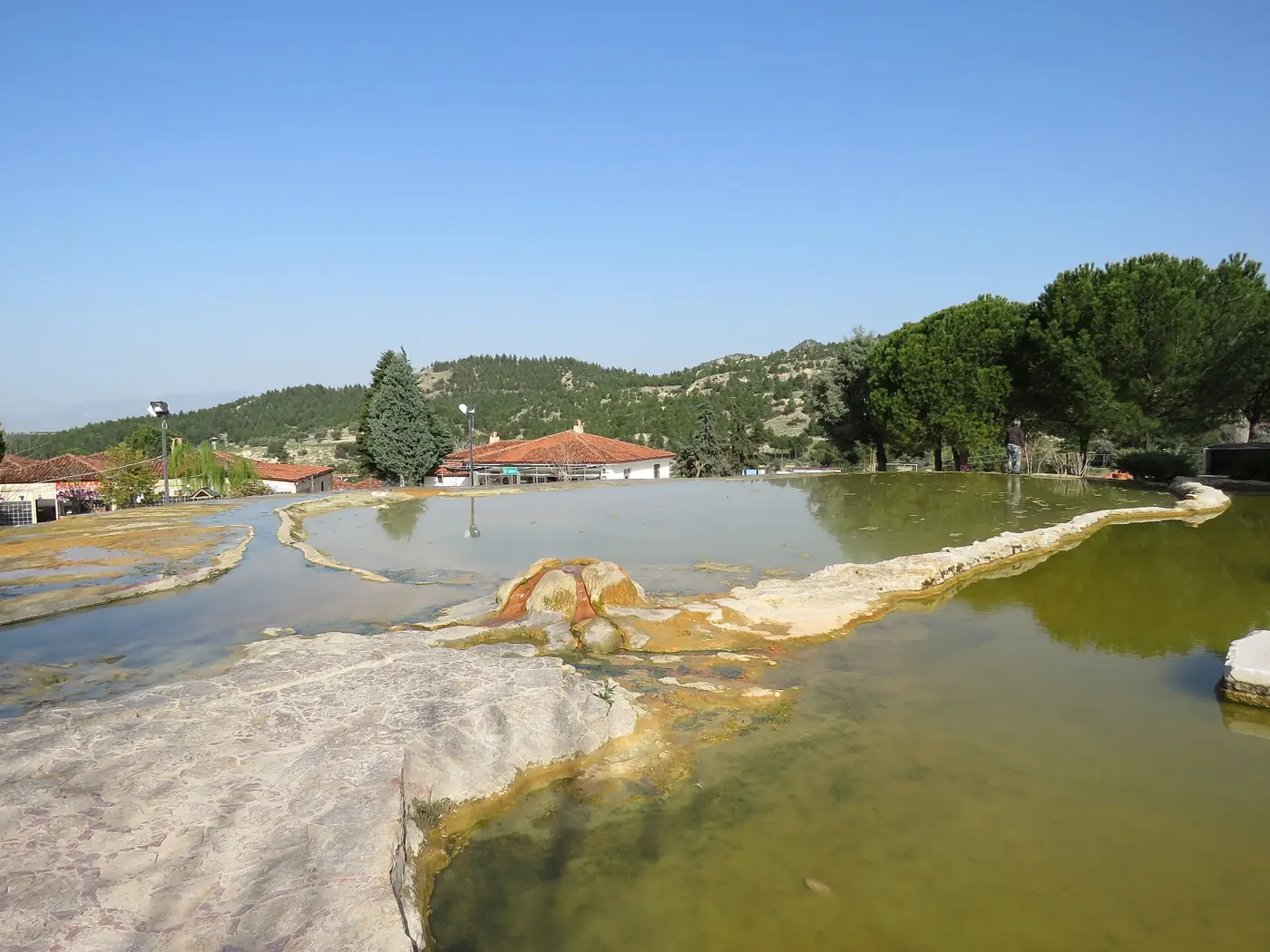
4 Karahayıt Kırmızı Su
Karahayit lies about 5 km from Pamukkale and has iron-rich thermal water that leaves reddish deposits. It is known for spa and mud-bath tourism. Visit it for a colour contrast to the white terraces.
- Location: Karahayit, about 5 km from Pamukkale
- Known for: Red, iron-rich thermal water
Show map
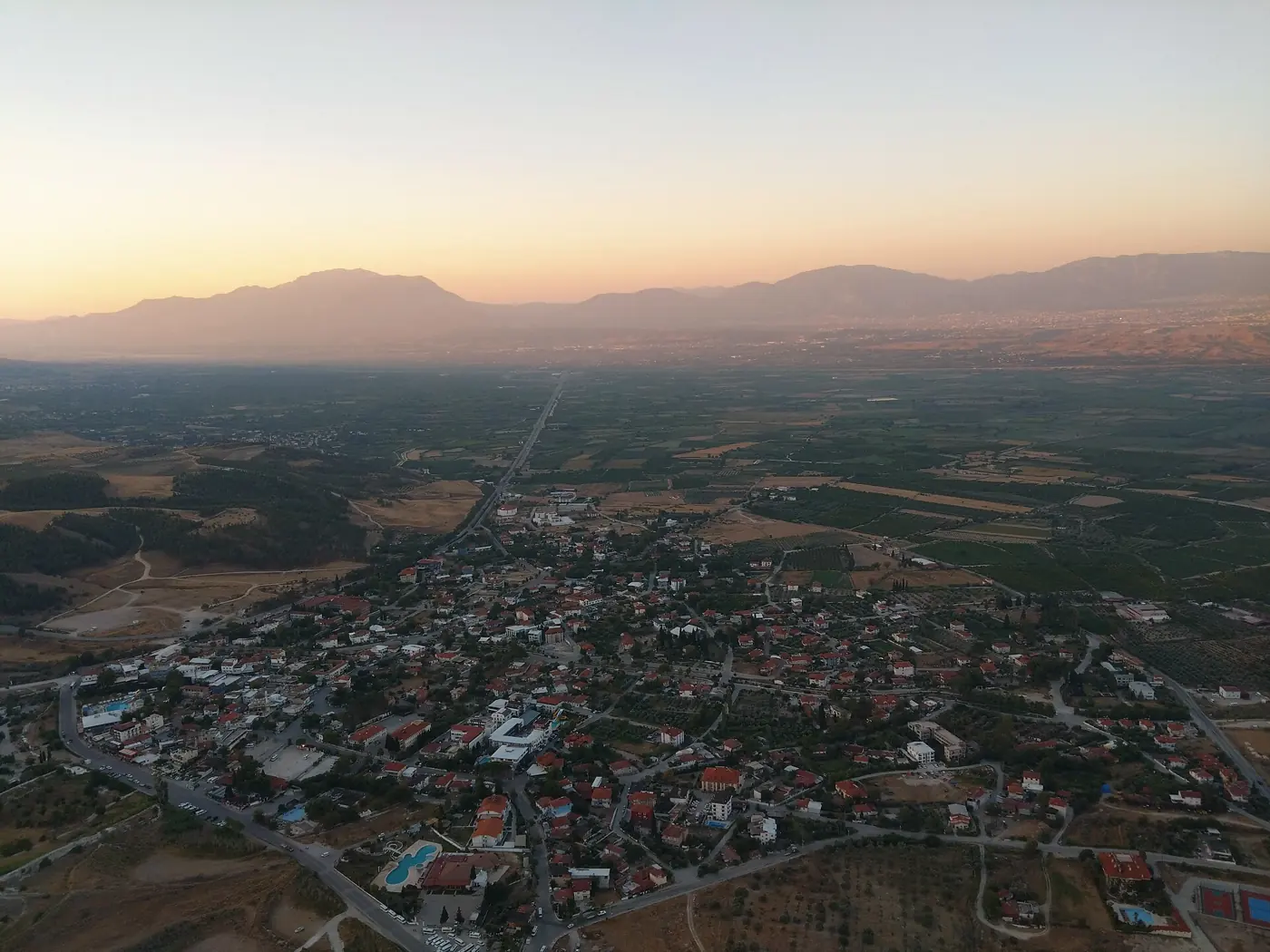
5 Pamukkale Balloon Flights
Hot-air balloon rides pass over the terraces and the Lycus valley and are offered by local tour operators. They suit early risers and photographers. Book through an operator and confirm conditions locally.
- Area: Over Pamukkale and Hierapolis
- Booking: Through local tour operators
Show map
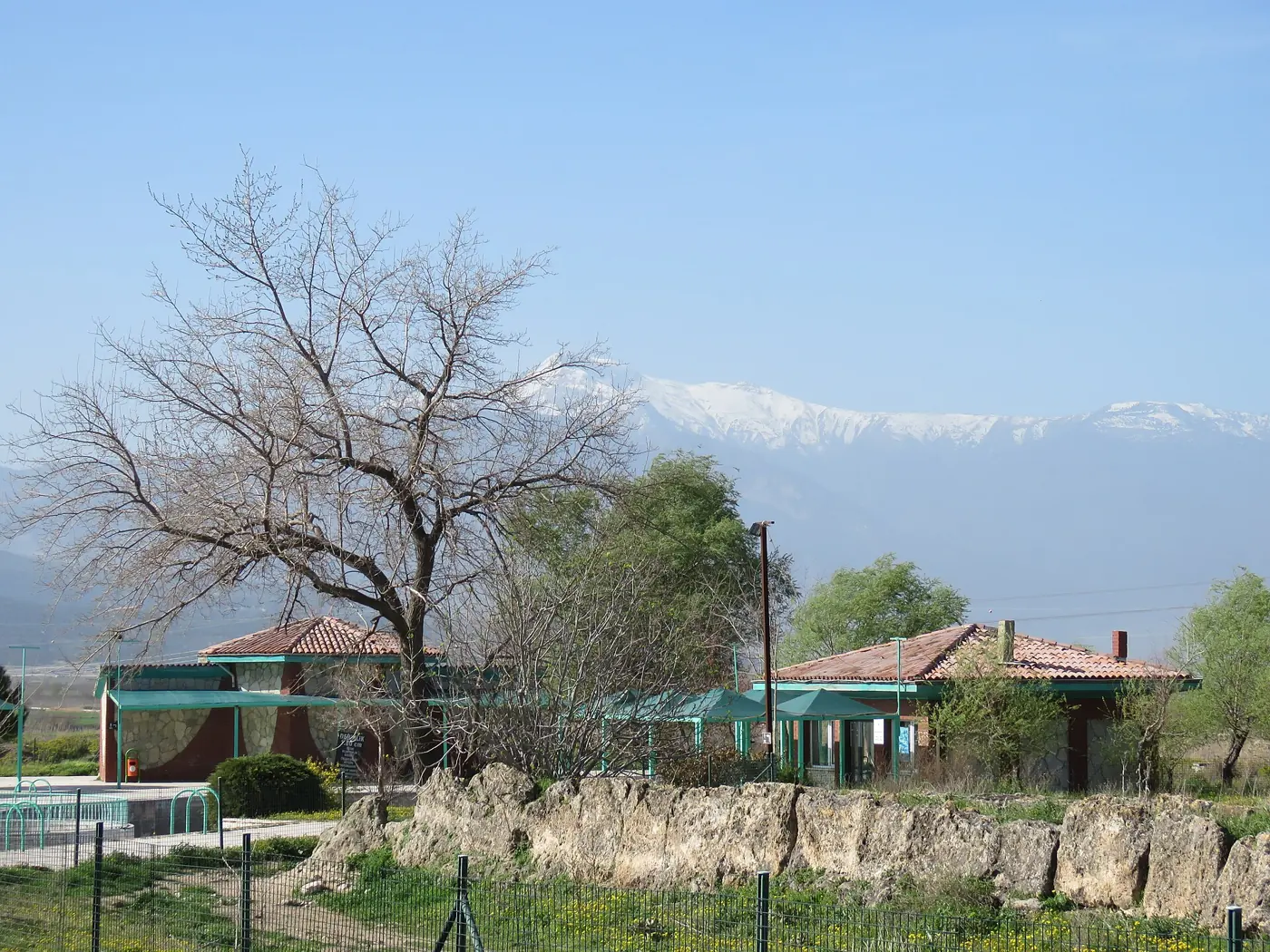
6 Kaklık Mağarası
Kaklik Cave in the Honaz district has white travertine formations and is nicknamed the underground Pamukkale. It lies about 30-35 km from Denizli city. It is a cool stop for families.
- District: Honaz
- Nickname: Underground Pamukkale
Show map
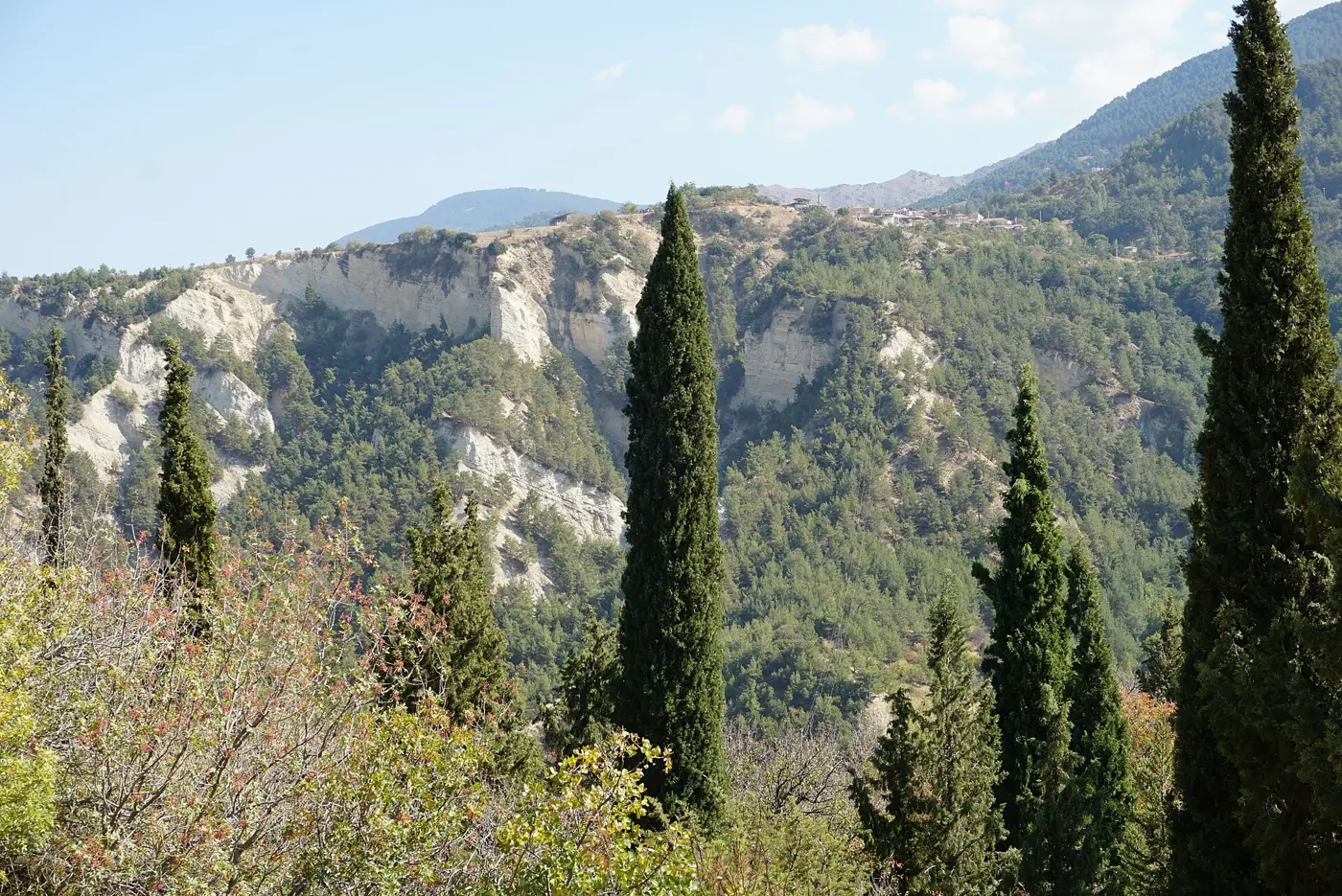
7 Babadağ
Mount Babadag rises above Pamukkale and the Babadag district and is visible across the Lycus valley. It suits hikers and viewpoint seekers. Check the route locally before you go.
- District: Babadag, Denizli
- View: Overlooks Pamukkale area
Show map
How do the main options compare?
The table compares the main options by experience, effort and best time. Use it to build a plan that matches your energy and your group. Moreover, the Antique Pool and the terraces suit the widest range of travellers.
Balloon flights and hiking need more preparation, so check them early. In contrast, the terraces and Hierapolis need only comfortable shoes.
The table compares seven places and activities near Pamukkale.
| Option | Experience | Effort | Note |
|---|---|---|---|
| Travertine terraces | White terraces, thermal pools | Easy to moderate | Follow posted rules |
| Hierapolis | Roman city on the hill | Moderate walking | Allow several hours |
| Antique Pool | Swim among ancient columns | Easy | Separate swimming fee |
| Karahayit Red Springs | Red thermal water, spa | Easy | About 5 km from Pamukkale |
| Balloon flights | Aerial view | Early start | Book through an operator |
| Kaklik Cave | Underground travertine | Easy | About 30-35 km from Denizli |
| Mount Babadag | Hiking and views | Moderate to hard | Check route locally |
How do you get to Pamukkale and around the area?
Pamukkale lies in the Denizli province and most visitors reach it from Denizli city or from hotels in Pamukkale and Karahayit. A private car with a driver picks you up at your hotel or at an airport and drops you at the entrance you choose. This saves time because the terraces and the Hierapolis gates are at different ends.
Within the area, short taxi or transfer rides link Pamukkale, Karahayit and the viewpoints. Kaklik Cave and Mount Babadag are further away, so plan them by car.
The table shows the usual ways to reach each place.
| Place | From | Suggested way |
|---|---|---|
| Terraces and Hierapolis | Denizli or Pamukkale hotel | Private car or hotel transfer |
| Karahayit | Pamukkale, about 5 km | Short transfer or taxi |
| Kaklik Cave | Denizli, about 30-35 km | Private car |
| Mount Babadag | Pamukkale or Denizli | Private car, check route |
What practical tips help at the terraces?
Check the official page on the day, because access rules for the terraces and pools can change. Wear footwear that handles wet surfaces, and carry water and sun protection. Furthermore, the best light for photos is early or late, when the white surface looks softer and fewer visitors are present.
Bring a swimsuit and towel if you plan to swim in the Antique Pool, and a change of clothes. Keep valuables safe in a small bag and follow signs about where you may walk.
A short checklist for the day.
- Check the official page for access rules on the day.
- Wear footwear that works on wet surfaces.
- Carry water, a hat and sun protection.
- Bring a swimsuit and towel for the Antique Pool.
- Visit early or late for softer light.
- Follow signs about where you may walk.
What does a sample day look like?
A full day starts early at the terraces, moves up to Hierapolis, and ends with a swim in the Antique Pool. In the afternoon you can drive to Karahayit for the red springs. Therefore the day mixes nature, history and a spa break.
If you have only half a day, choose the terraces and Hierapolis, and skip the extras. Add a balloon flight only if you can start before sunrise.
The table gives one sample full-day plan.
| Time | Stop | Why |
|---|---|---|
| Morning | Travertine terraces | Softer light and fewer visitors |
| Late morning | Hierapolis ruins | Theatre, necropolis, main street |
| Midday | Antique Pool | Swim and rest |
| Afternoon | Karahayit Red Springs | Colour contrast and spa |
How should you pace a visit to the travertines?
Do not rush the terraces. The surface is a natural landscape, and the pools change with the light and the season. Moreover, a slow walk lets you see the contrast between the white rock and the blue-green water, and it gives your photos better light.
Combine the terraces with Hierapolis, but give each a clear block of time. Therefore you avoid arriving at the ruins tired and in the strongest sun. In contrast to a short stop, a paced visit leaves energy for the Antique Pool and an afternoon excursion.
Finally, keep a flexible plan for the whole day, from the first walk on the terraces to the last drive back to your hotel. Weather, crowds and access rules can change the order of your stops, and a driver who knows the area can adjust the day quickly. Moreover, build in a rest at midday, because heat and walking tire most visitors. Therefore a relaxed schedule usually gives better photos, better memories and a safer visit than a tight list of stops.
Frequently asked questions
What are the Pamukkale travertines?
They are white calcium-carbonate terraces and thermal pools above Pamukkale, part of a UNESCO World Heritage Site with Hierapolis.
Can I swim in Pamukkale?
Yes, in the Antique Pool inside the Hierapolis site. A separate swimming fee applies.
What is Karahayit known for?
Karahayit is known for iron-rich thermal water that leaves reddish deposits and for spa and mud-bath tourism.
When is the best time to visit the terraces?
Early or late in the day usually gives softer light and fewer visitors.
Can I take a balloon flight at Pamukkale?
Yes. Local tour operators offer hot-air balloon rides over the terraces and the Lycus valley.
What should I wear?
Wear footwear that handles wet surfaces, light clothes and sun protection. Bring a swimsuit for the pool.
Where do I check access rules and tickets?
Check the official page or Google Maps on the day, because rules, hours and prices change.
Is there a cave like Pamukkale underground?
Kaklik Cave in Honaz has white travertine formations and is nicknamed the underground Pamukkale.
Plan this with TurkGT
A private car with driver, an airport transfer and a licensed guide make the terraces, Hierapolis and Karahayit easy to combine, and we can also arrange hotel booking in Pamukkale. Send your dates and group size by WhatsApp or the inquiry form and we will build the day around you.
Request a booking
Related guides
- Cleopatra Pool (Antique Pool) at Pamukkale: Fee and Experience
- Lake Acıgöl, Karahayıt and Denizli’s Thermal Springs
- Pamukkale Balloon Flights and Activities: A Practical Guide
- Best 10 Hotels in Pamukkale: Thermal, Boutique and Village
- Best Restaurants in Pamukkale and Denizli: Top Picks
- Top Sights in Denizli Province: Visit Guide
- Best Shopping in Denizli: Malls, Bazaars and Sweet Shops
→ Denizli and Pamukkale travel guides
Related destinations and attractions
Explore more city guides
Sources
Last reviewed: 2026-11-21.