
Konya’s best mosques span two eras. The Seljuk Alaeddin and Iplikci mosques date to the 12th and 13th centuries, while the Selimiye and Aziziye mosques are Ottoman. Most sit within a short walk of Alaaddin Hill and Mevlana Avenue.
Key facts
- Seljuk mosques: Alaeddin, Iplikci, Sahib-i Ata
- Ottoman mosques: Selimiye, Aziziye, Kapu
- Outside the city: Esrefoglu Mosque in Beysehir
- Starting point: Alaaddin Hill, served by the tram
- Dress: Modest clothing, scarf, shoes off
- Entry: Check locally; hours differ
- Time needed: Half a day for the city mosques
Which Konya mosques are worth visiting?
Konya was the capital of the Anatolian Seljuks, so it keeps important Seljuk mosques. The Alaeddin Mosque on Alaaddin Hill is the main prayer hall of the Seljuk sultans. The Iplikci Mosque dates to 1202. The Ottoman Selimiye and Aziziye mosques stand near the Mevlana Museum.
Moreover, the Esrefoglu Mosque in Beysehir is a 13th-century mosque for a day trip. Therefore, you can see both eras and two scales, from the city centre to a lakeside town.
This guide covers:
- Two Seljuk mosques on the central axis
- Two Ottoman mosques near Mevlana
- A Seljuk complex with mosque and museum
- One Seljuk mosque in Beysehir
How did we choose these mosques?
We selected mosques that are registered on our site and described by public sources such as Wikipedia and Wikivoyage. The criteria are historic period, location and clear facts. We do not accept payment for placement. Ratings change often, so we show none; use the Google Maps button on each card before you go.
However, these are active places of worship. Therefore, hours for visitors depend on prayer times, and some buildings have restoration work. Check locally before you go.
We looked at:
- Historic period (Seljuk or Ottoman)
- Walking distance from Alaaddin Hill or Mevlana Avenue
- Facts available from public sources
- No payment for placement
What are the top mosques in Konya?
The cards below follow a walking order. Start on Alaaddin Hill, then follow Mevlana Avenue toward the Mevlana Museum. Add the Sahib-i Ata complex if you like Seljuk architecture, and the Esrefoglu Mosque if you have a day for Beysehir.
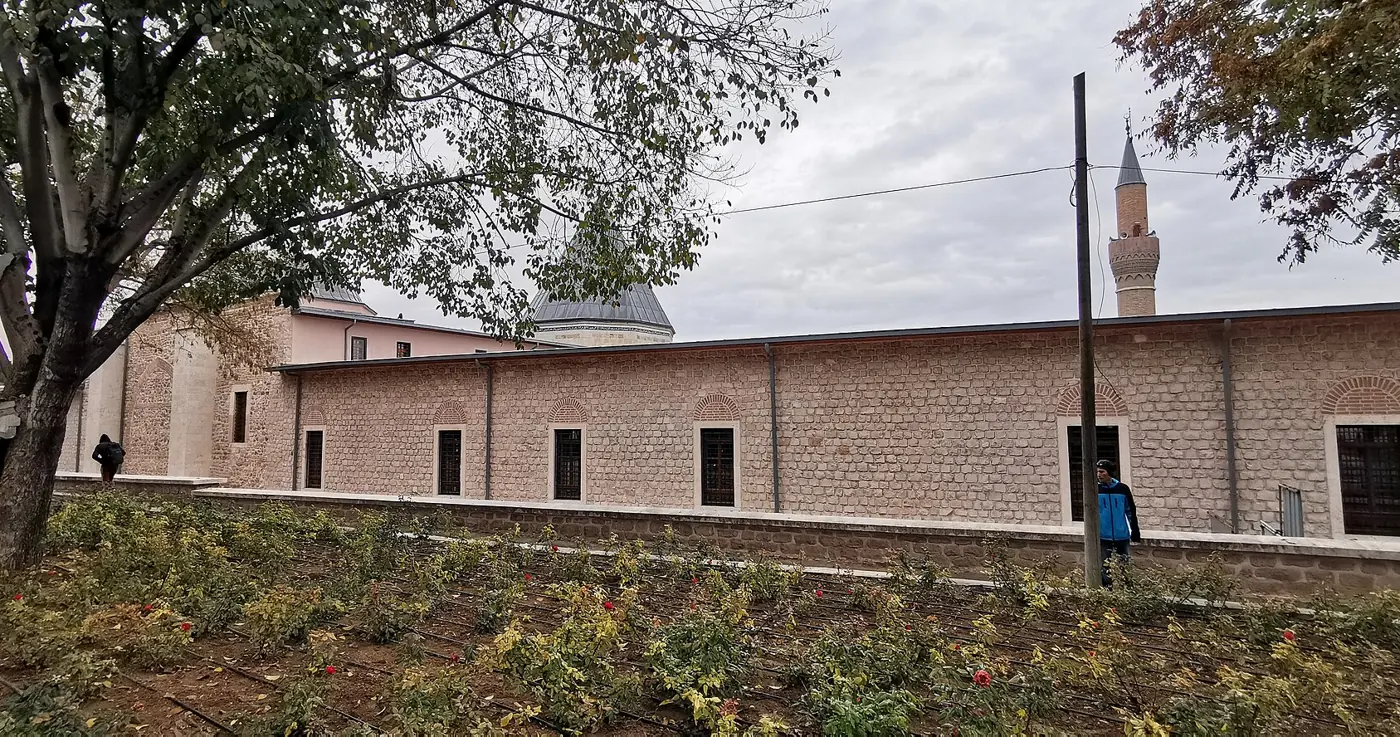
1 Alâeddin Camii
The Alaeddin Mosque is the principal monument on Alaaddin Hill and the main prayer hall of the Seljuk Sultans of Rum. Several sultans are buried in its courtyard. Wikivoyage notes a restoration from 2014, so check the current state.
- Era: Seljuk (Sultanate of Rum)
- Hours: Daily 08:00-23:00 (per Wikivoyage)
- Burials: Sultan Alaaddin Keykubat and at least seven other sultans (per Wikivoyage)
Show map
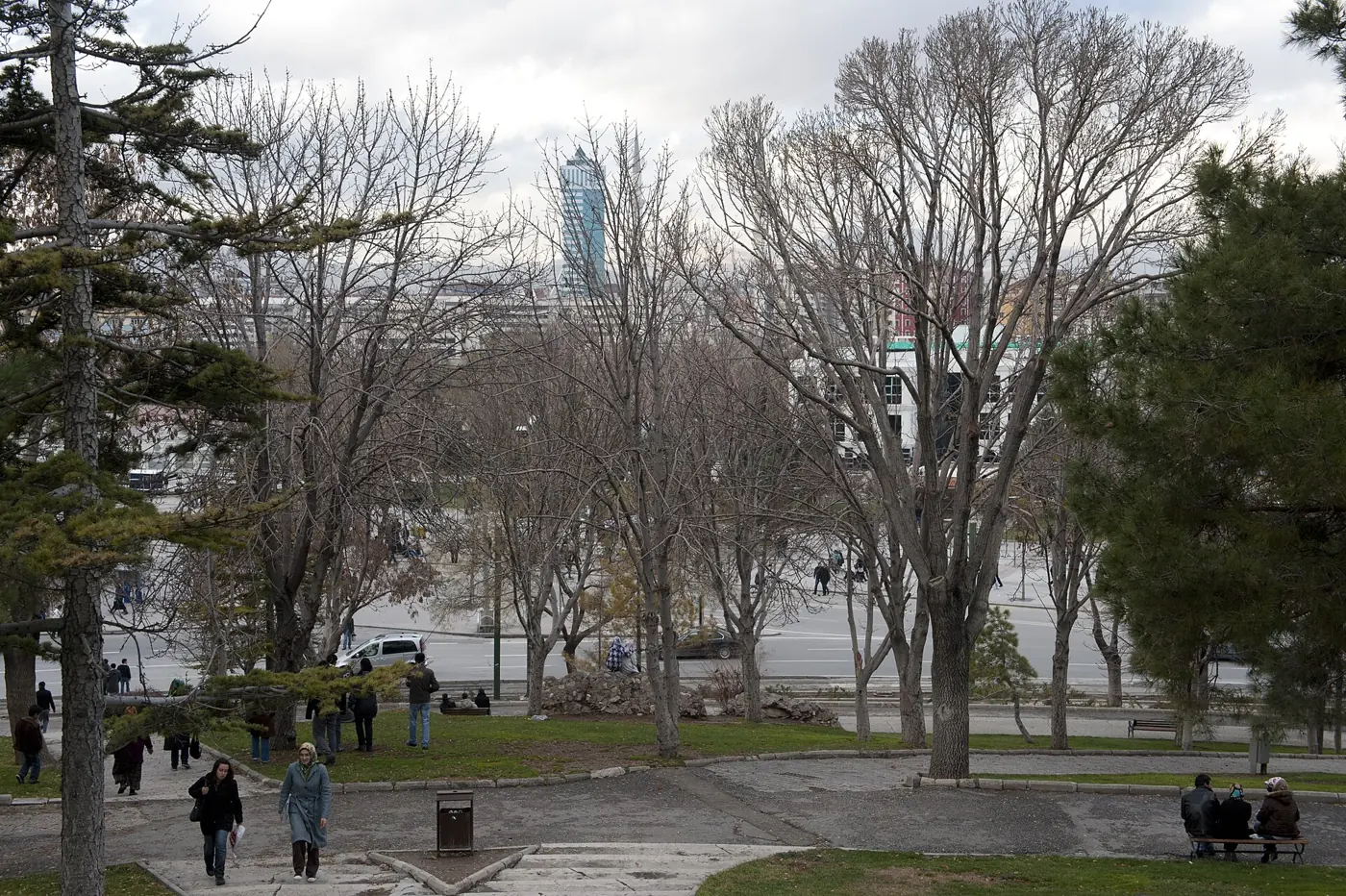
2 Alaaddin Tepesi
Alaaddin Hill is an artificial knoll of the Seljuk period that now works as a small park. The mosque stands at the top. The tram lines circle the hill, which makes it an easy start.
- Origin: Artificial knoll of the Seljuk period
- Topmost sight: Alaeddin Mosque
- Transport: Focus of the city tram lines
Show map
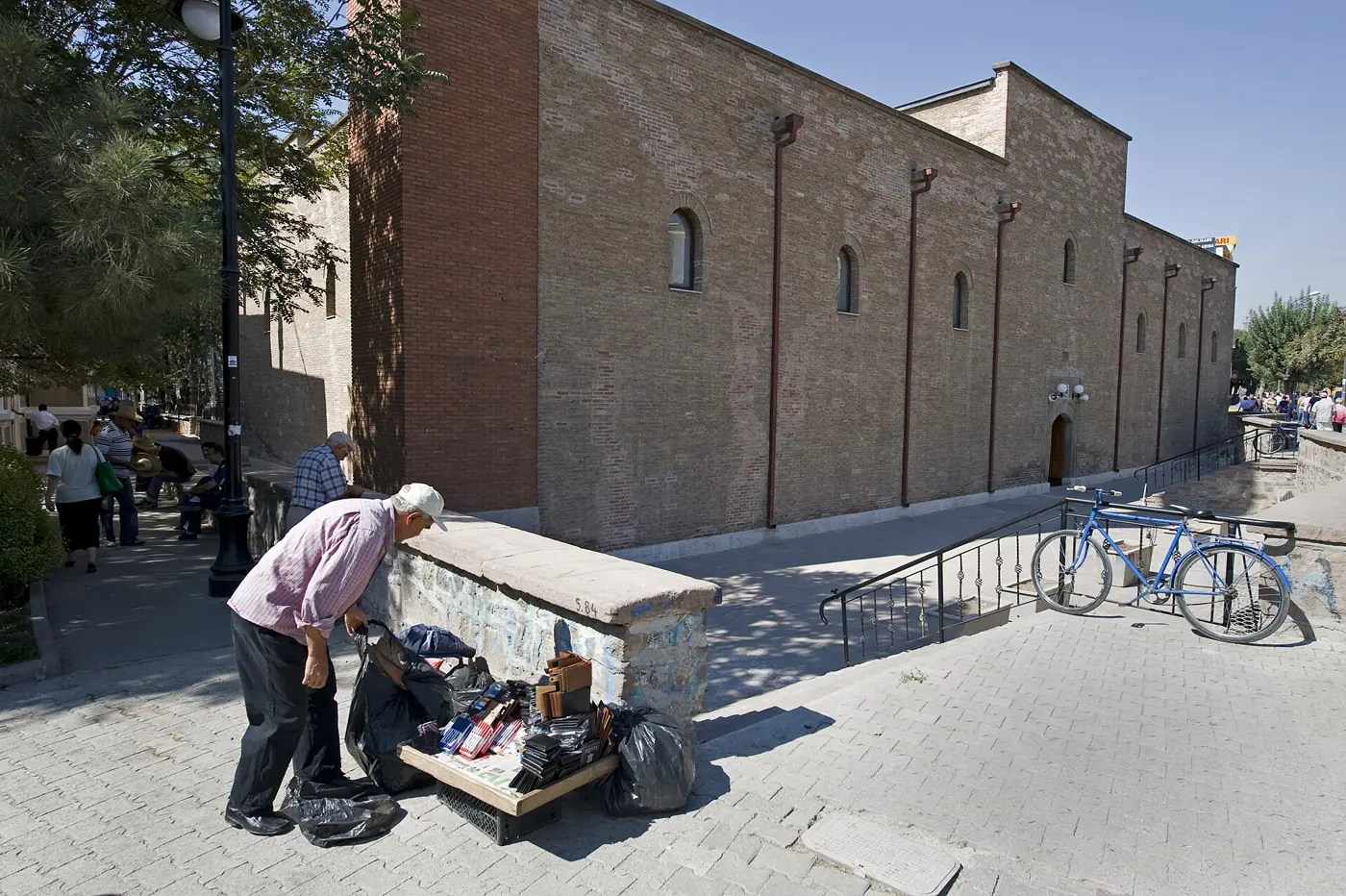
3 İplikçi Camii
The Iplikci Mosque is a brick Seljuk mosque on Mevlana Avenue. It was built in 1202 and rebuilt in the 16th century after a fire. It was a museum from 1945 and became a mosque again in 1960.
- Built: 1202 AD (598 AH)
- Hours: Daily 06:00-21:00 (per Wikivoyage)
- History: Museum from 1945, mosque again in 1960
Show map
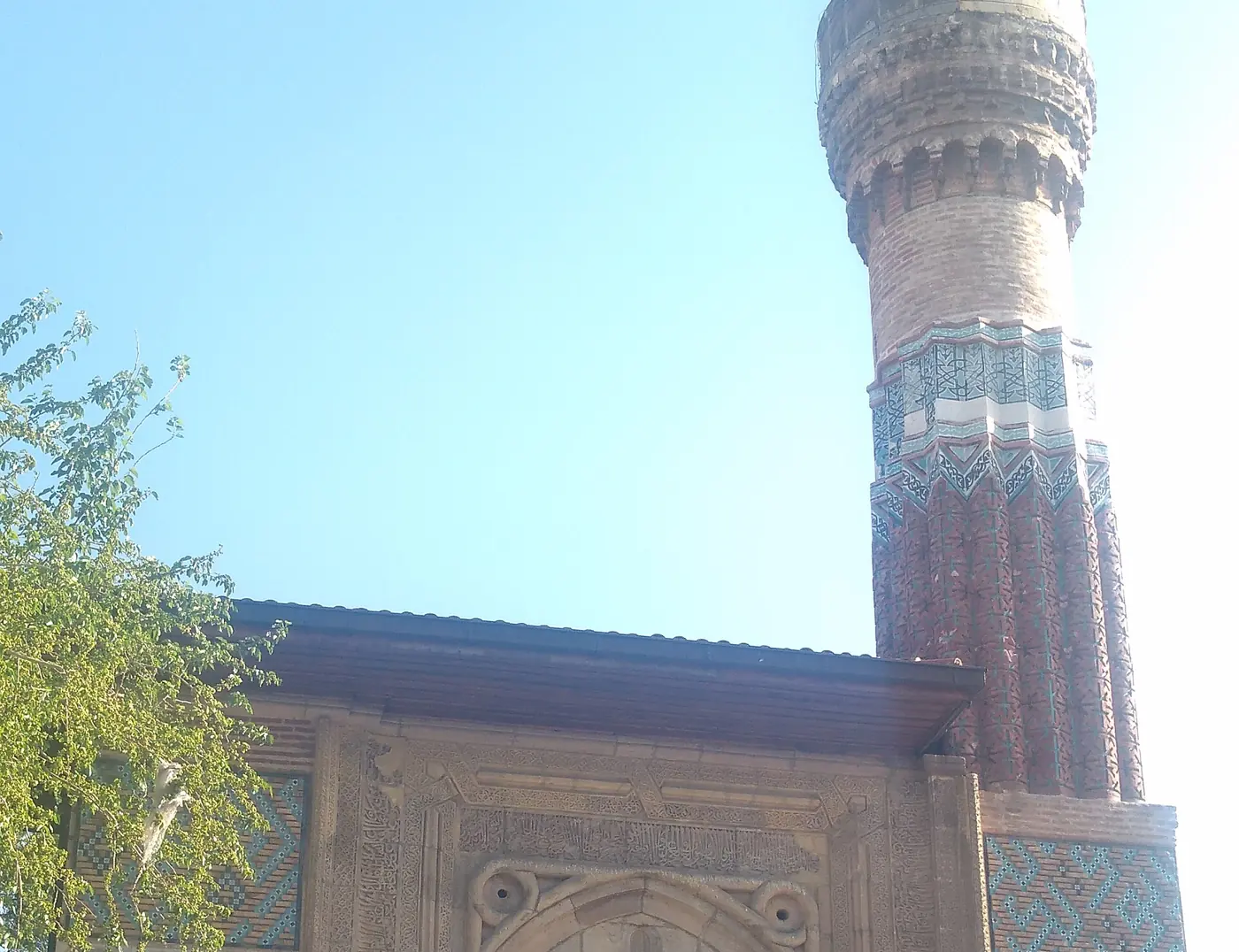
4 Sahip Ata Vakıflar Eserleri Müzesi
The Sahib-i Ata complex pairs a Seljuk mosque finished in 1283 with a refurbished madrasa. The madrasa is now a museum of Seljuk-era arts. It stands next to the Konya Archaeological Museum.
- Mosque completed: 1283 (per Wikivoyage)
- Madrasa: Now a museum of foundation works
- Neighbour: Konya Archaeological Museum
Show map
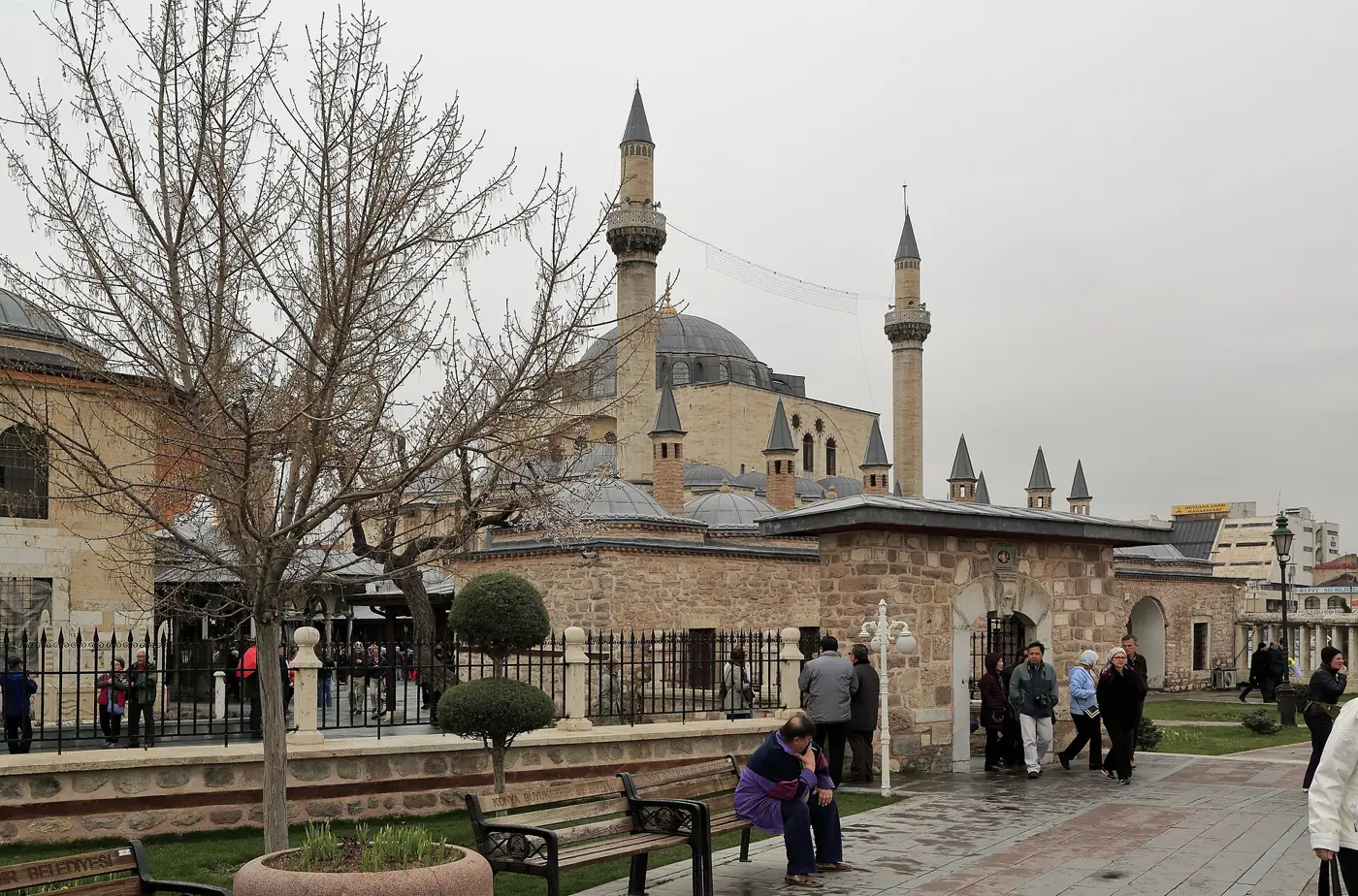
5 Selimiye Camii
The Selimiye Mosque is a classical Ottoman mosque of the 16th century. It stands in the plaza outside the Mevlana Museum. In contrast to the brick Seljuk buildings, its style is the later Ottoman one.
- Style: Classical Ottoman
- Completed: 1567 (per Wikivoyage)
- Location: Plaza outside the Mevlana Museum
Show map
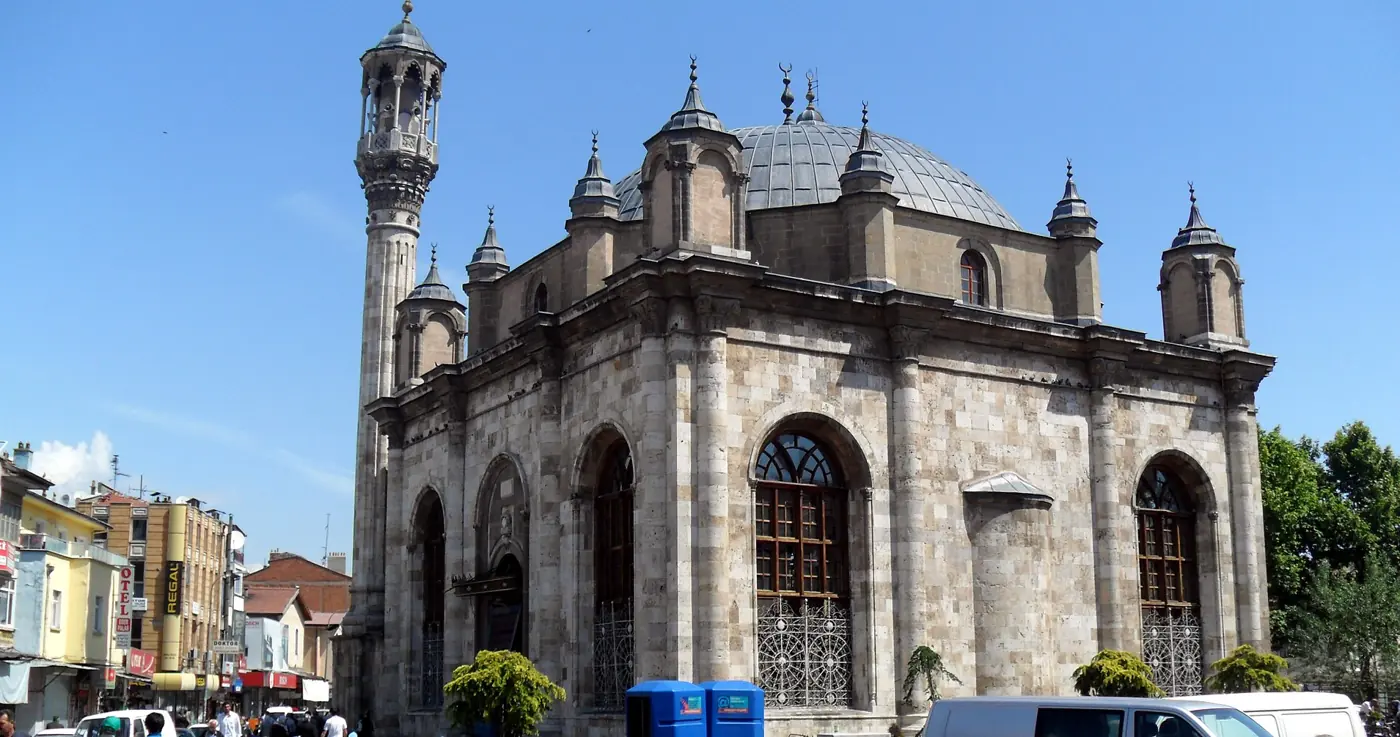
6 Aziziye Camii
The Aziziye Mosque is an Ottoman mosque known for the columned balcony of its minaret. This feature is rare in Turkish mosques. It lies a block south of Mevlana Avenue.
- Style: Ottoman
- Feature: Columned minaret balcony
- Location: A block south of Mevlana Cd
Show map
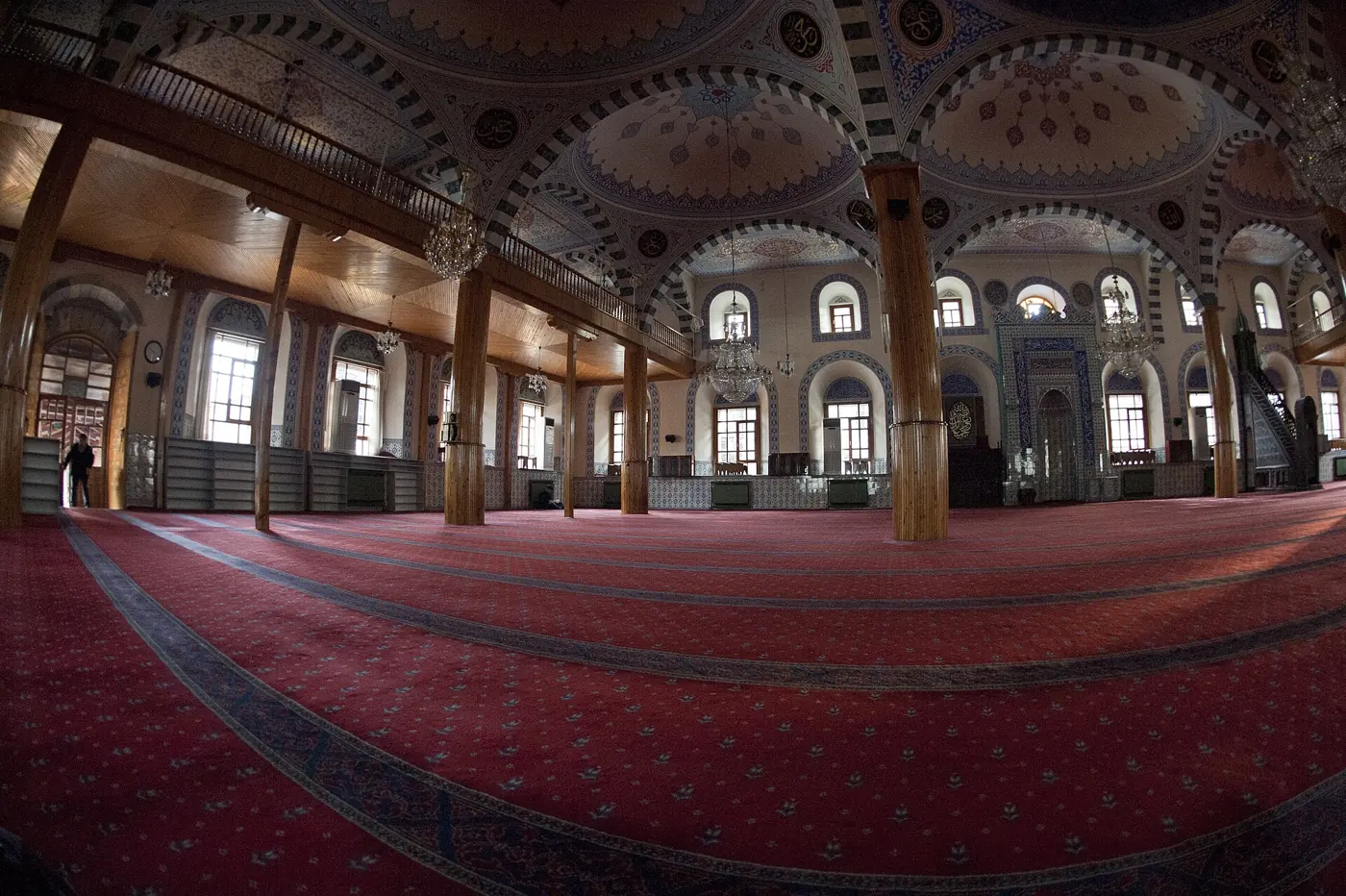
7 Kapu Camii
The Kapu Mosque is an ornate mosque near the Aziziye Mosque. It fits on the same short walk. Wikivoyage lists it among the sights near Mevlana Avenue.
- Location: One block south of Mevlana Cd
- Nearby: Aziziye Mosque, Mevlana Museum
Show map
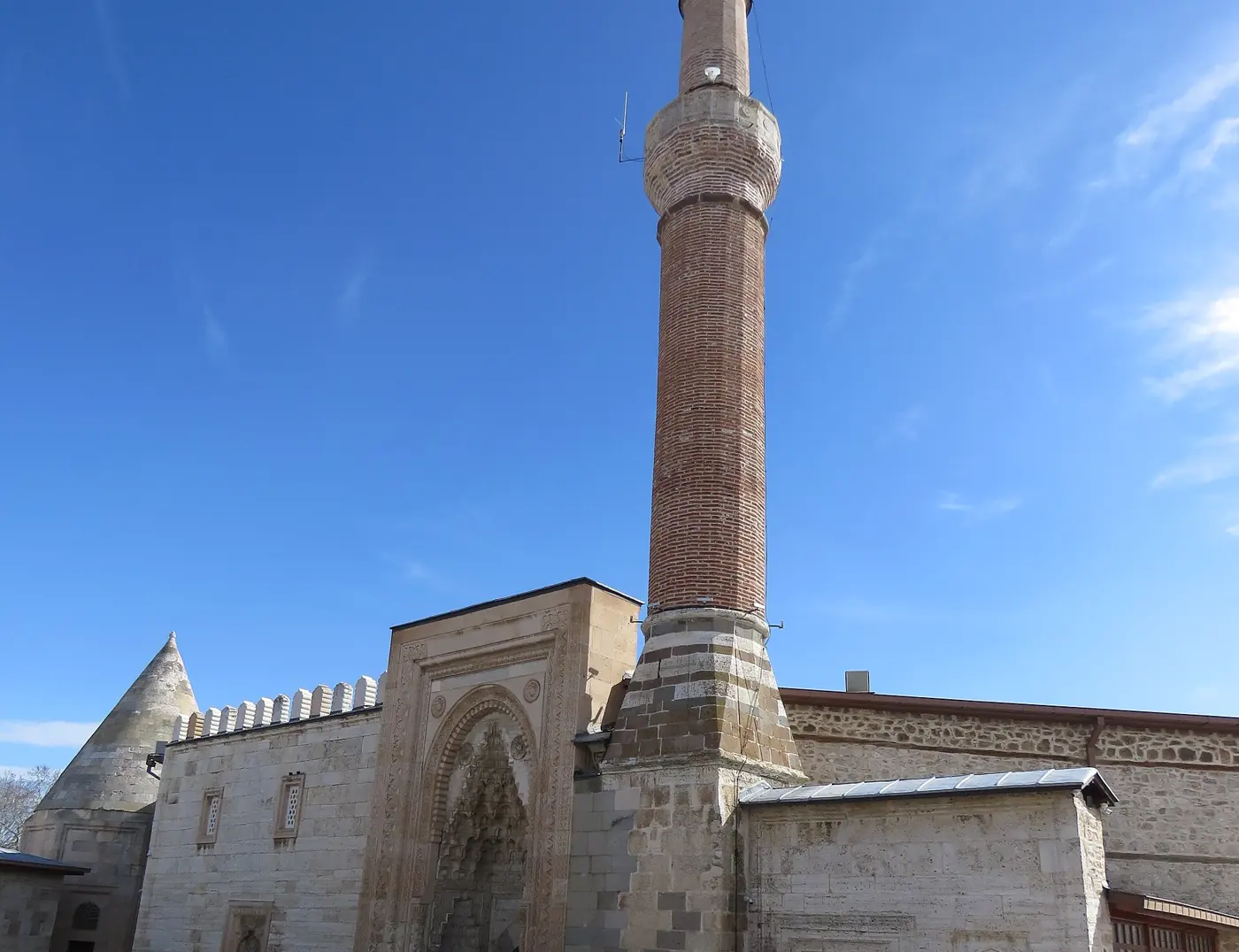
8 Eşrefoğlu Camii
The Esrefoglu Mosque is a 13th-century mosque in Beysehir, 100 m north of the lake. Our registry notes wooden columns. It suits a day trip with Lake Beysehir.
- Era: 13th century
- Location: Beyşehir, 100 m N of the lake
Show map
How do the Seljuk and Ottoman mosques compare?
The table compares the mosques by era and position. In short, the Seljuk mosques cluster around Alaaddin Hill, and the Ottoman ones cluster around the Mevlana Museum.
Therefore, a simple route goes from the hill down Mevlana Avenue to the museum.
Use this table to plan your order.
| Mosque | Era | Area | Note |
|---|---|---|---|
| Alaeddin | Seljuk | Alaaddin Hill | Sultans’ tombs in the courtyard |
| Iplikci | Seljuk, 1202 | Mevlana Avenue | Brick; rebuilt in the 16th century |
| Sahib-i Ata | Seljuk, 1283 | City centre | Madrasa museum next door |
| Selimiye | Ottoman, 1567 | Mevlana plaza | Classical Ottoman |
| Aziziye | Ottoman | South of Mevlana Avenue | Columned minaret balcony |
| Kapu | Ottoman | South of Mevlana Avenue | Ornate |
| Esrefoglu | 13th century | Beysehir | Day trip |
How do you get around between the mosques?
Take the tram to Alaaddin Hill, then walk along Mevlana Avenue. The Mevlana area is on foot from there. For Beysehir, you need a car, because the lake area lies far west of the city. Therefore, plan Beysehir as a separate day.
Moreover, a private driver saves waiting at stations. A licensed guide can explain the architecture.
Movement tips:
- Use the tram to reach Alaaddin Hill
- Walk the Mevlana Avenue line
- Use a taxi for Sahib-i Ata if you are tired
- Hire a car with driver for Beysehir
What practical tips apply to visiting mosques?
These are active mosques. Dress modestly, cover your shoulders and knees, and remove your shoes at the entrance. Avoid visits during prayer, especially at midday on Fridays. Photography is usually fine outside, but ask before you photograph worshippers. Moreover, plan a break with water and shade, and check the weather forecast the day before. A relaxed pace gives better photographs, more time to read information boards, and less pressure when a site is closed or crowded. If something changes, you can adjust the order of stops without losing the whole day.
Remember:
- Women should carry a scarf
- Keep your voice low
- Check hours locally; Wikivoyage data may be old
- Avoid Friday midday prayer time
- Respect restoration barriers
What makes Seljuk and Ottoman mosques different?
Seljuk mosques in Konya often use brick and tile, and many sit inside larger complexes with a madrasa. The Iplikci Mosque and the Alaeddin Mosque show this early Anatolian style. Ottoman mosques, such as the Selimiye, use a classical form with a central dome and a pencil minaret. Therefore, a short walk lets you compare two architectural traditions.
Moreover, the Aziziye Mosque stands out for its minaret with a columned balcony, which Wikivoyage and Wikipedia describe as rare in Turkey. In contrast, the Kapu Mosque is noted for its ornate look. We do not state more than our sources support, so a guide can add the details of decoration and dates.
Look for these details:
- Brick and tile work on Seljuk buildings
- Central domes and pencil minarets on Ottoman buildings
- The columned minaret balcony at the Aziziye Mosque
- Courtyard tombs at the Alaeddin Mosque
Which mosque should you choose if time is short?
If you have only one hour, choose the Alaeddin Mosque on Alaaddin Hill and the Selimiye Mosque near the Mevlana Museum. These two represent the Seljuk and the Ottoman eras. If you have two or three hours, add the Iplikci, Aziziye and Kapu mosques. Therefore, your plan grows with your time, and each stop is close to the previous one.
However, remember that mosques close to visitors during prayer. Check the daily prayer times and plan around them. A morning visit is usually calm, while Friday midday is the busiest time and is best avoided.
Choose your route by time available.
| Time available | Suggested mosques | Why |
|---|---|---|
| 1 hour | Alaeddin and Selimiye | One Seljuk and one Ottoman landmark |
| 2-3 hours | Add Iplikci, Aziziye and Kapu | Fills the walk along Mevlana Avenue |
| Half day | Add Sahib-i Ata complex | Mosque plus Seljuk arts museum |
| Full day | Add Esrefoglu in Beysehir | Lake and Seljuk mosque trip |
How can you combine the mosques with other Konya sights?
The mosques sit beside other attractions, so a single walk can cover several themes. Alaaddin Hill also holds the Seljuk palace ruins and is close to the Karatay and Ince Minare madrasas. The Mevlana plaza holds the museum, the Selimiye Mosque and the Sema venue is nearby. Therefore, treat the mosques as anchors for a day, not as separate trips.
Moreover, a tea break between stops helps in hot weather. Local cafes and markets lie along Mevlana Avenue, but we list only places registered on our site, so ask your hotel or guide for current recommendations. In short, keep the plan light, and let your pace follow the prayer times and the weather.
Good pairings:
- Alaeddin Mosque with the Seljuk palace ruins
- Selimiye Mosque with the Mevlana Museum
- Aziziye and Kapu mosques as one short loop
- Sahib-i Ata mosque with the museum next door
What does a sample day plan look like?
Start at Alaaddin Hill and the Alaeddin Mosque in the morning. Walk to the Iplikci Mosque, then continue to the Mevlana plaza for the Selimiye Mosque. After lunch, visit the Aziziye and Kapu mosques. If you still have energy, finish at the Sahib-i Ata complex.
The plan below fits one day in the city centre.
| Time | Stop |
|---|---|
| Morning | Alaaddin Hill and Alaeddin Mosque |
| Late morning | Iplikci Mosque |
| Midday | Selimiye Mosque and Mevlana Museum plaza |
| Afternoon | Aziziye, Kapu, then Sahib-i Ata |
Frequently asked questions
Which is the oldest mosque in Konya in this guide?
The Iplikci Mosque dates to 1202, according to Wikivoyage. The Alaeddin Mosque is also Seljuk.
Can tourists enter the Alaeddin Mosque?
Wikivoyage lists daily hours, but access depends on prayer and restoration. Check locally.
What is special about the Aziziye Mosque?
Its minaret has a columned balcony, which is rare in Turkish mosques.
Where is the Selimiye Mosque?
It stands in the plaza outside the Mevlana Museum.
Is there a mosque for a day trip?
The Esrefoglu Mosque in Beysehir is a 13th-century mosque near Lake Beysehir.
What should I wear?
Modest clothing, covered shoulders and knees, and a scarf for women.
How long do the city mosques take?
Plan about half a day for the main city mosques at a relaxed pace.
Plan this with TurkGT
TurkGT can provide a licensed guide for Konya’s mosques, a private car with driver for Beysehir, or a transfer from the airport. Send your dates and group size by WhatsApp or through the form, and we will reply with a plan.
Request a booking
Related guides
- Top Attractions in Konya: A Visitor Guide to the Main Sights
- Mevlana Museum in Konya: Visit Guide and Nearby Sights
- Konya’s Seljuk Madrasas: Ince Minare, Karatay and Sircali
- Top 10 Hotels in Konya: Where to Stay by Area and Budget
- Best Restaurants in Konya: 10 Top Picks for Local Food
- Catalhoyuk and Archaeological Sites Around Konya
- Best Places to Shop in Konya: Malls and Markets
Related destinations and attractions
Explore more city guides
Sources
Last reviewed: 2026-11-21.