
Hierapolis is a Hellenistic and Roman spa city on the hill above the Pamukkale terraces, and it is part of the same UNESCO World Heritage Site. Allow three to four hours to see the theatre, the necropolis, the main street, the agora and the museum. Start early, wear sturdy shoes and bring water.
Key facts
- Site: Hierapolis, above the Pamukkale travertines
- Era: Hellenistic and Roman
- Designation: UNESCO World Heritage Site (with Pamukkale)
- Main sights: Theatre, necropolis, Plutonium, Frontinus Gate, agora, basilica baths
- Museum: Hierapolis Archaeology Museum, in the old Roman baths
- Suggested time: 3-4 hours for the main sights
- Swimming: Antique Pool inside the site, separate fee
- Tickets and hours: Check the official page or Google Maps
What is Hierapolis and why visit it?
Hierapolis was a Hellenistic and Roman spa city built beside hot springs on the hill above today’s Pamukkale. Visitors come for its large theatre, its huge ancient cemetery and its colonnaded main street. Moreover, the ruins sit directly above the white terraces, so one visit and one day cover both sights.
The city grew because of its thermal water, which people used for bathing and healing. Therefore the ruins include baths, a sacred cave and a museum as well as the usual theatre and agora. In contrast to many Aegean sites, Hierapolis combines archaeology with a natural landscape that you can see from almost every viewpoint.
How did we choose the sights in this guide?
We chose these places from official designations (UNESCO World Heritage listing), location inside the Denizli province, and details taken from official and reference sources. We do not accept payment for placement. Opening hours, ticket rules and conditions change, so check the place’s page or Google Maps before you go, and read current visitor feedback there.
The nine places below are the parts of Hierapolis that official and reference sources describe most clearly. They are also the stops that fit a single walking route from the northern gate to the museum. However, the site is large, so treat the list as a plan and skip stops if the heat or the queue is heavy.
Which are the main sights inside Hierapolis?
The main sights are the Roman theatre, the necropolis, the Plutonium, the Frontinus Gate and street, the agora, the basilica baths and the Martyrium of Saint Philip. Together they show the city as a spa town, a pagan sanctuary and later a Christian pilgrimage place.
Start with the overview card, then follow the cards in the order below. Each card gives the period, the type of building and its place inside the site. Furthermore, the facts come from the registered sources, so they stay general on purpose.
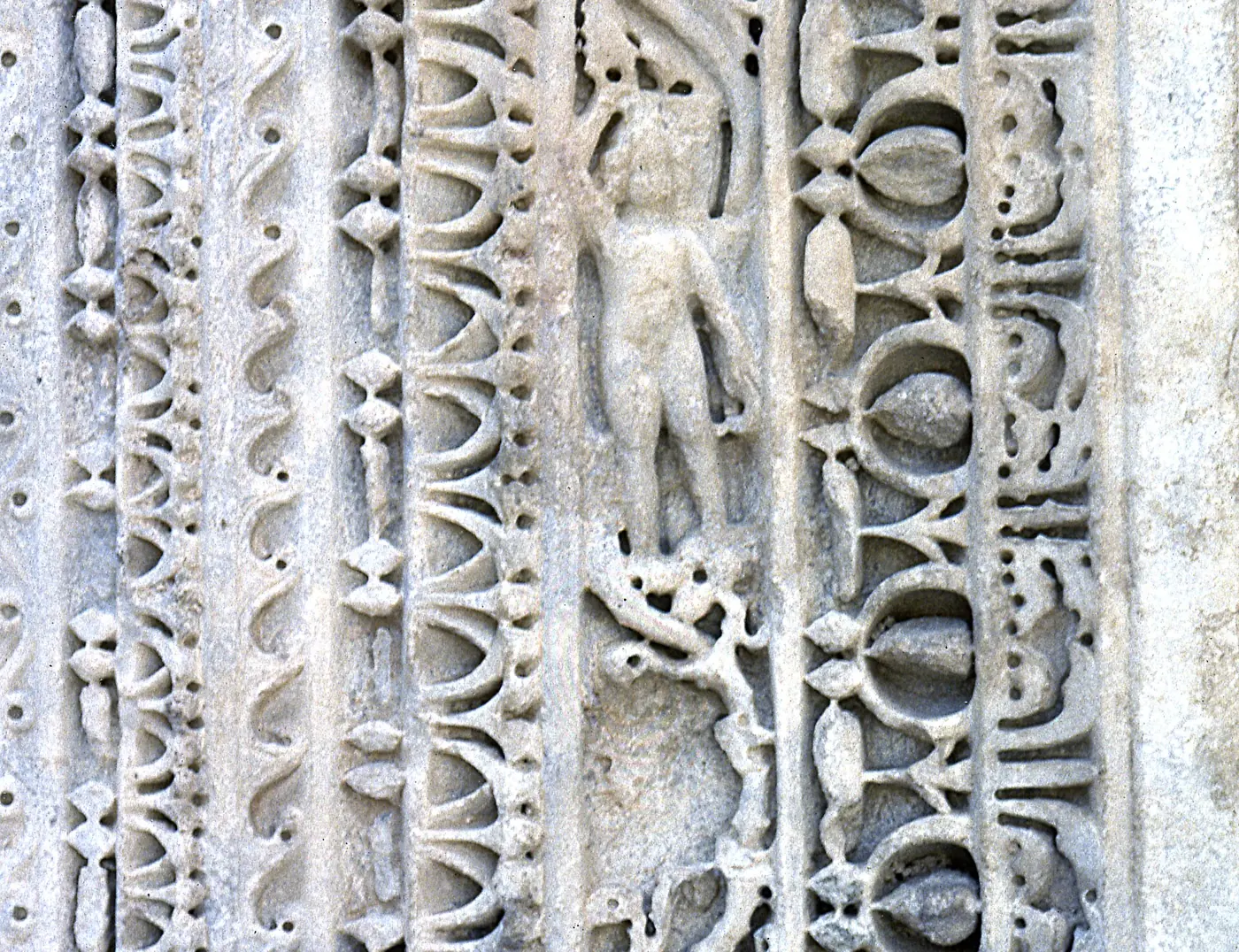
1 Hierapolis Antik Kenti
This is the overview of the whole Hellenistic and Roman spa city. It sits above the Pamukkale terraces and holds the theatre, the necropolis and the Antique Pool. Use it as your mental map before you walk.
- Era: Hellenistic and Roman
- Designation: UNESCO World Heritage Site
Show map
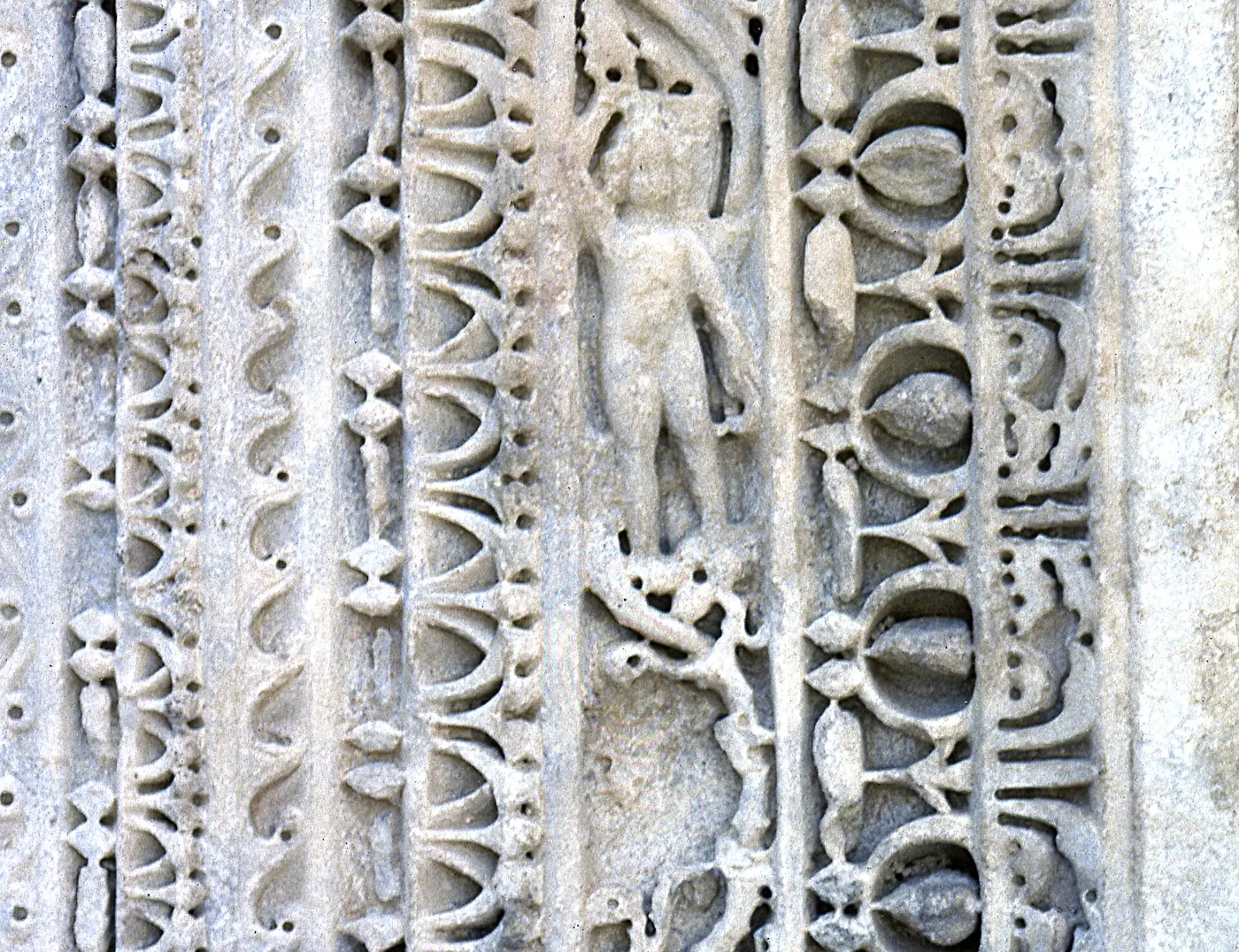
2 Hierapolis Antik Tiyatrosu
The large Roman theatre climbs the hillside and keeps a richly carved stage building. It has a Hadrianic origin and was rebuilt in the early 3rd century AD under Septimius Severus. Climb the seats for a view over the site.
- Period: Hadrianic origin, rebuilt under Septimius Severus
- Type: Roman theatre
Show map
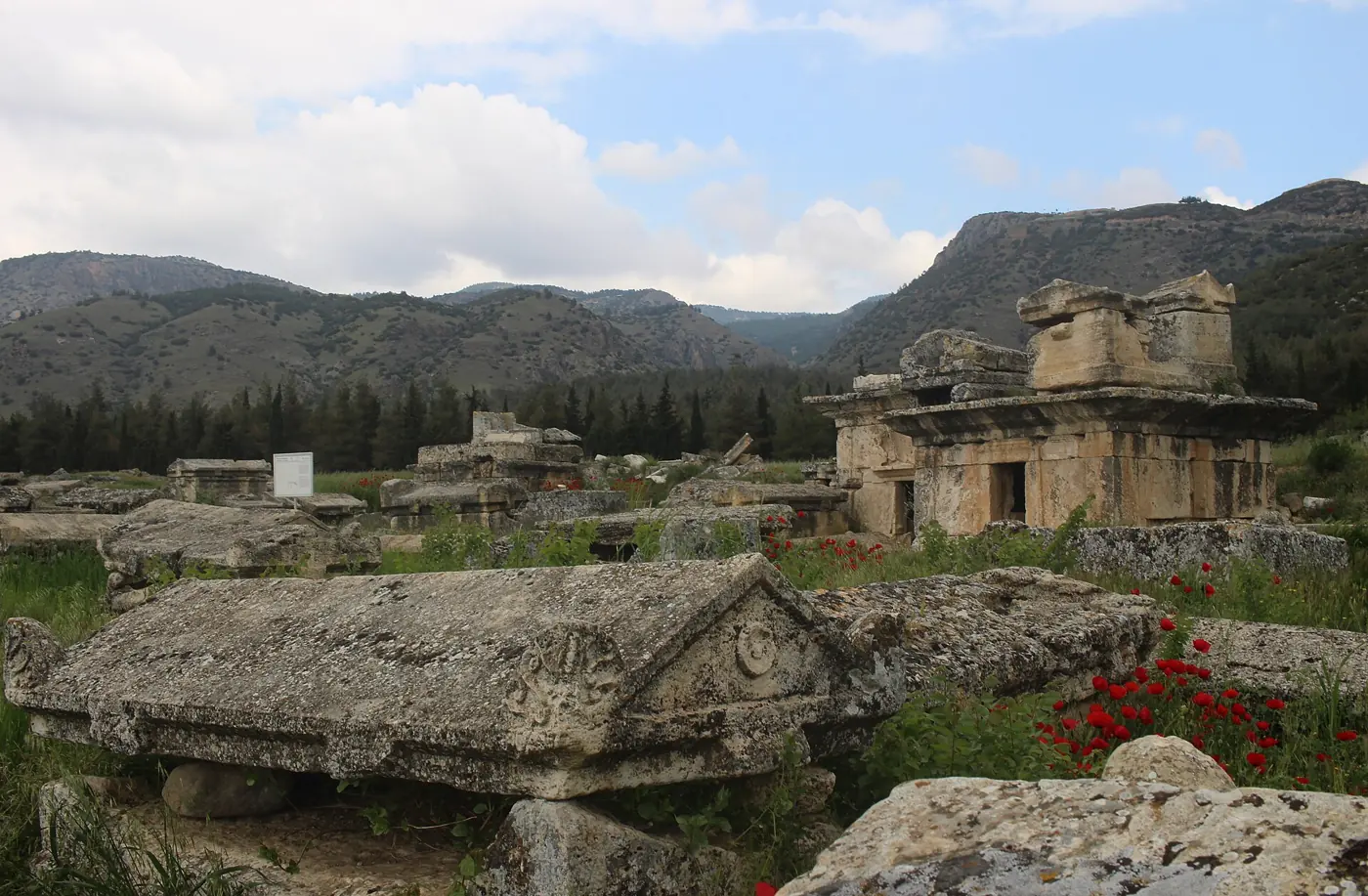
3 Hierapolis Nekropolü
This is one of the largest and best-preserved ancient cemeteries in Anatolia. You will see tumuli, house-tombs and sarcophagi spread across the northern side. It rewards a slow walk and a camera.
- Type: Ancient cemetery
- Tomb types: Tumuli, sarcophagi, house tombs
Show map
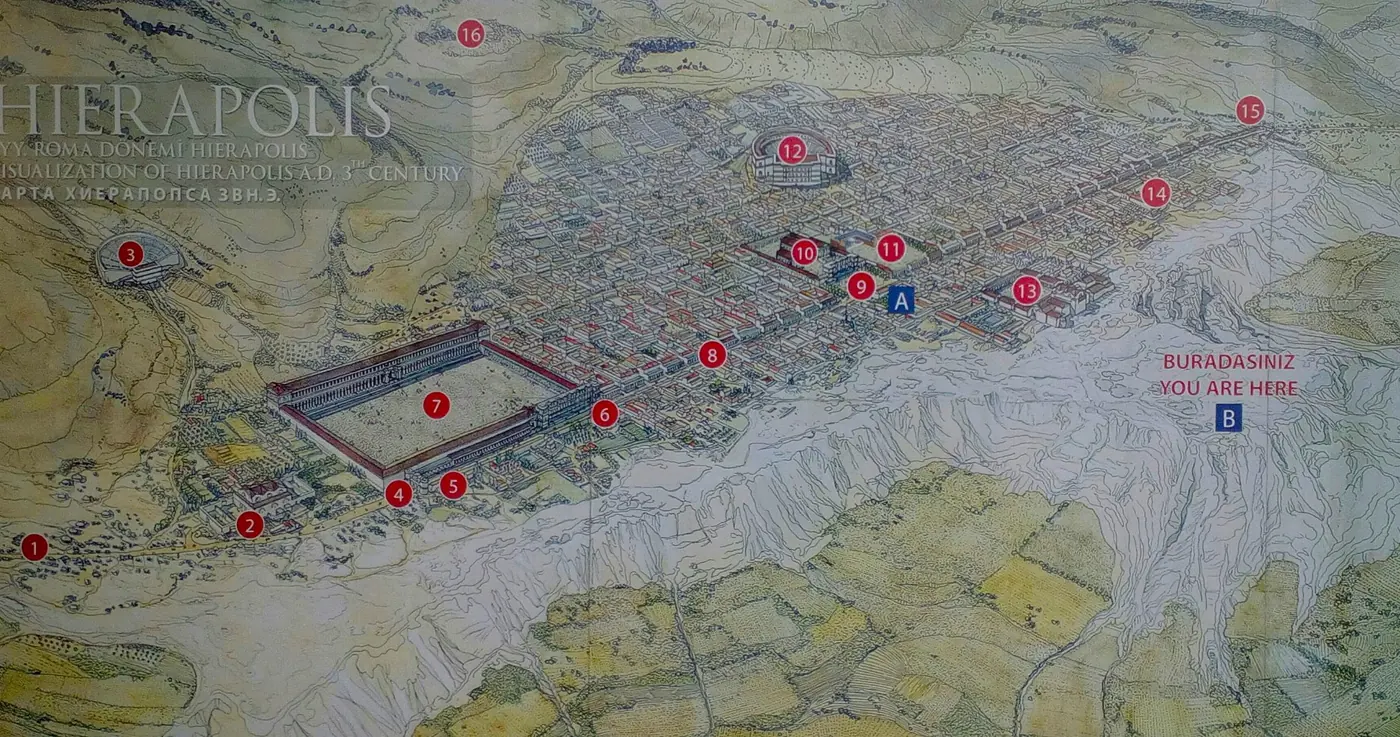
4 Plutonyum
The Plutonium was a cave sanctuary known as the gate to Hades. It released toxic carbon dioxide, and priests used it in rituals linked to Pluto and Cybele. Italian archaeologists excavated it, so follow site signs and barriers.
- Type: Ancient cave sanctuary
- Associated with: Pluto and Cybele
Show map
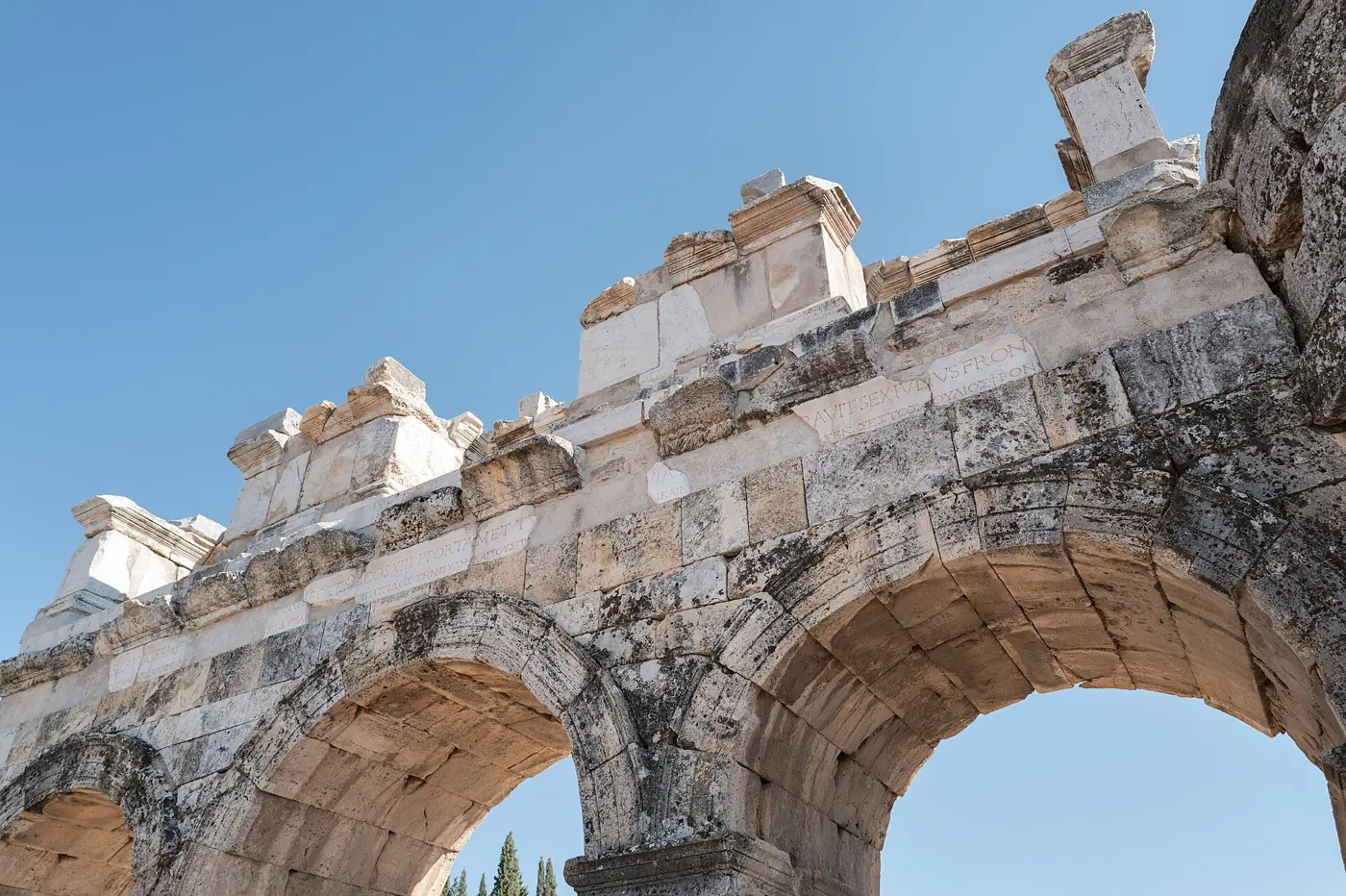
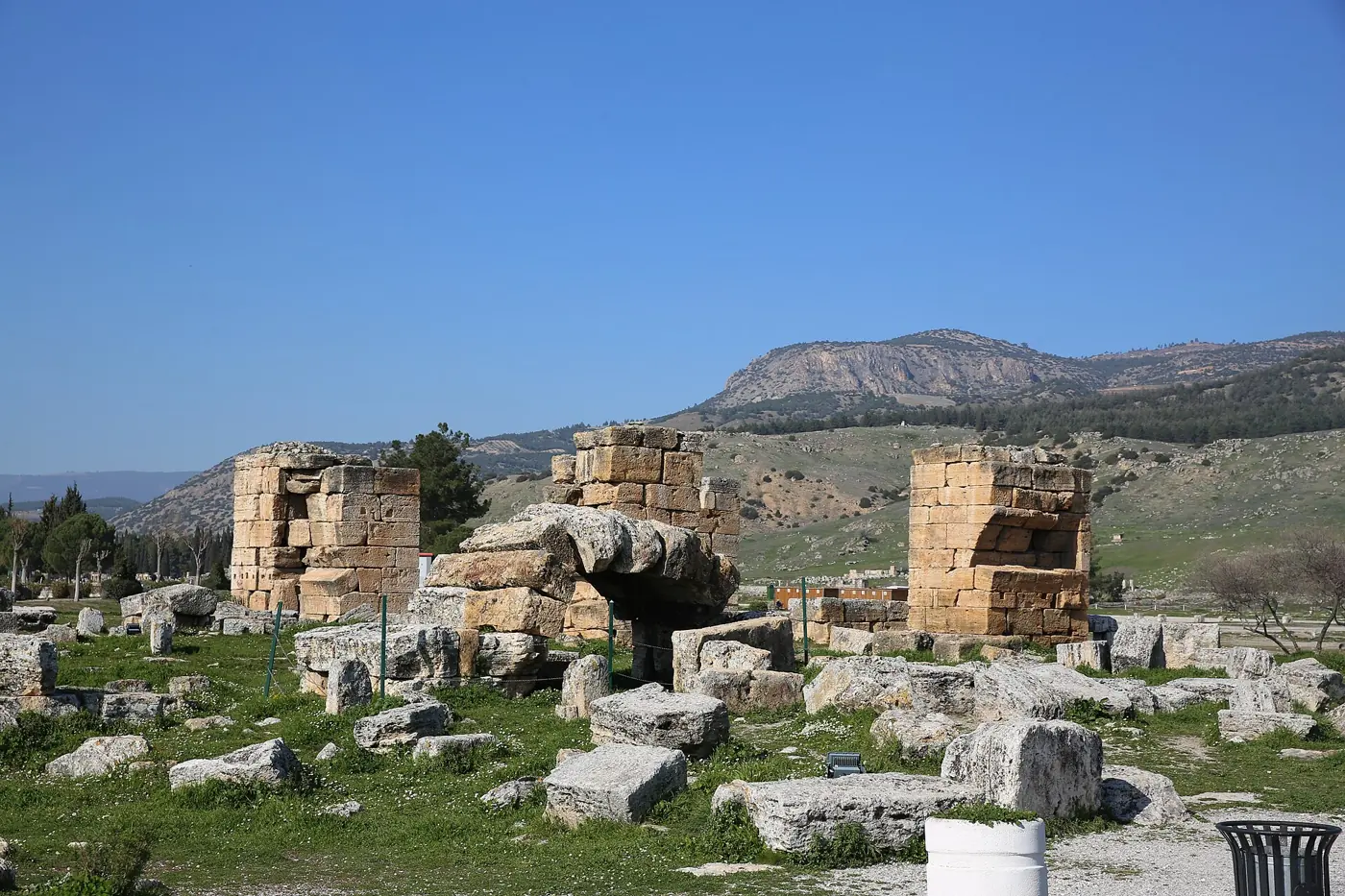
5 Frontinus Kapisi
This monumental twin-towered gate stands at the northern end of the main colonnaded street. It dates to the late 1st century AD, in the time of Domitian. It is the natural start or end of a north-south walk.
- Period: Late 1st century AD (Domitian)
- Type: Monumental city gate
Show map
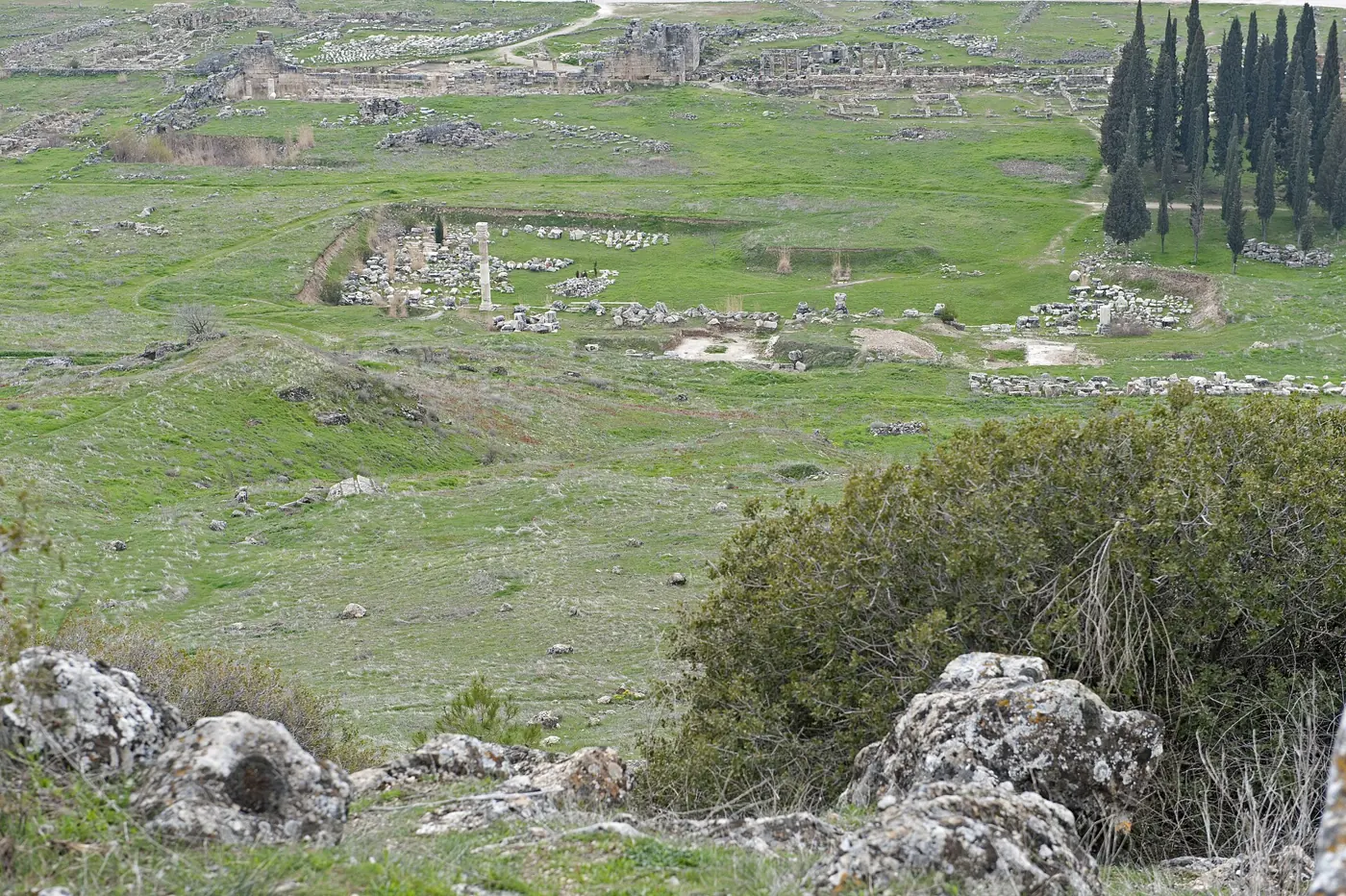
6 Hierapolis Agorasi
The agora was the vast market square of Hierapolis, surrounded by colonnades. It is one of the largest known in Anatolia. The open space makes it a good place to rest and picture the city’s trade.
- Type: Roman agora
- Features: Colonnaded square
Show map
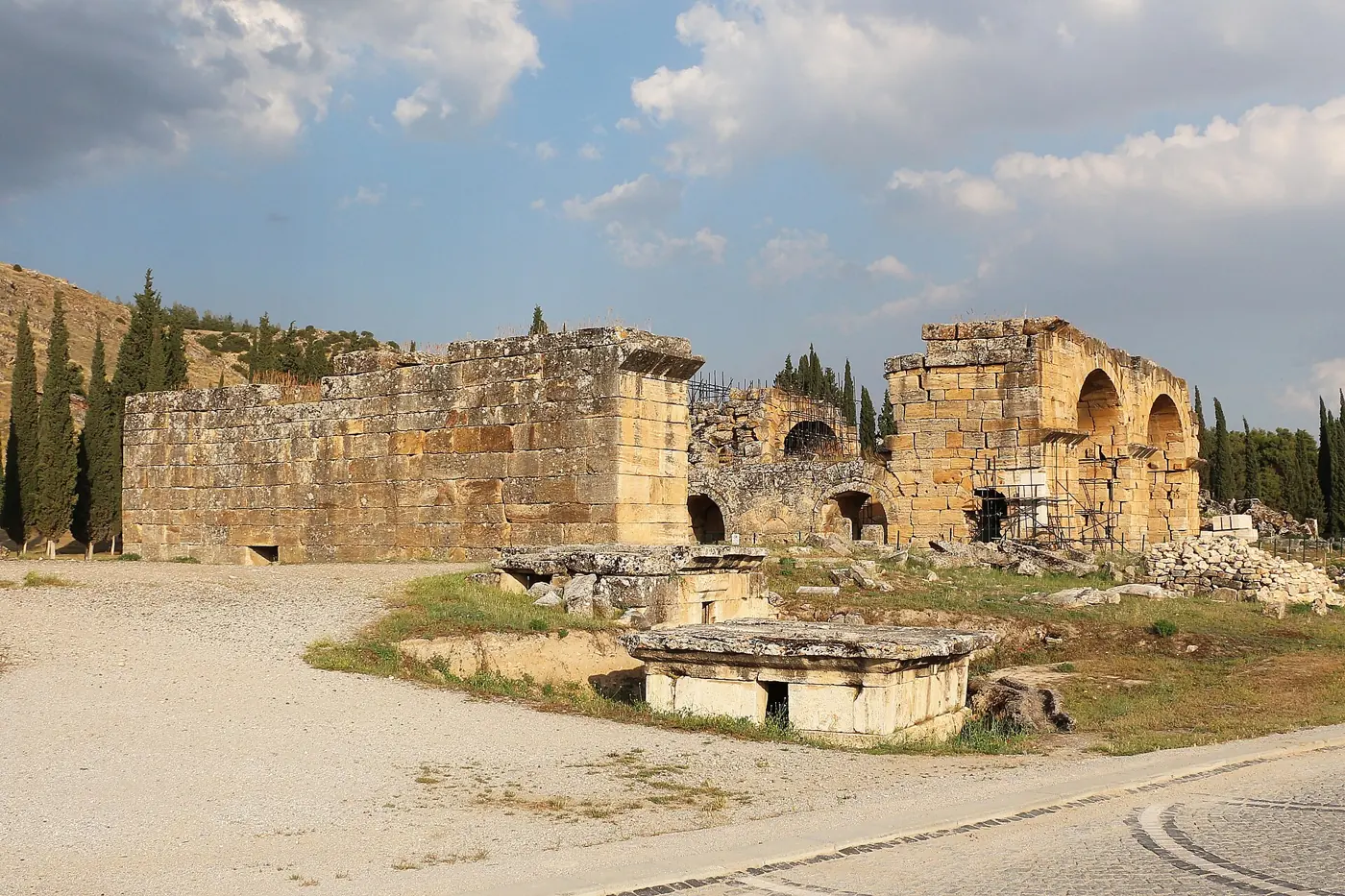
7 Hierapolis Bazilika Hamami
These ruined Roman baths have large vaulted halls and a later basilica phase. They show how bathing shaped the spa city. Later Byzantine reuse adds another layer to the story.
- Type: Roman bath complex
- Period: Roman, with later Byzantine reuse
Show map
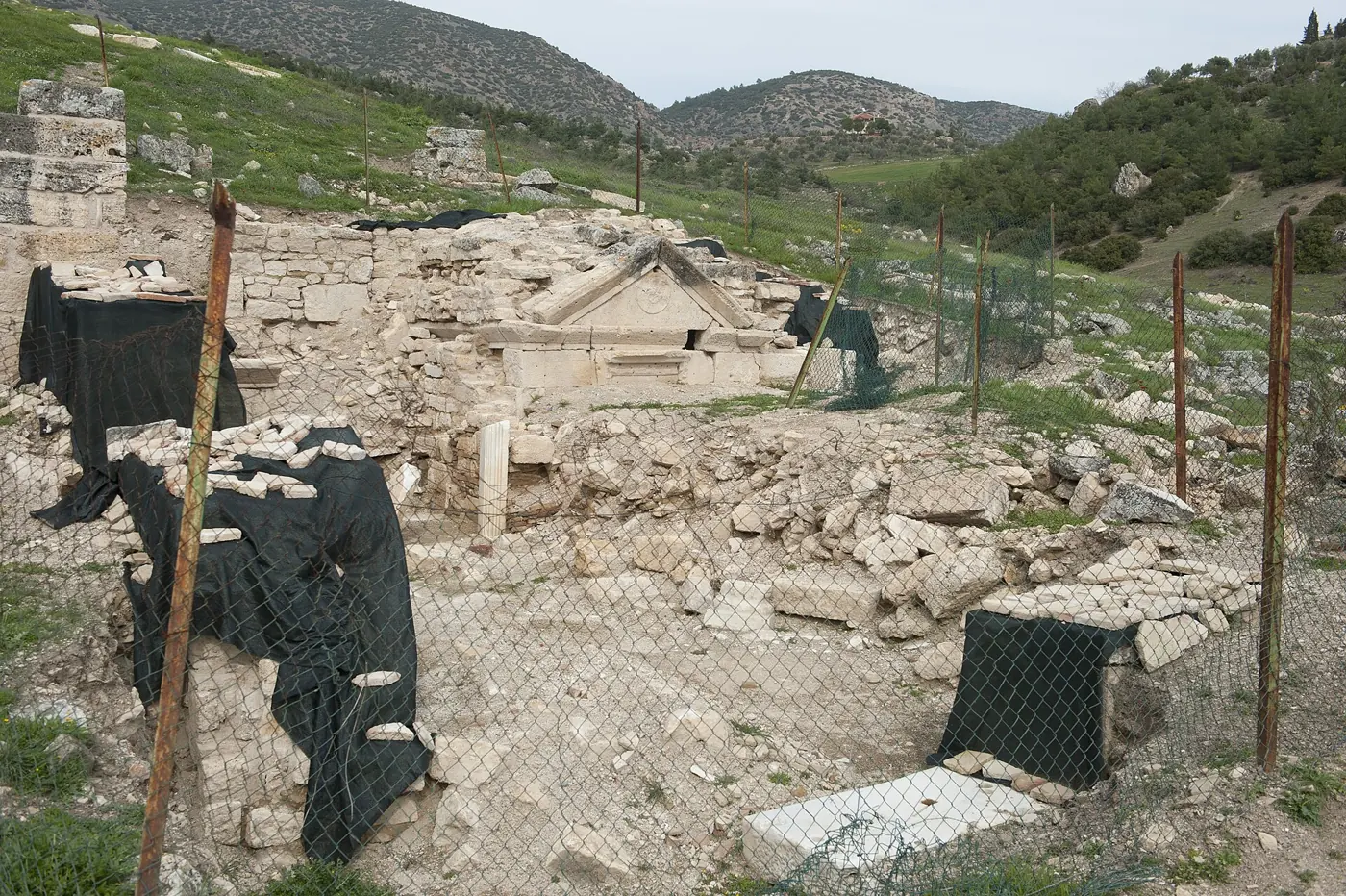
8 Aziz Philippus Martyriumu
This octagonal Byzantine church complex stands on a hill and was long linked to the Apostle Philip. Italian archaeologists identified the tomb in 2011. It is the key stop for Christian heritage in Hierapolis.
- Period: Early 5th century AD
- Plan: Octagonal
Show map
9 Hierapolis Arkeoloji Muzesi
The museum occupies the old Roman baths and shows sarcophagi, reliefs and finds from Hierapolis, Laodicea and Tripolis. Visit it to connect the ruins with objects. The Ministry of Culture and Tourism operates it.
- Housed in: Roman bath building
- Collections: Sarcophagi, sculpture, pottery
Show map
How do the main sights compare?
The table compares the stops by type and by the time they usually need. The time column is a planning guide, not an official figure, so adjust it to your pace. In contrast to the theatre, the necropolis and the agora are open spaces with little shade.
Use the table to drop stops when you are short of time. For example, a two-hour visit can keep the theatre, the main street and the museum. However, the necropolis alone can fill an hour for keen walkers.
The table lists each stop, what it is and how long we suggest allowing.
| Stop | Type | What to look for | Planning time |
|---|---|---|---|
| Theatre | Roman theatre | Carved stage building, hillside seats | 30-45 min |
| Necropolis | Ancient cemetery | Tumuli, sarcophagi, house tombs | 45-60 min |
| Plutonium | Cave sanctuary | Gate to Hades, ritual use | 15 min |
| Frontinus Gate | City gate | Twin towers, start of main street | 15 min |
| Agora | Market square | Colonnades, open space | 20 min |
| Basilica baths | Roman baths | Vaulted halls, basilica phase | 20 min |
| Martyrium of Saint Philip | Byzantine church | Octagonal plan, tomb of Philip | 30 min |
| Archaeology Museum | Museum | Sarcophagi, reliefs, local finds | 45 min |
How do you get to Hierapolis and move around it?
Hierapolis lies in Pamukkale, in Denizli province, and travellers normally reach it from Denizli city or from nearby hotels. A private car with a driver drops you at the entrance and meets you at the exit you choose. This matters because the site is long and the two ends are far apart.
Inside the site you walk. Paths are uneven and partly stone, and slopes can be steep near the theatre. Therefore plan a one-way route so you do not repeat the climb. Ask your driver or guide where to start, and check the official page for the current gate and parking arrangements.
This table shows common ways to reach the site and what each one suits.
| Option | Suits | Main advantage | Watch out for |
|---|---|---|---|
| Private car with driver | Families, groups, mixed ages | Door-to-door, flexible pick-up point | Agree the meeting gate in advance |
| Own hired car | Independent travellers | Full control of timing | Parking and gate rules, check locally |
| Local transport from Denizli | Budget travellers | Low cost | Schedules change, check locally |
| Hotel transfer | Guests staying in Pamukkale | Simple and short | Confirm times with the hotel |
What practical tips help on the day?
Go early or late in the day to avoid the strongest sun, and carry water. There is little shade among the ruins. Moreover, comfortable shoes with grip matter more than anything else, because stone surfaces can be slippery.
Bring a swimsuit if you want to use the Antique Pool, since swimming carries a separate fee. Check ticket details, opening times and any museum rules on the official page or Google Maps before you leave. Finally, respect barriers around excavated areas and do not climb on the ruins.
Keep this short checklist in your bag.
- Wear sturdy shoes with grip.
- Carry water and a hat.
- Bring a swimsuit and towel for the Antique Pool.
- Check ticket and opening details on the official page or Google Maps.
- Follow site signs and barriers around excavations.
- Leave space in your plan for the museum.
What does a sample half-day plan look like?
A half-day plan starts at the museum or at the Frontinus Gate, depending on your driver’s drop-off point. Walk down the main colonnaded street, visit the agora and the baths, then climb to the theatre and finish above the terraces. This order keeps the steepest climb in the middle, not at the end.
If you have a full day, add the necropolis and the Martyrium of Saint Philip. In contrast to a rushed visit, a full day lets you rest in the shade and swim in the Antique Pool at the end.
The table gives one possible half-day order.
| Step | Stop | Why this order |
|---|---|---|
| 1 | Frontinus Gate | Northern entrance, cool early start |
| 2 | Main street and agora | Flat walking, easy pace |
| 3 | Basilica baths and museum | Shade and indoor stop |
| 4 | Theatre | Climb with energy still left |
| 5 | Terrace viewpoints | End with the white view |
Why does the history of Hierapolis matter for visitors?
Hierapolis shows how a natural spring turned into a city with baths, temples, a market and a vast cemetery. Moreover, later periods added Christian buildings, so one hillside tells several stories. Therefore a short introduction from a guide or a museum visit makes the walk far more rewarding than wandering alone.
Read the site signs as you go, and compare what you see with the objects in the museum. In contrast to a quick photo stop at the terraces, Hierapolis rewards patience.
Frequently asked questions
How long should I spend at Hierapolis?
Allow three to four hours for the main sights and more if you add the necropolis, the museum and a swim.
Is Hierapolis part of the same site as the Pamukkale terraces?
Yes. Hierapolis and the Pamukkale travertines form one UNESCO World Heritage Site.
Can I swim at Hierapolis?
Yes, in the Antique Pool inside the site. A separate swimming fee applies beyond the site ticket.
Is there a museum at Hierapolis?
Yes. The Hierapolis Archaeology Museum is inside the old Roman baths and shows finds from Hierapolis, Laodicea and Tripolis.
What is the Plutonium?
It is an ancient cave sanctuary known as the gate to Hades, linked to Pluto and Cybele and excavated by Italian archaeologists.
What should I wear?
Wear sturdy shoes, light clothes, a hat and sun protection. Bring a swimsuit if you plan to swim.
Where do I check ticket prices and hours?
Check the official page or Google Maps, because prices and hours change.
Should I visit with a guide?
A licensed guide helps you follow the layout and the history, especially in the necropolis and at the Martyrium of Saint Philip.
Plan this with TurkGT
A private car with driver takes you to the gate you prefer and waits at the exit, and a licensed guide can explain the theatre, necropolis and Martyrium on site. Send your dates and group size by WhatsApp or the inquiry form and we will build the day around you.
Request a booking
Related guides
- Top Sights in Denizli Province: Visit Guide
- Laodicea and the Ancient Biblical Cities Near Denizli
- Hierapolis Museum and Archaeology Sites Around Denizli
- Best 10 Hotels in Pamukkale: Thermal, Boutique and Village
- Best Restaurants in Pamukkale and Denizli: Top Picks
- Pamukkale Thermal Pools and White Travertines: Visit Guide
- Best Shopping in Denizli: Malls, Bazaars and Sweet Shops
→ Denizli and Pamukkale travel guides
Related destinations and attractions
Explore more city guides
Sources
Last reviewed: 2026-11-21.