
Laodicea, Colossae and Hierapolis lie within a short drive of Denizli, and all three appear in the New Testament. Laodicea is one of the seven churches of Revelation and has restored streets and a church. Colossae is largely unexcavated, while Hierapolis holds the Martyrium of Saint Philip.
Key facts
- Region: Lycus valley, Denizli province
- Laodicea: About 6 km from Denizli centre; one of the seven churches of Revelation
- Colossae: Near Honaz; addressee of the Epistle to the Colossians
- Hierapolis: Martyrium of Saint Philip above Pamukkale
- Tripolis: Buldan area, Maeander valley
- Suggested time: One full day for Laodicea, Hierapolis and Colossae
- Best for: Heritage travellers, pilgrims, history groups
- Tickets and hours: Check each site’s page or Google Maps
Which ancient biblical cities are near Denizli?
Near Denizli you can visit Laodicea, Hierapolis, Colossae and Tripolis in the Lycus and Maeander valleys. Laodicea, Hierapolis and Colossae are linked to New Testament texts, and Laodicea is one of the seven churches of Asia in the Book of Revelation. Therefore the area works well for a heritage day.
The cities lie close together, so one day can cover the main three with a car. However, they differ a lot. Laodicea has active excavations and restored streets, Hierapolis has a large and busy site, and Colossae is mostly a quiet, unexcavated mound.
How did we choose these sites?
We chose these places from official designations (UNESCO World Heritage listing), location inside the Denizli province, and details taken from official and reference sources. We do not accept payment for placement. Opening hours, ticket rules and conditions change, so check the place’s page or Google Maps before you go, and read current visitor feedback there.
For this guide we kept sites with a clear New Testament or early Christian link, plus Tripolis as a nearby ancient city with excavated remains. Where a source gives only a general description, we repeat it in general terms and do not add details.
What can you see at Laodicea on the Lycus?
Laodicea was a major Hellenistic and Roman city on the trade road to Ephesus, founded in the 3rd century BC under the Seleucids. It lies about 6 km from Denizli centre. Excavations continue, and restored colonnaded streets let you walk through the layout.
The site has a stadium, a western theatre and an early Christian church. The cards below list each part with its role. Moreover, the theatre looks across the Lycus valley towards Pamukkale, which makes it a good photo stop.
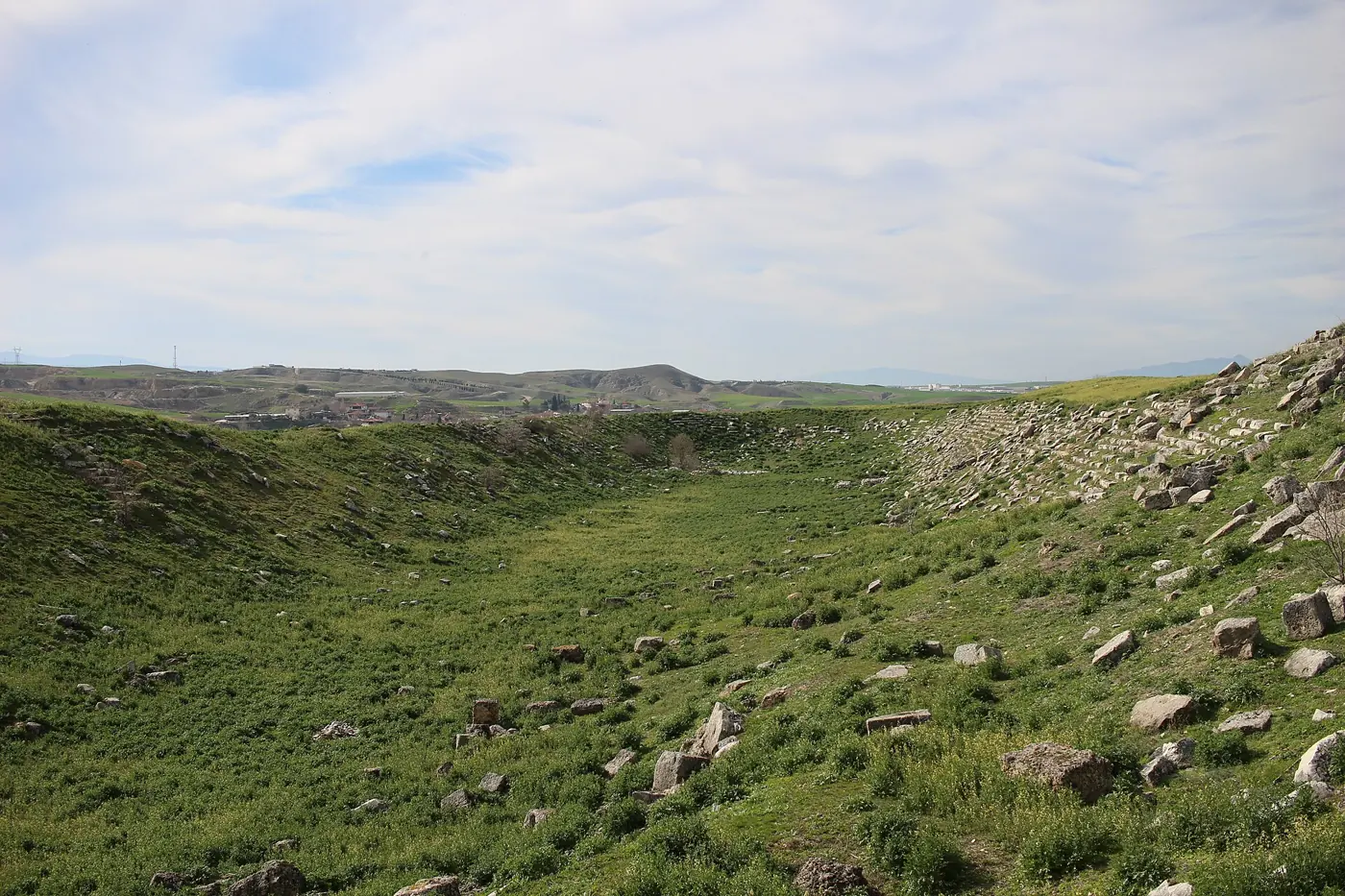
1 Laodikya Antik Kenti
Laodicea was a major city on the trade road to Ephesus and is named in Revelation as one of the seven churches of Asia. Excavations continue and colonnaded streets have been restored. Start here to understand the city plan.
- Founded: 3rd century BC (Seleucid)
- Distance: About 6 km from Denizli centre
Show map
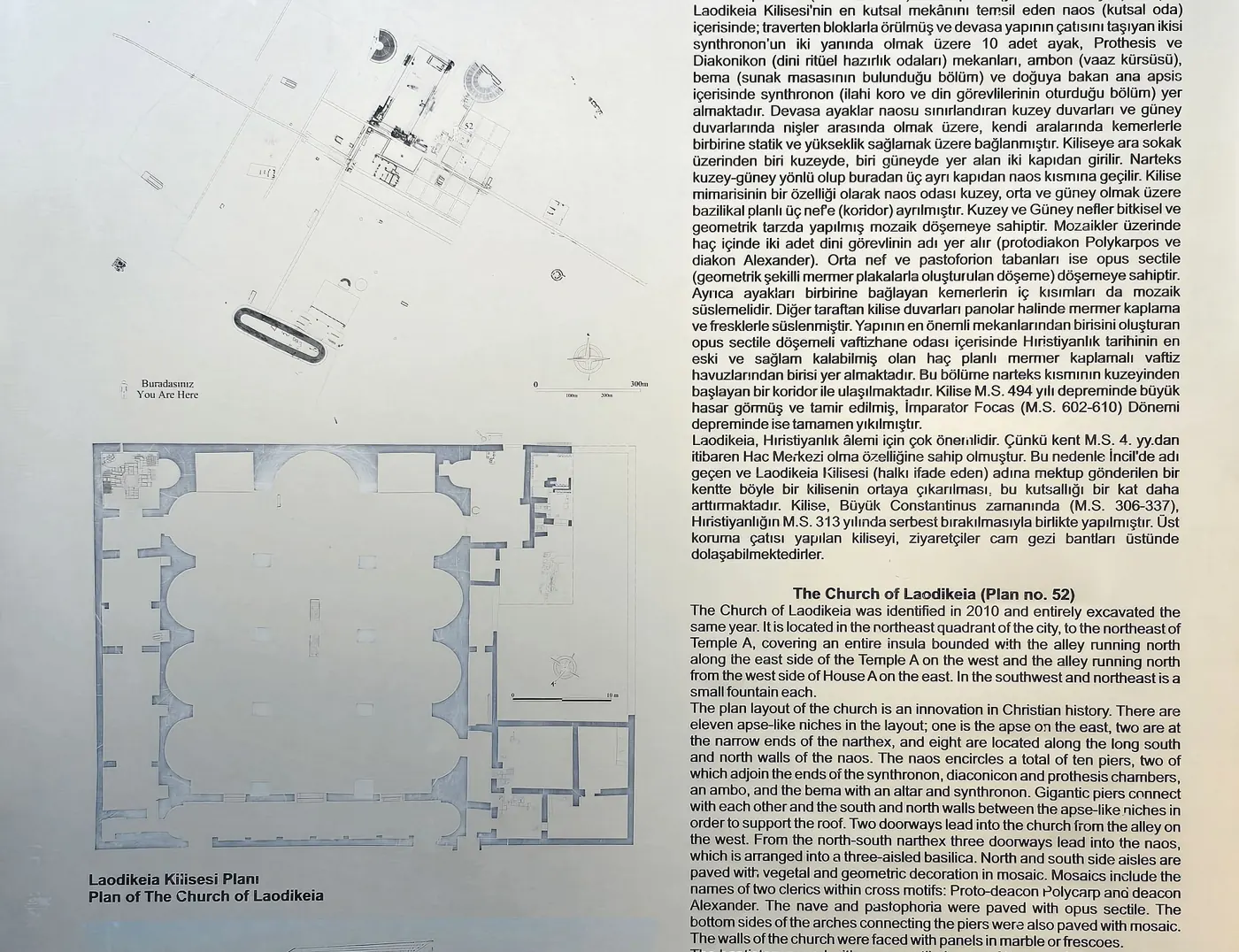
2 Laodikya Kilisesi
This early Christian church was excavated at Laodicea and is linked to the Revelation to John. It has been restored for visitors. It is the main stop for readers of the seven churches.
- Type: Early Christian church
- Context: Seven churches of Revelation
Show map
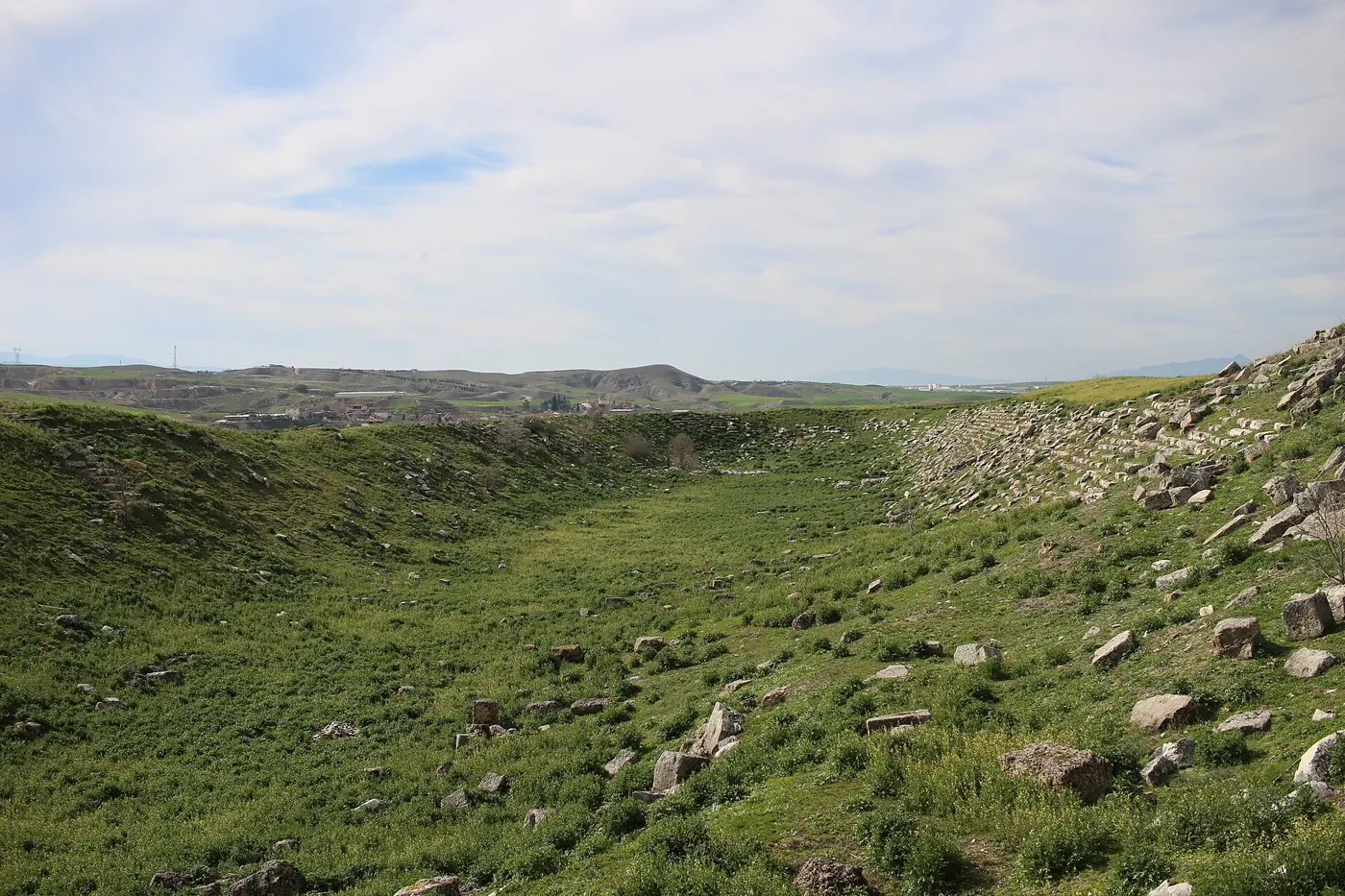
3 Laodikya Stadyumu
The Roman stadium is one of the best preserved in Anatolia and was dedicated to the Emperor Vespasian. Walk the length of it to sense the scale. It is a simple stop with a strong visual effect.
- Dedicated to: Vespasian
- Type: Roman stadium
Show map
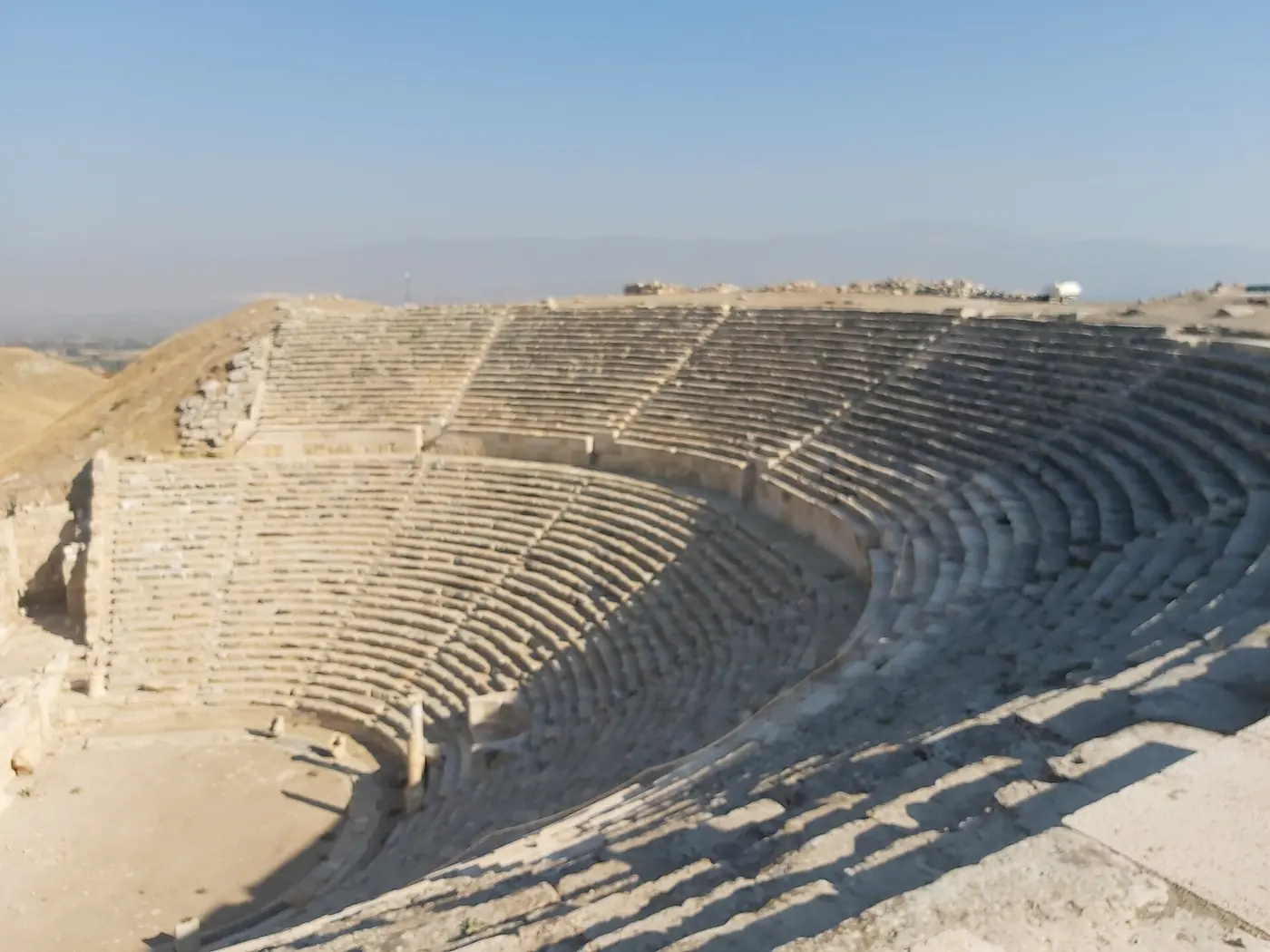
4 Laodikya Bati Tiyatrosu
The Hellenistic-Roman western theatre looks across the Lycus valley towards Hierapolis. Sit in the upper rows for the view. It pairs well with a visit to the church.
- Type: Roman theatre
- View: Towards Hierapolis
Show map
What is there at Colossae, Tripolis and the Martyrium of Philip?
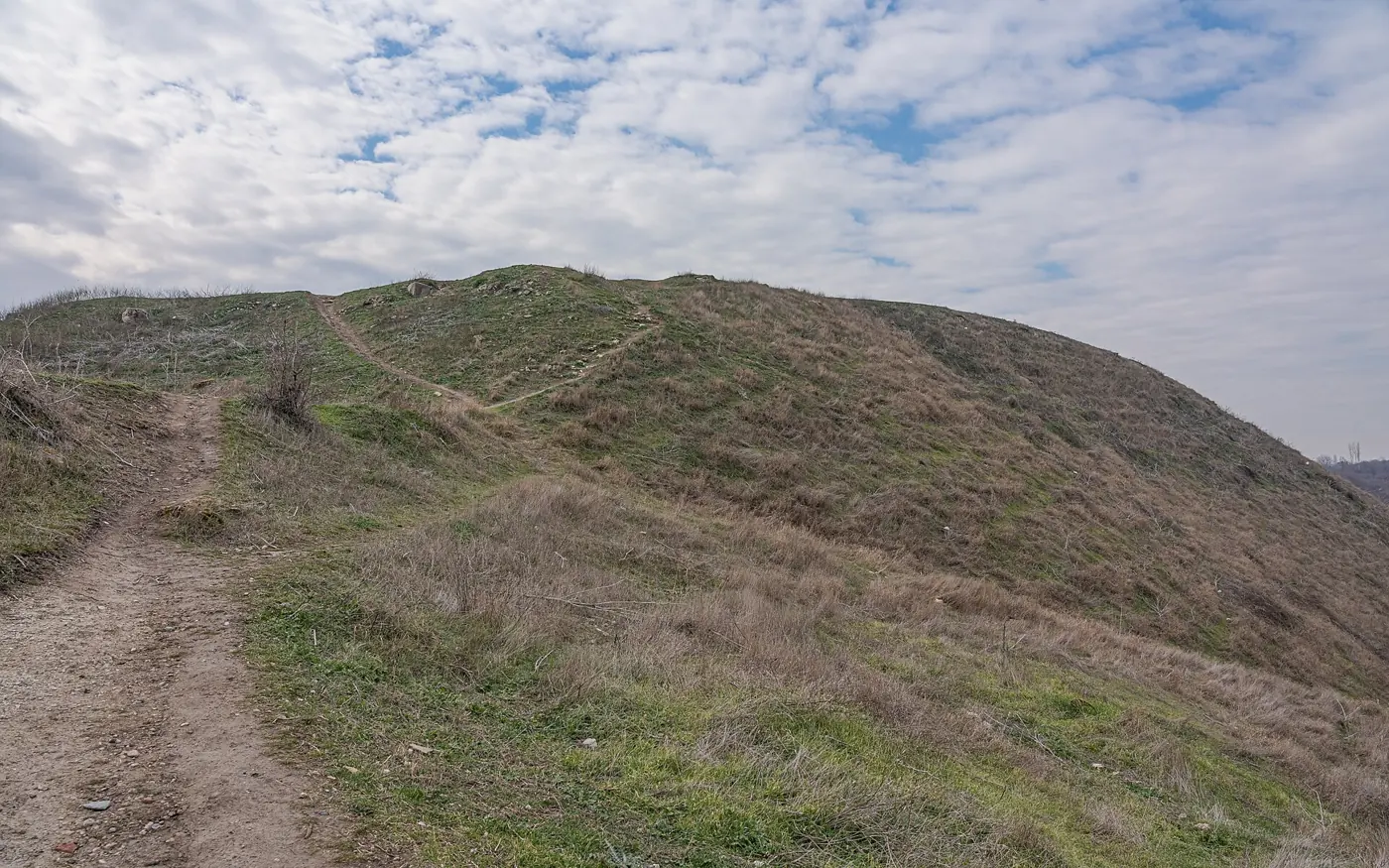
Colossae is an ancient Phrygian city near Honaz, and the New Testament Epistle to the Colossians is addressed to it. The site is largely unexcavated, so expect a landscape and a mound instead of standing ruins. In contrast, Tripolis on the Maeander in the Buldan area has a theatre, a bath and a necropolis excavated by Turkish archaeologists.
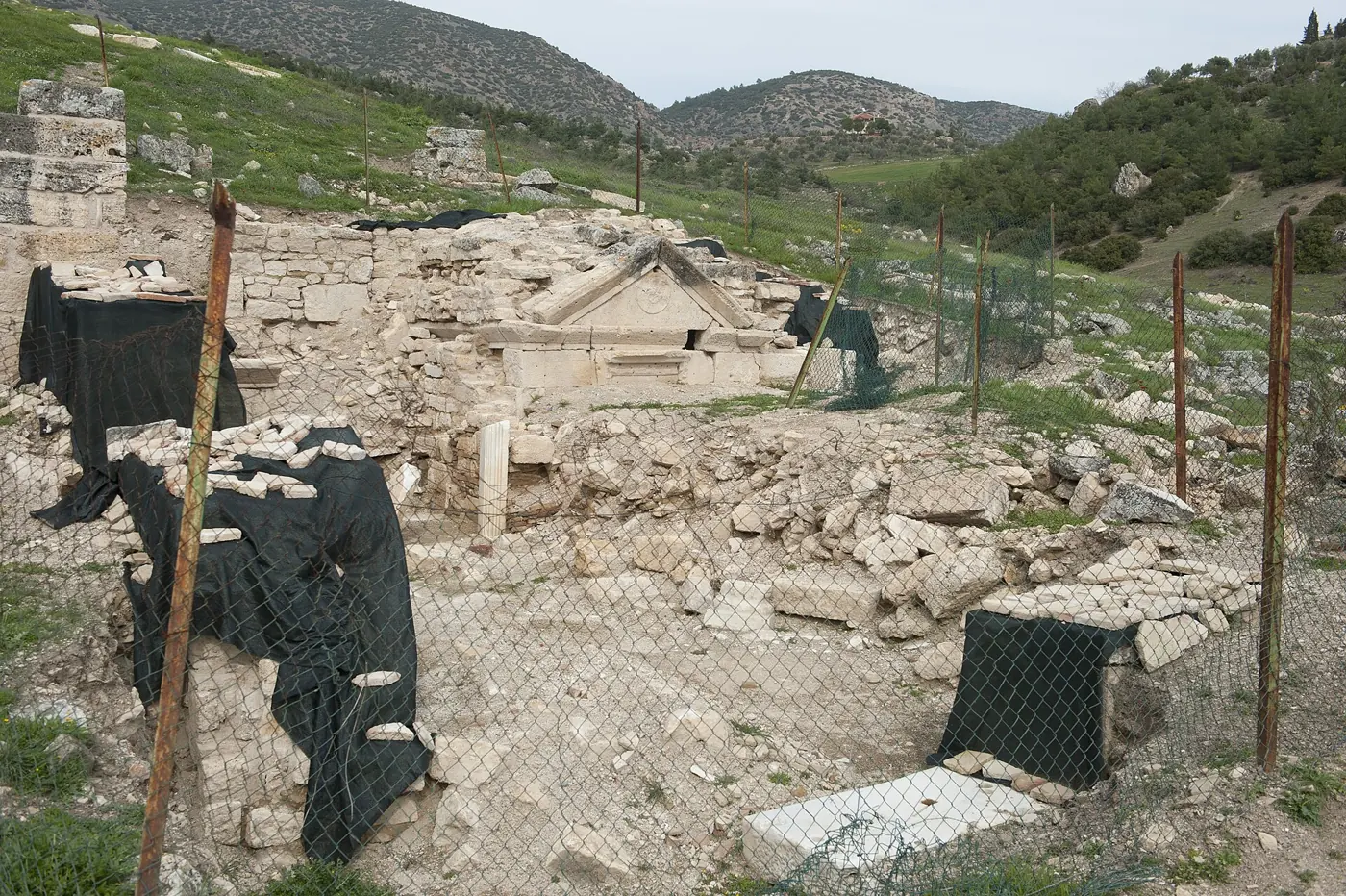
The Martyrium of Saint Philip stands at Hierapolis and was long considered the burial and martyrdom place of the Apostle Philip. Italian archaeologists identified the tomb in 2011. Therefore it completes the Christian route between Laodicea and Pamukkale.
5 Kolossai
Colossae is an ancient Phrygian city near Honaz, addressed in the Epistle to the Colossians. The site is largely unexcavated. Visit for its significance and the quiet setting, not for large ruins.
- District: Honaz
- Significance: Addressee of the Epistle to the Colossians
Show map
6 Aziz Philippus Martyriumu
This octagonal Byzantine church complex on a hill at Hierapolis was long linked to the Apostle Philip. The tomb was identified by Italian archaeologists in 2011. It sits within the Hierapolis site.
- Period: Early 5th century AD
- Linked to: Apostle Philip
Show map
7 Tripolis Antik Kenti
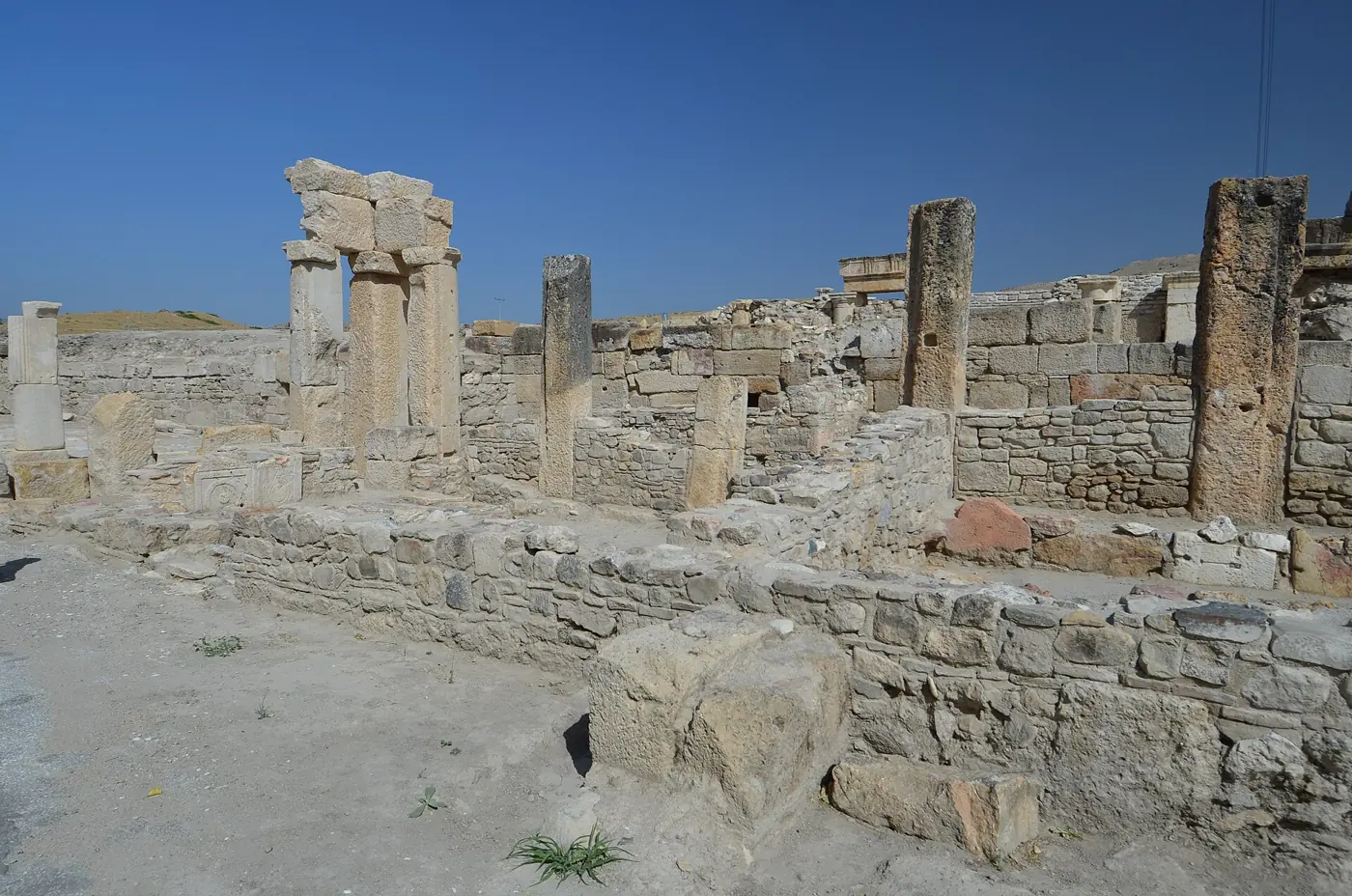
Tripolis lay on the border of Lydia, Caria and Phrygia near the Maeander river. Its theatre, bath and necropolis were excavated by Turkish archaeologists. It suits travellers who want a quieter site.
- Region: Lydia, Caria, Phrygia border
- Visit: Open archaeological site
Show map
How do the sites compare?
The table compares the four ancient cities by district, biblical link and what you actually see. Use it to choose between a short heritage visit and a full day. Moreover, it helps you decide which site suits mixed groups with older travellers.
Laodicea and Hierapolis give the most to see for the time. Colossae and Tripolis are quieter and suit those with a specific interest.
The table summarises the main facts for each ancient city.
| Site | Area | Biblical or early Christian link | What you see |
|---|---|---|---|
| Laodicea | Denizli (Goncali), about 6 km from centre | One of the seven churches of Revelation | Restored streets, church, stadium, theatre |
| Hierapolis | Pamukkale | Martyrium of Saint Philip | Theatre, necropolis, church complex |
| Colossae | Honaz | Epistle to the Colossians | Largely unexcavated site |
| Tripolis | Buldan | Ancient city on the Maeander | Theatre, bath, necropolis |
How do you get between the sites?
The easiest way is a private car with a driver, because the sites lie in different districts and public transport links change. Laodicea is close to Denizli, Hierapolis is in Pamukkale, Colossae is near Honaz and Tripolis is in the Buldan area. Therefore a fixed route saves time.
Ask the driver to order the stops by distance. A common order is Laodicea, then Hierapolis, then Colossae if you have time. Tripolis is better as a separate half-day.
The table gives one suggested order for a day trip.
| Order | Stop | Reason |
|---|---|---|
| 1 | Laodicea | Closest to Denizli, cooler in the morning |
| 2 | Hierapolis and the Martyrium | Largest site, needs several hours |
| 3 | Colossae | Short stop near Honaz if time allows |
| Separate day | Tripolis | Further away, quieter |
What practical tips help on this route?
Bring water, a hat and sturdy shoes, because shade is limited at all four sites. Respect church and excavation areas and follow local signs. Furthermore, check each site’s page or Google Maps for hours and access, as open archaeological sites and excavations can change their routes.
If you travel for faith reasons, a licensed guide helps place each ruin in its biblical context. A guide also explains what is excavated and what remains unexcavated, so expectations stay realistic.
Prepare with these points.
- Check hours and access for each site before you go.
- Wear sturdy shoes and carry water.
- Expect Colossae to be largely unexcavated.
- Plan Tripolis as a separate trip.
- Respect barriers and signs at excavations.
Who should plan a biblical heritage day, and what should they expect?
This route suits pilgrims, church groups, history students and curious travellers who want context beyond the famous terraces. Expect open archaeological sites, uneven paths and limited shade. Moreover, expect different levels of excavation: Laodicea is actively restored, Hierapolis is well visited and Colossae is mostly a quiet hillside.
Set expectations early and agree a flexible timetable with your driver or guide. Therefore the day stays relaxed even if one site takes longer than planned. In contrast to a standard sightseeing tour, a heritage day gives you time to read, reflect and ask questions.
Combine the route with a night in Pamukkale or Denizli so that you do not rush the last site.
The table helps you match the route to your group.
| Group | Best focus | Suggested sites | Note |
|---|---|---|---|
| Pilgrims and church groups | Revelation and New Testament sites | Laodicea, Martyrium of Saint Philip, Colossae | Agree a guide in advance |
| History lovers | Roman and Hellenistic remains | Laodicea, Hierapolis, Tripolis | Allow a full day |
| Mixed families | Easy walking and views | Laodicea theatre and Hierapolis | Keep Colossae optional |
| Photographers | Valley views and ruins | Laodicea western theatre, Hierapolis | Visit early or late |
Frequently asked questions
Is Laodicea one of the seven churches of Revelation?
Yes. Laodicea on the Lycus is named in the Book of Revelation as one of the seven churches of Asia.
How far is Laodicea from Denizli?
About 6 km from Denizli centre.
Can I see ruins at Colossae?
Little. The site near Honaz is largely unexcavated.
Which site holds the tomb of the Apostle Philip?
The Martyrium of Saint Philip at Hierapolis was long considered the burial place, and the tomb was identified by Italian archaeologists in 2011.
Can I visit Laodicea and Hierapolis in one day?
Yes. They are in the same valley, and a car makes a combined day practical.
Where is Tripolis?
Tripolis on the Maeander is in the Buldan area of Denizli province.
Do I need a guide?
It is not required, but a licensed guide helps with the biblical context and with unexcavated sites.
Where do I check ticket details?
Use each site’s official page or Google Maps, because hours and prices change.
Plan this with TurkGT
A private car with driver and a licensed guide suit this route best, because the sites lie in different districts and need context on site. Send your dates and group size by WhatsApp or the inquiry form and we will build the day around you.
Request a booking
Related guides
- Top Sights in Denizli Province: Visit Guide
- Hierapolis Ancient City: How to Visit the Ruins at Pamukkale
- Hierapolis Museum and Archaeology Sites Around Denizli
- Best 10 Hotels in Pamukkale: Thermal, Boutique and Village
- Best Restaurants in Pamukkale and Denizli: Top Picks
- Pamukkale Thermal Pools and White Travertines: Visit Guide
- Best Shopping in Denizli: Malls, Bazaars and Sweet Shops
→ Denizli and Pamukkale travel guides
Related destinations and attractions
Explore more city guides
Sources
- Laodicea on the Lycus – Wikipedia
- Colossae – Wikipedia
- Tripolis on the Meander – Wikipedia
- Hierapolis – Wikipedia
Last reviewed: 2026-11-21.