
Göbekli Tepe, Çatalhöyük and Arslantepe are three UNESCO-listed sites that show early Anatolian history. Göbekli Tepe dates to the 10th-9th millennia BC, Çatalhöyük to about 7,400-5,200 BC, and Arslantepe to about 3400-3100 BCE.
Key facts
- Göbekli Tepe: 10th-9th millennia BC; inscribed 2018
- Çatalhöyük: 7,400 to 5,200 BC; inscribed 2012
- Arslantepe: Late Chalcolithic palace, 3400-3100 BCE; inscribed 2021
- Hattusha (sidebar): Hittite capital, late Bronze Age; inscribed 1986
- Gordion (sidebar): Phrygian centre; inscribed 2023
Scope and dating
This page covers three UNESCO sites on the early end of Anatolian history: Göbekli Tepe, Çatalhöyük and Arslantepe. Dates below come from UNESCO and the Culture Portal.
Hattusha and Gordion are later, so they appear only in a short sidebar.
Göbekli Tepe
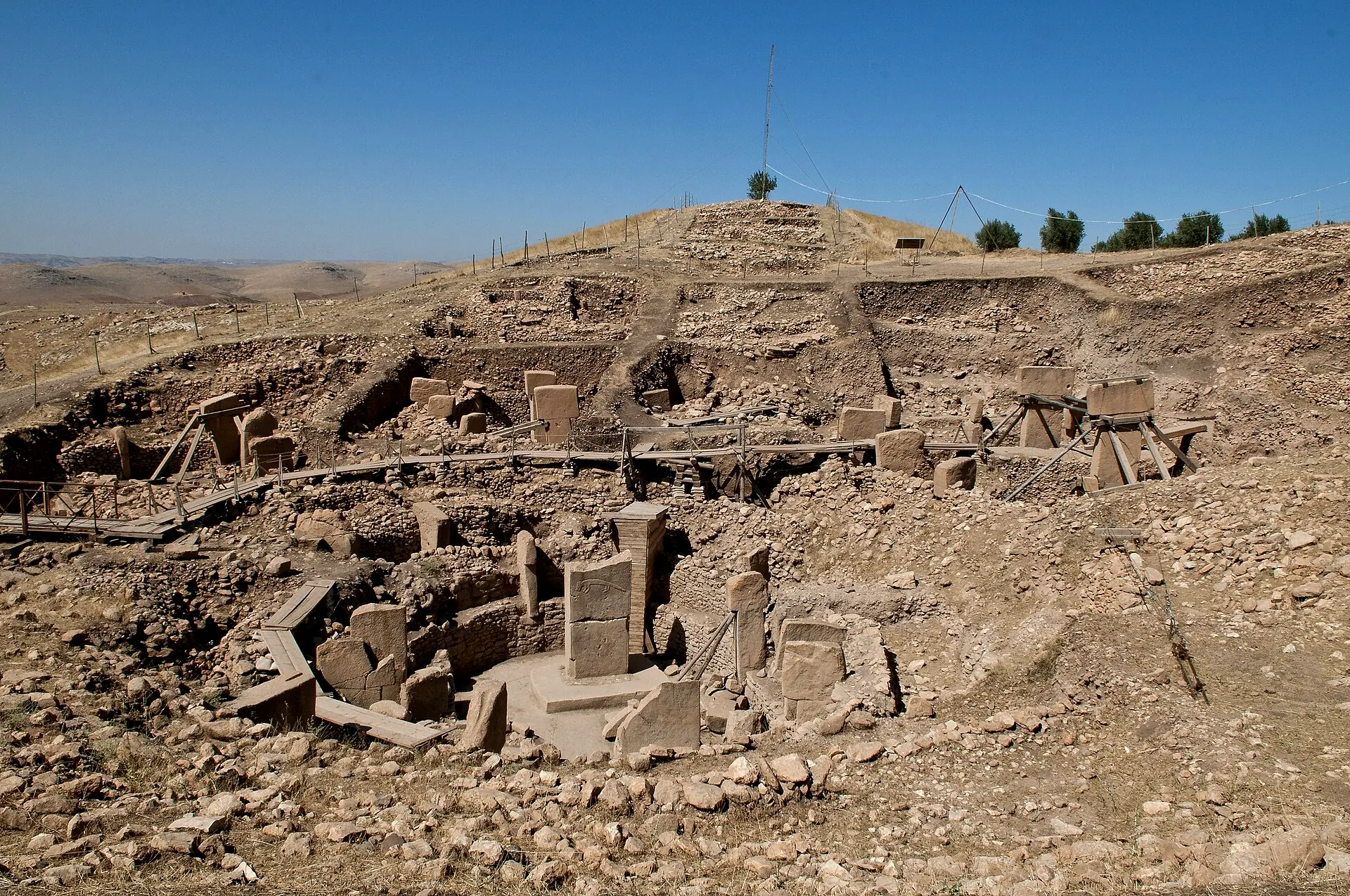
Göbekli Tepe is in Şanlıurfa Province, about 18 km northeast of the city centre. UNESCO says hunter-gatherers built monumental enclosures there in the 10th-9th millennia BC.
The enclosures have T-shaped limestone pillars rising up to 5.5 m. UNESCO calls the site one of the first manifestations of human-made monumental architecture.
Its discovery dates to 1963, but the first excavations began in 1995. UNESCO inscribed it in 2018.
Çatalhöyük
Çatalhöyük is on the Konya plain and has two tells. The eastern tell has 18 Neolithic levels dated 7,400 to 6,200 BC, and the western tell is mainly Chalcolithic, 6,200 to 5,200 BC.
UNESCO describes back-to-back houses with roof access. Excavation periods were 1958-1965 and 1993-2018, and the site was inscribed in 2012.
Arslantepe
Arslantepe is a tell about 30 m high on the Malatya plain, 7 km northeast of Malatya. It is Chalcolithic rather than Neolithic.
UNESCO says it was a centre of governance between about 3400 and 3100 BCE, with the largest unitary palace complex known from the late Chalcolithic. It was inscribed in 2021, and finds are displayed in the Malatya Archaeology Museum.
Sidebar: Hattusha and Gordion
Hattusha was the capital of the Hittite Empire in the late Bronze Age, not the Neolithic. UNESCO inscribed it in 1986.
Gordion, about 90 km southwest of Ankara, was the centre of ancient Phrygia. Its Midas Mound is 53 m high, and it was inscribed in 2023.
Practical notes
Opening hours, access routes and visitor rules change. Check the official site pages for each location before you travel.
Frequently asked questions
How old is Göbekli Tepe?
UNESCO dates its monumental enclosures to the 10th-9th millennia BC.
When was Çatalhöyük inhabited?
The eastern tell has Neolithic levels dated 7,400 to 6,200 BC, per UNESCO.
Is Arslantepe Neolithic?
No. Its most outstanding remains are Late Chalcolithic, about 3400 to 3100 BCE.
Is Hattusha Neolithic?
No. It was a Hittite capital in the late Bronze Age.
Which of these sites are World Heritage Sites?
All of them: Göbekli Tepe (2018), Çatalhöyük (2012), Arslantepe (2021), Hattusha (1986) and Gordion (2023).
Related on TurkGT
- Göbekli Tepe
- Neolithic Site of Çatalhöyük
- Arslantepe Mound
- Gordion
- Hattusha: the Hittite Capital
- Şanlıurfa
- Konya
- Malatya
- Türkiye’s UNESCO Intangible Heritage: 32 Living Traditions
- Ottoman Mosques and Complexes to Know in Türkiye
- Underground Cities and Rock-Cut Churches of Cappadocia
- Ancient Roman and Greek Cities in Türkiye: Ephesus to Aspendos
- Tur Abdin and Syriac Heritage: Monasteries of Mardin and Midyat
Sources
- UNESCO World Heritage Centre: 1572
- kulturportali.gov.tr – gobeklitepe-
- UNESCO World Heritage Centre: 1405
- Wikipedia: %C3%87atalh%C3%B6y%C3%BCk
- UNESCO World Heritage Centre: 1622
- kulturportali.gov.tr – arslantepe
- UNESCO World Heritage Centre: 1669
- Wikipedia: Hattusa
- UNESCO World Heritage Centre: 377
- kulturportali.gov.tr – hattusa
- kulturportali.gov.tr – gordion-antik-kenti
Last reviewed: 2026-11-16. Opening hours, ticket prices and other changeable visitor details are not listed here because we have not verified them; check the official source before you travel.